以油养肤

Search documents
半年营收翻番,林清轩改名再冲上市
Sou Hu Cai Jing· 2025-12-03 13:25
Core Insights - Lin Qingxuan has updated its prospectus for its IPO in Hong Kong, indicating a potential shift in the competitive landscape of domestic beauty brands in China [1] - The company has changed its name from "Shanghai Lin Qingxuan Biotechnology Co., Ltd." to "Shanghai Lin Qingxuan Cosmetics Group Co., Ltd." to reflect its strategic intent towards multi-brand and group operations [2][4] - The updated prospectus highlights a significant increase in revenue, with a 98.3% year-on-year growth in the first half of 2025, reaching 1.052 billion yuan [21][22] - Lin Qingxuan aims to expand its brand portfolio and enhance its market presence through internal incubation and strategic acquisitions [32][36] - The company plans to initiate international expansion starting with Southeast Asia, leveraging its unique plant resources and the concept of "Chinese beauty" [48] Company Name Change - The name change signifies a strategic shift towards a multi-brand and group-oriented operation [2][4] - The term "high-end" appears more frequently in the updated prospectus, indicating a continued focus on premium positioning [5] Financial Performance - Lin Qingxuan reported a revenue of 1.052 billion yuan in the first half of 2025, a substantial increase from 530 million yuan in the same period last year [21][22] - The company’s net profit for the same period was 182 million yuan, with a gross margin of 82.4% [22] - Historical revenue figures show a consistent upward trend, with revenues of 691 million yuan in 2022, 805 million yuan in 2023, and projected 1.21 billion yuan in 2024 [23] Shareholder Structure - The shareholder structure remains largely unchanged, with the founder holding a significant portion of shares [12][15] - Notably, a new investment from Shanghai Kaihui Chuangmei, an affiliate of L'Oréal, has been made, indicating increased interest from international beauty giants [18][20] Product and Brand Strategy - Lin Qingxuan's flagship product, the Camellia Oil, has been a major revenue driver, accounting for 45.5% of total revenue in the first half of 2025 [28][31] - The company is focusing on expanding its product matrix and has introduced new brands targeting different consumer segments [32][35] Retail and Distribution - As of June 30, 2025, Lin Qingxuan operates 554 stores, with over 95% located in high-end shopping malls [44] - The average repurchase rate has slightly decreased to 33.5%, while the active customer base has grown significantly [44] - Online sales accounted for 65.4% of total revenue in the first half of 2025, indicating a strong digital presence [48] Future Outlook - Lin Qingxuan plans to enhance its R&D capabilities, with an increase in the number of researchers to 85, focusing on developing proprietary ingredients and technologies [36][42] - The company is exploring potential acquisitions to strengthen its supply chain and expand its brand portfolio [36][40] - The upcoming IPO could position Lin Qingxuan as the leading domestic high-end skincare brand in the Hong Kong market, potentially altering the competitive dynamics within the industry [11][48]

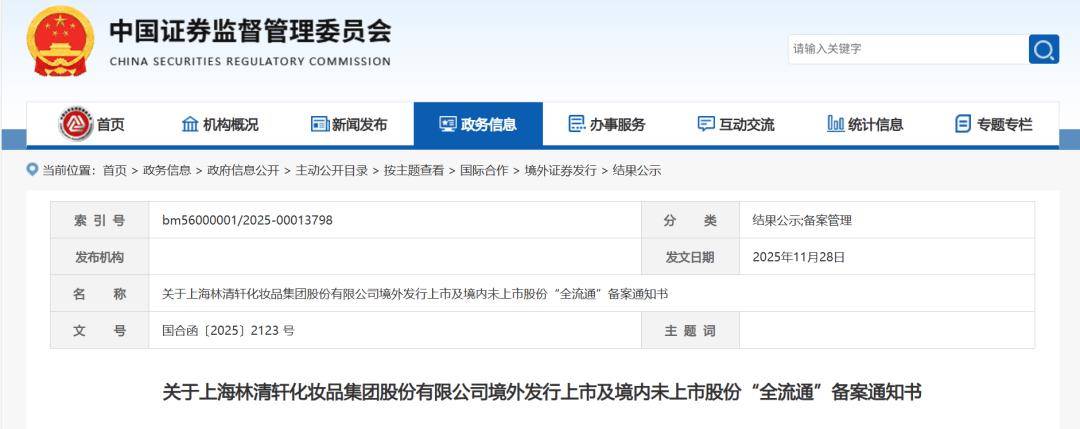
国货护肤品林清轩递表港交所
Jing Ji Guan Cha Wang· 2025-12-03 08:55
Company Dynamics - On December 2, the Hong Kong Stock Exchange disclosed that Shanghai Linqingxuan Cosmetics Group Co., Ltd. submitted its listing application, with CITIC Securities and Huatai International as joint sponsors [2] - Linqingxuan is a high-end domestic skincare brand in China, focusing on anti-wrinkle and firming skincare products, known for its flagship brand offering high-end skincare solutions based on natural camellia ingredients [2] - Since starting research on camellia skincare products in 2012, the company pioneered the "oil-based skincare" concept, launching its first camellia essence oil in 2014, which laid the foundation for its core product line [2] - As of June 30, 2025, Linqingxuan has a total of 230 SKUs, including essence oils, creams, toners, lotions, serums, masks, and sunscreens [2] - Research and development costs for Linqingxuan were RMB 21 million, RMB 20 million, RMB 30 million, and RMB 18 million for the years 2022, 2023, 2024, and the first half of 2025, respectively [2] Industry Overview - The Chinese skincare market has been steadily growing, with the market size increasing from RMB 332.9 billion in 2019 to RMB 461.9 billion in 2024, representing a compound annual growth rate (CAGR) of 6.8% [3] - The high-end segment of the market has seen significant growth, rising from RMB 74.9 billion in 2019 to RMB 114.4 billion in 2024 [3] - In 2024, Linqingxuan ranked first among all high-end domestic skincare brands in China, capturing a market share of 1.4% based on retail sales [3] - Linqingxuan's revenue for the years 2022, 2023, 2024 was RMB 691 million, RMB 805 million, and RMB 1.21 billion, with revenue for the first half of 2025 reaching RMB 1.052 billion [3] - The adjusted net profits for Linqingxuan were RMB -4 million, RMB 88 million, RMB 200 million, and RMB 201 million for the years 2022, 2023, 2024, and the first half of 2025, indicating significant fluctuations in growth [3]

新股消息 林清轩递表港交所主板 在中国高端国货护肤品牌中排名第一
Jin Rong Jie· 2025-12-03 02:05
Core Viewpoint - Shanghai Linqingxuan Cosmetics Group Co., Ltd. has submitted an application for listing on the Hong Kong Stock Exchange, focusing on high-end domestic skincare products, particularly anti-wrinkle and firming skincare solutions [1][2]. Company Overview - Linqingxuan is recognized for its high-end skincare brand in China, emphasizing natural camellia oil-based products and the "oil-based skincare" concept since 2012 [1]. - The company launched its first camellia oil facial essence in 2014, which has since sold over 45 million bottles, maintaining the top position in retail sales among all facial oil products in China for 11 consecutive years [1][2]. Financial Performance - Revenue figures for Linqingxuan from 2022 to 2025 (up to June 30) are as follows: RMB 6.85 billion, RMB 7.97 billion, RMB 11.98 billion, and RMB 10.42 billion, respectively, with the brand accounting for over 99% of total revenue during these periods [2][5]. - Gross profit for the same periods is reported as approximately RMB 5.39 billion, RMB 6.54 billion, RMB 9.98 billion, and RMB 8.66 billion [6]. Market Position - In 2024, Linqingxuan ranked first among all high-end domestic skincare brands in China, holding a 1.4% market share, and is the only domestic brand in the top 15 high-end skincare brands overall [2]. - The high-end skincare market in China is projected to grow from RMB 749 billion in 2019 to RMB 1,144 billion by 2024, with expectations to reach RMB 2,185 billion by 2029 [2]. Product Offering - Linqingxuan offers a comprehensive range of high-end skincare solutions, including essence oils, creams, toners, emulsions, serums, masks, and sunscreens, designed to support a complete skincare routine [1]. Sales Strategy - The company has established a comprehensive sales network utilizing an OMO (Online-Merge-Offline) approach, combining diverse online channels with a strong offline presence [4].
已获证监会备案并更新招股书 “以油养肤”开创者林清轩加速推进上市进程
智通财经网· 2025-12-03 02:03
Core Viewpoint - Lin Qingxuan is accelerating its IPO process after receiving the CSRC filing notice, with updated IPO application materials now available on the Hong Kong Stock Exchange website [1] Company Overview - Lin Qingxuan, a pioneer in the "oil-based skincare" sector, has focused on anti-wrinkle and firming skincare products, becoming a leading brand in cell-level anti-wrinkle essence oils [1] - The company's flagship product, the Camellia Oil Anti-Wrinkle Repair Essence Oil, has ranked first in retail sales among all facial essence oil products in China for 11 consecutive years since 2014 [1] Financial Performance - The company's total revenue has shown consistent growth over the past three years, with a compound annual growth rate (CAGR) of 32.3%, increasing from RMB 691 million in 2022 to RMB 1.21 billion in 2024 [1] - In the first half of this year, the company achieved a net profit of RMB 182 million, with a gross margin of 82.4%, and the gross margin for the essence oil category reached 86.2% [1] Product Sales Performance - The Lin Qingxuan Black Gold Time Peptide Anti-Wrinkle Brightening Cream is projected to generate RMB 61.5 million in revenue for 2024, with RMB 50 million already achieved in the first half of 2025, making it one of the best-selling products [2] - The Lin Qingxuan High SPF Sunscreen has rapidly developed since its launch in 2024, generating RMB 36.3 million in its first year and increasing to RMB 42.1 million in the first half of this year, indicating strong market recognition [2] Industry Growth Potential - The market for high-end anti-wrinkle and firming skincare products is expected to grow from RMB 59.4 billion in 2024 to RMB 155.5 billion by 2029, with a CAGR of 21.2% [2] - The overall high-end skincare market in China is projected to reach RMB 218.5 billion by 2029, with a CAGR of 13.8% from 2024 to 2029 [2] - As a leading brand in the high-end domestic skincare industry, Lin Qingxuan is well-positioned to benefit from strong R&D capabilities and existing leading products [2]
林清轩递表港交所主板 在中国高端国货护肤品牌中排名第一
Zhi Tong Cai Jing· 2025-12-03 01:19
Core Viewpoint - Shanghai Linqingxuan Cosmetics Group Co., Ltd. has submitted an application for listing on the Hong Kong Stock Exchange, with CITIC Securities and Huatai International as joint sponsors [1] Company Overview - Linqingxuan is a high-end domestic skincare brand in China, focusing on anti-wrinkle and firming skincare products, known for its natural camellia oil-based skincare solutions [3] - The company pioneered the "oil-based skincare" concept and launched its first camellia oil facial essence in 2014, which has since sold over 45 million bottles by June 30, 2025 [3][4] - Linqingxuan offers a full range of high-end skincare solutions, including essence oils, creams, toners, emulsions, serums, masks, and sunscreens [3] Financial Performance - Revenue for Linqingxuan was approximately RMB 6.85 billion, RMB 7.97 billion, RMB 11.98 billion, RMB 5.25 billion, and RMB 10.42 billion for the years 2022, 2023, 2024, and the six months ending June 30 for 2024 and 2025, respectively [4][8] - Gross profit figures for the same periods were approximately RMB 5.39 billion, RMB 6.54 billion, RMB 9.98 billion, RMB 8.66 billion [9][10] - The company has maintained a dominant revenue share, accounting for 99.1% to 99.0% of total revenue across the reported periods [4] Market Position - Linqingxuan ranked first among all domestic high-end skincare brands in China by retail sales in 2024, holding a 1.4% market share, and is the only domestic brand in the top 15 high-end skincare brands in China [4] - The high-end skincare market in China is rapidly growing, with the market size expected to increase from RMB 749 billion in 2019 to RMB 1,144 billion in 2024, and projected to reach RMB 2,185 billion by 2029 [4] Market Opportunities - The market for high-end anti-wrinkle and firming products is expected to grow from RMB 594 billion in 2024 to RMB 1,555 billion by 2029, with a compound annual growth rate (CAGR) of 21.2% [5] - The market for facial essence oils is projected to reach RMB 139 billion by 2029, with a CAGR of 21.3% from 2024 to 2029 [6] Sales Strategy - The company has established a comprehensive sales network utilizing an OMO (Online-Merge-Offline) approach, combining diverse online channels with a strong offline presence [7] - Offline channels include direct stores and partnerships with retailers, while online channels encompass direct sales and sales through online retailers, enhancing brand engagement and consumer touchpoints [7]
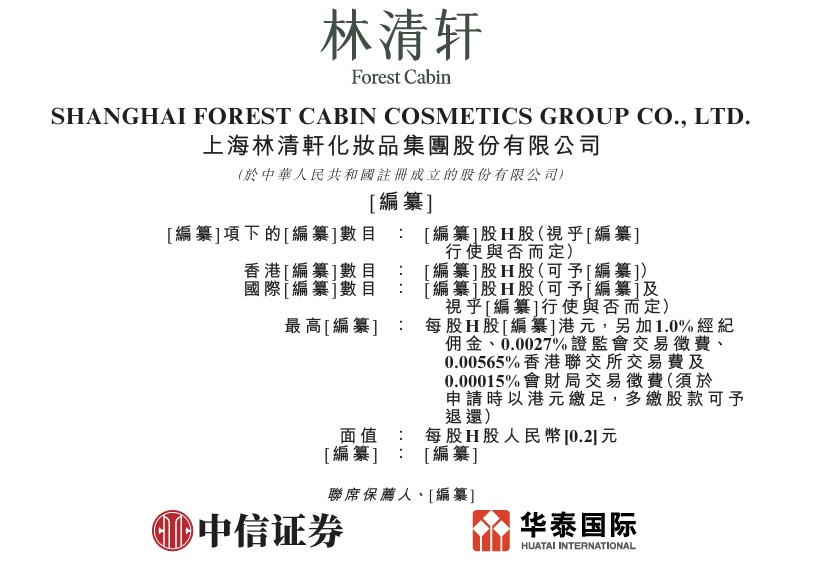
新股消息 | 林清轩递表港交所主板 在中国高端国货护肤品牌中排名第一
智通财经网· 2025-12-03 01:16
Core Viewpoint - Lin Qingxuan, a high-end domestic skincare brand in China, has submitted its application for listing on the Hong Kong Stock Exchange, with CITIC Securities and Huatai International as joint sponsors [1][3]. Company Overview - Lin Qingxuan focuses on anti-wrinkle and firming skincare products, known for its high-end solutions based on natural camellia oil since its research began in 2012 [3]. - The company launched its first camellia oil essence in 2014, which has since sold over 45 million bottles, maintaining the top position in retail sales among all facial oil products in China for 11 consecutive years [3][4]. - As of June 30, 2025, Lin Qingxuan offers 230 SKUs and has generated significant revenue, with 99% of its income coming from its core product lines in recent years [4]. Market Position - In 2024, Lin Qingxuan ranked first among all high-end domestic skincare brands in China, holding a 1.4% market share, and is the only domestic brand in the top 15 high-end skincare brands [4]. - The high-end skincare market in China is rapidly growing, with the market size expected to increase from RMB 749 billion in 2019 to RMB 2,185 billion by 2029 [4]. Financial Performance - Revenue for Lin Qingxuan was approximately RMB 6.91 billion in 2022, RMB 8.05 billion in 2023, and RMB 12.1 billion in 2024, with a projected revenue of RMB 10.52 billion for the first half of 2025 [8]. - Gross profit figures were RMB 5.39 billion in 2022, RMB 6.54 billion in 2023, and RMB 9.98 billion in 2024, with a gross profit of RMB 8.66 billion for the first half of 2025 [9]. Market Growth Potential - The market for high-end anti-wrinkle and firming products is projected to grow from RMB 594 billion in 2024 to RMB 1,555 billion by 2029, with a compound annual growth rate (CAGR) of 21.2% [5]. - The facial oil market in China is expected to reach RMB 139 billion by 2029, with a CAGR of 21.3% from 2024 to 2029 [6]. Sales Strategy - The company has established a comprehensive sales network that combines online and offline channels, enhancing brand engagement and consumer touchpoints [7].
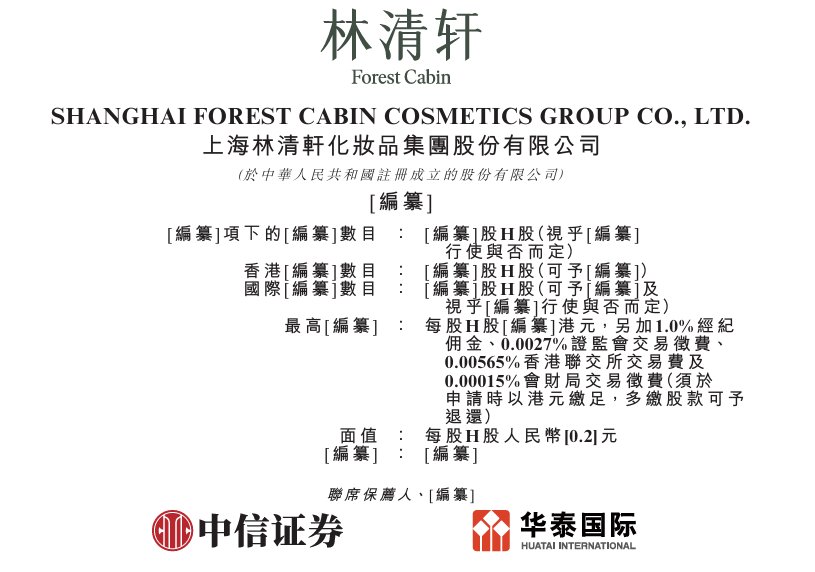
林清轩完成港股上市备案,冲击港股“国货高端护肤第一股”
Sou Hu Cai Jing· 2025-12-02 04:31
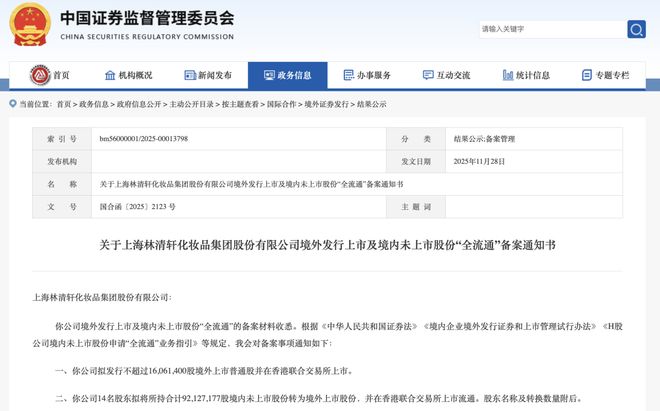
Core Viewpoint - The China Securities Regulatory Commission has issued a notice regarding the overseas issuance and listing of Shanghai Linqingxuan Cosmetics Group Co., Ltd., which plans to issue up to 16,061,400 overseas listed ordinary shares and list them on the Hong Kong Stock Exchange [2] Company Overview - Linqingxuan is a leading high-end domestic skincare brand in China, focusing on anti-wrinkle and firming skincare products, known for its flagship brand "Linqingxuan" which offers high-end skincare solutions based on natural camellia flower ingredients [3][4] - The company has pioneered the "oil-based skincare" concept since 2012, launching its first camellia essence oil in 2014, which has become a core product line [3][5] Market Position - Linqingxuan ranks first among all domestic high-end skincare brands in China by retail sales in 2024 and is the only domestic brand among the top 15 high-end skincare brands, including both domestic and international brands [3][4] - The high-end skincare market in China is rapidly growing, projected to increase from RMB 749 billion in 2019 to RMB 1,144 billion in 2024, with expectations to reach RMB 2,185 billion by 2029 [4] Financial Performance - The company's revenue increased from RMB 6.91 billion in 2022 to RMB 8.05 billion in 2023, and is expected to further rise to RMB 12.10 billion in 2024, reflecting a compound annual growth rate of 32.3% from 2022 to 2024 [8] - In 2024, the total profit and comprehensive income amounted to RMB 1.87 billion, with a net profit margin of 15.4% [8] Product Development and R&D - Linqingxuan emphasizes independent development of core ingredients and technologies related to camellia flower for anti-wrinkle and skin repair, with R&D costs of RMB 21.1 million, RMB 19.7 million, and RMB 30.4 million for 2022, 2023, and 2024 respectively [7] - The company offers a full range of high-end skincare solutions, including essence oils, creams, toners, and masks, with a total of 188 SKUs as of December 31, 2024 [5] Production Capacity - Linqingxuan operates two production bases in Shanghai, with a total building area of 49,120 square meters and an annual designed production capacity of 365 tons of raw materials and 40,700 thousand skincare products [7]
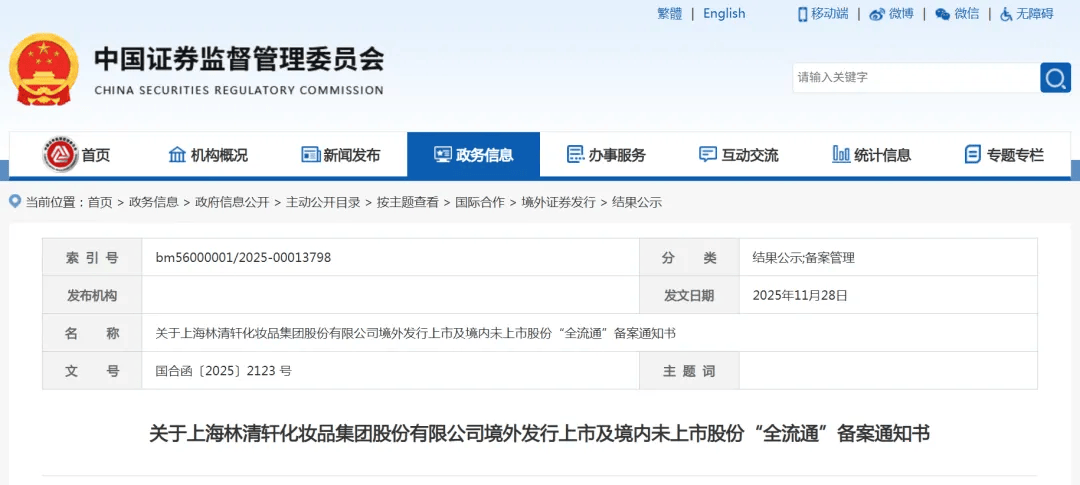
林清轩获证监会备案 冲刺港股“国货高端护肤第一股”
Xin Jing Bao· 2025-12-01 05:32
Core Viewpoint - Lin Qingxuan is advancing its IPO process in Hong Kong, aiming to become the leading domestic high-end skincare brand in the market, leveraging its unique product offerings and competitive advantages in the industry [1][2]. Company Overview - Lin Qingxuan plans to issue up to 16.061 million shares for overseas listing on the Hong Kong Stock Exchange, marking a significant step in its IPO journey [1]. - The company is recognized as the only domestic brand among the top 15 high-end skincare brands in China, including international brands, and holds the leading position in the domestic high-end national skincare market [1]. Financial Performance - From 2022 to 2024, Lin Qingxuan's revenue is projected to grow from 690 million yuan to 1.21 billion yuan, with a compound annual growth rate (CAGR) of 32.3%, significantly outpacing the industry average [2]. - The flagship product, Lin Qingxuan Camellia Oil, has sold over 30 million bottles since its launch in 2014, maintaining its position as the top-selling facial oil in China for 11 consecutive years [2]. Product and R&D - Lin Qingxuan has invested heavily in R&D, with expenses increasing from 21.12 million yuan in 2022 to 30.40 million yuan in 2024, resulting in 80 patents, including 42 related to core ingredients and technologies [2]. - The flagship patented ingredient, Qingxuan Extract, derived from high-altitude red camellia flowers, offers targeted skin benefits such as enhancing elasticity and reducing fine lines [2]. Market Position and Strategy - The company has established a unique competitive advantage through full value chain integration, from raw material procurement to product development and production, ensuring high-quality product offerings [1][2]. - Lin Qingxuan is redefining high-end domestic skincare with its comprehensive control over the supply chain and an omnichannel sales model, positioning itself for continued leadership in the plant-based skincare revolution in China [2].
“以油养肤”开创者林清轩获证监会备案 冲刺港股“国货高端护肤第一股”
Jin Rong Jie· 2025-12-01 03:53
Core Viewpoint - Lin Qingxuan is advancing its IPO process in Hong Kong, aiming to become the leading domestic high-end skincare brand listed in the market, leveraging its unique product offerings and competitive advantages in the industry [1][3]. Group 1: Company Overview - Lin Qingxuan plans to issue up to 16.061 million overseas listed shares and list on the Hong Kong Stock Exchange, marking a significant step in its IPO journey [1]. - The company is recognized as the top domestic high-end skincare brand in China, particularly noted for its signature product, Camellia Oil, which has established a strong market presence [1][2]. - Lin Qingxuan is the only domestic brand among the top 15 high-end skincare brands in China, which includes international competitors [1]. Group 2: Financial Performance - From 2022 to 2024, Lin Qingxuan's revenue is projected to grow from 691 million RMB to 1.21 billion RMB, reflecting a compound annual growth rate (CAGR) of 32.3%, significantly outpacing the industry average [2]. - The flagship product, Camellia Oil, has sold over 30 million bottles since its launch in 2014, maintaining its position as the retail sales champion in the facial oil category for 11 consecutive years [2]. Group 3: Research and Development - Lin Qingxuan has invested heavily in R&D, with expenses increasing from 21.12 million RMB in 2022 to 30.4 million RMB in 2024, resulting in 80 patents, including 42 related to core ingredients and technologies [2]. - The flagship patented ingredient, Qingxuan Extract, derived from high-altitude red camellia flowers, offers targeted skin benefits, enhancing skin elasticity and reducing fine lines [2]. Group 4: Market Strategy - The company is redefining high-end domestic skincare through comprehensive control over its supply chain and an OMO (Online-Merge-Offline) sales model, which positions it well for future growth and global expansion [3].
欧莱雅首投中国纯净护肤品牌LAN兰,日系肌本科却黯然退出天猫
Yang Zi Wan Bao Wang· 2025-11-21 10:31
Core Insights - L'Oréal Group announced a minority stake investment in Chinese skincare brand LAN, marking its first investment in a local skincare brand since the establishment of its Chinese investment company, Meici Fang [1][2] - Meanwhile, Japanese brand Muji announced the closure of its Tmall flagship store, expected to officially close by December 11, 2025, highlighting a significant reshuffle in the Chinese beauty market [1][8] Investment Dynamics - The investment in LAN was supported by L'Oréal's strategic innovation risk investment fund, BOLD, and is seen as a key step in L'Oréal's deepening presence in China's beauty tech sector [2] - Meici Fang's investment history shows a focus on fragrance and raw material innovation, with LAN aligning perfectly with its investment criteria of digitalization, research, aesthetics, and originality [4] Brand Performance - Founded in 2019, LAN has achieved remarkable growth, reaching over 1 billion in annual sales within six years, driven by its "pure skincare" philosophy and innovative product concepts [5] - The brand has established a strong research foundation, with over 40 patents and plans to create China's first plant oil molecular database by 2025 [5] Market Challenges - Muji's exit from the Chinese market reflects the challenges faced by Japanese brands, which have struggled to adapt to the rapid shift in consumer preferences towards ingredient-focused and efficacy-driven skincare [8][11] - Since 2025, nine Japanese beauty brands, including Decorte and Sekkisei, have closed or exited the Chinese market, indicating a broader trend of international brands facing difficulties in the evolving landscape [12] Industry Trends - The simultaneous events of LAN's investment and Muji's exit illustrate a significant transformation in the Chinese beauty market, where local brands emphasizing technological innovation are rapidly rising [12] - The need for international brands to rethink their product development and marketing strategies is critical in order to regain consumer favor in an increasingly rational market [12]