
台湾问题

Search documents
X @外汇交易员
外汇交易员· 2025-12-04 07:29
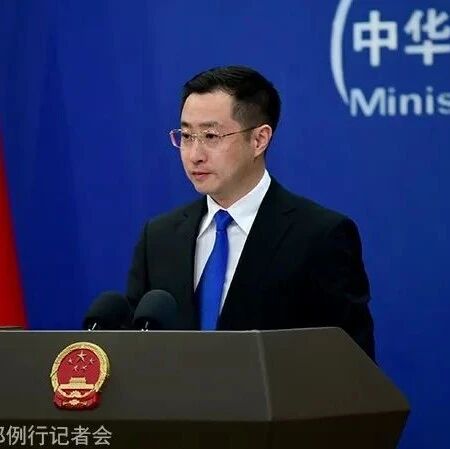
今日有媒体提问称,12月3日日本首相高市早苗在参议院全体会议上援引《中日联合声明》表示理解和尊重中国政府关于台湾是中国领土不可分割的一部分的立场,请问中方对此有何评论?对此,中国外交部发言人林剑表示,据核实,有关报道不准确,高市首相本人只提及日方在台湾问题上的基本立场如1972年《中日联合声明》所述,这一立场没有变化,仅此而已。既然高市首相称日方在台湾问题上的基本立场如1972年《中日联合声明》所述,那么她能准确完整重申1972年《中日联合声明》所述的内容吗?为什么日方就是刻意不肯讲清楚既有的承诺和法律义务,这背后到底是什么逻辑和居心?日方也需要给中方和国际社会一个交代。 ...
外交部:高市早苗敷衍搪塞,中方绝不接受
券商中国· 2025-12-04 07:27
Group 1 - The core viewpoint of the article is that the Chinese government firmly rejects the statements made by Japanese Prime Minister Kishi Nobuo regarding Taiwan, emphasizing that Japan must acknowledge its historical commitments as outlined in the 1972 China-Japan Joint Statement [1] - The Chinese Foreign Ministry spokesperson Lin Jian clarified that the reports about Kishi's comments were inaccurate, stating that the Prime Minister only reiterated Japan's unchanged position on Taiwan as per the 1972 agreement [1] - Lin Jian urged Japan to reflect on and correct its stance, questioning why Japan is unwilling to clearly articulate its existing commitments and legal obligations regarding Taiwan [1]

外交部:敦促美方慎之又慎处理台湾问题 停止美台官方往来
Xin Hua She· 2025-12-04 02:30
Core Viewpoint - China firmly opposes any form of official exchanges between the United States and Taiwan, emphasizing that the Taiwan issue is a core interest of China and a red line in Sino-U.S. relations [1] Group 1 - The one-China principle is highlighted as the political foundation of Sino-U.S. relations [1] - China urges the U.S. to adhere to the one-China principle and the three Sino-U.S. joint communiqués [1] - The Chinese government calls for the U.S. to handle Taiwan issues with caution and to cease official exchanges with Taiwan [1]
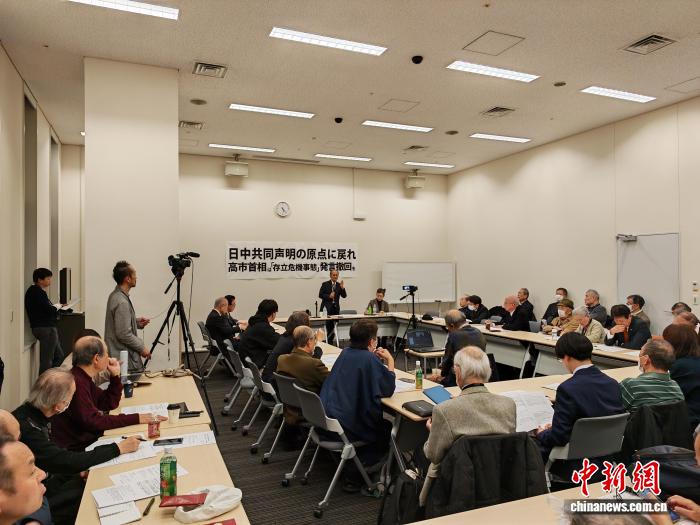
日本多方人士举行集会要求高市早苗撤回涉台错误言论
Zhong Guo Xin Wen Wang· 2025-12-03 07:39
Group 1 - A gathering of political, academic, and civic leaders in Japan demanded Prime Minister Kishi Nobuo retract his erroneous statements regarding Taiwan to prevent further damage to Japan-China relations [1][3] - Former Ministry of Foreign Affairs official Sunzaki Takashi emphasized that the Taiwan issue is purely an internal matter for China and criticized Kishi's linkage of Taiwan to Japan's "survival crisis" as absurd [1][3] - Lawmaker Hiraoka Hideo stated that Kishi's statements, made to please his support base, are unacceptable and could lead to significant economic losses for Japan [3][4] Group 2 - Senator Ibo Yoichi expressed concerns over Japan's increasing military presence in the southwestern islands and the rising defense budget, which he believes could escalate regional tensions [3][4] - Senator Takara Saya suggested that Kishi's provocative remarks are intended to create an atmosphere for further military expansion and revision of Japan's security policies [3][4] - Professor Haba Kumiko highlighted Japan's historical colonial rule over Taiwan, urging the government to exercise caution in its statements regarding the Taiwan issue [4]
视频丨台外事部门就日在台培养媚日人士表态 国台办:暴露民进党当局“媚日卖台”丑陋嘴脸
Yang Shi Xin Wen Ke Hu Duan· 2025-12-03 07:37
Group 1 - Japan has invested over 13 billion yen in Taiwan to cultivate pro-Japan individuals, according to reports [1] - Taiwan's foreign affairs department head Lin Jialong stated that Japan and Taiwan share similar ideologies and common interests [1] - The spokesperson for the Taiwan Affairs Office, Zhang Han, criticized the Democratic Progressive Party (DPP) for its "pro-Japan and anti-Taiwan" stance, labeling it as disgraceful [3] Group 2 - Zhang Han emphasized that Taiwan issues are purely China's internal affairs and should not be interfered with by external forces [3] - He warned the DPP that their attempts to align with external powers for independence would lead to a dead end [3] - Zhang reiterated that there is only one China and Taiwan is a part of it, asserting that China's unification is an inevitable historical trend [3]
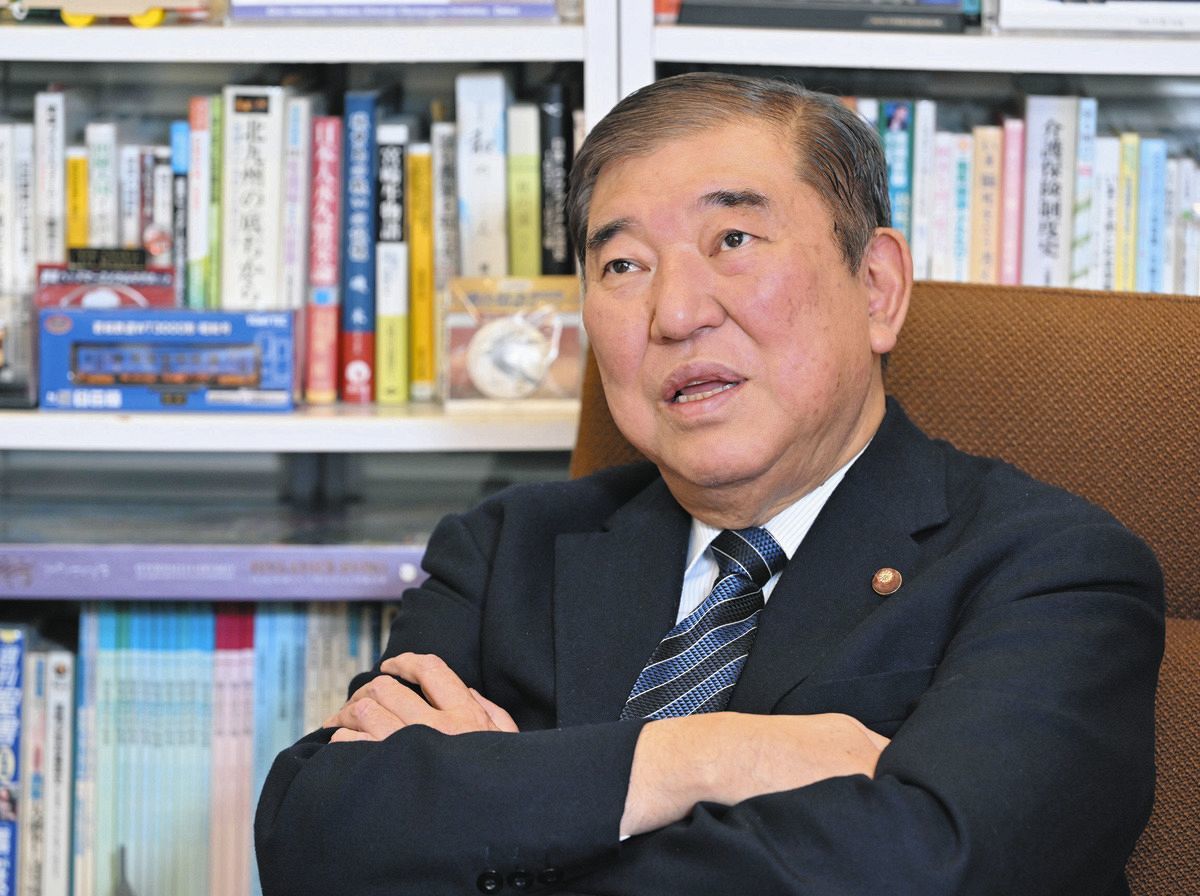
石破茂:还记得那时日本的结局吗?
Xin Jing Bao· 2025-12-03 06:12
Group 1 - The core viewpoint of the articles revolves around former Japanese Prime Minister Shigeru Ishiba's criticism of the current administration led by Sanae Takaichi regarding its remarks on Taiwan, emphasizing the importance of maintaining diplomatic relations with China [1][2] - Ishiba highlighted the historical context of Japan's diplomatic stance towards China, noting that since the normalization of relations in 1972, Japanese governments have consistently respected China's position on Taiwan [1] - He pointed out the economic dependence of Japan on imports from China, including food, rare earths, and pharmaceuticals, urging for smoother diplomatic relations between Japan and China [1] Group 2 - Ishiba's comments reflect a broader concern about the potential negative impact of Takaichi's statements on Japan-China relations, suggesting that such remarks could lead to diplomatic tensions [2] - He criticized the tendency of politicians to make impulsive statements on sensitive diplomatic issues, indicating that careful consideration is necessary in foreign policy discussions [2] - The articles raise questions about whether Takaichi understands the implications of her statements on Japan's foreign relations, particularly with China [2]
石破茂回应“背后放冷枪”指责:还记得那时大家都闭嘴时日本的结局吗?
Huan Qiu Wang· 2025-12-03 04:25
Core Viewpoint - Former Japanese Prime Minister Shigeru Ishiba criticized the cabinet of Sanae Takaichi, highlighting the importance of speaking out against government actions despite potential backlash from public opinion [1][3] Group 1: Criticism of Government - Ishiba's remarks were labeled as "backstabbing" by some in Japanese media, indicating a sensitive political climate where dissent is often met with criticism [1][3] - He referenced historical instances, such as the 1940 speech by former Congressman Takao Saito opposing the invasion of China, to illustrate the consequences of silence in the face of government decisions [3] Group 2: Japan-China Relations - Ishiba has previously criticized Takaichi's comments regarding Taiwan, arguing that deteriorating Japan-China relations could have severe implications for Japan's national interests [3] - He emphasized the necessity of maintaining a relationship with China, stating that Japan's existence is intertwined with its relationship with China since the normalization of diplomatic ties in 1972 [3]
外交部:任何外部势力胆敢介入台海事务,我们必将迎头痛击!
Zheng Quan Shi Bao· 2025-12-02 11:16
Core Viewpoint - China firmly opposes Japan's challenge to the post-war international order and the revival of militarism, emphasizing the need for Japan to reflect on its actions and adhere to its commitments as a defeated nation in World War II [2][3]. Group 1: Japan's Actions and Statements - Japan's Permanent Representative to the UN made unreasonable claims in a letter to the UN Secretary-General, which China views as a blatant challenge to the outcomes of World War II and the post-war international order [2]. - The Japanese Prime Minister's comments regarding Taiwan are seen as a violation of the UN Charter and an implicit threat of military action against China, contradicting Japan's stated defense policies [2][3]. - Japan's defense spending has increased for thirteen consecutive years, and it has been loosening restrictions on military exports, which China interprets as a move to undermine international agreements established after World War II [2]. Group 2: China's Response - China has reiterated its position to the UN Secretary-General, urging Japan to reflect on its past and fulfill its obligations as a defeated nation, especially in light of the 80th anniversary of the victory in the Anti-Japanese War [3]. - Any external interference in Taiwan affairs will be met with strong resistance from China, which asserts that Taiwan is an integral part of its territory [4]. - China encourages Japanese organizations to play a positive role domestically and hopes for a retraction of the Prime Minister's erroneous statements to foster better bilateral relations [5].
中方再次致函联合国
中国能源报· 2025-12-02 02:13
Core Viewpoint - The article emphasizes China's strong opposition to Japan's provocative statements regarding Taiwan, asserting that such remarks challenge international order and violate the principles of the UN Charter [1][3]. Group 1: China's Position - China firmly criticizes Japanese Prime Minister Kishi Nobuo's remarks suggesting that Taiwan's situation could pose an existential threat to Japan, viewing this as a direct challenge to the outcomes of World War II and the post-war international order [1][2]. - The letter from China's UN representative highlights that Japan's claims of a consistent stance on Taiwan are vague and unsubstantiated, questioning Japan's commitment to its historical agreements regarding Taiwan [2][3]. Group 2: Japan's Defense Strategy - Japan's assertion of a passive defense strategy is contradicted by its linkage of Taiwan's situation to Japan's national security, which implies a potential military response against China, thus exceeding the bounds of its stated defense policy [2][4]. - The article points out that Japan has significantly increased its defense budget for thirteen consecutive years and is modifying its post-war policies to allow for arms exports and potential nuclear capabilities, indicating a shift away from its historical defense posture [4]. Group 3: International Relations and Trust - The article argues that the provocative statements from Japan have severely damaged mutual trust and the political foundation of Sino-Japanese relations, urging Japan to adhere to the One China principle and rectify its statements to foster stable relations [5]. - It warns that Japan's militarization and historical revisionism pose a threat to regional peace, calling for vigilance from the international community regarding Japan's military ambitions [4][5].
日本在野党高层人士批评高市早苗涉台错误言论
Xin Hua She· 2025-12-01 15:57
Core Viewpoint - Japanese opposition parties have criticized Prime Minister Sanae Takaichi's recent remarks regarding Taiwan, urging her to retract her statements to avoid further damaging Japan-China relations [1] Group 1: Criticism from Opposition Parties - The head of the Constitutional Democratic Party's Policy Research Council, Tomoharu Honjo, stated that Takaichi's responses in the Diet reflect a lack of understanding of the "crisis situation" [1] - Honjo emphasized that Takaichi's comments deviate significantly from Japan's historical stance on Taiwan since the normalization of diplomatic relations with China in 1972 [1] - Japanese Communist Party Policy Committee Chairman Taku Yamazoe pointed out that Takaichi's statements could lead to serious consequences for Japan and violate the Japanese Constitution [1] Group 2: Calls for Retraction - Yamazoe highlighted that Takaichi's remarks contradict the 1972 Japan-China Joint Statement, which acknowledges Taiwan as part of China, and the 2008 political consensus of "mutual non-threat" [1] - He insisted that Takaichi must retract her statements to resolve the current diplomatic predicament [1] - Daishi Akiko, co-representative of the Reiwa Shinsengumi, criticized Takaichi's comments as "baseless" and urged the Japanese public to remain calm and not be incited [1]