
中国统一

Search documents
“纳土归宋”照见中国统一智慧
Xin Lang Cai Jing· 2026-01-24 13:23
Core Viewpoint - The historical drama "Tai Ping Nian" reflects the significant historical choice of "Na Tu Gui Song" made by Qian Chu, the last ruler of the Wu-Yue Kingdom, during a turbulent period in Chinese history, emphasizing the importance of peaceful unification in a time of chaos [1][2][3]. Historical Context - After the Tang Dynasty, China entered a period of instability known as the Five Dynasties and Ten Kingdoms, characterized by frequent regime changes and wars, leading to societal and civilizational disruptions [2]. - The Wu-Yue Kingdom, under Qian Liu, established a relatively stable regime in the south, maintaining ties with the central authority and ensuring the welfare of its people [2]. Key Historical Decision - The decision of "Na Tu Gui Song" occurred when the Northern Song had unified the north, and Qian Chu chose to peacefully integrate his territory into the Song Dynasty, thus avoiding potential warfare and preserving the socio-economic and cultural fabric of the region [2][3]. Cultural Significance of "Tai Ping" - The term "Tai Ping" embodies a deep cultural aspiration for stability and order, representing a collective desire for a return to normalcy amidst chaos, which was severely disrupted during the Five Dynasties and Ten Kingdoms period [5][6]. - The Wu-Yue Kingdom's commitment to peace and stability positioned it uniquely among other regional powers, highlighting a rational and long-term approach to governance [5][9]. Modern Relevance - The historical choice of "Na Tu Gui Song" serves as a contemporary lesson on the value of peace and rational decision-making in resolving conflicts, emphasizing that unity can be achieved without violence [8][9][11]. - In today's context, the experience of the Wu-Yue Kingdom offers insights into addressing modern challenges through cooperation and dialogue rather than division and confrontation [9][11].

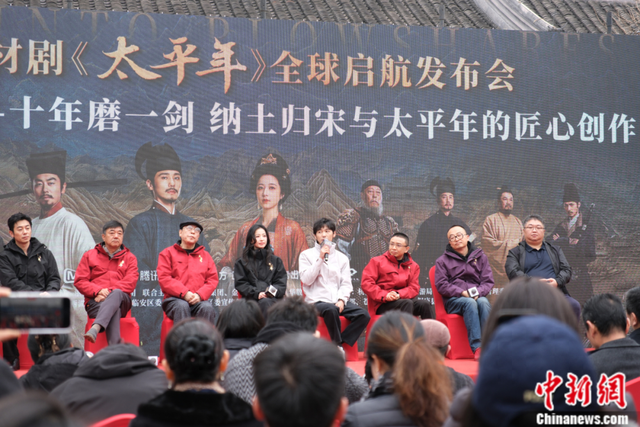
泰国华社强烈反对美国对台军售
Xin Lang Cai Jing· 2026-01-14 11:24
Core Viewpoint - The recent approval of large-scale arms sales by the United States to Taiwan has sparked strong outrage among overseas Chinese communities, particularly in Thailand, who express firm opposition to external interference and support for China's complete reunification [1][3][9]. Group 1: Reactions from Thai Chinese Organizations - The President of the Thai Chinese Chamber of Commerce, Lin Chuqin, emphasized that the U.S. arms sales provoke hostility in Taiwan against the mainland and aim to create a crisis in the Taiwan Strait for profit [3]. - Wang Zhimin, President of the Thai China Peaceful Reunification Promotion Association, stated that U.S. arms sales severely disrupt peace and stability in the Taiwan Strait and send a dangerous signal to pro-independence forces in Taiwan [7]. - Xu Huishen, President of the Thai Chaozhou Association, condemned the U.S. arms sales as a blatant interference in China's internal affairs and a significant threat to peace in the Taiwan Strait, reaffirming support for China's reunification efforts [9]. Group 2: Historical and Cultural Context - Lin Chuqin highlighted that Taiwan has historically been an inseparable part of China, and the issue of Taiwan does not require external intervention [3]. - The sentiment of shared ancestry among Chinese people was emphasized, with a call for unity to achieve the great rejuvenation of the Chinese nation, reflecting a deep-rooted cultural connection [3].
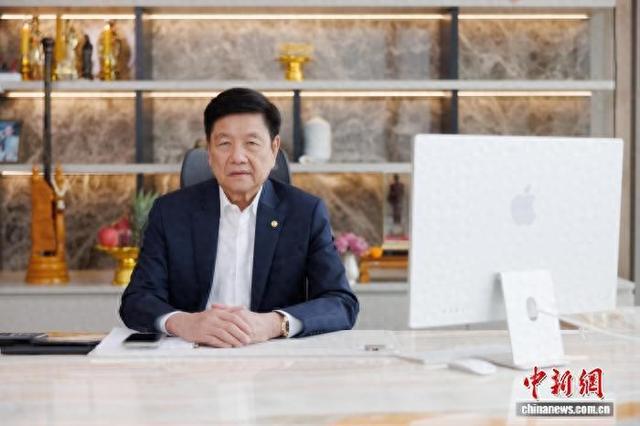
外交部再次回应美对台军售:无论向台湾卖多少先进武器,都阻挡不了中国终将统一、也必将统一的历史大势
Xin Hua She· 2025-12-19 12:51
Core Viewpoint - The Chinese government firmly opposes the recent large-scale arms sales to Taiwan by the United States, asserting that such actions will not prevent China's eventual reunification with Taiwan, which is seen as an inevitable historical trend [1][2] Group 1: China's Response to U.S. Arms Sales - The Chinese Foreign Ministry spokesperson, Guo Jia-kun, stated that the U.S. arms sales to Taiwan constitute a serious interference in China's internal affairs and significantly undermine China's sovereignty, security, and territorial integrity [1] - Guo emphasized that any attempt to arm Taiwan will face severe consequences, and that the real threat to peace and stability in the Taiwan Strait comes from Taiwan's "independence" activities and external interference [1][2] Group 2: Call for U.S. Compliance - China urges the U.S. to adhere to the One China principle and the three joint communiqués between China and the U.S., and to cease its dangerous actions of arming Taiwan [2] - The Chinese government expresses its strong determination and capability to defend national sovereignty and territorial integrity, indicating that it will take all necessary measures to maintain these principles [2]
就美对台军售,外交部、国防部发声!
中国基金报· 2025-12-19 10:05
Group 1 - The Chinese government strongly opposes the recent large-scale arms sales from the U.S. to Taiwan, stating that it severely undermines China's sovereignty and territorial integrity, and disrupts peace and stability in the Taiwan Strait [2][3] - The Chinese Foreign Ministry emphasized that no matter how many advanced weapons are sold to Taiwan, it cannot prevent the historical trend of China's eventual reunification [2] - The Chinese Defense Ministry criticized the U.S. for violating the One China principle and damaging strategic mutual trust between China and the U.S., urging the U.S. to stop arms sales to Taiwan immediately [3] Group 2 - The arms sales package approved by the U.S. amounts to over $11.1 billion, marking one of the largest military sales to Taiwan [3] - The Chinese government warns that any actions supporting "Taiwan independence" will face severe consequences, and that the Chinese military will continue to strengthen its preparedness to defend national sovereignty [3]
就美对台军售,外交部、国防部发声!
Ren Min Ri Bao· 2025-12-19 09:13
Core Viewpoint - The Chinese government strongly opposes the recent large-scale arms sales from the United States to Taiwan, asserting that such actions severely undermine China's sovereignty and territorial integrity, and threaten peace and stability in the Taiwan Strait [1][2]. Group 1: Government Response - The Chinese Ministry of Foreign Affairs expressed strong dissatisfaction and firm opposition to the U.S. arms sales, stating that it constitutes a gross interference in China's internal affairs [1]. - The spokesperson emphasized that any actions to arm Taiwan will face serious consequences, and that the core interests of China, particularly regarding Taiwan, are non-negotiable [1]. - The Chinese government reiterated its determination to achieve national reunification, asserting that no amount of advanced weapon sales to Taiwan can alter the historical trend towards unification [1]. Group 2: Defense Ministry Commentary - The Chinese Ministry of National Defense criticized the U.S. arms sales, labeling them as a serious violation of the One China principle and damaging to China’s sovereignty and security interests [2]. - The spokesperson highlighted that the arms sales send a dangerous signal to pro-independence forces in Taiwan and undermine strategic trust between China and the U.S. [2]. - The Chinese government warned that the pro-independence forces in Taiwan are risking the safety and well-being of Taiwanese citizens by pursuing independence through military means, which will ultimately lead to their own downfall [2].

视频丨台外事部门就日在台培养媚日人士表态 国台办:暴露民进党当局“媚日卖台”丑陋嘴脸
Yang Shi Xin Wen Ke Hu Duan· 2025-12-03 07:37
Group 1 - Japan has invested over 13 billion yen in Taiwan to cultivate pro-Japan individuals, according to reports [1] - Taiwan's foreign affairs department head Lin Jialong stated that Japan and Taiwan share similar ideologies and common interests [1] - The spokesperson for the Taiwan Affairs Office, Zhang Han, criticized the Democratic Progressive Party (DPP) for its "pro-Japan and anti-Taiwan" stance, labeling it as disgraceful [3] Group 2 - Zhang Han emphasized that Taiwan issues are purely China's internal affairs and should not be interfered with by external forces [3] - He warned the DPP that their attempts to align with external powers for independence would lead to a dead end [3] - Zhang reiterated that there is only one China and Taiwan is a part of it, asserting that China's unification is an inevitable historical trend [3]
国台办:台湾的前途只能由包括台湾同胞在内的14亿多中国人共同决定
Xin Hua She· 2025-12-03 03:33
Core Viewpoint - The spokesperson for the Taiwan Affairs Office, Zhang Han, emphasized that Taiwan is an inseparable part of China, and its status is clear and well-established. The future of Taiwan can only be determined by the 1.4 billion Chinese people, including those in Taiwan [1] Group 1 - Zhang Han responded to recent statements by Lai Ching-te, asserting that Taiwan does not belong to China and that its future is determined by the 23 million people living there [1] - The spokesperson highlighted that advocating for "Taiwan independence" leads to war and is a dead end, stressing the strong determination and capability of the Chinese people to defend national sovereignty and territorial integrity [1] - The historical trend towards unification of China is described as unstoppable [1]
新华时评丨错判时与势,注定撞南墙
Xin Hua She· 2025-11-16 13:19
Group 1 - The article discusses the provocative remarks made by Japan's Prime Minister, Kishi Suga, regarding Taiwan, suggesting potential military intervention, which reflects the extreme stance of Japan's right-wing forces [1][2] - It emphasizes that Japan should learn from its historical mistakes, particularly in the context of the 80th anniversary of the victory in the Anti-Japanese War and the liberation of Taiwan, and should pursue a path of peaceful development [2][3] - The article asserts that China has the strong will and capability to defend its sovereignty and territorial integrity, dismissing any attempts by Japan to revive militaristic ambitions as futile [2][3] Group 2 - The article highlights recent developments in China's military capabilities, including the commissioning of the third aircraft carrier, Fujian, and the successful return of the Shenzhou 20 astronaut crew, showcasing China's economic and technological strength [2][3] - It reiterates that Taiwan is an inseparable part of China and that the unification of Taiwan with the mainland is an unstoppable historical trend [3]
纪录片《国土重光—纪念台湾光复80周年》播出
Ren Min Ri Bao Hai Wai Ban· 2025-11-04 01:08
Core Viewpoint - The documentary series "National Territory Restoration - Commemorating the 80th Anniversary of Taiwan's Liberation" highlights the historical connection between the two sides of the Taiwan Strait and emphasizes the inevitability of China's reunification, countering foreign aggression and colonial history [1] Group 1 - The documentary consists of six episodes: "The Pain of 1895," "Defending Taiwan to the Death," "Unyielding Resistance," "Brothers Across Mountains and Seas," "Dawn of Hope," and "Return to the Motherland" [1] - It employs rigorous historical research and interpretations from experts and witnesses to reveal the harsh exploitation and oppression during Japan's 50-year occupation of Taiwan [1] - The production team conducted interviews and filming across more than ten provinces and Taiwan, gathering valuable historical artifacts and documents from various archives, many of which are being disclosed for the first time [1]
全球秩序的底层逻辑|分裂与统一
Yang Shi Wang· 2025-10-30 07:40
Core Viewpoint - The article emphasizes the historical and legal basis for China's sovereignty over Taiwan, citing various international legal documents that confirm this claim [1]. Summary by Relevant Sections - Historical Context: The article references the surrender ceremony in Taiwan on October 25, 1945, marking the return of Taiwan and the Penghu Islands to Chinese sovereignty [1]. - Legal Framework: It mentions key international documents such as the Cairo Declaration, the Potsdam Proclamation, and the Japanese Instrument of Surrender, which collectively affirm China's claim over Taiwan [1]. - National Unity: The article asserts that despite internal and external challenges, the bond between people on both sides of the Taiwan Strait remains strong, and it concludes that China will ultimately achieve reunification [1].