增材制造

Search documents
“十五五”新材料产业发展规划
材料汇· 2025-08-08 13:50
Core Viewpoint - The new materials industry is crucial for supporting modern industrial systems and fostering new productive forces, with significant strategic importance for China's high-level technological self-reliance and manufacturing strength [2]. Group 1: Industry Background and Development Situation - During the 14th Five-Year Plan, China's new materials industry saw continuous growth, with total output value exceeding 8.2 trillion yuan and an average annual growth rate of over 12% [4]. - Achievements include breakthroughs in ultra-high-strength steel, high-performance carbon fiber, semiconductor silicon wafers, and key materials for lithium-ion batteries [4]. - Challenges remain in high-end materials, core process equipment autonomy, and the need for improved standards and evaluation systems [4]. Group 2: Overall Requirements - The guiding ideology emphasizes innovation-driven development, demand orientation, green low-carbon practices, and open collaboration [7]. - Key principles include self-reliance through innovation, application-driven demand, enterprise-led collaboration, and a focus on green and efficient practices [9]. Group 3: Development Goals (by 2030) - Strategic material security capabilities should exceed 80%, with a focus on achieving global leadership in original achievements in frontier new materials [11]. - The goal is to cultivate internationally competitive new materials enterprises and establish over 20 distinctive, complete, and internationally leading new materials industry clusters [11]. - Significant reductions in energy consumption and emissions during material production processes are targeted, alongside a substantial increase in the proportion of green low-carbon materials [11]. Group 4: Key Development Directions - Advanced basic materials include ultra-high-strength automotive steel, high-performance aluminum alloys, and advanced chemical materials [13]. - Key strategic materials focus on high-temperature alloys, integrated circuit materials, and new energy materials [14][15][16]. - Frontier new materials include low-dimensional and smart materials, quantum information materials, and bio-based sustainable materials [17][18]. Group 5: Key Tasks and Major Projects - Focus on urgent new materials needed in key application areas, such as aerospace, new energy vehicles, and electronic information [21]. - Specific targets include high-performance carbon fiber for aircraft and high-energy density battery materials for electric vehicles [22][26][28]. Group 6: Collaborative Innovation System - Establish a collaborative innovation system centered on enterprises, integrating industry, academia, and research [45]. - Encourage leading enterprises to form innovation alliances with universities and research institutions to tackle key technologies [46]. Group 7: Market Cultivation for Key New Materials - Implement insurance compensation mechanisms for the first application of key new materials to reduce user risks [50]. - Establish a project library for demonstration projects, providing financial support and policy incentives to promote new materials [50]. Group 8: Breakthroughs in Key Processes and Equipment - Focus on overcoming bottlenecks in key processes and specialized equipment for new materials production [55]. - Develop advanced manufacturing technologies, such as 3D printing and automated composite material forming processes [56]. Group 9: Standard System Improvement - Accelerate the establishment of a comprehensive standard system covering the entire new materials industry chain [60]. - Develop and revise over 500 key new materials standards to ensure product quality and market order [61].


商道创投网·会员动态|美光速造·完成近亿元战略融资
Sou Hu Cai Jing· 2025-08-01 16:30
Core Insights - Jiangsu Meiguang Suzao Technology Co., Ltd. has completed nearly 100 million yuan strategic financing exclusively funded by Huaden International [2] - The company specializes in metal SLM (Selective Laser Melting) equipment and has developed a closed-loop system integrating "equipment + materials + AI algorithms + industrial software" [3] - The CEO stated that the funds will be used for R&D of next-generation multi-laser large-format equipment, expansion of intelligent manufacturing bases in East and South China, and localization of service networks in Europe, America, and India [4] Company Overview - Meiguang Suzao was founded by a team of PhD graduates from Nanyang Technological University and Huazhong University of Science and Technology, focusing on SLM technology [3] - The company has over 1,500 operating devices globally and has printed more than 200 million parts, serving clients in over 50 countries [3] Investment Rationale - Huaden International's managing director highlighted the company's interdisciplinary team and its ability to commercialize SLM technology, noting that its equipment shipment volume ranks among the top globally [5] - The company is experiencing rapid order growth and gross margin improvements, indicating its potential to define the next generation of additive manufacturing standards [5] Industry Context - The Ministry of Industry and Information Technology's "Additive Manufacturing Industry Development Action Plan" and various local "Intelligent Manufacturing Policies" provide dual benefits of orders and subsidies for the industry [6] - The investment reflects a patient capital approach, emphasizing early, small, and hard technology investments [6] - The company's commitment to tackling the challenges of "multi-laser stability" and its global expansion strategy have garnered industry recognition [6]
全球3D打印领先企业TOP15出炉,中国这4家公司上榜!
Sou Hu Cai Jing· 2025-07-31 08:11
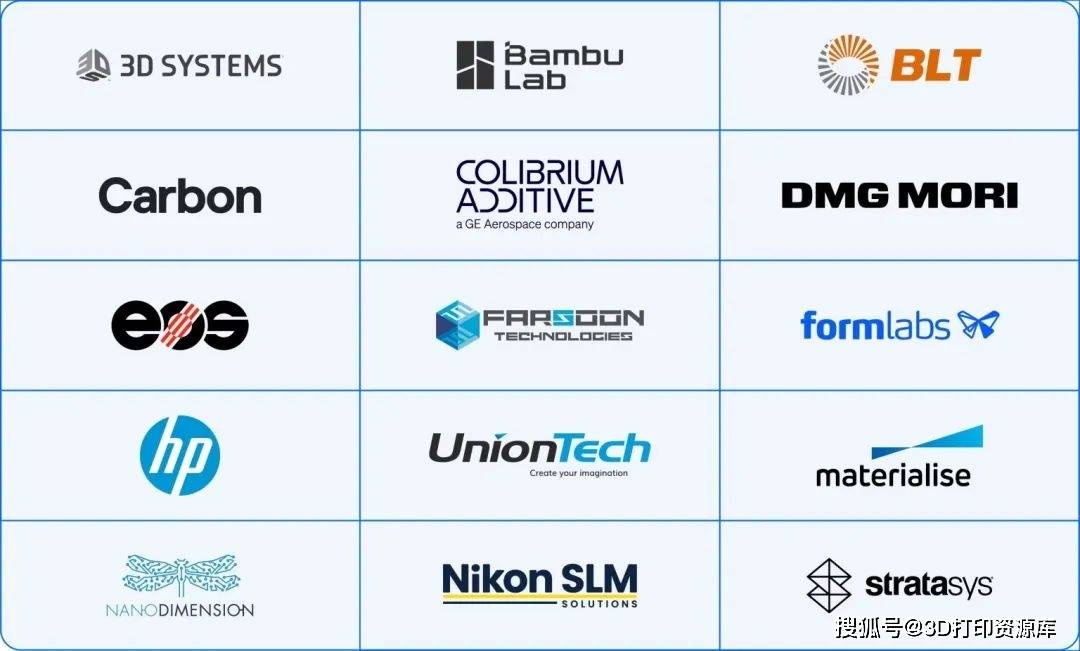
Core Insights - The global 3D printing market is projected to reach $12.3 billion in total revenue in 2024, with hardware revenue at $5.5 billion, services at $4.3 billion, and materials at $2.4 billion. By 2034, the market size is expected to exceed $108 billion, with a compound annual growth rate (CAGR) of 24.4% [1][2] Group 1: Market Overview - The report by VoxelMatters highlights the increasing integration of 3D printing technology across various manufacturing scenarios, indicating a robust growth trajectory for the industry [1] - The report identifies 15 leading companies globally that are driving the development of the 3D printing sector through their technology, strategy, and business models [2][3] Group 2: Company Highlights - 3D Systems, a pioneer in industrial 3D printing, reported a revenue decline to $440 million in 2024 but remains the second-largest player in the additive manufacturing industry [4] -拓竹科技 (Bambu Lab) gained rapid popularity in the desktop FFF market with its X1 printer, raising over $7 million on Kickstarter within a month of launch [7][9] - 铂力特 (Platinum Technology) is the largest metal additive manufacturing equipment manufacturer in China, achieving a revenue of 1.326 billion yuan in 2024, a 15.02% increase year-on-year [10][12] - Carbon, known for its DLS technology, has established a strong presence in the high-speed DLP system market, focusing on enhancing product performance and scalability [13][15] - Colibrium Additive, formerly GE Additive, provides various metal 3D printing technologies and has integrated its capabilities into GE's aerospace manufacturing [16][18] - DMG MORI is advancing the integration of directed energy deposition (DED) and CNC subtractive processing, positioning itself as a major supplier in the industrial metal AM systems market [19][22] - EOS is recognized as a global benchmark for laser powder bed fusion technology, with over 5,000 installations worldwide [23] - 华曙高科 (Horizon) has established a strong foothold in large-format metal printing, deploying over 150 "meter-level" metal printing devices by mid-2025 [24][26] - Formlabs, a leader in desktop SLA printing, has sold over 130,000 units and is expanding its product line to include SLS technology [27][29] - 惠普 (HP) is focused on scaling its Multi Jet Fusion (MJF) technology for high-throughput polymer manufacturing, with recent product iterations enhancing efficiency [30][32] - 联泰科技 (UnionTech) has become a significant player in the on-demand manufacturing sector, offering a complete ecosystem of hardware, software, and materials [33][35] - Materialise specializes in additive manufacturing software and services, reporting total revenue of €266.8 million in 2024 [36][38] - Nano Dimension is building a diverse platform for additive manufacturing technologies, focusing on high-value applications in aerospace, medical, and defense sectors [39][41] - Stratasys, a core player in polymer 3D printing, reported a revenue of $572.5 million in 2024, experiencing an 8.8% decline due to market adjustments [45][47] Group 3: Market Segmentation - Polymer additive manufacturing remains the market leader, with 2024 revenue projected at $7.4 billion, expected to grow to $46 billion by 2034, at a CAGR of 20.1% [50] - Metal additive manufacturing is anticipated to reach $4.7 billion in revenue in 2024, with projections nearing $60 billion by 2034, reflecting a CAGR of 29% [50] - Ceramic additive manufacturing, while the smallest segment, is expected to grow the fastest, with 2024 revenue at $166 million and projections exceeding $2.5 billion by 2034, achieving a CAGR of 31.2% [50]
消费级设备系列报告之二:消费级3D打印出海爆火,重视核心标的机会
Shenwan Hongyuan Securities· 2025-07-22 12:26
Investment Rating - The report indicates a positive investment outlook for the consumer-grade 3D printing industry, highlighting significant growth potential driven by various demand factors and technological advancements [3][79]. Core Insights - The consumer-grade 3D printing market is expected to reach USD 7.1 billion by 2028, with a compound annual growth rate (CAGR) of 19.2% from 2022 to 2028 [3][83]. - Key demand drivers include the rise of the maker movement in Europe and the U.S., the DIY culture, and the increasing consumer interest in personalized products [3][39]. - The supply side is characterized by technological advancements, a diverse material spectrum, and the establishment of community ecosystems that enhance customer engagement [3][91]. Summary by Sections 1. Market Overview - The consumer-grade 3D printing market is primarily designed for individual users and small businesses, offering ease of use and lower costs compared to industrial-grade printers [3][10]. - The market is witnessing rapid growth, with significant contributions from the U.S. and European markets, driven by high consumer spending power and interest in technology [3][47]. 2. Demand Drivers - The report identifies four main demand drivers: 1. The "garage innovation" culture in the U.S. and Europe, which promotes the adoption of desktop devices [3][39]. 2. The DIY trend among consumers, allowing for personalized product creation [3][40]. 3. The tool-like attributes of 3D printers for small businesses and educational institutions [3][59]. 4. The influence of trendy collectible products that enhance consumer interest [3][70]. 3. Supply Trends - The supply side is evolving with advancements in technology, including multi-functional devices and AI integration, which lower operational barriers for users [3][91]. - The materials used in 3D printing are becoming more diverse, allowing for a wider range of applications [3][106]. - Community ecosystems are being built to retain customer loyalty and encourage new entrants through crowdfunding opportunities [3][110]. 4. Key Players - Core companies identified in the report include: 1. Key components: Jieput, Ruike Laser, and Jinchengzi [3]. 2. 3D scanning accessories: Sikan Technology and Orbbec [3]. 3. Materials: Haizheng Materials, Huitong Technology, and Jialian Technology [3]. 4. Complete machines: Anker Innovation and others [3][28]. 5. Market Statistics - In 2024, China's 3D printer exports are projected to reach USD 1.147 billion, with a year-on-year growth of 31.09% [3][80]. - The report notes that over 90% of entry-level 3D printers globally are supplied by Chinese manufacturers, indicating a strong competitive position in the market [3][88].




铂力特: 西安铂力特增材技术股份有限公司关于完成工商变更登记并换发营业执照的公告
Zheng Quan Zhi Xing· 2025-07-21 16:17
Group 1 - The company has completed the registration of business changes and received a new business license [1][2] - The company held a board meeting on April 28, 2025, and an annual shareholders' meeting on June 9, 2025, to approve changes in business scope and governance structure [1] - The registered capital of the company is 271.768196 million RMB, and it was established on July 6, 2011 [1] Group 2 - The company's business scope includes additive manufacturing, equipment manufacturing and sales, 3D printing services, and various technical services [1] - The company is authorized to produce and operate third-class medical devices and provide inspection and testing services [2]

研发、制造、服务“一条龙” 这家企业玩转金属3D打印
He Nan Ri Bao· 2025-07-12 23:23
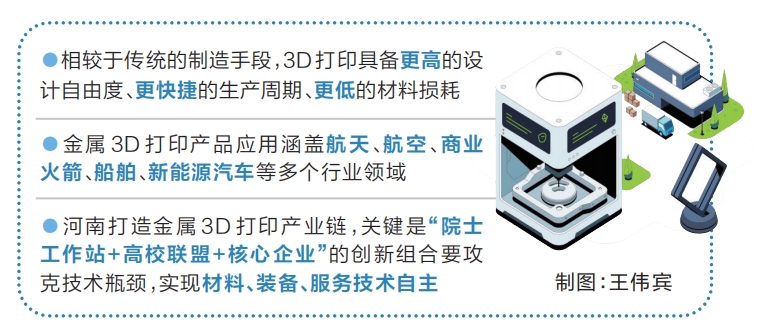
Core Insights - The article highlights the advancements and capabilities of Luoyang Yingchuang Aurora Precision Manufacturing Co., Ltd. in the field of metal 3D printing, emphasizing its ambition to become a leading provider of additive manufacturing solutions both domestically and internationally [2][3]. Company Overview - Luoyang Yingchuang Aurora focuses on the manufacturing of metal 3D printing equipment and provides 3D printing services for various industries, including aerospace, aviation, commercial rockets, shipping, and new energy vehicles [2]. - The company has developed a complete industrial chain from equipment production to process research and development, offering customized services that significantly reduce product development cycles and customer trial-and-error costs [3]. Technological Innovations - The company possesses advanced metal 3D printing technology and has achieved breakthroughs in smart powder spreading and permanent dust removal systems, holding two invention patents related to "powder bin drying" and "new scraper drive" [4]. - In 2023, the company initiated a project to upgrade laser technology and additive manufacturing processes, investing over 100 million yuan to establish a service center, which is expected to generate an annual output value exceeding 100 million yuan [6]. Industry Development - The article discusses the importance of creating a robust metal 3D printing industry chain in Henan province, emphasizing the need for collaboration between academic institutions, core enterprises, and innovation to overcome technical bottlenecks [6]. - The province aims to leverage its strengths in local industries such as healthcare and automotive to drive technological advancements and achieve a transition from traditional manufacturing to intelligent manufacturing [6][7].
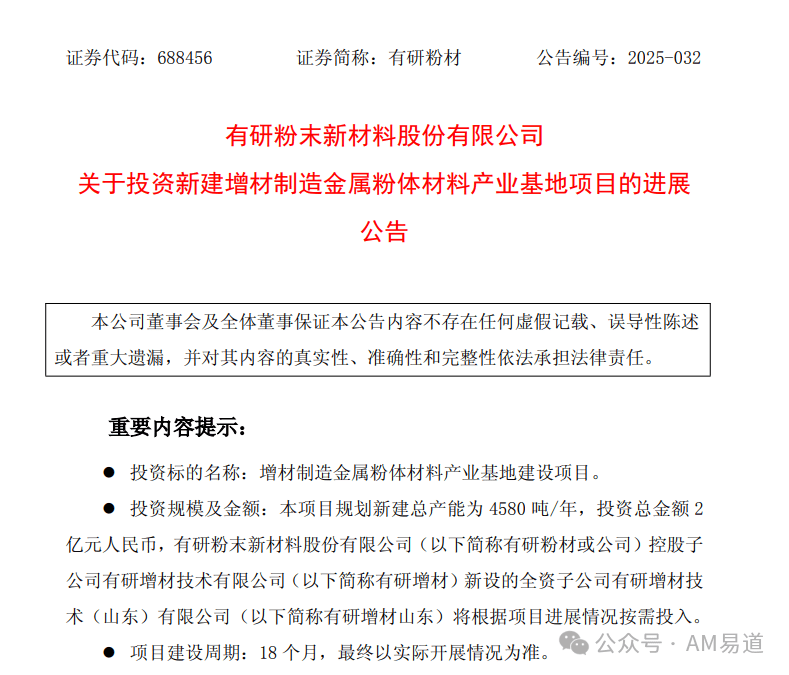
上市企业2亿元押注山东:3D打印金属粉材赛道迎4580吨新增年产能
Sou Hu Cai Jing· 2025-07-12 01:31
Core Viewpoint - The company plans to invest 200 million yuan to establish a metal powder material production base in Binzhou, Shandong, with an annual production capacity of 4,580 tons, addressing operational challenges and capitalizing on market demand growth in sectors like aerospace and new energy [3][6][8]. Group 1: Capacity Expansion - The project will have an 18-month construction period, covering 60 acres, with over 20,000 square meters of new production facilities and the addition of 200 new equipment units [4]. - The company aims to resolve operational issues such as insufficient production equipment and limited space, which have hindered capacity expansion and increased management costs [5]. Group 2: Market Demand - The investment is likely driven by anticipated growth in demand for metal 3D printing in various sectors, including aerospace, low-altitude economy, new energy, and high-end industrial molds [6][8]. - The project is expected to enhance production efficiency and capabilities through facility upgrades and automation, which will lower labor costs and safety risks [8]. Group 3: Business Synergy - The expansion will support the industrialization and scaling of the additive manufacturing and special powder materials segment, which previously lacked sufficient support for large-scale development [9]. Group 4: Shareholding Structure Adjustment - The investment will lead to a significant adjustment in the shareholding structure, increasing the company's stake in Youyan Additive from 60% to 80%, while the previous shareholder, Kangpu Xiwai, will exit completely [10][11]. Group 5: Technical Strength - Youyan Additive has a solid technical foundation, being one of the earliest entities in China to research and industrialize atomization powdering technology, and has received national awards for its achievements [12][14]. Group 6: Financial Data - Financial projections indicate that Youyan Additive expects revenue of 105 million yuan and a net profit of 10.16 million yuan for 2024, with a net profit margin of approximately 9.7% [15][17]. Group 7: Regional Business Logic - The choice of Binzhou for the project is strategic, as Shandong is a manufacturing powerhouse with a well-established supply chain for metal materials, offering advantages in raw material supply and cost efficiency compared to Beijing [18].

倒计时7天!2025(第四届)高分子3D打印材料高峰论坛(7.18-20︱杭州)
DT新材料· 2025-07-10 14:15
Core Viewpoint - The 2025 Polymer 3D Printing Materials Summit Forum aims to address the opportunities and challenges in additive manufacturing, focusing on high-end applications in aerospace, automotive, biomedical, and robotics sectors, while promoting collaboration and innovation in the industry [14]. Agenda Summary Day 1: Registration and Opening Ceremony - Registration will take place on July 18, 2025, from 14:00 to 20:00 [2]. - The opening ceremony and main forum will discuss the opportunities and challenges in additive manufacturing on July 19, 2025, from 08:50 to 12:00 [18]. Day 2: Specialized Sessions - The afternoon of July 19, 2025, will feature two specialized sessions: "Artificial Intelligence+" and 3D printing (Hall 1) and Ceramic 3D Printing (Hall 2) [4][6]. - Notable presentations include: - Continuous composite material 3D printing process optimization [5]. - Research on functionalized bio-ceramics for precise manufacturing [7]. Day 3: Biomedical and Industrial 3D Printing - On July 20, 2025, the forum will host sessions on Biomedical 3D Printing (Hall 1) and Industrial 3D Printing (Hall 2) [8][10]. - Key topics include: - Bioprinting techniques and applications in regenerative medicine [9]. - Innovations in high-performance polymer materials for aerospace applications [10]. Forum Background - Additive manufacturing technology, particularly 3D printing, is recognized for its design flexibility, material efficiency, and customization capabilities, making it crucial for advancements in various sectors [14]. - The forum aims to create a comprehensive platform for experts and industry leaders to share insights on the latest trends, innovations, and application needs in the additive manufacturing industry [14].

议程公布!7月18-20日 杭州丨第四届高分子3D打印材料高峰论坛
DT新材料· 2025-07-06 15:39
Core Viewpoint - The 2025 (Fourth) Polymer 3D Printing Materials Summit will focus on the integration of advanced manufacturing technologies, particularly in aerospace, automotive, drones, humanoid robots, and biomedical applications, addressing the core demands for integration, lightweight, high performance, and customization [2][3]. Group 1: Event Overview - The summit will take place from July 18-20, 2025, in Hangzhou, Zhejiang [5]. - It aims to create a comprehensive communication platform that integrates material science, cutting-edge technology, and advanced equipment, gathering experts and industry elites to share and discuss the latest trends, innovations, and application needs in the additive manufacturing industry [2][3]. Group 2: Key Themes and Challenges - Additive manufacturing technology (3D printing) is recognized for its high design freedom, excellent material utilization, and strong customization capabilities, becoming a crucial technology driving developments in various fields [1]. - Despite its potential, the industry faces significant challenges in areas such as multi-variety, large-scale production, low-cost, large-size, high precision, and ultra-high-speed 3D printing, as well as multi-material functional 3D printing [1]. Group 3: Agenda Highlights - The agenda includes sessions on opportunities and challenges in additive manufacturing, AI-driven innovations in 3D printing, and specialized tracks for biomedical and industrial applications [6][12]. - Notable presentations will cover topics such as sustainable high-performance light-curing 3D printing, bioprinting applications, and advancements in ceramic 3D printing technologies [7][10][11]. Group 4: Organizers and Support - The summit is organized by Ningbo DT New Materials Technology Co., Ltd., with support from various academic and research institutions [3][4]. - The event will feature contributions from leading experts in the field, ensuring a high level of discourse and knowledge sharing [3][4].

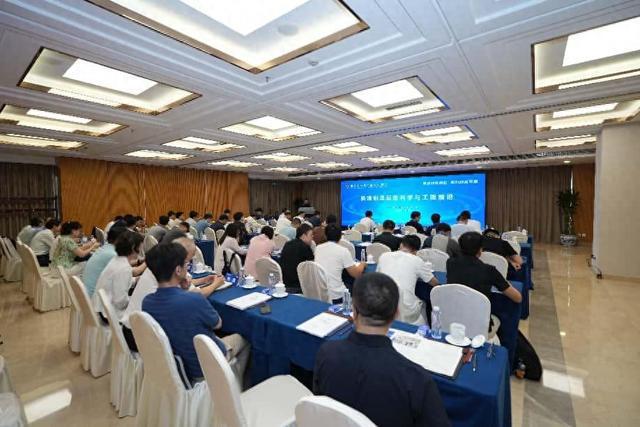
极端制造基础科学与工程前沿专题论坛在京举行
Huan Qiu Wang Zi Xun· 2025-07-06 04:50
Core Viewpoint - The forum on extreme manufacturing, hosted by the China Association for Science and Technology and organized by the China Mechanical Engineering Society, aimed to showcase breakthroughs in basic science and engineering applications in extreme manufacturing, addressing national strategic needs and fostering interdisciplinary academic exchanges [1][5]. Group 1: Forum Highlights - The forum featured six leading scholars who presented specialized reports on the forefront of extreme manufacturing [3]. - Key topics included the intersection of biological materials and manufacturing technology, high-performance metal component laser additive manufacturing, and the development of high-temperature resistant materials [3][5]. - Discussions also covered micro-nano manufacturing precision limits and the exploration of composite materials in space manufacturing [3][5]. Group 2: Academic Exchange and Innovation - The forum facilitated in-depth discussions on the boundaries and innovations in extreme manufacturing, showcasing the academic vitality in this field [5]. - Participants included doctoral students from the "China Association for Science and Technology Young Talent Program," who engaged with experts on topics such as the impact of microgravity on material properties [5]. - The event highlighted the full-chain innovation achievements from basic theory to engineering applications, emphasizing the integration of mechanical manufacturing with materials science, biology, optics, and aerospace [5].