
社会主义核心价值观

Search documents
培根铸魂担使命 思想引领育新人
Yang Shi Wang· 2025-12-17 11:06
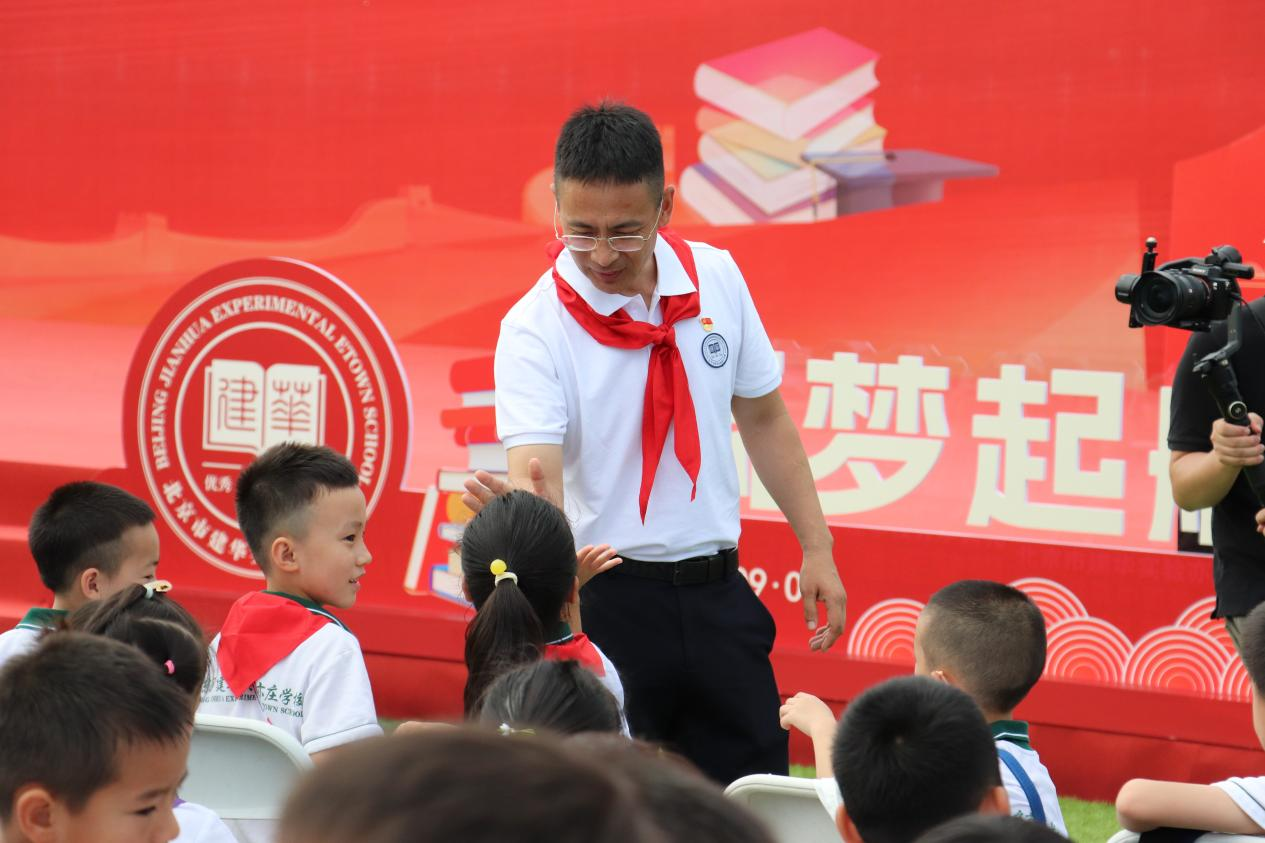
Group 1 - The core focus of the article is on the importance of moral and ideological education for minors, emphasizing the need for a strategic and foundational approach to cultivate socialist builders and successors through the integration of family, school, and society [1][2] - The "Yijian Siguang" brand represents the school's commitment to the new educational mission, highlighting the significance of ideological construction and the core values of education [2][3] - The school has implemented innovative practices in integrating ideological education with teaching, including organizational, systemic, curriculum, and ecological innovations to create a collaborative educational community [2][3] Group 2 - The school has achieved notable improvements in educational quality, with a continuously optimized curriculum and enhanced classroom teaching, leading to recognition through various awards and honors [3] - The school has focused on project-based and outcome-oriented development in its党建 work, resulting in significant research achievements that contribute to the integration of党建 and education [3][5] - The "Yijian Siguang" brand has expanded its influence beyond the school, sharing its practices regionally and becoming a model for党建-led educational reform, thus supporting high-quality educational development [5]

刘宁会见全国第十二届残运会暨第九届特奥会河南省代表团运动员教练员代表
He Nan Ri Bao· 2025-12-17 11:04
Group 1 - The core message emphasizes the importance of the achievements of the athletes and coaches from the Henan Province delegation at the 12th National Paralympic Games and the 9th Special Olympics, highlighting their spirit of perseverance and self-improvement [1] - The provincial government expresses gratitude towards the athletes and all individuals supporting the cause of disabled persons, recognizing their contributions to the pride of the province [1] Group 2 - The development of the disabled persons' cause is identified as a crucial part of the party and national agenda, with a focus on improving the service and guarantee system for disabled individuals as outlined in the 14th Five-Year Plan [2] - There is a call for local departments to prioritize the work related to disabled persons, enhancing public service quality and ensuring equal rights for disabled individuals to improve their quality of life [2] - Plans are set to advance the sports development for disabled persons during the 14th Five-Year period, including the establishment of talent discovery and training mechanisms, improvement of sports facilities, and integration of technology to support athletes [2] - Emphasis is placed on the need for dedicated support for disabled athletes and coaches in areas such as training, rehabilitation, and employment, to create better conditions for them to showcase their talents and achieve their dreams [2]
加强新时代思想政治工作 为凝心聚力建设新时代壮美广西注入强大精神力量(学习贯彻《中国共产党思想政治工作条例》)
Ren Min Ri Bao· 2025-12-17 00:33
Core Viewpoint - The article emphasizes the extreme importance of ideological and political work in the context of the new era, highlighting its role in unifying thoughts, building consensus, and promoting the construction of a beautiful Guangxi in line with the directives of the central government [1][2][3]. Group 1: Importance of Ideological and Political Work - Ideological and political work is crucial for the party's future, national stability, and the cohesion of the nation, and must be integrated into all aspects of the party's work [2]. - The party has historically prioritized ideological and political work, recognizing it as essential for unifying thoughts and achieving various historical tasks [3]. - The recent issuance of the "Regulations on Ideological and Political Work" marks a significant step towards the scientific, institutional, and standardized development of this work [4]. Group 2: Role in Guangxi's Development - The central government's support for Guangxi's development has fostered unity and motivation among its people, making ideological and political work essential for high-quality development [5]. - The ideological and political work should guide the actions of party members and officials to align with the central government's directives, ensuring collective effort towards achieving the envisioned goals for Guangxi [5]. Group 3: Enhancing Ideological and Political Work - The focus is on guiding, inspiring, and uniting people to provide a strong ideological and political guarantee for modernizing Guangxi [6]. - There is an emphasis on deepening the understanding and implementation of the spirit of the 20th National Congress, making it a major political task for party members [7]. - Efforts should be made to gather positive energy for unity and progress by integrating ideological work into various forms of communication and outreach [8]. Group 4: Strengthening Leadership and Coordination - The party's comprehensive leadership is fundamental to effective ideological and political work, necessitating clear responsibilities and innovative methods [11]. - A coordinated approach is required to integrate ideological work with political, organizational, and disciplinary construction, creating a new framework for ideological and political work [12]. - Embracing digital transformation and utilizing technology can enhance the effectiveness and relevance of ideological and political work in contemporary society [13].
【央视快评】坚持把未成年人思想道德建设作为战略性基础性工作来抓
Yang Shi Wang· 2025-12-16 05:53
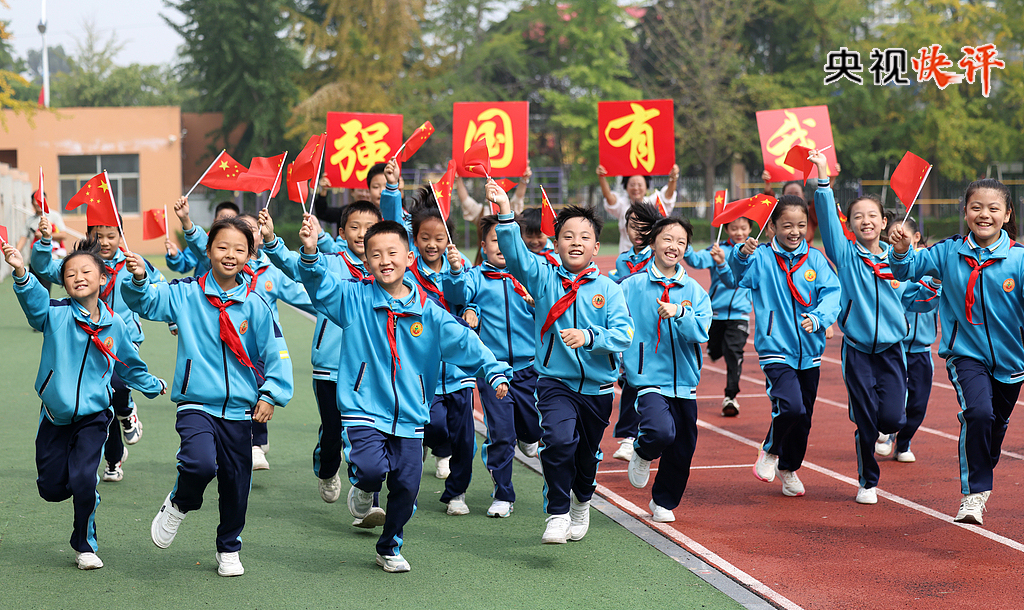
"新征程上,要落实立德树人根本任务,坚持把未成年人思想道德建设作为战略性、基础性工作来抓。"近日,习近平总书记对未成年人思想道德 建设作出重要指示。总书记站在党和国家事业发展薪火相传、后继有人的高度,深刻指出做好未成年人思想道德建设工作的重要性、紧迫性。总 书记的重要指示高屋建瓴、精辟深邃,进一步回答了培养什么人、怎样培养人、为谁培养人这一系列事关中国式现代化前途命运的重大问题,为 我们扎实做好未成年人思想道德建设工作提供了根本遵循。 少年强则国强。进入新时代,习近平总书记深刻洞察未成年人教育引导面临的新情况、新问题,将思想道德建设放在突出位置,作为关键抓手, 一语中的、纲举目张。只有牢牢抓住思想道德建设这个"牛鼻子",固本培元、凝心铸魂,教育引导广大未成年人在"拔节孕穗期"树立正确的世界 观、人生观、价值观,扣好"人生第一粒扣子",才能培养出一代又一代理想信念坚定、思想品德高尚、道德修养优良的社会主义建设者和接班 人。 做好未成年人思想道德建设是一项复杂的系统工程,必须坚持系统观念,扎扎实实、久久为功。既要落实学校育人主体责任,坚持德育为先,注 重"五育"融合,又要重视和加强家庭教育,发挥家庭教育的基础作用 ...
食客低头看手机摔骨折起诉餐厅,法院这样判
Zhong Guo Xin Wen Wang· 2025-12-16 05:23
食客低头看手机摔骨折起诉餐厅,法院这样判 中新网北京12月16日电(记者 高萌)食客低头看手机摔倒起诉餐厅,男子职场性骚扰被解雇后起诉公司, 隐婚男子骗女友恋爱分手后不归还大额转账……怎么判?12月16日,最高人民法院发布第四批人民法院 大力弘扬社会主义核心价值观典型民事案例。 食客低头看手机摔骨折起诉餐厅和物业 法院:应自行担责 案例五中,郭某在上海浦东某餐厅用完餐离开时,一直低头看手机,在餐厅外的台阶区域不慎踩空摔 倒,十天后诊断为腰椎右侧横突骨折。郭某认为,餐厅和物业没尽到安全保障义务,未及时修复磨损台 阶致其摔倒受伤,索赔6万余元。 审理法院认为,气象资料和监控视频都表明,事发时现场不存在其他足以影响步行安全的客观干扰因 素,台阶区域亦无明显异常。宾馆、商场等公共场所经营者、管理者的安全保障义务应在合理限度内。 郭某在摔倒前持续低头看手机,摔倒是其自身未尽安全注意义务所致,某餐饮公司和某商业管理公司对 此并无过错,不应承担赔偿责任。故判决:驳回郭某全部诉讼请求。 最高法表示,这一案例既向动辄将自身损害归责于无关他人的不当行为亮明态度,也明确了经营场所、 公共场所的经营者、管理者安全保障义务的边界;坚决 ...
用人单位发录用通知后,无故取消录用导致劳动者从原单位离职后失业的,应当承担赔偿责任!最高法发布典型案例
Mei Ri Jing Ji Xin Wen· 2025-12-16 04:30
Core Viewpoint - The Supreme People's Court of China has released typical civil cases that promote the core socialist values, covering aspects such as family ethics, workplace civility, romantic relationships, and public conduct [1] Group 1: Family Ethics - In the case of Liang vs. Jiang, a parent who renounces inheritance to avoid paying child support can have that renunciation declared invalid, emphasizing the legal obligation of parents to support their children [2][8][9] - The court ruled that the act of renouncing inheritance to evade child support is malicious and harms the interests of the child, reinforcing the principle that parental responsibilities do not cease upon divorce [10] Group 2: Workplace Civility - In the case of Zhang vs. a technology company, the court found that a company that cancels a job offer after the candidate has resigned from their previous job must compensate the candidate for their losses [3][11][12] - The ruling highlights the importance of good faith in employment contracts and the need for companies to honor their commitments to prospective employees [13] Group 3: Workplace Conduct - In the case of Wu vs. a food company, the court upheld the right of an employer to terminate an employee for sexual harassment, affirming that such behavior violates workplace regulations [4][14][15] - The decision underscores the importance of maintaining a respectful and safe work environment, aligning with socialist core values [16] Group 4: Romantic Relationships - In the case of Xiao vs. Zhou, the court ruled that a person who conceals their marital status to receive significant funds from a partner must return the money, as this constitutes deceit [5][17][18] - This case reinforces the principle of honesty in relationships and the legal consequences of misleading behavior [19] Group 5: Public Conduct - In the case of Guo vs. a restaurant and a management company, the court determined that a person who injures themselves while distracted by their phone cannot hold the establishment liable for their injuries [6][20][21] - The ruling clarifies the limits of liability for public space operators and emphasizes personal responsibility in maintaining safety [22]

最高法发布第四批人民法院大力弘扬社会主义核心价值观典型民事案例
Xin Hua She· 2025-12-16 03:54
新华社北京12月16日电(记者冯家顺)最高人民法院16日发布第四批人民法院大力弘扬社会主义核心价 值观典型民事案例。第四批共5件典型案例涉及家风文明、职场文明、婚恋文明、出行文明等方面。 养育未成年子女是父母的基本义务,是最基本的家庭伦理道德。"梁某宸诉蒋某婚姻家庭纠纷案"中,夫 妻离婚后,不与未成年子女共同生活一方放弃继承、逃避履行抚养义务。审理法院依法支持被抚养人关 于确认放弃继承无效的请求,引导父母自觉履行抚养教育未成年子女职责。 这批案例中有2件涉及职场文明。"张某诉某科技公司缔约过失责任纠纷案"中,用人单位向求职劳动者 发出录用通知书,劳动者辞去原工作后又被通知取消录用,导致劳动者失业。法院认为,用人单位应承 担缔约过失责任,赔偿劳动者损失2万元。"吴某诉广东某食品公司劳动争议案"中,劳动者在工作期间 存在多次性骚扰行为,严重违反用人单位规章制度。审理法院认定用人单位解除劳动合同并无不当,驳 回劳动者关于支付违法解除劳动合同赔偿金的诉讼请求,营造安全文明的职场环境。 借婚姻索取财物为法律所禁止,隐瞒已婚事实通过恋爱关系骗取钱财也为法律所否定。"肖某诉周某不 当得利纠纷案"中,周某隐瞒已婚事实与离异的 ...
父母为规避抚养费放弃继承被判无效 最高法发布典型案例
Yang Shi Wang· 2025-12-16 02:52
Core Viewpoint - The Supreme People's Court has released the fourth batch of typical civil cases to promote socialist core values, focusing on family ethics, workplace civility, marriage and love ethics, and safe travel [1][4]. Group 1: Family Ethics - Case one emphasizes that parents have a fundamental obligation to support their minor children, and actions taken to evade this responsibility, such as renouncing inheritance, are deemed invalid [7][8]. - The court's ruling reinforces the principle that parental duties do not cease upon divorce, promoting a societal atmosphere that cares for the healthy growth of minors [9]. Group 2: Workplace Civility - Case two highlights the importance of trust in employment relationships, where an employer's cancellation of a job offer after a candidate has resigned from their previous job leads to compensation for the candidate [10][11]. - The court's decision aims to encourage employers to uphold their commitments and protect workers' rights, fostering a positive employment environment [12][13]. - Case three addresses workplace sexual harassment, affirming that employers can legally terminate employees who engage in such behavior, thereby protecting the rights of female employees and promoting a safe work environment [14][15][16]. Group 3: Marriage and Love Ethics - Case four illustrates that concealing marital status to obtain money from a partner is legally prohibited, with the court ordering the return of funds to the deceived party [17][18][19]. - This ruling promotes honesty in relationships and aims to establish a correct view of marriage and love, contributing to family harmony and social stability [20]. Group 4: Safe Travel - Case five discusses the responsibility of individuals for their own safety while traveling, where a person who was distracted by their phone and subsequently injured cannot hold others liable for their injuries [21][22][23]. - The court's decision emphasizes the importance of personal accountability in ensuring safety during travel, advocating for a culture of responsible behavior in public spaces [23].
文明华彩映琼州 和谐家园满目新
Hai Nan Ri Bao· 2025-12-16 01:47
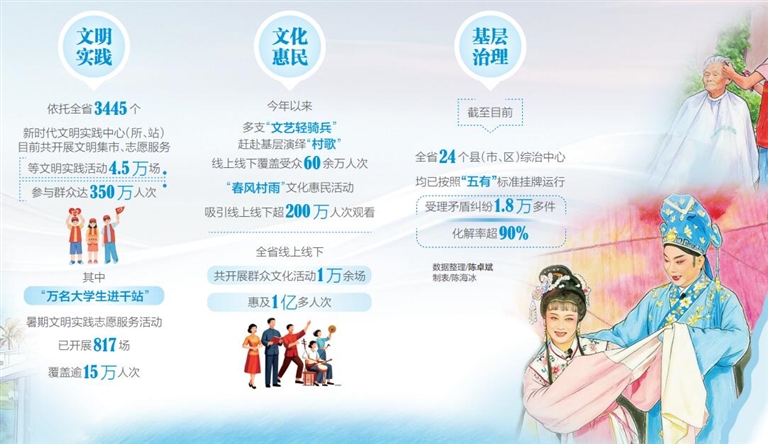
Core Viewpoint - Hainan is focusing on strengthening spiritual civilization, enriching cultural life for the masses, and deepening grassroots social governance, aiming to create a harmonious and stable society that enhances the sense of gain, happiness, and security for its residents [4]. Group 1: Spiritual Civilization and Cultural Life - The province is actively promoting the core socialist values and conducting mass spiritual civilization initiatives to enhance residents' cultural literacy and social civility [7]. - Various cultural activities, such as music festivals and community service, have attracted over 250,000 participants, showcasing the vibrant cultural scene in Hainan [4][8]. - The establishment of 3,445 new era civilization practice centers has facilitated 45,000 cultural events, engaging around 3.5 million people [8]. Group 2: Public Cultural Services - Hainan is enhancing public cultural services to improve the quality of life for its residents, with initiatives like the development of new cultural spaces and virtual exhibitions [10]. - The provincial government emphasizes the importance of public cultural services as a means to ensure cultural rights and improve living standards [10]. - Recent cultural events, such as the "Spring Village Evening" and various performances, have reached over 1 million participants, demonstrating the effectiveness of cultural outreach [12]. Group 3: Grassroots Social Governance - Hainan is advancing the establishment of comprehensive social governance centers to address community disputes efficiently, achieving a resolution rate of over 90% for more than 18,000 cases [14]. - The integration of data from 26 departments into a social management information platform enhances real-time monitoring and response capabilities for social governance [15]. - The provincial government is committed to maintaining safety and stability, focusing on crime prevention and risk management as critical components for the success of the Hainan Free Trade Port [16].
凝聚合力立德树人 持之以恒培根铸魂
Xin Hua She· 2025-12-16 00:00
Group 1 - The meeting on the ideological and moral construction of minors emphasized the importance of Xi Jinping's recent instructions, which serve as a guiding principle for future work [1][2] - Participants expressed a commitment to implement the fundamental task of fostering virtue and character in minors, viewing this as a strategic and foundational effort [1][2] - The establishment of over 1,200 practical teaching bases for ideological and political education in primary and secondary schools has integrated socialist core values into educational practices [2] Group 2 - The emphasis on a collaborative education mechanism involving schools, families, and society is highlighted as a strong directive for improving the ideological and moral education of minors [2][3] - The importance of family education in shaping the moral character and behavior of minors is underscored, with initiatives like "parenting classrooms" being promoted [2][3] - Efforts to protect minors online have seen significant progress, including the implementation of a "minor mode" and actions to combat online chaos [3][5] Group 3 - The need for social support and concern for the ideological and moral construction of minors is recognized as essential for effective implementation [4] - Various organizations are committed to enhancing their roles in protecting minors, with a focus on legal and psychological support systems [5]