跨境金融

Search documents
第十九届深圳国际金融博览会开幕
Zhong Guo Jing Ji Wang· 2025-11-20 01:29
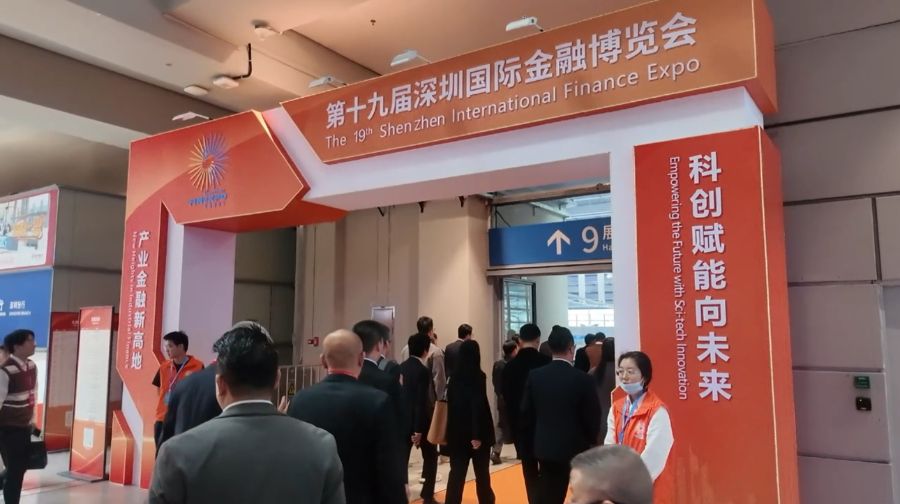
Group 1 - The 19th Shenzhen International Financial Expo opened with the theme "New Heights in Industrial Finance, Empowering the Future with Science and Technology," attracting 288 institutions from various countries and regions [1] - The expo serves as a significant platform for financial institutions to launch major products and services, showcasing Shenzhen's innovative practices in high-quality industrial finance development [1][2] - A key outcome of the expo is the release of the "Action Plan for Jointly Building the Hong Kong-Shenzhen Global Financial Technology Center (2025-2027)," which outlines a vision for collaboration between financial technology enterprises in both regions [1][2] Group 2 - The expo features nine thematic exhibition areas, including industrial finance, financial technology, and cross-border finance, creating a comprehensive ecosystem for financial products [2] - The establishment of a government-guided fund exhibition area highlights 29 star enterprises invested by the municipal guiding fund, along with a selection of "little giant" and innovative enterprises [2] - The 2025 Shenzhen International Financial Conference aims to create a high-end international dialogue platform for financial reform and regional cooperation, contributing to the development of the Greater Bay Area [3]
海南省委书记冯飞会见汇丰银行(中国)有限公司客人
Zheng Quan Shi Bao Wang· 2025-11-19 11:15
人民财讯11月19日电,据海南日报消息,11月18日,海南省委书记冯飞在海口会见汇丰银行(中国)有限 公司行长兼行政总裁王云峰一行。 王云峰表示,汇丰银行愿充分发挥连接中国与世界经济的桥梁作用,优化在海南发展(002163)布局, 依托跨境金融业务优势,探索拓展跨境金融特色服务,向世界广泛宣传推介海南自由贸易港,共享开放 发展新机遇。 冯飞表示,海南自由贸易港全岛封关运作在即,扩大高水平对外开放,离不开金融的有力支撑。汇丰银 行与海南合作基础良好,希望双方立足封关新起点,充分发挥各自优势,拓展战略合作广度和深度,有 序提升海南自由贸易港金融对外开放水平,助力中国企业更好"走出去"和境外企业"走进来",在深化合 作中实现互利共赢。 ...
聚焦六方面发力 深圳打造产业金融中心
2 1 Shi Ji Jing Ji Bao Dao· 2025-11-19 09:48
Core Insights - The 19th Shenzhen International Financial Expo focuses on "New Heights of Industrial Finance, Empowering Future with Science and Technology" and features a "1+3+N" model, showcasing Shenzhen's efforts in integrating industry and finance and building a global financial center [2] Group 1: Strategic Directions - Shenzhen aims to establish itself as a globally influential industrial financial center, focusing on six key areas: a world-class technology industry financial development hub, an innovation capital formation center, a financial technology center, a cross-border RMB service hub, a wealth management center, and a financial security demonstration area [3] - The People's Bank of China emphasizes the role of digital technology and data elements in driving financial supply-side structural reform and high-quality financial development [3] Group 2: Major Announcements - The expo saw the release of several significant initiatives, including a joint action plan between Shenzhen and Hong Kong to create a global financial technology center and a memorandum on gold sector cooperation [4] - New AI service practices were introduced by Ping An Group, including "AI Super Customer Service," "AI Family Doctor," and "AI Elderly Care Manager," promoting AI integration in finance, healthcare, and elder care [4] Group 3: Financial Innovations - The China Financial Electronic Group presented collections on financial application innovations and digital financial security, highlighting the practical outcomes of large models in financial services [5] - Shenzhen's cross-border RMB business has seen growth in volume and scope, with new payment service projects launched to enhance payment settlement and support high-quality economic development [6] Group 4: Financial Ecosystem Development - The expo featured various financial sectors, including cross-border finance with over twenty participating institutions, and showcased over thirty financial technology companies demonstrating cutting-edge technologies [7] - A government-guided fund exhibition highlighted 29 star enterprises and included activities aimed at fostering connections between investment and industry, illustrating Shenzhen's approach to integrating investment with industrial growth [7]

港人北上: 从来消费到享生活
Sou Hu Cai Jing· 2025-11-18 16:40
周六的深圳福田街头,香港青年李尊明熟练地打开手机扫码,用新办的内地信用卡买了店里的新款球 鞋。这张小小的卡片,是他作为"北上生活圈"一员的重要凭证。 "有了内地信用卡,坐飞机有贵宾厅,日常支付也更方便。"李尊明告诉第一财经记者。如今,像他这样 每周北上消费的香港居民正催生新的金融需求。他们带着香港的信用记录,希望在内地获得贷款和金融 服务。 这一变化正在深港两地悄然发生。越来越多的港人选择在大湾区长期居住,从"消费北上"升级为"生活 北上",进而催生了信贷、社保等全方位的跨境服务需求。在香港金融科技周上,香港环联信贷的亚太 首席产品官冼迪云透露,目前香港居民"北上"贷款的需求有所提升。 "北上买社保"也成为社交平台上的新热点。港人李生给记者算了一笔账:每月缴纳898元养老保险,20 年后在深圳退休,预计每月可领3000多元退休金,"这样领几年就能回本"。广东省社会保障基金管理局 数据显示,截至2024年8月,港澳居民在粤参加养老、工伤、失业保险共33.28万人次,较2021年底前增 长118.93%。 北上贷款需求出现 过去,深港跨境信贷多呈现"南向"流动,以内地企业和居民在港融资、开户为主,其中多数案例依托 ...
中国银行内蒙古分行全方位服务第八届进博会
Sou Hu Cai Jing· 2025-11-18 09:57
Core Viewpoint - The China International Import Expo (CIIE) is being supported by the Bank of China as a strategic partner, focusing on providing comprehensive financial services to facilitate cross-border trade and investment [1][2]. Group 1: Participation in CIIE - The Bank of China has actively participated in the CIIE, establishing a special task force to assist in various activities such as trade investment matchmaking and brand promotion [2]. - The Inner Mongolia branch of the Bank of China collaborated with over 70 quality enterprises from the region to attend the expo, highlighting partnerships with companies like Erdos Resources and Yili Group [2]. Group 2: Financial Support and Services - The Bank of China has provided financial support to over 1,500 enterprises in Inner Mongolia this year, maintaining a leading market share in international trade settlement and cross-border RMB services [3]. - The bank has conducted over 20 cross-border matchmaking service activities for small and micro enterprises, supporting projects related to the Belt and Road Initiative [3]. Group 3: Digital Financial Services - The Inner Mongolia branch is enhancing its online financial services, achieving over $2.1 billion in online settlement and documentation services this year [4]. - The bank has successfully launched an integrated cross-border fund management service, processing transactions worth $7.3 million [4]. Group 4: Economic Development Initiatives - The Bank of China is implementing various financial service measures to stabilize foreign trade and support the high-quality development of the region's foreign-related economy [5]. - The bank has organized numerous activities to assist enterprises in exporting used cars, cross-border e-commerce, and other initiatives, reaching over 800 foreign trade enterprises [5].

第八届进博会首设跨境电商专区 全生态赋能外贸新业态
Zhong Guo Zhi Liang Xin Wen Wang· 2025-11-18 04:52
Core Insights - The China International Import Expo (CIIE) has introduced a cross-border e-commerce zone, aiming to enhance global trade and support Shanghai's development as an international trade center [1][2] Group 1: Cross-Border E-Commerce Zone - The cross-border e-commerce zone is designed to integrate various services, addressing the growing demand for comprehensive financial and industrial support in the cross-border e-commerce sector [2] - The zone features a 40-square-meter service area by the Bank of China, showcasing its core capabilities in cross-border finance and promoting its global service brand "Bank of China Cross-Border E-Commerce" [2][3] - The "Bank of China Cross-Border E-Commerce" product line includes sub-products like "Three-Way Pass," "Cross-Border Pass," "E-Commerce Pass," and "Overseas Pass," tailored for the characteristics of small, high-frequency transactions [2] Group 2: Integrated Services and Support - The zone provides a one-stop service ecosystem for global exhibitors, particularly small and medium-sized enterprises, offering comprehensive support from cross-border settlement to policy consultation [3] - Collaboration with customs and tax authorities in the zone aims to facilitate customs processes and provide precise policy guidance, enabling smaller enterprises to enter the Chinese market more easily [3] - The Shanghai branch of the Bank of China is leveraging its local service and global network to transform the zone's experiences into ongoing support for Shanghai's trade center development [4] Group 3: Future Developments - The Shanghai branch has established partnerships with seven domestic and international payment institutions and cross-border e-commerce platforms, enhancing its ability to meet the needs of the cross-border e-commerce ecosystem [4] - Future plans include deepening collaboration with payment institutions and e-commerce platforms to further integrate cross-border financial services with Shanghai's "Silk Road E-Commerce" initiative [4]
锚定“强大”,蹄疾步稳——上海国际金融中心提质升级续新篇
Xin Hua Wang· 2025-11-16 02:29
Core Insights - The construction of Shanghai as a strong international financial center is emphasized, with a focus on enhancing cross-border financial convenience and developing a robust asset management and risk management center [1][8][10] Group 1: Financial Market Developments - Shanghai's financial market has seen a total transaction volume exceeding 29.68 trillion yuan (approximately 4.5 trillion USD) from January to September, marking a year-on-year growth of 12.7% [4] - The Shanghai shipping index futures, launched over two years ago, have become active and stable, attracting attention from domestic and international financial professionals [2][3] - The international reinsurance center in Shanghai has attracted 26 insurance institutions, with 128 institutions having trading permissions, covering 14 countries and regions [3] Group 2: Financial Innovation and Talent Development - The introduction of the digital RMB international operation center and the successful issuance of offshore bonds in the Shanghai Free Trade Zone are part of ongoing financial reforms [2][3] - The need for a strong talent pool in finance is highlighted, particularly in emerging fields such as green finance and digital finance, emphasizing the importance of professionals who understand international financial laws and compliance [9][10] - The collaboration between technology and finance is underscored, with companies like Moer Thread, a domestic GPU manufacturer, showcasing the synergy between capital markets and technological innovation [5][6] Group 3: Policy and Strategic Initiatives - The Shanghai government is committed to deepening financial market reforms and promoting high-level financial openness, leveraging the Free Trade Zone for innovative cross-border financial services [8][10] - The recent launch of multiple futures options products reflects a strategic move to provide flexible risk management tools for enterprises [7] - The focus on serving the real economy and national strategies is evident, with initiatives aimed at enhancing financial services for aging populations and supporting new trade models [7][8]
第十九届深圳国际金融博览会将于11月19日至21日在深圳举行
Zheng Quan Shi Bao Wang· 2025-11-14 08:12
Core Viewpoint - The 19th Shenzhen International Financial Expo will take place from November 19 to 21 at the Shenzhen Convention and Exhibition Center, featuring a significant participation of global financial institutions [1] Group 1: Event Details - The exhibition area for this year's expo is 15,000 square meters [1] - A total of 288 institutions from various countries and regions are expected to participate [1] - The event is anticipated to attract over 10,000 professional visitors [1] Group 2: Exhibition Structure - The expo will establish a collaborative framework of "one exhibition and two conferences" [1] - Nine thematic exhibition areas will be set up, focusing on licensed financial institutions, financial technology, and cross-border finance [1] - The event aims to create a comprehensive display matrix of financial products [1]
更高质量跨境金融服务体系护航更高水平对外开放
Jin Rong Shi Bao· 2025-11-13 02:00
Core Insights - The China International Import Expo (CIIE) has significantly enhanced China's integration with global markets, showcasing the country's commitment to international economic cooperation and an open economy [1] Group 1: Cross-Border Financial Services - The scale of cross-border financial services in China's banking sector is expanding, with state-owned banks leveraging their global networks to support capital flow between domestic and foreign enterprises [1] - The demand for cross-border financial services is becoming increasingly diversified, as Chinese companies "go global" and require more complex financial solutions beyond traditional payment and trade financing [2] Group 2: Financial Service System Improvement - Financial institutions need to enhance their cross-border financial service systems to better support service trade and digital trade, including promoting RMB payments for cross-border e-commerce [3] - Utilizing technology such as blockchain and AI, banks should innovate their cross-border financial products and services to improve efficiency and responsiveness to market changes [3] Group 3: Financial Industry Opening - China's financial industry has made significant progress in opening up, with measures such as the removal of foreign ownership limits and the establishment of various financial connectivity programs [4] - Upcoming initiatives, including the establishment of a trading report database and a digital RMB international operation center, are expected to further enhance the financial market's openness and competitiveness [4] Group 4: Future Outlook - The financial sector is poised to accelerate its role in promoting high-level openness, providing new opportunities for foreign investors to share in China's development [5]
摸清科技企业“成长路线图”,深圳建行让金融服务“不脱节”
21世纪经济报道· 2025-11-11 09:12
Core Viewpoint - Chinese technology companies are accelerating their internationalization journey while facing challenges such as cross-border financing difficulties, complex capital operations, and significant risk management pressures [1][4]. Group 1: Company Case Study - R Company, specializing in image intelligent perception technology, is in a critical phase of business expansion and preparing for a Hong Kong IPO, requiring comprehensive financial support [3][4]. - China Construction Bank (CCB) provided R Company with a full-chain support model, including domestic and international services, which helped the company address its multifaceted financial needs [3][5]. - By the end of September 2025, CCB's technology loan balance exceeded 2.5 trillion yuan, with over 20,000 technology companies receiving financing support, showcasing its leading position in the industry [3][4]. Group 2: Financial Support Mechanism - CCB's approach goes beyond merely providing loans; it focuses on understanding the company's business model and development plans to tailor suitable financial service solutions [5][8]. - The bank established a communication mechanism with its international branches to coordinate responsibilities effectively, ensuring a seamless service experience for R Company [5][8]. - CCB designed a comprehensive financial service plan that includes financing, settlement, and risk management, ensuring R Company receives all-around support for its cross-border operations [6][8]. Group 3: Dynamic Service Optimization - CCB implemented a collaborative mechanism that involves deep customer demand exploration, cross-regional coordination, customized solution design, and continuous service optimization [8][9]. - The bank's ability to adapt its services based on R Company's feedback and changing market conditions has been crucial for maintaining competitiveness [9]. - This case provides a reference for banks serving technology companies in their international ventures, emphasizing the importance of resource integration, professional services, and risk management [9].