
Embodied Intelligence

Search documents
一个近2000人的具身社区,给出了这样的答案~
具身智能之心· 2025-09-28 01:05
Group 1 - The article emphasizes the importance of community engagement and the development of hardware solutions to address user complaints about expensive and inefficient products [2][3] - The community aims to create a comprehensive platform for knowledge sharing in the field of embodied intelligence, including job referrals and academic guidance [5][12] - The community has established connections with numerous universities and companies in the embodied intelligence sector, facilitating collaboration and resource sharing [13][19] Group 2 - The community has compiled over 30 technical routes and invited industry experts to provide insights and answer questions related to embodied intelligence [6][10] - Various forums and live sessions are organized to discuss advancements in the field, covering topics such as robot simulation, data collection, and decision-making frameworks [6][17] - The community offers a wealth of resources, including open-source projects, datasets, and educational materials to support both beginners and advanced researchers [29][35][39] Group 3 - The community provides a structured learning path for newcomers, including technical stacks and routes for different areas of embodied intelligence [8][14] - For those already engaged in research, valuable industry frameworks and project proposals are available to enhance their work [10][12] - The community fosters a collaborative environment where members can freely ask questions and receive guidance on career and research direction [73][80]


Changzhou Microintelligence Co., Ltd(H0072) - Application Proof (1st submission)
2025-09-27 16:00
WARNING Application Proof of Changzhou Microintelligence Co., Ltd 常 州 微 億 智 造 科 技 股 份 有 限 公 司 The Stock Exchange of Hong Kong Limited and the Securities and Futures Commission take no responsibility for the contents of this Application Proof, make no representation as to its accuracy or completeness and expressly disclaim any liability whatsoever for any loss howsoever arising from or in reliance upon the whole or any part of the contents of this Application Proof. (A joint stock company incorporated in the ...
北航机器人研究所名誉所长王田苗:未来2—3年是具身智能场景全面渗透的关键窗口期
Xin Lang Cai Jing· 2025-09-27 04:36
Core Insights - The 2025 NetEase Future Conference was held on September 27 in Hangzhou, focusing on the development of embodied intelligence industries [1] - Professor Wang Tianmiao from Beihang University emphasized that regional competition is evolving beyond simple financial incentives and land offerings to a comprehensive chain competition involving "technology closed-loop, mass production capability, data feedback, and business closed-loop" [1] - The next 2-3 years are identified as a critical window for "mass production at the scale of tens of thousands, clusters worth hundreds of billions, and comprehensive penetration of scenarios" [1] Industry Trends - The competition in the embodied intelligence sector is shifting towards a full-chain approach rather than just financial support [1] - The focus on technology and data integration is becoming increasingly important for companies in this space [1] - The industry is expected to experience significant growth and transformation in the coming years, with a focus on large-scale production and market penetration [1]

视远·正心明智——机器之心2025年度AI榜单正式启动
机器之心· 2025-09-26 03:31
Core Viewpoint - The article emphasizes the ongoing advancements in artificial intelligence (AI) as of 2025, highlighting the rapid iteration of large models and the emergence of new applications, particularly in China, where domestic models are approaching or surpassing international standards [2][3][4]. Summary by Sections AI Development Trends - In 2025, AI continues to evolve with significant breakthroughs in large models, including GPT-4.5, GPT-5, and Genie 3, enhancing capabilities in understanding, generation, and reasoning [3][4]. - The advancements in model capabilities are leading to new application forms, such as automated code generation and multi-step task completion in intelligent agents [4]. Domestic AI Landscape - China's AI development in 2025 is marked by domestic large models not only matching but also leading in performance compared to international counterparts, with a strong open-source ecosystem [4]. - Recent rankings show that all top 15 open-source AI models on the Design Arena leaderboard are from China [4]. Recognition of AI Leaders - The article outlines a curated list of top companies and products in AI for 2025, recognizing those with significant technological strength and innovation [6][7][8][9][10][11][12][13]. - Categories include: - **Top 10 Companies with Strong Technical Strength**: Companies that have made long-term investments in AI technology and maintain a leading position in the field [7]. - **Top 20 AI Leading Companies**: Firms that have established comprehensive operational capabilities and competitive advantages in AI technology and applications [8]. - **Top 20 Best Large Models**: Recognizing representative and powerful foundational models in the domestic market [9]. - **Top 20 Best Large Model Products**: Highlighting valuable new products and applications based on large models [10]. - **Top 10 Leading Companies in Embodied Intelligence**: Companies with systematic technology layouts and continuous innovation in the field of embodied intelligence [12]. - **Top 10 Leading Companies in ScienceAI**: Firms focusing on the intersection of AI and other scientific disciplines, driving industry development through innovative solutions [13].

豪森智能(688529.SH):已与智元、乐聚、浙江人形等头部机器人本体厂商展开合作交流
Ge Long Hui· 2025-09-25 07:50
Group 1 - The company has engaged in collaboration and communication with leading robot manufacturers such as Zhiyuan, Leju, and Zhejiang Renxing [1] - The company has identified over 40 industrial production scenarios suitable for humanoid intelligent robots based on historical project experience and deep understanding of processes [1]

Technology Innovation | HAOYU ZHANG | TEDxHWSSH Youth
TEDx Talks· 2025-09-24 15:02
Technology Innovation & Embodied Intelligence - Embodied intelligence enables AI to perform physical tasks, exemplified by robots learning to fold clothes and navigate environments [2][3] - The concept of one brain, multiple bodies can cut costs by 70% in robotics applications [4] AI Applications & Advancements - AI predicted global weather 10 days in advance in 10 minutes during the Europe 2023 floods, 1,000 times faster than traditional methods [5] - AI tools like Midjourney are used by artists to create image drafts from text prompts, which are then refined manually [6] - AI assists in academic challenges by clarifying doubts, summarizing answers, and analyzing knowledge gaps [8] Ethical Considerations & Future Balance - The presentation highlights the need to balance technological advancement with ethical responsibility, especially in areas like AI-driven medical diagnoses and autonomous weapons [9] - Technology should serve humanity and lead towards a brighter, more connected future [10] Retail & AR Applications - I-fabric technology uses AR for 3D clothing previews, aiming to reduce return rates and waste [7] - Brands are implementing virtual fitting rooms and digital storefronts to enhance the online shopping experience [7]

沿沪宁产业发展报告①机器人:产业现状与城市分工
Xin Lang Cai Jing· 2025-09-24 08:43
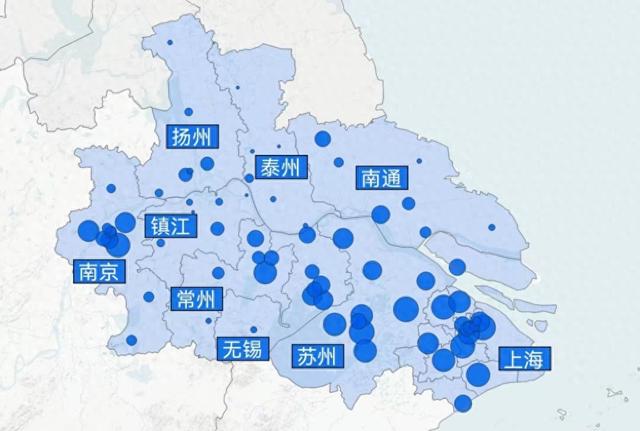
Core Insights - The Yangtze River Delta Innovation Belt, particularly along the Shanghai-Nanjing route, is becoming a significant hub for the robotics industry, with strong collaboration among cities like Shanghai, Nanjing, and Suzhou to enhance technological innovation and industrial development [1][2][10] Industry Overview - The Shanghai-Nanjing Innovation Belt accounts for 21.9% of the national robotics enterprises, with a concentration of 67.69% in Shanghai and Suzhou [5][6] - The overall quality of robotics companies in this region is high, with Shanghai leading in key enterprises [5][6] Company Distribution - Shanghai and Suzhou are the primary locations for robotics companies, with significant numbers in districts like Shanghai's Pudong and Suzhou's Kunshan [5][6] - The distribution of companies includes 303 in Shanghai's Pudong, 417 in Suzhou's Kunshan, and 183 in Nanjing's Jiangning District [5][6] Operational Performance - In 2024, the overall operational performance of listed robotics companies in the Shanghai-Nanjing region weakened, with upstream profits declining and midstream companies facing high costs and low profitability [2][15] - Downstream companies, however, showed good performance due to clear application scenarios [2][15] Innovation Factors - 70% of robotics patents are filed by companies in the Shanghai-Nanjing region, indicating a strong focus on practical innovations [2][19] - The majority of patents are utility models, reflecting an emphasis on application rather than purely aesthetic designs [19][20] Standardization Efforts - Companies and associations are actively promoting standardization, with enterprise and group standards dominating the landscape [2][24] - Shanghai and Suzhou contribute nearly 60% of the standards, showcasing their leadership in the robotics sector [24][25] Financial Aspects - The number of financing events for robotics companies has increased, but the average investment amount has decreased, indicating a shift towards early-stage and strategic investments [2][26][27] - The focus is now on nurturing potential companies rather than solely investing in established leaders [27][28] Regional Specialization - Each city in the Shanghai-Nanjing region has its specialization: Shanghai leads in embodied intelligence, Nanjing focuses on industrial robots, and Suzhou excels in service robots [10][12][13] - Other cities like Wuxi and Changzhou are developing strengths in precision manufacturing and core components [10][12][13] R&D Capabilities - The region boasts a robust R&D environment, with Shanghai having the highest number of research institutions and a strong emphasis on innovation [19][21] - Companies are the main drivers of R&D, supported by engineering research centers and other institutions [19][21] Market Dynamics - The robotics market is experiencing structural challenges, with a slowdown in employee growth, revenue growth, and profit growth compared to 2023 [15][16] - The industry is still in a growth phase, with significant potential for future development, especially in application scenarios [15][16]
Nvidia Considers $500 Million Investment in Autonomous Driving AI Firm Wayve
PYMNTS.com· 2025-09-19 14:04
Core Insights - Nvidia is considering a $500 million investment in Wayve, a company focused on embodied artificial intelligence for autonomous vehicles [1][2] - Wayve has a history of collaboration with Nvidia since 2018, utilizing Nvidia technology in its robot platforms [2] - The investment evaluation is part of Wayve's upcoming funding round, following a $1.05 billion Series C funding round in May 2024, which included participation from Nvidia [2][5] Company Collaboration - The partnership aims to deliver production-ready autonomous driving technology by integrating Wayve's foundation model with Nvidia's automotive-grade computing platforms [3] - Wayve's next platform, Wayve Gen 3, will utilize Nvidia Drive AGX Thor technology [3] Technology Development - Wayve's AV2.0 approach focuses on self-driving technology that learns from experience rather than explicit programming, which is expected to revolutionize mobility [4] - Nvidia recognizes Wayve as a leader in deep learning for autonomous driving, emphasizing the ability of Wayve's platform to adapt to new environments without costly sensors and high-definition maps [5] Future Prospects - Nvidia's vice president of automotive business highlighted the potential of Wayve's next-generation AV2.0 approach, which leverages Nvidia's advanced architectures for AI workloads [6] - Nvidia has published over 70 research papers to demonstrate AI's capabilities in real-world applications, aiming to enhance embodied intelligence across various industries [6]


抢鲜!第十一届中国机器人高峰论坛暨第八届CEO圆桌峰会议程曝光,预约你的参会指南
机器人大讲堂· 2025-09-18 11:46
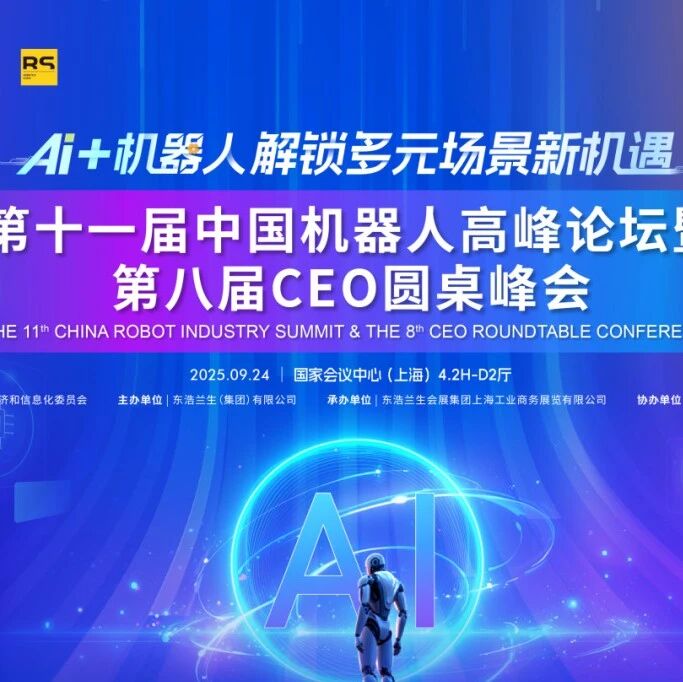
Core Viewpoint - The 11th China Robot Industry Summit and the 8th CEO Roundtable Conference will focus on "AI + Robotics: Unlocking New Opportunities in Diverse Scenarios," aiming to explore the integration of AI and robotics in various applications and the future development of the industry [17]. Event Overview - The event is organized by Donghao Lansheng Group and supported by the Shanghai Robot Industry Association, featuring a combination of exhibition, communication, trade, and services related to robotics technology and applications [2]. - The forum will take place on September 24, 2025, at the National Exhibition and Convention Center in Shanghai, with a schedule that includes speeches from government leaders and industry experts [5][6]. Key Highlights - Leaders from the Ministry of Industry and Information Technology and the Shanghai Municipal Government will deliver opening remarks and announce relevant industrial policies [4]. - CEOs from renowned domestic and international robotics manufacturing and application companies will discuss market trends, challenges, and future prospects in the robotics industry [4]. Forum Agenda - The agenda includes speeches from government officials, industry experts, and the presentation of awards and directories related to intelligent robotics in Shanghai [5][6]. - A roundtable discussion will focus on how AI and robotics can reshape diverse future scenarios, featuring prominent industry leaders [8]. Industry Insights - The forum aims to analyze the bottlenecks in the development of the robotics industry, share innovations in robotics technology, and explore new paths for the integration of AI and robotics [17]. - The event will provide a platform for discussing the application of robotics in various sectors, thereby supporting the sustainable growth of the robotics industry in China [17].
速腾聚创将在IROS 2025发布AC2 重塑机器人感知开发生态
Zhi Tong Cai Jing· 2025-09-17 01:03
Group 1 - RoboSense will participate as an official sponsor in the IROS2025, a premier global robotics event, taking place from October 19 to 25, 2025, in Hangzhou, China, marking the first time in nearly 20 years that IROS is held in mainland China [1][2] - The company will launch its latest product, the Active Camera series AC2, which aims to provide advanced perception development tools for robotics researchers and developers, enhancing the implementation of AI robotics [1] - AC2 is designed for various applications in embodied intelligent robotics, offering high-precision and robust RGBD information, which, when combined with AI algorithms, enables robots to effectively perceive and utilize three-dimensional color environments and semantic information [1] Group 2 - IROS has been a significant platform for the advancement of global robotics technology since its inception in 1988, expected to attract over 7,000 top experts, scholars, and industry professionals to showcase cutting-edge academic achievements and technological trends [2] - RoboSense invites attendees to visit their booth at IROS2025 to discuss cutting-edge technology trends and industry applications, aiming to collaboratively advance the development of embodied intelligent robotics [2]