
法治化营商环境

Search documents
甘肃省司法厅创新监管方式为企业减负松绑
Xin Lang Cai Jing· 2026-01-02 02:01
据介绍,省司法厅推行"综合查一次""一业一查""一表通查"等综合执法模式,联合省营商环境建设局建 成全国首个覆盖省市县乡四级执法监督与三级营商诉求直通的"陇上e企查"系统,实现了入企检查"事前 赋码通知、事中扫码入企、事后码上评价"的全流程智慧监管,并将调研、督导、考察、服务等各类非 行政检查入企活动纳入规范管理范围,杜绝"变相检查",切实为企业减负松绑。该系统自2025年10月上 线以来,已预警拦截违规检查225次,压减重复检查944次,检查频次同比下降35%。 省司法厅在全省范围内开展规范涉企行政执法专项行动,通过线索征集、案卷评查、实地走访等方式, 全面整治涉企执法突出问题,累计抽评案卷20.31万余件,走访企业6729家,发现问题线索742条,曝光 典型案例330件,为企业挽回直接经济损失1511.58万元。优化升级法治化营商环境问题线索"一键举 报"平台,累计受理线索840余条,有效办结率97%,全力推动解决涉企执法、拖欠账款等问题。发挥行 政复议化解行政争议的主渠道作用,开展行政复议护航企业高质量发展专项行动,在全省各产业园区、 开发区设立149个行政复议工作联系点,累计为企业挽回损失4.2亿元。 ...
省委政法委员会2025年第十一次全体会议召开
Xin Lang Cai Jing· 2025-12-31 23:12
Core Viewpoint - The meeting emphasizes the importance of implementing Xi Jinping's legal thought and aligning with the central and provincial economic work meetings to enhance the rule of law in Fujian province [1][2] Group 1 - The provincial legal authorities are urged to focus on expanding domestic demand, industrial development, and technological innovation to create a first-class legal business environment [1] - The goal is to achieve modernization in legal work to better support and serve the practice of Chinese-style modernization in Fujian [1] Group 2 - There is a call for strict implementation of the network security responsibility system and the establishment of a long-term mechanism for network ecological governance [2] - The meeting highlights the need to strengthen the integrity and discipline within the legal sector and to promote high-quality development in legal reforms and legislation [2] - Authorities are reminded to maintain awareness of potential risks and ensure safety and stability during the New Year and Spring Festival period [2]
以“立园满园”司法新范式 擦亮法治“锦”色
Xin Lang Cai Jing· 2025-12-29 19:18
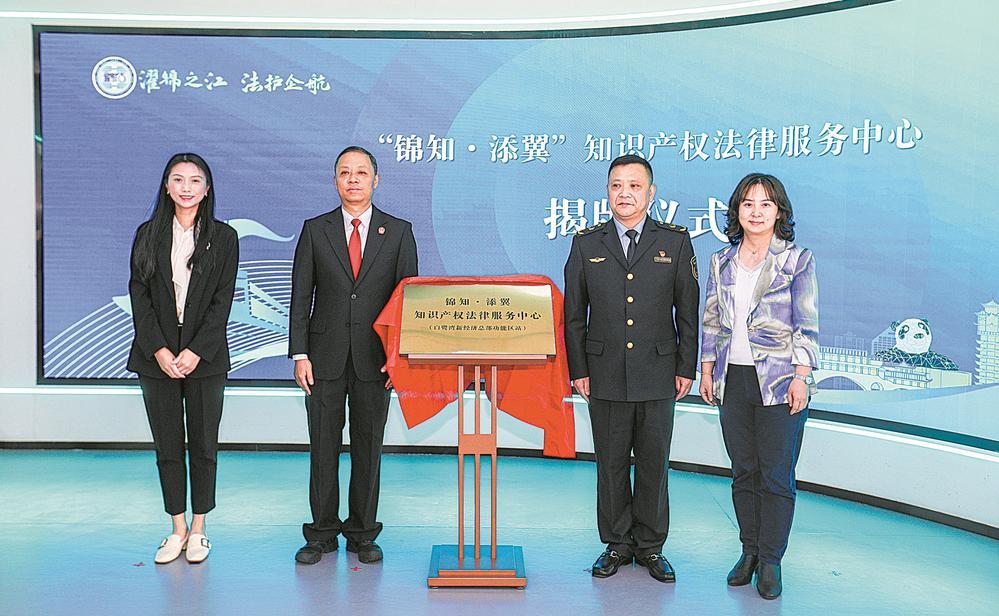
登录新浪财经APP 搜索【信披】查看更多考评等级 转自:成都日报锦观 锦江法院 行动并未止步。法院持续深化"濯锦·企航"品牌内涵,构建起"一链两端N翼"的立体化护企体系。以《促进企业发展十一条举措》为核心政策主 线,精准切入劳动雇佣、金融创新等企业关切领域;通过联合发布《政法机关与工商联沟通联系工作意见》,创新"法院+工商联+工会"多元 协同解纷模式;出台《信用修复实施办法(试行)》及配套指南,全程激励企业守信履约;更推出"一园一方"策略,为不同产业园区提供定制 化法律服务。 由此,一条以专项行动为起点、以核心政策为主线,辐射多领域的"一点一线全周期"司法护企链条清晰形成,实现了司法供给与产业需求的精 准匹配。 以"立园满园"司法新范式 擦亮法治"锦"色 锦江法院"锦知·添翼"知识产权法律服务中心揭牌。 在"十四五"收官与"十五五"谋篇布局的历史交汇点,如何以高质量司法服务赋能区域经济高质量发展,是摆在基层法院面前的时代命题。五年 来,锦江法院以"扎根园区、服务企业"为实践主轴,积极探索司法助力"立园满园"的新路径、新机制,将法治保障深度融入产业肌理。从宏观 的战略引领到微观的诉求响应、从机制的协同创新到服务 ...

【优化法治化营商环境】数智赋能,打造法治化营商环境新高地
Sou Hu Cai Jing· 2025-12-29 13:10
Core Viewpoint - The establishment of a digital court system in E'tuoke Banner enhances the judicial environment, promoting efficient and convenient judicial services that support high-quality economic and social development [2] Group 1: Online Filing and Accessibility - The online filing system allows businesses to complete applications, document submissions, and fee payments without leaving their premises, significantly reducing time and costs [3] - Cross-regional filing services are implemented to facilitate businesses operating in multiple areas, ensuring proximity in filing and comprehensive handling [3] - A green channel for enterprise-related disputes prioritizes small and micro enterprises, ensuring their cases are processed swiftly [3] Group 2: Smart Court Trials - Remote video trials and asynchronous hearings are promoted, enabling participants to engage via mobile or computer, with automatic generation of trial records [4] - The "no clerk" trial model utilizes AI for real-time transcription, enhancing trial efficiency and reducing the burden on participants [4] Group 3: Diverse Mediation - A multi-channel dispute resolution system is established, integrating judges, professional mediators, and industry experts to address common business-related disputes [5] - The online mediation platform allows parties to participate in mediation anytime and anywhere, effectively resolving conflicts while conserving judicial resources [5] Group 4: Extended Digital Services - Continuous improvement of the digital court system includes 24-hour self-service centers and electronic delivery, aiming to reduce the processing time for enterprise-related cases [6] - A creditworthiness whitelist for enterprises is established to enhance the efficiency of case handling [6] - The launch of an electronic guarantee platform for litigation preservation simplifies processes and improves asset preservation efficiency [6]

广州市场监管发布116项减免责清单,释放亲商“大诚意”
Sou Hu Cai Jing· 2025-12-29 08:46
根据《广州市高水平法治政府建设赋能高质量发展专项规划(2024—2035年)》设定的宏伟蓝图,广州力争到2029年减免责清单事项不少于600项,到2035 年不少于1000项。此次《清单》的发布,正是这一宏大目标的阶段性生动实践。 在持续优化营商环境的赛道上,广州再次迈出关键一步。近日,广州市市场监管局印发《广州市市场监管系统行政执法减免责清单(2025年)》(以下简称 《清单》)。这不仅是广州在市场监管领域推出的"4.0版"行政执法减免责机制,更标志着广州在建立健全长效包容审慎监管机制上,进入了一个事项更 全、力度更大、颗粒度更细的全新阶段。 这份新版《清单》,究竟"新"在哪里?它将如何改变企业和市民的日常经营与生活? 幅度拓展:从"60项"到"116项" 如果说监管是一把"尺子",那么新版《清单》更像是一把"精密的卡尺"。为了回应市场主体对法治化营商环境的迫切需求,广州积极发挥超一线城市主力军 和火车头作用,对原有的减免责事项进行了大幅度拓展。 值得注意的是,《清单》将事项从原有的60项一举拓展至116项,增幅高达93.3%,涵盖了市场准入、食品、交易秩序、知识产权、产品质量等领域,真正 为广大市场主体提 ...

弘扬诚实守信!最高人民法院发布人民法院惩治逃废债典型案例
Yang Shi Wang· 2025-12-29 02:57
Core Viewpoint - The Supreme People's Court of China has published seven typical cases to combat debt evasion, aiming to enhance creditor protection and promote a trustworthy business environment through legal measures [1][2]. Group 1: Coverage and Scope - The published cases cover various common debt evasion tactics, including malicious transfer of assets by actual controllers, shareholders evading capital contributions, and fraudulent bankruptcy applications [1][2]. - The cases serve to guide local courts in accurately identifying and punishing debt evasion behaviors, thereby fostering a culture of honesty and trustworthiness in the market [1][2]. Group 2: Strengthening Punitive Measures - The cases outline three types of liabilities for debt evasion: civil liability, penalties for obstructing civil litigation, and criminal liability [2]. - Civil liabilities include holding related companies accountable for debts through piercing the corporate veil and requiring shareholders to compensate creditors for unpaid contributions [2]. - Criminal liabilities have been pursued in cases of false bankruptcy and evasion of execution, with offenders receiving prison sentences [2]. Group 3: Collaborative Legal Framework - A coordinated approach involving legislation, adjudication, and enforcement is necessary to effectively combat debt evasion [3]. - Courts are enhancing their capabilities through big data and AI to identify fraudulent lawsuits and improve the efficiency of debt recovery [3]. - Collaboration with law enforcement agencies is emphasized to address severe cases of debt evasion, ensuring that offenders face appropriate legal consequences [3]. Group 4: Future Directions - The Supreme People's Court plans to refine rules and enforcement measures against debt evasion, improve bankruptcy systems, and promote legal awareness through illustrative cases [4]. - The goal is to create a favorable legal environment for high-quality economic development by protecting creditor rights and promoting integrity [4].
企业“点”出需求 政法单位办到实处
Xin Lang Cai Jing· 2025-12-28 19:25
Core Viewpoint - The "order-based" service model implemented by the Pingdu municipal political and legal system effectively addresses the legal needs of enterprises, enhancing the business environment and supporting high-quality economic development [1][2]. Group 1: Service Model Implementation - The Pingdu municipal political and legal system has introduced an "order-based" service model to proactively address the pain points and challenges faced by enterprises, shifting from passive response to active service [1]. - A one-on-one legal guidance team was established to assist companies in risk avoidance, demonstrating the effectiveness of the "order-based" service [1]. Group 2: Multi-Channel Demand Collection - To facilitate easier "ordering" by enterprises, a multi-dimensional demand collection system has been established, including 10 "Legal Protection for Enterprises" discussion rooms across the city [2]. - An online and offline integrated "ordering" channel has been created, allowing enterprises to submit their needs and suggestions conveniently [2]. - Over 30 enterprise-related issues have been resolved this year, with more than 100 companies visited and 155 suggestions collected [2]. Group 3: Efficient Order Processing - The Pingdu municipal political and legal system has categorized enterprise "orders" to ensure efficient implementation, focusing on precise and professional service delivery [3]. - Five specialized discussions have been held with entrepreneurs and legal experts to analyze legal needs and challenges faced by enterprises [3]. - A total of 14 "order-based" legal education sessions have been conducted, benefiting over 2,000 entrepreneurs [3]. Group 4: Closed-Loop Management - A closed-loop mechanism has been established to ensure that enterprise "orders" are effectively completed, including feedback and improvement processes [4]. - The system tracks service completion rates and enterprise satisfaction through follow-up calls and visits [4]. - A "star-rated legal enterprise" initiative has been launched, providing free legal assessments to help enterprises predict operational risks [4].
九场对话 十月深耕
Xin Lang Cai Jing· 2025-12-28 19:25
转自:成都日报锦观 九场对话 十月深耕 法企双向奔赴 构建法治护航新范式 如何以高水平司法赋能新经济?如何用法治力量激发创新活力?在近日举行的第九场活动中,答案愈发 清晰。面对企业提出的数据权益保护、竞业限制认定、技术成果转化等前沿法律问题,法院相关部门负 责人不绕弯子、现场"接单",从法律依据到实践路径给予清晰指引。活动不仅发布了具有规则指引意义 的典型案例,更通过深度问需实现了司法服务的精准滴灌。 从初春到深冬,九场"蓉法护企面对面"是一场法院与企业的"双向奔赴"。法院以开放的姿态将司法服务 窗口前移,变"坐堂问案"为"主动服务";企业则感受到了并肩作战、共谋发展的司法诚意与护航决心。 这仅仅是开始。随后的10个月里,"蓉法护企面对面"活动一场接一场,主题不断深化,从"开门纳谏"到 聚焦建设工程、知识产权、涉外法治等专业领域,目前已成功举办至第九场,彰显了成都法院以司法服 务保障高质量发展的坚定决心。 "诉求清单"到"司法方案"的服务闭环 "今天来,就是想听真实的声音,建议直奔主题。"成都中院"一把手"的开场白直接为这九场对话定下了 务实、高效的基调。 座谈中,企业家们围绕经营中遇到的劳动争议困惑、知识产 ...
加强党对经济工作的领导,凝聚现代化强省建设合力——省委经济工作会议精神在全省引发热烈反响
Da Zhong Ri Bao· 2025-12-28 00:54
Group 1: Economic Leadership and Development - Strengthening the Party's leadership over economic work is essential for ensuring effective economic management, with specific requirements set forth in the provincial economic work conference [1] - Yantai Huangbohai New Area, as one of the four provincial-level new areas, benefits from national strategies such as the national economic development zone and the China-South Korea industrial park, driving strong development momentum [1] - The provincial economic work conference emphasizes the importance of a correct performance view and the need for a comprehensive approach to economic work, focusing on eight key tasks and ten major projects [1] Group 2: Cultural and Tourism Industry - The cultural and tourism industry is identified as a crucial engine for expanding domestic demand and stimulating economic growth, with new requirements and deployments outlined in the "Top Ten Projects" [2] - The provincial cultural and tourism department plans to enhance high-quality development through effective party building and the integration of cultural and tourism sectors [2] - Efforts will be made to strengthen the "Good Guest Shandong" brand and improve the supply of high-quality tourism products to support comprehensive domestic demand expansion [2] Group 3: State-owned Enterprises - State-owned enterprises are described as the "ballast" and "pillar" of the province's economic and social development, with Shandong Port Group achieving a cargo throughput of over 1.9 billion tons this year [3] - The group is transitioning from a single port operator to a comprehensive port service provider, aligning with the provincial economic work conference's directives [3] - Plans include enhancing port infrastructure, achieving digital transformation, and promoting green and low-carbon development to contribute to high-quality economic growth [3] Group 4: Foreign Trade and Open Economy - The provincial economic work conference prioritizes expanding high-level opening-up as a key task for the upcoming year, with specific strategies for enhancing institutional openness and developing new foreign trade formats [4] - The focus will be on integrating major initiatives such as the Belt and Road Initiative and improving the business environment for foreign trade [4] - Comprehensive measures will be implemented to stabilize foreign trade growth and enhance market entities and port operations [4] Group 5: Legal Environment for Business - The importance of a legal economy is emphasized, with the provincial judicial department committed to creating a first-class legal business environment to support high-quality economic development [5] - Legislative efforts will focus on key areas such as fair competition and marine ranching to ensure high-quality development [5] - Administrative law enforcement will be standardized to maintain market order and boost business confidence [5] Group 6: Agricultural Development - Yucheng City is advancing rural industrial revitalization through a "grain-to-table" and "agriculture-to-industry" development approach, emphasizing the importance of practical achievements [6] - The city aims to strengthen agricultural industrialization by focusing on key crops and enhancing agricultural enterprise cultivation [6] - Employment opportunities will be increased through innovation and entrepreneurship parks, while urbanization efforts will focus on comprehensive land management [6] Group 7: Urban Construction and Development - The focus of urban construction in Tai'an City includes enhancing urban quality, upgrading old neighborhoods, and promoting green and low-carbon transitions [7] - The construction sector is encouraged to adopt digital solutions and ensure market stability while preventing risks [7] - The integration of urban development with residents' well-being is highlighted as a key responsibility for the city's construction department [7]
立足检察职能护航营商环境
Xin Lang Cai Jing· 2025-12-27 22:49
该院在办理涉营商犯罪案件中,坚持打击犯罪与追赃挽损并重,通过对案件的提前介入、引导侦查,提 升办案质效,有效保障民营企业的合法权益。 与此同时,深入开展"服务保障法治化营商环境"专项行动,找准检察工作服务企业健康发展的切入点和 着力点,针对企业发展过程中出现的急难愁盼问题,精准施策、出谋划策,以提升服务能力和水平,助 力企业健康有序发展,为营造良好的法治化营商环境贡献检察力量。今年以来,该院累计办理涉营商刑 事案件65件,向企业提供法律咨询100次,送法入企20余次。(龙静 安慧芳) 转自:贵州日报 今年以来,铜仁市松桃自治县人民检察院立足检察职能,以优化法治化营商环境为目标,通过精准打击 犯罪、温情司法服务,助力企业健康发展。 ...