
可再生能源

Search documents
用电需求增长考验土耳其光伏(世界能源·转型之路)
Zhong Guo Neng Yuan Wang· 2026-02-05 03:14
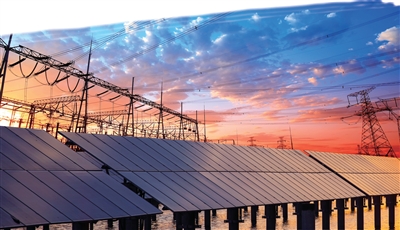
土耳其国家输电系统运营商土耳其电力传输公司最新发布数据显示,2025年,该国新增光伏装机容量约 4.69吉瓦,累计光伏装机规模接近25吉瓦,太阳能装机占全国总装机容量比重接近1/5。尽管新增规模 较2024年有所回落,但在工商业分布式项目持续放量、可再生能源区招标稳步推进、光伏发电经济性进 一步凸显等因素共同作用下,多方一致认为土耳其光伏产业仍具备较大发展潜力,其2026年市场走向备 受关注。 在装机规模稳步扩大的同时,光伏发电的经济性优势进一步显现,成为支撑土耳其光伏市场持续发展的 重要基础。Ember基于土耳其官方数据及行业标准测算显示,2025年新建光伏电站的平准化度电成本已 降至43美元/兆瓦时,较10年前累计下降约69%。 与传统化石能源相比,光伏的成本竞争力尤为突出。根据对煤炭价格、平均热值及电厂效率的测算,土 耳其现有本土燃煤电厂的平均发电成本约为55美元/兆瓦时,新建本土煤电项目的发电成本则高达90美 元/兆瓦时。新建光伏电站的发电成本不仅较现有本土煤电低约21%,较新建煤电项目更是低出52%。 Ember分析指出,在无需高额补贴的情况下,光伏发电已成为土耳其最具经济竞争力的电力来源之一。 通 ...

电力决胜AI时代,中国发用电能力领跑全球
2 1 Shi Ji Jing Ji Bao Dao· 2026-02-04 11:45
21世纪经济报道记者曹恩惠上海报道 2025年累计发电装机容量38.9亿千瓦、全社会用电量首次突破10万亿千瓦时,当中国交出上述年度发用 电成绩单时,一种观点引发热议:"中国发电能力将左右未来AI竞争力"。 特斯拉首席执行官埃隆.马斯克日前在达沃斯世界经济论坛的言论仍然"余音绕梁":他称,电力供应能 力是制约美国人工智能发展的最大瓶颈,而这是竞争对手中国无需应对的问题。 AI的尽头是算力,算力的尽头是电力。当业内越来越认同这逻辑时,这意味着电力供应能力已然成为 全球AI竞争的"胜负手"。 解构10万亿度用电新增量 国家能源局2026年1月公布的统计数据显示,2025年度中国全社会用电量高达约10.37万亿千瓦时,同比 增长5.0%。对此,中国电力企业联合会日前发布的《2025-2026年度全国电力供需形势分析预测报告》 指出,前述用电规模超过美国全年用电量的两倍,高于欧盟、俄罗斯、印度、日本全年全社会用电量的 总和,稳居全球电力消费第一大国地位。 那么,上述10万亿度用电背后有何亮点? 从中国全社会用电结构上看,第二产业稳居用电基本盘——2025年用电量约6.64万亿千瓦时,同比增长 3.7%,占比高达64% ...

专访章鱼能源创始人:与中国伙伴携手,为全球数亿人提供清洁电力
2 1 Shi Ji Jing Ji Bao Dao· 2026-02-03 11:52
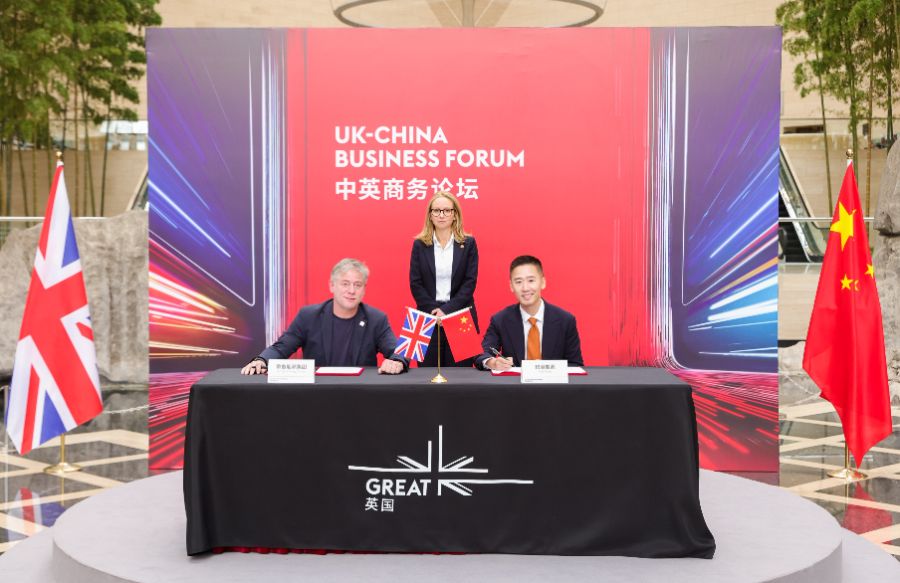
(签约现场,英中贸易协会供图) 南方财经21世纪经济报道记者郑青亭 北京报道 杰克逊:作为一名企业家,我始终聚焦于客户需求。我们思考的是:如何借助能源技术,更好地服务我们在全球各国的客户? 我曾多次到访中国,目睹了中国在太阳能电池板、电池、风力涡轮机、电动汽车等领域的惊人创新。这些技术正帮助客户获得 更廉价、更清洁、更可靠的能源。因此,能随首相一同访华,与他探讨这些机遇,并让他亲眼看到中国技术进步带来的变革, 我感到十分荣幸。 "我的愿景是,通过与中国的合作伙伴携手,为全球数千万乃至数亿人提供清洁电力,并且是更便宜的电力。我们要让能源更可 及、更廉价,并引领电气化进程。"章鱼能源(Octopus Energy)创始人、首席执行官格雷格·杰克逊(Greg Jackson)在接受21世纪 经济报道记者采访时说道。 杰克逊表示,中国在可再生能源技术方面的创新令人瞩目,而英国在电力市场灵活性与数字化服务方面拥有经验,双方优势互 补,有望共同推动全球能源转型与电气化进程。 章鱼能源是全球领先的能源科技独角兽企业。这家2015年成立于英国的公司,现已发展为英国最大的电力供应商之一,也在欧 洲市场占据领先地位,业务遍布全球 ...
了不起的中国风电,登上顶尖期刊《科学》杂志
Zhong Guo Neng Yuan Wang· 2026-02-03 09:52
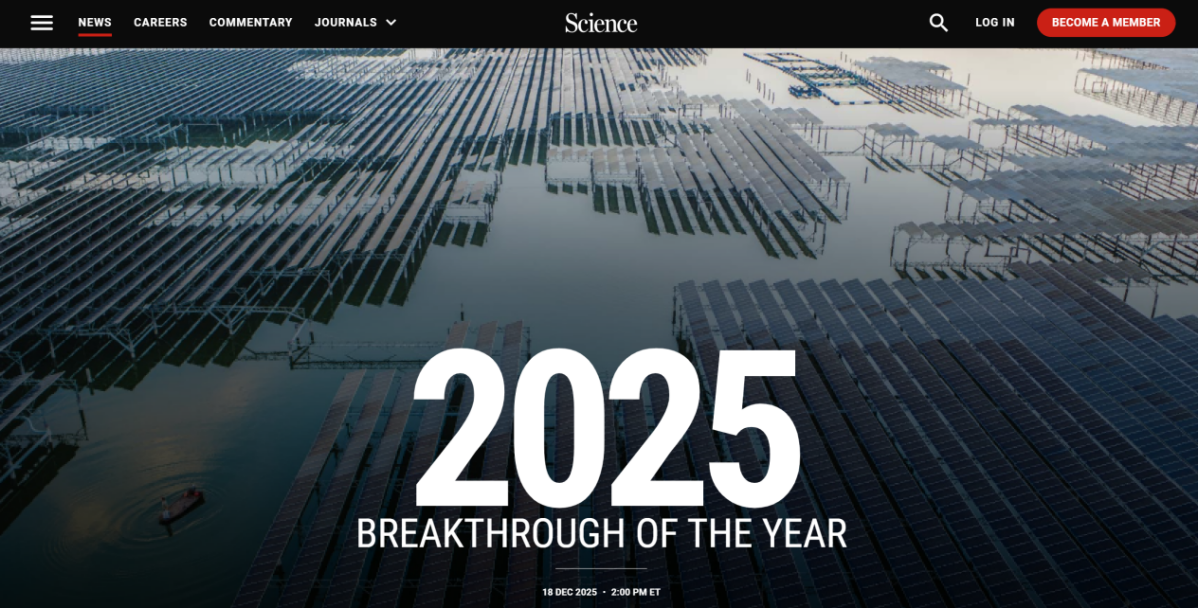
Group 1 - The core viewpoint of the articles highlights that "China-led renewable energy development" has been recognized as the top scientific breakthrough for 2025 by the journal Science, with a similar acknowledgment from Nature [1][5] - The development of China's wind power industry is prominently featured, showcasing its significant achievements and contributions to the global energy landscape [1][3] - The total installed capacity of solar and wind power in China is now sufficient to meet the entire electricity demand of the United States, indicating the scale of China's renewable energy capabilities [3] Group 2 - The SANY Shaoshan blade factory, recognized as the world's first "lighthouse factory" in the wind power sector, is highlighted in a special report by Science, illustrating the advanced manufacturing processes in China's wind energy production [3] - China produces two-thirds of the world's wind turbines, with a growing number of international orders, reflecting the increasing global demand for Chinese wind energy technology [3] - The articles emphasize China's journey from having minimal wind power capabilities to becoming the world's leader in installed wind power capacity for 15 consecutive years, establishing a complete wind power industry chain [5]
专访碧澄董事长:联手英国章鱼能源 开拓海外新兴市场
2 1 Shi Ji Jing Ji Bao Dao· 2026-02-03 08:25
近日,英国首相斯塔默对中国进行了正式访问。这是英国首相时隔8年再次访华,也是新年伊始中方接 待的第一位联合国安理会常任理事国领导人。访华期间,双方围绕气候变化与能源合作举行高层会晤, 重点就可再生能源、低碳技术协作达成共识。 访问期间,中国工商业分布式清洁能源电站投资运营商碧澄能源与总部在英国的能源科技公司章鱼能源 (Octopus Energy)正式宣布战略合资。双方将共同在华设立聚焦电力交易业务的合资公司——碧桐能 源。这一合作代表世界顶级能源科技企业正式进入中国市场,成为中国电力市场化改革进程中的标志性 事件之一。 在1月30日的中英商务论坛上,碧澄能源董事长兼CEO李文轩围绕碧桐能源的业务规划、中英能源合作 前景、碧澄能源的国际化布局接受了21世纪经济报道记者的专访。 "我们期待通过双方的紧密协作,为中国工商业用户提供更经济、智慧、可靠的能源服务,更为中国电 力市场的繁荣发展与绿色转型贡献力量。同时,这样的合作也是中国在新能源和电力市场实践中, 对'安全、低碳、低成本'能源不可能三角解法的一部分探索。"他说。 据介绍,此次合作设立的合资公司——碧桐能源将成为碧澄能源"综合能源服务"战略的核心板块,旨在 ...
了不起的中国风电,登上顶尖期刊《科学》《自然》杂志
中国能源报· 2026-02-03 04:57
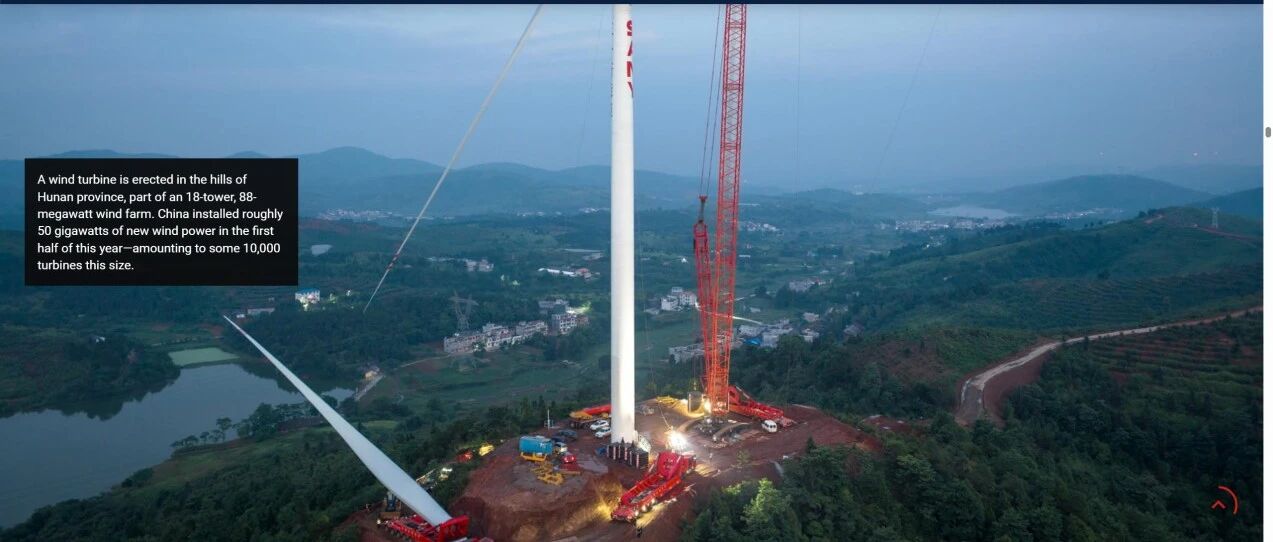
▲ 摄影:Ge o rg e St e i nme t z 专题中的系列照片,完整呈现了风电叶片从工厂智能制造、跨区域陆路运输到山地现场吊装的全流程关键环节,成为中国风电产业高质 量蓬勃发展的生动缩影。无论国际舆论场评价如何,中国风电产业始终以扎实的技术沉淀与超大规模的应用实践,不断突破风电开发边 界,默默重塑着全球清洁能源的版图。 日前,全球顶尖科研期刊《科学》(Sc i e nc e)杂志公布了2 025年度十大科学突破评选结果,"中国引领下的可再生能源发展"位列榜 首。同期,《自然》(Na t ur e)期刊亦将"中国引领可再生能源跨越式发展"选为2025年振奋人心的七大科学突破。其中,中国风电产 业的发展成果,被写在了最显眼的位置。 位于湖南韶山的全球首座风电行业"灯塔工厂"——三一韶山叶片工厂的系列照片,更是登上《科学》杂志"The Gr e e n Gi a nt(绿色巨 人)"专题报道。 《科学》杂志中提到,"从中国工厂涌出的技术浪潮改变了中国的能源格局... ..中国太阳能和风力发电场现在的总装机容量足以满足整 个美国的电力需求。"文中的一张配图的注释更清晰写道:"风力发电机叶片正等待从三一工 ...
2026年中国太阳能发电将超过煤电,成为最大可再生能源市场
Huan Qiu Wang· 2026-02-03 01:17
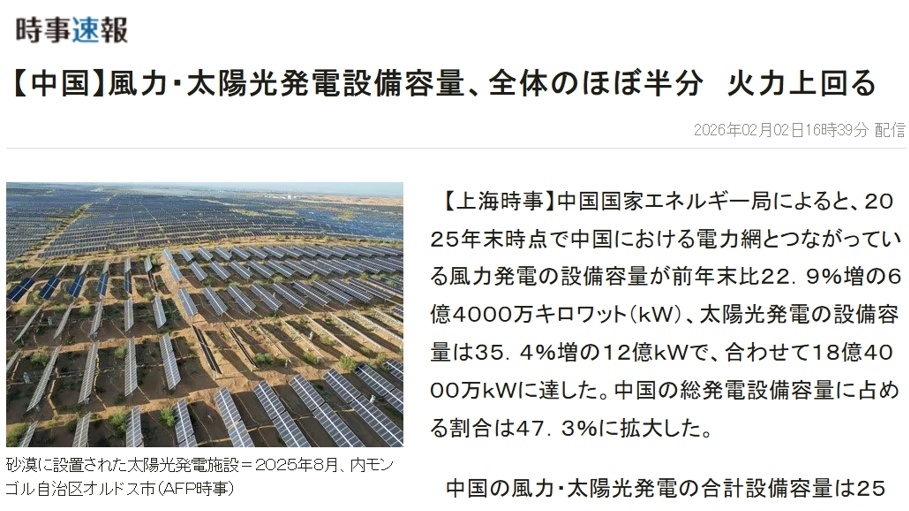
【环球网财经综合报道】据中国电力企业联合会预测,2026年中国太阳能发电装机规模将首次超过煤电,年底风电和太阳能发电 合计装机规模达到总发电装机的一半。全年新增发电装机有望超过4亿千瓦,其中新增新能源发电装机有望超过3亿千瓦。 时事通讯社发文称,过去几年,中国风力和太阳能发电设备容量以惊人的速度增长,成为中国最大的可再生能源市场。 山西证券发布报告提到,国家能源局此前公布1-11月份全国电力工业统计数据。其中,1-11月太阳能发电新增装机规模 274.89GW,11月单月太阳能发电新增装机22.02GW,环比10月12.6GW,增长75%。 ...

新材料ETF国泰(159761)回调超4%,新型产业快速发展,上游材料需求有望持续旺盛
Mei Ri Jing Ji Xin Wen· 2026-02-02 07:02
Group 1 - The core viewpoint is that emerging industries such as artificial intelligence, electric vehicles, renewable energy, and commercial aerospace are rapidly expanding, leading to qualitative changes in the requirements for upstream materials [1] - These changes impose unprecedented stringent standards on the performance, purity, form, and functionality of materials, resulting in a significant number of metals being reclassified from bulk commodities to "critical strategic materials" or "high-tech value-added new materials" [1] - The investment logic in the upstream metal materials industry is fundamentally shifting due to the vigorous development of new fields, injecting a new growth cycle into the upstream metal materials sector from the demand side [1] Group 2 - The value of upstream metals is expected to continue to rise as the demand for materials in new industries remains robust, necessitating a growth-oriented perspective on the key materials for future technology industries [1] - The Guotai New Materials ETF (159761) tracks the New Materials Index (H30597), which focuses on the new materials industry by selecting listed companies involved in advanced basic materials, critical strategic materials, and cutting-edge new materials [1]

欧盟2025年新增储能装机27.1GWh,2030年目标装机750GWh
中关村储能产业技术联盟· 2026-02-02 03:47
Core Viewpoint - The European battery storage market is experiencing significant growth, with a record installation capacity expected to reach 27.1 GWh by 2025, marking a 45% year-on-year increase, primarily driven by utility-scale systems [3][4]. Group 1: Market Growth and Projections - The EU's battery storage capacity has increased tenfold since 2021, from 7.8 GWh to 77.3 GWh, indicating a robust growth trajectory [3]. - By 2030, the EU aims to achieve a tenfold increase in battery storage capacity to meet energy flexibility demands, targeting a total capacity of 750 GWh [3]. - Utility-scale systems contributed 55% of the new installations in 2025, highlighting their role as the main driver of market expansion [3]. Group 2: Manufacturing and Supply Chain Challenges - The EU's midstream battery production capacity is projected to reach 252 GWh by 2025, but there are structural gaps in the production of active materials for battery electrodes [4]. - Over 90% of battery cell production capacity is currently focused on electric vehicles rather than stationary storage, indicating a need for diversification [4]. - High production costs and project delays are hindering competitiveness, necessitating the establishment of a more resilient and integrated European battery supply chain [4]. Group 3: Recommendations for Development - To accelerate the deployment of battery storage systems, the report suggests simplifying approval processes for independent and hybrid projects, prioritizing mature and grid-compatible projects [5]. - The report calls for investments in innovation to ensure a reliable supply of key raw materials and to expand recycling capacities, aiming to create a resilient and cost-effective battery supply chain [5]. - It recommends the establishment of unified safety standards and accident reporting systems across the EU to enhance industry trust and performance, alongside stricter regulations on battery recycling and carbon footprint disclosure [5].

每日市场观察-20260202
Caida Securities· 2026-02-02 03:15
Market Overview - On February 2, 2026, both stock indices closed lower with a trading volume of 2.86 trillion, a decrease of approximately 400 billion from the previous trading day[1] - The coal, communication, and agriculture sectors saw minor gains, while non-ferrous metals, food and beverage, real estate, computer, and military industries experienced significant declines[1] - The market showed a wide fluctuation with a V-shaped intraday trend, influenced by the overnight volatility in non-ferrous metals, leading to a significant drop in the non-ferrous sector[1] Industry Trends - The technology and non-ferrous sectors are currently in a consolidation phase, resulting in a lack of a leading sector to drive the market[1] - The communication sector, despite maintaining an upward technical pattern, faces skepticism regarding the sustainability of its rebound due to previous substantial gains and lack of valuation advantages[1] Investment Insights - The market is expected to enter a weak consolidation phase, suggesting a need for cautious positioning in portfolios[1] - Precious metals and non-ferrous metals are in a high-level fluctuation phase, making it unsuitable for aggressive buying; however, potential investment opportunities may arise if there is a stabilization after a pullback[1] Fund Flow - On January 30, 2026, the Shanghai Composite Index saw a net outflow of 34.314 billion, while the Shenzhen Composite Index had a net outflow of 1.775 billion[4] - The top three sectors for capital inflow were communication equipment, semiconductors, and agriculture, while industrial metals, minor metals, and software development saw the highest outflows[4] Economic Indicators - The Ministry of Industry and Information Technology reported that the electronic information manufacturing industry is expected to achieve a revenue of 17.4 trillion yuan in 2025, with a year-on-year growth of 7.4%[5] - The profit margin for the electronic information manufacturing sector is projected to be 4.3%, an increase of 0.2 percentage points compared to the previous year[5]
