
多边主义

Search documents
专访丨全球治理倡议对当今不确定的世界具有重要意义——访埃塞俄比亚智库专家巴鲁·德米西
Xin Hua Wang· 2025-09-16 06:09
德米西说,倡议奉行主权平等,就是主张各国无论大小、强弱、贫富,都在全球治理中平等参与、 平等决策、平等受益。"这一愿景在当今多极化的世界中引发强烈共鸣。通过提升新兴经济体的声音, 发展中国家在世界的影响力将越来越大。" 在他看来,全球治理倡议强调遵守国际法治是"全球治理的坚实保障"。这意味着各国要统一执行国 际准则,不搞双重标准,不将少数国家的所谓"规则"强加于人。 德米西表示,全球治理倡议对多边主义的承诺同样重要。全球治理体系应由所有人共同构建,治理 成果也应由所有人共享。全球治理倡议呼吁加强而非削弱诸如联合国这样的机构的作用,防止在未来危 机中出现类似不平等现象。 "与抽象的宣言不同,全球治理倡议强调的是实际成果。这种务实态度延续了中国以实现发展为导 向的主张。"德米西说,2014年西非爆发埃博拉疫情时,中国派遣医疗团队并设立治疗中心,协助相关 国家抗击疫情。 新华社亚的斯亚贝巴9月16日电 专访|全球治理倡议对当今不确定的世界具有重要意义——访埃塞 俄比亚智库专家巴鲁·德米西 新华社记者刘方强 埃塞俄比亚政策研究所高级顾问巴鲁·德米西近日在接受新华社记者采访时表示,在当今这样一个 充满巨大不确定性的时代 ...
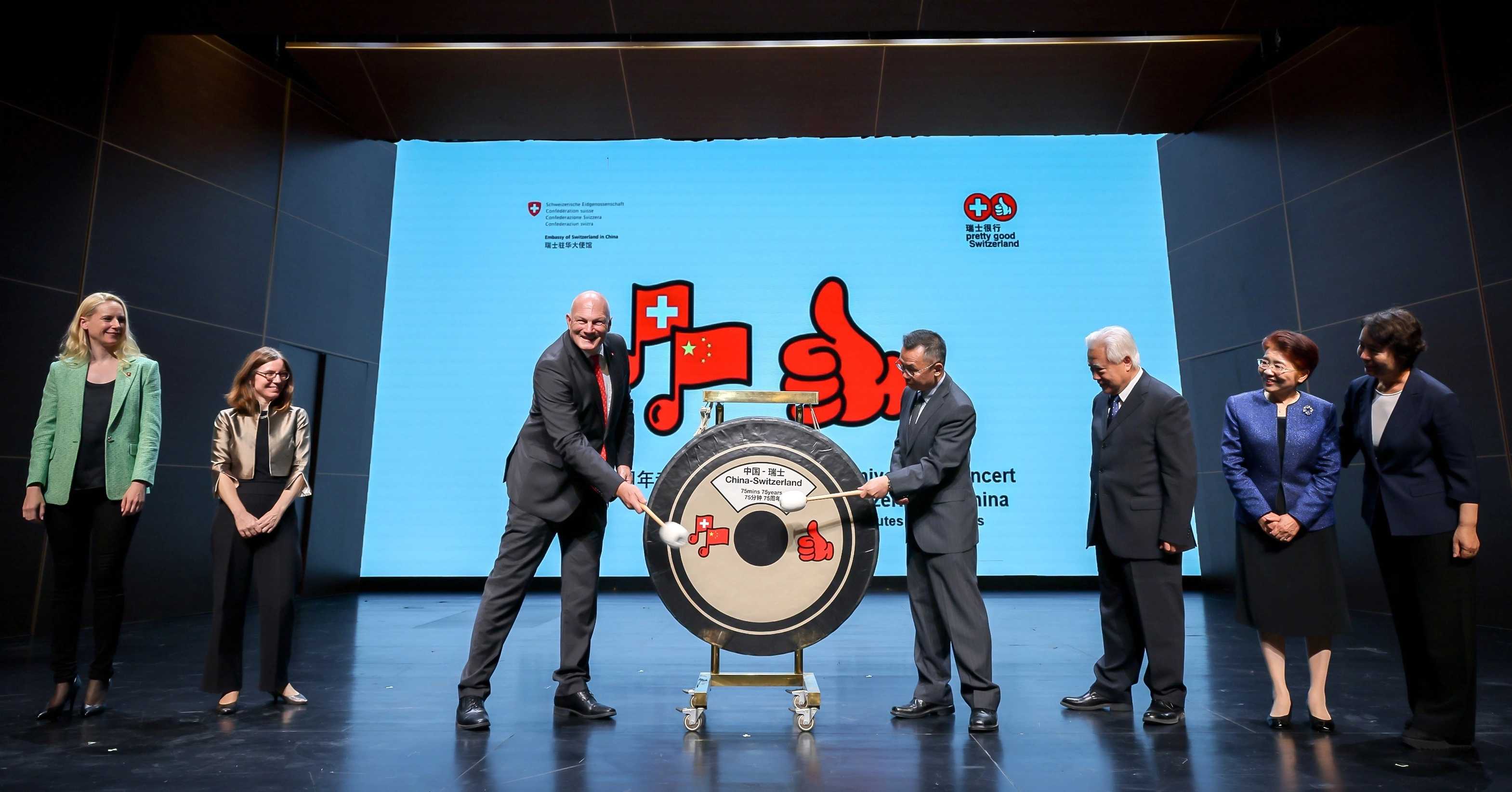
中瑞音乐家联袂献礼两国建交75周年
人民网-国际频道 原创稿· 2025-09-16 02:00
Core Viewpoint - The music concert celebrating the 75th anniversary of diplomatic relations between China and Switzerland highlights the deep friendship and cooperation between the two countries, emphasizing their contributions to multilateralism and free trade [1][4][7]. Group 1: Event Details - The concert titled "75 Minutes · 75 Years of Harmonious Voices" lasted for 75 minutes, symbolizing the 75 years of friendship between China and Switzerland [4]. - The performance featured a collaboration between the China National Traditional Orchestra and the Swiss Symphony Orchestra, blending traditional Chinese classics, contemporary music, and Swiss classical and folk music [4][6]. - Notable pieces included traditional Chinese songs such as "Spring River, Flower Moon Night" and "Gusu Walk," as well as contemporary adaptations like Jay Chou's "Chrysanthemum Terrace" [4][7]. Group 2: Diplomatic Significance - The concert serves as a milestone in artistic exchange and reflects the development of China-Switzerland relations, with Switzerland being one of the first Western countries to recognize the People's Republic of China in January 1950 [7]. - Key milestones in the relationship include the signing of a comprehensive free trade agreement in 2013, which was the first such agreement between China and a European country, and the establishment of an innovative strategic partnership in 2016 [7]. - Since 2010, China has been Switzerland's largest trading partner in Asia and the third-largest globally, while Switzerland ranks as China's sixth-largest trading partner in Europe [7].

坚持多边主义是基本路径——构建更加公正合理的全球治理体系④
Xin Hua Wang· 2025-09-16 00:15
Group 1 - The core viewpoint emphasizes that adhering to multilateralism is essential for establishing a fair and reasonable global governance system, as highlighted by China's President Xi Jinping during the "Shanghai Cooperation Organization+" meeting [1] - The article discusses the significant changes in the global landscape, noting the rapid development of emerging markets and developing countries, which calls for a shift from a unipolar to a multipolar world [1][2] - It stresses that multilateralism recognizes the equal rights of all countries, particularly developing nations, to participate in global governance, which is crucial for achieving fairness and rationality in the global governance system [1][2] Group 2 - China's foreign policy is characterized by a strong commitment to multilateralism, advocating for collaborative solutions to complex global issues and promoting the concept of a community with a shared future for mankind [2] - The article highlights China's support for various multilateral platforms, including the United Nations, Shanghai Cooperation Organization, BRICS, and the Belt and Road Initiative, to enhance global cooperation [2][3] - It asserts that the United Nations is the core platform for practicing multilateralism and addressing global challenges, with China willing to deepen cooperation with the UN to maintain world peace and promote development [3]
卢拉在美媒撰文反击美国关税:美方行动“不仅方向错误而且不合逻辑”
Huan Qiu Shi Bao· 2025-09-15 22:48
Core Viewpoint - Brazilian President Lula emphasizes that Brazil is open to negotiations with the U.S. on mutually beneficial topics, but insists that Brazil's democracy and sovereignty are non-negotiable [1] Trade Relations - Lula criticizes the U.S. for imposing a 50% tariff on Brazilian products, arguing that such unilateral actions are misguided and that multilateralism offers fairer solutions [1][2] - The U.S. has a cumulative trade surplus of $410 billion with Brazil over the past 15 years, with nearly 75% of U.S. exports to Brazil being duty-free [1] - Brazil's GDP is projected to decline by 0.2 percentage points due to the impact of U.S. tariffs, potentially resulting in the loss of approximately 138,000 jobs, primarily in the industrial and service sectors [2] Political Context - Lula asserts that the U.S. government's motivations for tariffs are political, aimed at undermining the democratic will expressed in the elections [2] - The Brazilian Supreme Court has convicted former President Bolsonaro for attempting a coup, marking him as the first former president in Brazil to be convicted for such actions [3] - Lula defends the independence of Brazil's judiciary against U.S. criticisms, stating that the judicial process is fair and should not be interfered with [3][5] Digital Regulation - Lula rejects U.S. accusations that Brazil's digital regulations are unfairly targeting American tech companies, asserting that all digital platforms in Brazil are subject to the same laws aimed at protecting families from fraud and misinformation [4] - He emphasizes the importance of cooperation between Brazil and the U.S. despite ideological differences, advocating for mutual respect in their bilateral relationship [4]
新华时评丨坚持多边主义是基本路径——构建更加公正合理的全球治理体系④
Xin Hua She· 2025-09-15 15:40
Group 1 - The core viewpoint emphasizes the importance of multilateralism as a fundamental path for global governance, addressing current global challenges and creating a shared future for humanity [2][3] - The rise of emerging markets and developing countries has accelerated global multipolarity, necessitating a shift from a historically dominated international power structure to a more equitable global order [2][3] - Multilateralism is framed as a means to recognize and respect the equal rights of all countries, particularly developing nations, in participating in global governance [2][3] Group 2 - China's foreign policy is characterized by a strong commitment to multilateralism, advocating for collective discussion, construction, and sharing of governance outcomes [3] - The United Nations is highlighted as the core platform for practicing multilateralism and advancing global governance, with an emphasis on strengthening its role rather than diminishing it [4] - The interconnectedness of humanity today underscores the necessity of genuine multilateralism and the promotion of a balanced and orderly multipolar world [4]
埃塞俄比亚学者:全球治理倡议为解决全球挑战提供路线图
人民网-国际频道 原创稿· 2025-09-15 01:59
Core Viewpoint - The global governance initiative proposed by China aims to reduce the North-South gap, rebuild confidence in multilateralism, and empower countries to collectively address global challenges [1][4]. Group 1: Global Governance Initiative Principles - The initiative emphasizes five key aspects: equality of sovereignty, adherence to international rule of law, multilateralism, a people-centered approach, and a focus on practical outcomes [4]. - It advocates for unity rather than confrontation and cooperation instead of unilateralism, providing a roadmap for addressing global challenges [4]. Group 2: Importance of Sovereignty and Representation - The principle of equality of sovereignty is highlighted as a fundamental prerequisite for global governance, resonating strongly in today's multipolar world [4]. - The initiative calls for enhancing the voice of emerging economies and increasing the representation of Global South countries [4]. Group 3: Commitment to Multilateralism - The initiative underscores the importance of adhering to international rule of law, which entails applying international norms uniformly without double standards [4]. - It reflects a commitment to multilateralism, asserting that global issues should be collectively decided, governance systems built collaboratively, and outcomes shared by all [4]. Group 4: People-Centered Approach - The initiative emphasizes that the global governance system must meet the needs of the people to enhance their confidence in a stable future [4]. - Governance is framed not merely as an elite task but as a driver of public welfare [4]. Group 5: Urgency for Reform and Cooperation - The current global challenges highlight the urgency for reform and the potential for cooperation [5]. - The global governance initiative is part of a broader set of Chinese initiatives aimed at addressing interconnected human needs such as development, peace, cultural dialogue, and governance reform [5].

坚持国际法治是根本保障——构建更加公正合理的全球治理体系③
Xin Hua Wang· 2025-09-15 00:21
Group 1 - The core viewpoint emphasizes the importance of adhering to international law as a fundamental guarantee for global governance, highlighting China's commitment to promoting a fair and reasonable global governance system [1][2][3] - The article discusses the current challenges in global governance, including the erosion of the authority of existing international mechanisms and the rise of unilateralism, which undermines international law and multilateralism [1][2] - It points out the necessity of establishing international rules in emerging fields based on broad consensus, ensuring equal application of international law without double standards [2][3] Group 2 - China, as a permanent member of the UN Security Council and the largest developing country, has consistently respected and upheld the authority of the UN Charter and international law, actively participating in international legal system construction [3] - The establishment of the International Mediation Institute in Hong Kong and the proposal for a Global AI Governance Initiative reflect China's practical actions towards enhancing global governance and promoting the rule of law [3] - The article concludes with China's commitment to advancing the democratization and rule of law in international relations, aiming to build a community with a shared future for mankind [3]
亚信智库论坛丨专访陈东晓:不能因亚信暂时解决不了某些冲突就否定其价值
Xin Lang Cai Jing· 2025-09-14 23:38
Core Viewpoint - The Asia Confidence and Trust Measures Conference (ACCM) plays an indispensable role in the global multilateral mechanism network, promoting the reconstruction of international order and global governance reform [2][4]. Group 1: Current Challenges and Unique Value of ACCM - The current global security situation is tense, with geopolitical conflicts and internal turmoil, highlighting the unique value of ACCM in providing security dialogue in Asia [3][4]. - ACCM faces significant challenges, including skepticism towards multilateralism, a noticeable global governance deficit, and the acceleration of a multipolar international landscape [4][5]. - The desire of "Global South" countries, including ACCM members, to maintain a multilateralism-centered global governance system is strong, emphasizing the need to avoid a return to "might makes right" principles [4][5]. Group 2: ACCM's Role in Conflict Resolution - ACCM is currently transitioning to a formal international organization, which limits its ability to provide effective security public goods, such as conflict resolution or direct intervention [6][8]. - The complexity of ACCM's membership, which includes 28 countries with diverse cultures and development stages, complicates cooperation and dialogue [5][6]. - Historical issues and external interventions contribute to conflicts in the region, necessitating a nuanced approach to conflict resolution [6][7]. Group 3: Transition to a Formal Organization - The transition of ACCM to a formal international organization is crucial for enhancing its capabilities and effectiveness in addressing security threats and promoting development cooperation [8][9]. - A formal organization would allow ACCM to establish a more robust institutional framework, improve coordination, and enhance its ability to provide effective public goods [9][10]. - Emphasizing development as a primary goal among member countries can foster cooperation and mitigate conflicts, aligning with the notion that development and security are interconnected [10][11]. Group 4: Chinese Contributions and Perspectives - Chinese initiatives, such as the Asian Security Concept and global governance proposals, aim to integrate traditional Asian political and security cultures into regional cooperation frameworks [12][13]. - The emphasis on sustainable security and the interconnection between development and security reflects a significant contribution from China to the discourse on regional stability [13][14]. - Think tanks and research institutions play a vital role in supporting ACCM's transition by providing policy recommendations and facilitating knowledge exchange among member countries [14][15].
中国外长在斯洛文尼亚表态引发广泛关注,多国媒体转引
Huan Qiu Shi Bao· 2025-09-14 22:52
Core Viewpoint - The statements made by Chinese Foreign Minister Wang Yi during his visit to Slovenia emphasize China's stance against the U.S. strategy of prioritizing sanctions and military actions, advocating for dialogue and multilateralism instead [1][2][3] Group 1: China's Position on International Relations - Wang Yi highlighted that war does not solve problems and sanctions complicate issues, asserting that China does not participate in or plan wars [2][3] - The Chinese government maintains a consistent diplomatic policy, treating all countries equally and promoting friendly cooperation with Slovenia over the past 30 years [1][2] Group 2: U.S. Pressure on Allies - U.S. President Trump issued an ultimatum to NATO allies to stop purchasing Russian oil and suggested imposing high tariffs on China, claiming this would help end the ongoing conflict [2][3] - The U.S. has been pressuring the EU and G7 countries to significantly increase tariffs on China and India as a punitive measure for their energy purchases from Russia [3][5] Group 3: Reactions from Canada and the EU - A recent poll indicated that over 60% of Canadians support the cancellation of tariffs on Chinese electric vehicles, reflecting a shift towards closer economic ties with China [4] - Experts warn that imposing punitive tariffs on imports from China and India could lead to skyrocketing prices for essential goods in Europe, exacerbating inflation [5][6]
铭记建交初心 共创美好未来(大使随笔)
Ren Min Ri Bao· 2025-09-14 22:03
Group 1 - The core viewpoint emphasizes the successful 75-year diplomatic relationship between China and Switzerland, highlighting mutual respect and cooperation despite differing social systems and development stages [1][2] - The trade volume between China and Switzerland has significantly increased from approximately $6 million at the time of establishment to a projected $62.78 billion in 2024, showcasing the rapid development of economic and financial cooperation [2] - Switzerland has become a key partner for China in Europe, being the first to sign a free trade agreement with China and establishing an innovation strategic partnership [1][2] Group 2 - The cultural and educational exchanges between China and Switzerland are thriving, with over ten Swiss universities collaborating closely with China and thousands of Chinese students studying in Switzerland [2] - A visa exemption policy for Swiss citizens traveling to China will be implemented in 2024, enhancing people-to-people exchanges and cultural ties [2] - Both countries are committed to multilateral cooperation and oppose unilateralism and protectionism, aiming to promote a fair and just international order [3]