
科技金融

Search documents
服务实体经济再添新动能 北京银行科技、绿色贷款增速均超20%
Xin Lang Cai Jing· 2025-10-31 08:43
Core Insights - Beijing Bank's total loan principal reached 2,373.046 billion yuan by the end of Q3 2025, reflecting a growth of 7.38% since the beginning of the year, with loans accounting for 48.51% of total assets [1] - The bank's focus on technology finance, green finance, and inclusive micro-enterprise loans has resulted in double-digit growth in these segments, indicating strong market competitiveness [1] Loan Growth Segments - Technology finance loans amounted to 437.710 billion yuan, showing a significant increase of 20.16% from the start of the year [1] - Green finance loans reached 265.456 billion yuan, achieving a notable growth of 26.20% since the beginning of the year, contributing robustly to the green economy [1] - Inclusive micro-enterprise loans totaled 260.810 billion yuan, with a growth of 16.91% year-to-date, effectively supporting the healthy development of small and micro enterprises [1] Strategic Initiatives - The bank launched the "Artificial Intelligence+" service plan during the reporting period, accompanied by specially designed financial product solutions [1]

上海银行产业研究院揭牌成立 首批八大战略赛道同步启动
Zhong Jin Zai Xian· 2025-10-31 07:16
Core Insights - Shanghai Bank established the Industry Research Institute to enhance its capabilities in supporting technology-driven enterprises and address challenges faced by early-stage companies [1][3][4] Group 1: Purpose and Vision - The research institute aims to reshape the evaluation logic of technology enterprises and the risk-return balance in technology finance, positioning Shanghai Bank as the preferred partner for technology transformation and incubation [3] - The vision includes becoming a comprehensive financial partner for technology enterprises throughout their growth cycle, from inception to maturity [3][5] Group 2: Strategic Positioning - The institute will focus on three main roles: outputting professional capabilities, supporting professional evaluations, and cultivating interdisciplinary talent that understands finance, technology, and industry [3][4] - It aligns with national strategies for technological self-reliance and the development of world-class industrial clusters in Shanghai [5] Group 3: Implementation and Goals - The institute will adopt a forward-looking, precise, and operational approach to analyze trends, map industry chains, and predict market benefits [3][5] - Key initiatives include building a robust industry recognition system, enhancing risk assessment frameworks, and creating a full-cycle service system for enterprises [5][7] Group 4: Collaborative Efforts - Shanghai Bank signed cooperation agreements with five investment institutions to launch eight strategic research tracks, aiming to integrate technology, industry, and finance [7] - The establishment of the research institute is seen as a critical step in enhancing Shanghai Bank's service offerings to technology enterprises, particularly in the early stages of development [4][5]


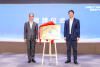
做好“普惠金融”大文章,北京银行如何用“差异化”解题
第一财经· 2025-10-31 06:56
Core Viewpoint - The article emphasizes the significant growth and transformation of inclusive finance in China over the past 20 years, highlighting Beijing Bank's proactive role in this sector, particularly through digital transformation and AI integration in financial services [1][4][6]. Group 1: Development of Inclusive Finance - The concept of "inclusive finance" was first proposed by the United Nations in 2005, and it has seen substantial growth in China, both in scale and service quality [1]. - Since 2022, Beijing Bank has achieved an average annual growth rate of 34.3% in its inclusive finance loan balance, showcasing its commitment to supporting small and medium-sized enterprises (SMEs) [1]. - Beijing Bank has positioned inclusive finance as a long-term strategic focus, aiming to provide differentiated and specialized services [1][7]. Group 2: Digital Transformation Initiatives - In November 2022, Beijing Bank launched the upgraded version 2.0 of its exclusive inclusive finance app "Xiao Juren," marking a new phase in its digital transformation [3]. - The bank's digital transformation is characterized by the integration of AI technologies, transitioning from "digital" to "intelligent" finance, which is seen as an inevitable trend [4][6]. - The introduction of "Linghang AI Loan," an AI-driven credit product for specialized and innovative enterprises, exemplifies the bank's commitment to leveraging AI for enhanced financial services [5]. Group 3: Structural and Mechanism Innovations - Beijing Bank has established a comprehensive organizational structure to support its inclusive finance strategy, with dedicated teams at the headquarters and branches [10]. - The bank has implemented a financing coordination mechanism and strengthened internal incentive systems to enhance the effectiveness of its inclusive finance initiatives [11]. - The bank's product innovation has led to a diverse range of inclusive finance products, including online renewal loans that support a seamless application process [11]. Group 4: Support for Small and Micro Enterprises - Beijing Bank has provided over 1.2 trillion yuan in credit to 50,000 technology-based SMEs, demonstrating its focus on enhancing the financial capabilities of this sector [7]. - As of mid-2025, the bank's inclusive loans to small and micro enterprises reached 261.6 billion yuan, reflecting a growth rate of 17.27% [11]. Group 5: Integration with Technology and Innovation - The bank has successfully combined inclusive finance with technology-driven financial solutions, breaking traditional credit assessment models to better serve innovative SMEs [13]. - A notable case involved the evaluation of a small enterprise's data assets, allowing for credit approval based on intangible assets, showcasing the bank's innovative approach [13]. Group 6: Contribution to Rural Revitalization - Beyond SMEs, inclusive finance plays a crucial role in poverty alleviation and rural revitalization, providing financial services to underserved regions [17]. - Beijing Bank actively participates in rural revitalization efforts, including funding key projects in various regions to support local economic development [18].
专家共话科技与数据双轮驱动下的金融产业变革
Xin Hua Cai Jing· 2025-10-31 06:54
Core Insights - The 2025 Financial Technology Conference held in Beijing focused on the transformation of the financial industry driven by technology and data, aligning with the State Council's guidance on technology finance and digital finance [1][2] - The conference aimed to create a high-level dialogue platform for policy interpretation, technical exchange, and practical cooperation in the financial technology industry, supporting the digital transformation of the financial sector [1] Group 1: Government Initiatives - The Ministry of Industry and Information Technology emphasized the need for financial institutions to increase support for enterprises, particularly technology-based companies, by providing comprehensive financial services throughout their lifecycle [1] - The conference highlighted the importance of guiding enterprises to enhance innovation investment to foster new productive forces [1] Group 2: Key Presentations - A keynote report by an academician discussed the reform of commercial banks in serving the industrial internet [1] - Another keynote focused on the practical exploration of blockchain technology in the financial sector [1] Group 3: Industry Achievements - Significant industry achievements were announced, including the "Enterprise Innovation Points System (2025)" and the "Intelligent Manufacturing and Financial Integration Credit Evaluation Product," which aim to facilitate financing for high-tech enterprises exceeding 600 billion yuan [2]
上海农村商业银行股份有限公司2025年第三季度报告
Shang Hai Zheng Quan Bao· 2025-10-31 06:34
Core Viewpoint - The company reported a stable overall performance in its third-quarter financial results, with a slight decline in operating income but an increase in net profit, indicating resilience in its business model amidst challenging market conditions [10][11]. Financial Data - The company achieved operating income of 19.831 billion yuan, a year-on-year decrease of 3.18%, while net interest income was 14.462 billion yuan, down 5.05% [10]. - The net profit attributable to shareholders was 10.567 billion yuan, reflecting a year-on-year growth of 0.78% [10]. - Total assets reached 1,558.094 billion yuan, an increase of 70.285 billion yuan or 4.72% from the previous year [10]. - The total loans and advances amounted to 767.304 billion yuan, up 12.085 billion yuan or 1.60% [10]. - The total deposits reached 1,137.617 billion yuan, increasing by 65.476 billion yuan or 6.11% [10]. Asset Quality - The non-performing loan balance was 7.480 billion yuan, with a non-performing loan ratio of 0.97%, unchanged from the previous year [10]. - The provision coverage ratio was 340.10%, down 12.25 percentage points from the previous year [10]. Capital Adequacy - The core Tier 1 capital adequacy ratio was 14.49%, Tier 1 capital adequacy ratio was 14.52%, and total capital adequacy ratio was 16.87%, all meeting regulatory requirements [10]. Retail Banking - The company focused on customer-centric retail transformation, with retail financial assets (AUM) reaching 841.424 billion yuan, an increase of 46.106 billion yuan or 5.80% [11]. - The number of personal customers (excluding credit card customers) grew to 26.1719 million, up 1.4397 million or 5.82% [11]. Cost Management - Business and management expenses were 5.378 billion yuan, down 8.28% year-on-year, with a cost-to-income ratio of 27.16%, a decrease of 1.50 percentage points [10]. Corporate Banking - The corporate loan balance was 497.740 billion yuan, an increase of 8.051 billion yuan or 1.64% [14]. - The corporate deposit balance reached 519.602 billion yuan, up 37.214 billion yuan or 7.71% [14]. Inclusive Finance - The company maintained a leading position in "three rural" financial services, with agricultural loans totaling 65.154 billion yuan and inclusive agricultural loans at 15.087 billion yuan [18]. - The balance of inclusive small and micro loans was 91.100 billion yuan, reflecting a year-on-year increase of 5.19% [18]. Green Finance - The company’s green finance assets reached 99.349 billion yuan, with green loan balance at 64.362 billion yuan, up 3.31% year-on-year [23]. - The company issued 4 billion yuan in green bonds at a rate of 1.67% to support green industry projects [24].
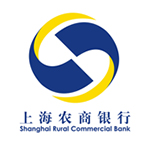
农行前三季度营收、净利润双增长!股价年内涨幅超50%
Nan Fang Du Shi Bao· 2025-10-31 06:28
Core Insights - Agricultural Bank of China reported a year-on-year revenue growth of 1.97% and a net profit growth of 3.28% for the first three quarters of the year [2][3] - The bank's A-share stock price has increased by over 50% this year, leading to a total market capitalization that ranks first among state-owned banks [2][7] Revenue and Profit Growth - The bank achieved an operating income of 550.88 billion yuan and a net profit of 222.32 billion yuan for the first three quarters [3] - Net interest income decreased by 2.40% to 427.31 billion yuan, with a net interest margin of 1.30% [3] - Fee and commission income rose by 13.34% to 69.88 billion yuan [3] Asset and Liability Position - As of the end of September, total assets reached 48.14 trillion yuan, an increase of 11.33% year-on-year [3] - Total liabilities amounted to 44.96 trillion yuan, growing by 12.01% [3] - Non-performing loans stood at 341.40 billion yuan, with a non-performing loan ratio of 1.27%, down by 0.03 percentage points from the previous year [3] Loan Growth in Key Areas - The balance of county loans reached 10.90 trillion yuan, with a growth rate of 10.57%, surpassing the bank's average [5] - Personal consumption loans increased by 9.4% to 1.46 trillion yuan, with a total of 523 million small and micro enterprise clients [6] Green and Inclusive Finance - Green loan balance reached 5.80 trillion yuan, with a growth rate of 20.3% [5] - The bank issued 660 billion yuan in green financial bonds, leading the industry in issuance scale [5] Pension and Consumer Finance - The number of social security card clients reached 280 million, with pension management scale at 372.8 billion yuan, growing by 17.70% [6] - The bank is actively promoting mid-term dividend-related work while balancing financial services and shareholder interests [7]

邮储银行(601658)2025年三季报点评:对公贷款增长快 业务格局更均衡
Xin Lang Cai Jing· 2025-10-31 06:27
Core Insights - The company achieved a revenue of 265.1 billion yuan in the first three quarters of 2025, representing a year-on-year growth of 1.8%, with an increase of 0.3 percentage points compared to the first half of the year [1] - The net profit attributable to shareholders reached 76.6 billion yuan, growing by 1.0% year-on-year, with a 0.2 percentage point increase from the first half of the year [1] - The annualized weighted average ROE was 10.7%, a decrease of 1.1 percentage points year-on-year [1] Financial Performance - Total assets grew by 11.1% year-on-year to 18.6 trillion yuan, an increase of 8.9% from the beginning of the year [1] - Customer deposits increased by 6.1% year-to-date to 16.2 trillion yuan, while total loans rose by 8.3% to 9.7 trillion yuan [1] - Corporate loans surged by 17.9% year-to-date, driven by increased credit allocation to advanced manufacturing, green finance, technology finance, and inclusive finance [1] - Personal loans grew by 1.9% year-to-date, while bill discounting slightly decreased [1] Capital and Asset Quality - The company completed capital replenishment, with a core Tier 1 capital adequacy ratio of 10.65% at the end of Q3, up by 1.09 percentage points from the beginning of the year [1] - The average net interest margin for the first three quarters was 1.68%, down by 21 basis points year-on-year, with net interest income decreasing by 2.1% [1] - The non-interest income from fees grew by 11.5% year-on-year to 23.1 billion yuan, supported by rapid development in investment banking, transaction banking, custody, and wealth management [2] - Other non-interest income increased by 27.5% year-on-year to 31.5 billion yuan, mainly due to gains from bond and bill trading [2] - The annualized non-performing loan generation rate was 0.93%, up by 0.14 percentage points year-on-year, with a non-performing loan ratio of 0.94% at the end of Q3, an increase from the beginning of the year [2] - The coverage ratio for provisions was 240%, down by 46 percentage points from the beginning of the year [2] Investment Outlook - The company maintained its profit forecast, expecting net profits attributable to shareholders of 86.6 billion yuan, 87.2 billion yuan, and 88.3 billion yuan for 2025-2027, with year-on-year growth rates of 0.2%, 0.7%, and 1.2% respectively [2] - The diluted EPS is projected to be 0.67, 0.67, and 0.68 yuan for the same period, with current stock prices corresponding to PE ratios of 8.9, 8.8, and 8.7 times, and PB ratios of 0.72, 0.68, and 0.65 times [2]

北京银行股份有限公司2025年第三季度报告
Shang Hai Zheng Quan Bao· 2025-10-31 05:51
Core Viewpoint - The report highlights Beijing Bank's financial performance and strategic initiatives for the third quarter of 2025, emphasizing growth in assets, loans, and deposits while maintaining asset quality and focusing on high-quality development in key financial sectors. Financial Performance - As of the end of the reporting period, the total assets of the company reached 48,922.27 billion RMB, an increase of 15.95% from the beginning of the year [6] - The total liabilities amounted to 45,050.82 billion RMB, reflecting a growth of 16.62% year-to-date [6] - The company achieved operating income of 515.88 billion RMB, a year-on-year decrease of 1.08%, while net profit attributable to shareholders was 210.64 billion RMB, up 0.26% [6] - The weighted average return on equity stood at 9.86%, indicating stable profitability [6] Asset Quality - The non-performing loan ratio was reported at 1.29%, a decrease of 0.02 percentage points from the beginning of the year, showcasing improved asset quality [7] Retail Business - Retail business saw steady growth, with personal loan balances reaching 7,056.84 billion RMB, a year-on-year increase of 1.99% [8] - The number of retail customers surpassed 31 million, with significant growth in high-end customer segments [8] - The average interest rate on personal savings decreased by 32 basis points compared to the beginning of the year [8] Corporate Business - Corporate deposits grew to 18,255 billion RMB, an increase of 7.12% year-to-date, while corporate loans reached 14,341 billion RMB, up 11.98% [14] - The company focused on enhancing service capabilities for strategic clients, particularly in key sectors such as clean energy and high-end manufacturing [15] Financial Market Operations - The financial market business saw a total scale of 59.4 trillion RMB, a growth of 28.09% from the beginning of the year [19] - The bank's foreign currency assets increased by 43.41%, with interest income from these assets rising by 41.06% [19] Strategic Initiatives - The company is committed to high-quality development, focusing on technology finance, green finance, and inclusive finance, with significant growth in these areas [5][6] - The bank has implemented a digital transformation strategy to enhance customer service and operational efficiency [10][18] Shareholder Information - The board of directors approved a cash dividend of 4.67 RMB per share for the "North Silver Preferred 1" shareholders, totaling 228.83 million RMB [29][46] Related Transactions - The bank approved a credit limit of 10 billion RMB for North Silver Consumer Finance Co., with a special liquidity support limit of 7 billion RMB [50][51] - A credit limit of 17.5 billion RMB was also approved for Beijing Financial Holdings Group and its subsidiaries [59][60]
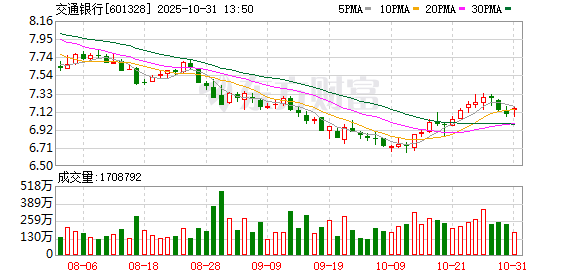
交行三季报透视:单季度营收同比劲增3.92%
2 1 Shi Ji Jing Ji Bao Dao· 2025-10-31 05:49
| 主要会计数据 | 2025 年 | 同比增减 | 2025 年 | ロ | | --- | --- | --- | --- | --- | | | 7至9月 | (%) | 1至9月 | | | 营业收入 | 66.277 | 3.92 | 199. 645 | | | 净利润(归属于母公司股 东) | 23,978 | 2. 46 | 69.994 | | | 扣除非经常性损益的净利 润(归属于母公司股东) | 23.670 | 2. 70 | 69.572 | | 资料来源:截取自交通银行2025年第三季度报告,单位为人民币百万元 10月30日晚间,交通银行发布2025年第三季度报告。 数据显示,今年第三季度,交通银行单季度经营表现稳健向好,整体盈利动能保持充足。7-9月,交行共实现营业收入662.77 亿元,同比增长3.92%;实现归 母净利润239.78 亿元,同比增长2.46%。 | 今年以来,交行盈利保持韧性、营收稳中向好。2025年前三季度共实现营业收入1,996.45亿元,同比增长1.80%;实现归母净利润699.94亿元,同比增长 | | --- | | 1.90%。 | 净息差站稳脚跟 ...

党的二十届四中全会精神学习权威辅导材料:研究建立金融“五篇大文章”综合考核评价制度 加大专项金融债发行
Zheng Quan Shi Bao Wang· 2025-10-31 05:45
人民财讯10月31日电,近日出版发行的《党的二十届四中全会〈建议〉学习辅导百问》,对"如何理解 大力发展科技金融、绿色金融、普惠金融、养老金融、数字金融"作出回答。 该解答指出,下一步,需要完善政策体系,强化正向激励,提升服务能力,进一步增强金融支持的强 度、可持续性和专业化水平。其中,强化对金融机构的正向激励。要科学设计、精准实施再贷款等结构 性货币政策工具,研究建立金融"五篇大文章"综合考核评价制度,加大专项金融债券发行,引导金融机 构加大信贷资源投入和优化信贷结构。加强金融政策与科技、产业、财政等政策协同,健全标准体系和 信息共享、融资对接等支持配套机制,优化金融"五篇大文章"领域贷款风险分担机制,发挥政府性融资 担保体系增信分险作用。 ...