Inflation

Search documents
A chaotic 'up-crash' as markets and economic realities made for a turbulent 2025
Abc.Net.Au· 2025-12-22 19:10
Economic Overview - The year has been marked by significant economic shocks and surges, particularly due to changes in global trade dynamics and tariffs imposed by the US [1][6] - Despite these shocks, the global economy has shown resilience, with stock markets in various countries reaching record highs [6][10] Tariff Impacts - The US implemented a sweeping regime of tariffs that affected trade with allies and adversaries alike, with rates reaching as high as 145% for China and 10% for countries like Australia and the UK [11][12] - The chaotic nature of the tariffs, including those placed on uninhabited islands, exemplified the unpredictable environment created by the US administration [8][11] Market Reactions - Following the announcement of tariffs, global stock markets initially reacted with panic, with the S&P 500 index losing $7.5 trillion in value within two days [31] - However, the market sentiment shifted as fears of a trade war subsided, leading to a recovery in stock prices [19][31] AI Boom - The rise of artificial intelligence (AI) has been a significant driver of market performance, with substantial investments in technology and data centers propelling the "Magnificent Seven" tech companies [32][37] - Nvidia, a key player in the AI sector, saw its stock price increase by over 1,200%, making it the most valuable company globally, valued at over $4 trillion [33][36] Economic Growth and Projections - The capital expenditure related to AI is estimated to be close to $500 billion, contributing significantly to GDP growth in the US [37][38] - Economists have noted that while there are concerns about market bubbles, the current growth is supported by genuine earnings growth from leading tech companies [36][39]



X @Bloomberg
Bloomberg· 2025-12-22 19:00
Paraguay’s central bank kept its benchmark interest rate steady at 6%, reiterating that inflation will converge with its target in 2026. https://t.co/oxf0bwVTQm ...
Inflation FEARMONGERING collapses under strong economic data
Youtube· 2025-12-22 18:31
Economic Outlook - The White House is preparing to launch phase two of President Trump's economic initiatives, focusing on housing affordability and tax refunds [1][2] - Vice President JD Vance acknowledges public impatience regarding economic conditions while emphasizing the need for caution [2] Housing Affordability - Kevin Hasset indicates that top advisors are developing a comprehensive list of proposals aimed at improving housing affordability, which remains a significant concern for American families [2][11] - The Trump administration is reportedly working on housing proposals that have received approval from cabinet secretaries, with plans to reveal them soon [11][18] - Current mortgage rates are around 6.2%, with potential for a reduction in the near future, which could positively impact the housing market [13][15] Inflation and Consumer Spending - Recent data shows that rental growth has stagnated, with no increase in rental payments recorded in October 2025 for the first time in three and a half years, particularly in cities like Austin, Phoenix, Miami, and Orlando [31][32] - The decrease in rental prices is expected to boost disposable income for consumers, leading to increased spending at major retailers like Walmart and Target [33] Market Performance - The S&P 500 is nearing a record high, indicating positive sentiment in the market, which could benefit workers and the overall economy [26][27] - Nvidia and Micron are highlighted as companies benefiting from potential policy changes regarding chip access to China, reflecting the administration's strategy to support American businesses [29]

特朗普"钦点"理事米兰:美联储明年不继续降息就有衰退风险
Hua Er Jie Jian Wen· 2025-12-22 18:16
Core Viewpoint - Stephen Miran, a Federal Reserve governor appointed by President Trump, warns that the U.S. economy faces recession risks unless the Fed continues to cut interest rates next year, highlighting a deep division within the Fed regarding interest rate policy [1][2]. Group 1: Miran's Position on Interest Rates - Miran emphasizes the need for further interest rate cuts, suggesting that the rising unemployment rate exceeds expectations and should prompt a shift towards a more dovish policy stance [1][2]. - He has advocated for larger rate cuts of 50 basis points since joining the Fed in September, although he acknowledges that the necessity for such cuts has diminished after a cumulative reduction of 75 basis points [2][3]. - Miran argues that maintaining a tight policy could lead to unnecessary unemployment and that the underlying inflation rate is close to the Fed's target when excluding certain distortions [2][3]. Group 2: Divergence Among Fed Officials - Other Fed officials, such as Cleveland Fed President Beth Hammack, express a more cautious stance, suggesting that the current monetary policy is favorable and that they can pause rate cuts to assess the impact of previous reductions [5][6]. - New York Fed President John Williams and Boston Fed President Susan Collins also indicate a preference for a more measured approach, with Collins noting concerns about persistent inflation [5][6]. - The recent FOMC meeting revealed significant internal dissent, with three votes against the decision to cut rates, reflecting differing priorities among officials regarding labor market conditions and inflation control [6].
Fed's Miran Says Recession Risks Rise Without More Rate Cuts
Bloomberg Television· 2025-12-22 18:04
Coming to the economy. Investors are watching for signals from policymakers heading into a key year for the Federal Reserve, with a new chair expected to be announced soon. Cleveland Fed President Beth Hammack among those, preferring to hold rates higher for longer.Well, our next guest is taking the other side, voting for a 50 basis point cut at the Fed's last meeting. Joining us now is Federal Reserve Governor Stephen Myron. Very good morning to you, Stephen.Thank you so much for joining us. Good morning. ...
Bitcoin Could Hit $170K in 2026 Fed Crisis Scenario
Etftrends· 2025-12-22 17:46
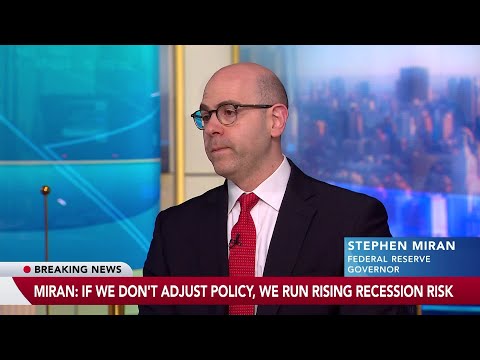
Core Viewpoint - The price of bitcoin could exceed $170,000 by 2026 if the Federal Reserve loses control of the economy and resorts to aggressive stimulus measures, according to CoinShares' latest outlook report [1] Scenario Summaries - The base case scenario predicts bitcoin trading between $110,000 and $140,000 during a slower economic expansion, characterized by subdued growth, persistent inflation, and cautious Fed rate cuts [2] - In the bull case, bitcoin could rise above $150,000 if inflation decreases steadily and AI-related productivity gains enable the Fed to implement more decisive rate cuts [3] - The bear case presents two outcomes: in a recession where the Fed cannot respond quickly, bitcoin may initially fall but could rebound past $170,000 as aggressive easing is interpreted as the Fed losing control [4] - A stagflation scenario, combining weak growth with rising inflation, could see bitcoin drop to the $70,000–$100,000 range due to ETF outflows [5] Investment Opportunities - Investors can gain exposure to bitcoin and ether futures through the CoinShares Bitcoin & Ether ETF (BTF), which currently holds $14.5 million in assets and has seen net inflows of $913,570 over the past month [6] - BTF invests in CME bitcoin and ether futures contracts, as well as treasuries, corporate bonds, and cash, rather than holding digital assets directly, with a 1.25% expense ratio [7] - Beyond the cyclical dynamics of 2026, the gradual decline in dollar reserve dominance is expected to provide a long-term structural tailwind for cryptocurrencies as central banks diversify away from single-currency dependence [7]

Inflation "Stuck" Into 2026 & Case for Incoming International Outperformance
Youtube· 2025-12-22 16:30
Core Insights - The bond market has stabilized, with 10-year yields hovering between 4.1% and 4.2%, contributing to support in the equity market [2] - Economic data, particularly GDP, will be a focal point for market participants, with expectations of consumer strength influencing future economic outlook [3][4] - Long-term yields are expected to remain rangebound until 2026, with potential for shifts based on economic data [4][5] Fixed Income Market - The lack of volatility in the bond market has been beneficial for equities, and expectations suggest that yields will remain elevated and rangebound [8][10] - The market anticipates one to two rate cuts by the Federal Reserve into 2026, but inflation is expected to remain relatively stable [11][12] - The term premium has increased due to uncertainties in fiscal policy and Federal Reserve actions, indicating potential for higher long-term yields [13][14] International Equity Market - International stocks are projected to see earnings growth of 11.5% next year, up from flat earnings this year in the Eurozone, with attractive valuations compared to the S&P 500 [7] - The broadening of the equity market rally may benefit international stocks, particularly as investors seek growth beyond technology sectors [6] - Japan is showing stronger performance compared to the EU, with increased defense spending and positive economic indicators [15][16] European Market Outlook - Germany's fiscal stimulus program is expected to ramp up next year, which could enhance growth and earnings in the Eurozone [16][17] - Recent optimism from the European Central Bank regarding GDP forecasts is supported by government spending, exports, and corporate investments, including in AI [17][18] - Increased lending in the Eurozone is anticipated to boost growth and earnings, contributing positively to the market outlook [18]

Wells Fargo: We're sticking with larger cap, midcap, US over international
CNBC Television· 2025-12-22 16:11
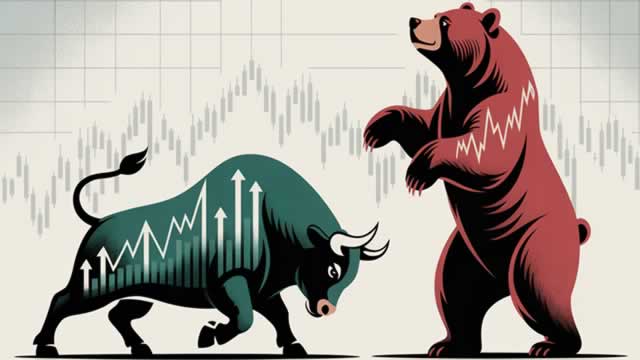
Market Outlook - Wells Fargo Investment Institute expects modest growth with moderate to moderating inflation, a good setup for risk assets in 2026 [3] - The Institute has a year-end 2026 target of 7500 for the S&P 500, considering it a doable number given the expected economic environment [7] - The Institute anticipates the rest of the world, including the US, will perform better next year relative to this year [13] Investment Strategy - The Institute took advantage of the pullback in early April and would like to see another one [4] - The Institute previously overweight infoch and communication services but went neutral on communication services and technology [4][5] - The Institute favors financials as its most favored sector, anticipating financing, M&A, deregulation, and a better economy [6] - The Institute likes industrials and utilities, viewing them as beneficiaries of the AI trade due to the need for data center construction and electrical grid upgrades [5][6] - The Institute is neutral on developed international and emerging markets, viewing emerging markets as a potentially cheaper way to play technology and AI [8][9] - The Institute prefers sticking with larger cap midcaps and US over international, but is looking for opportunities to increase international exposure [9][10]
Learning to Invest Early can Change the Fortune of your Life | Nimesh Mehta | TEDxSVKM Intl School
TEDx Talks· 2025-12-22 15:42
My mother and father both worked for approx 35 years. But in two years after their retirement and after my sister's wedding, we exhausted the life savings. We are left with zero money.And I kept wondering how is this possible. Today I'm going to share that reason and also my 20 years of investment learnings in the theme seeds of change and the topic why and how learning to invest early can change the fortune of your life. I was fortunate to have born to a loving, caring and humble parents.My mother used to ...

US markets today: Wall Street opens higher in holiday-shortened week; S&P 500 nears record
The Times Of India· 2025-12-22 15:16
Market Overview - The S&P 500 rose 0.4%, remaining just below its all-time high set earlier this month, while the Dow Jones Industrial Average increased by 170 points, or 0.4%, and the Nasdaq composite also gained 0.4% [4][6] - Market sentiment was bolstered by strength in commodities, with gold and silver reaching record highs and oil prices rising after US authorities pursued another sanctioned oil tanker in the Caribbean [4][6] Corporate Developments - Shares of Uber and Lyft rose approximately 1.4% each following their announcements to launch robotaxi services in London next year through partnerships with Chinese technology company Baidu, with testing set to begin in the first half of 2026 [4][6] Economic Indicators - The US Labor Department is expected to release weekly data on jobless benefit applications, a key indicator of layoffs, on Wednesday [5][6] - Economic sentiment has weakened over the year due to persistent inflation, a cooling job market, and weaker retail sales, with businesses and households facing uncertainty from a US-led trade war [5][6] Federal Reserve Actions - The Federal Reserve has cut its benchmark interest rate in its last three meetings, despite inflation remaining above the 2% target, and is expected to keep rates unchanged at the January meeting [5][6] International Markets - European markets were mostly lower, with Germany's DAX flat and France's CAC 40 and Britain's FTSE 100 both down 0.4% [5][6] - Asian markets closed higher, led by Japan's Nikkei 225, which jumped 1.8% to 50,402.39, driven by gains in semiconductor stocks [5][6] Commodity Prices - US benchmark crude rose by $1.17 to $57.69 per barrel, while Brent crude increased by $1.23 to $61.70 per barrel [5][6] - Gold prices gained 1.3% to $4,443.10 per ounce, and silver surged over 2% to $68.90 per ounce, setting a new record [5][6]