eSIM技术

Search documents
【太平洋科技-每日观点&资讯】(2025-09-12)
远峰电子· 2025-09-11 12:07
Market Performance - The main board led the gains with notable stocks such as Tongding Interconnection (+10.05%), Shijia Technology (+10.03%), and Dongfang Communication (+10.02) [1] - The ChiNext board saw significant increases with Huihan Co., Ltd. (+20.00%), Xiangnong Chip Creation (+20.00%), and Sihui Fushi (+19.99%) [1] - The Sci-Tech Innovation board also experienced a surge with Tengjing Technology (+20.00%), Haiguang Information (+20.00%), and Xinxiangwei (+20.00%) [1] - Active sub-industries included SW Communication Network Equipment and Devices (+11.24%) and SW Printed Circuit Boards (+11.10%) [1] Domestic News - Aibang ARAI glasses showcased significant advancements in silicon carbide technology, achieving high color fidelity and light efficiency with a thickness of only 0.7mm and a weight of 3.7g [1] - Dongxu Group, a leading domestic electronic glass company, announced the successful development of its first batch of TGV (Through Glass Via) products, covering various wafer specifications and achieving international standards [1] - TSMC is repurposing its old 8-inch wafer fab in Hsinchu Science Park to produce extreme ultraviolet light protective films, aiming for lower unit costs and more predictable supply [1] - China Telecom announced readiness for eSIM services following Apple's launch of new iPhone models supporting eSIM technology, with services expected to be available soon [1] Company Announcements - Chipone Technology reported new orders totaling 1.205 billion yuan, a significant increase of 85.88% compared to the same period last year, with AI computing orders making up about 64% [2] - Huashi Technology announced the acquisition of patents for a ship point cloud completion method and a distributed fiber optic sound sensing system, both of which are self-developed [2] - Chutianlong disclosed a plan for a shareholder to reduce holdings by up to 13.83 million shares, representing 3.00% of the company's total equity [2] - Cambridge Technology announced a cash dividend of 0.0452 yuan per share, totaling approximately 12.11 million yuan [2] International News - Oracle's CEO announced the signing of multiple contracts worth billions with different clients, resulting in a total remaining performance obligation of $455 billion [2] - The South Korean government plans to prioritize the development of strategic materials and components, aiming to increase the self-sufficiency rate of SiC power semiconductors from 10% to 20% by 2030 [2] - NVIDIA unveiled a new GPU series designed for large-scale context inference, optimized for AI inference tasks with high performance and energy efficiency [2] - Wolfspeed announced the large-scale commercialization of its 200mm silicon carbide materials, achieving superior specifications and improved uniformity [2]


万马科技(300698.SZ):已经持续多年开展eSIM业务
Ge Long Hui· 2025-09-11 07:06
Group 1 - The company has been engaged in eSIM business for several years and is considered a leader in the domestic industry [1] - The company's ONE SIM solution supports multiple GSMA standards, including SGP.02, SGP.22, and SGP.32, making it the first provider to support all these standards simultaneously [1] - The eSIM technology has already been applied in the vehicle networking sector, with plans to expand its application to more fields in the future [1]

果然财经|最薄苹果手机“无卡入市”,运营商eSIM破局在即
Qi Lu Wan Bao· 2025-09-11 06:52
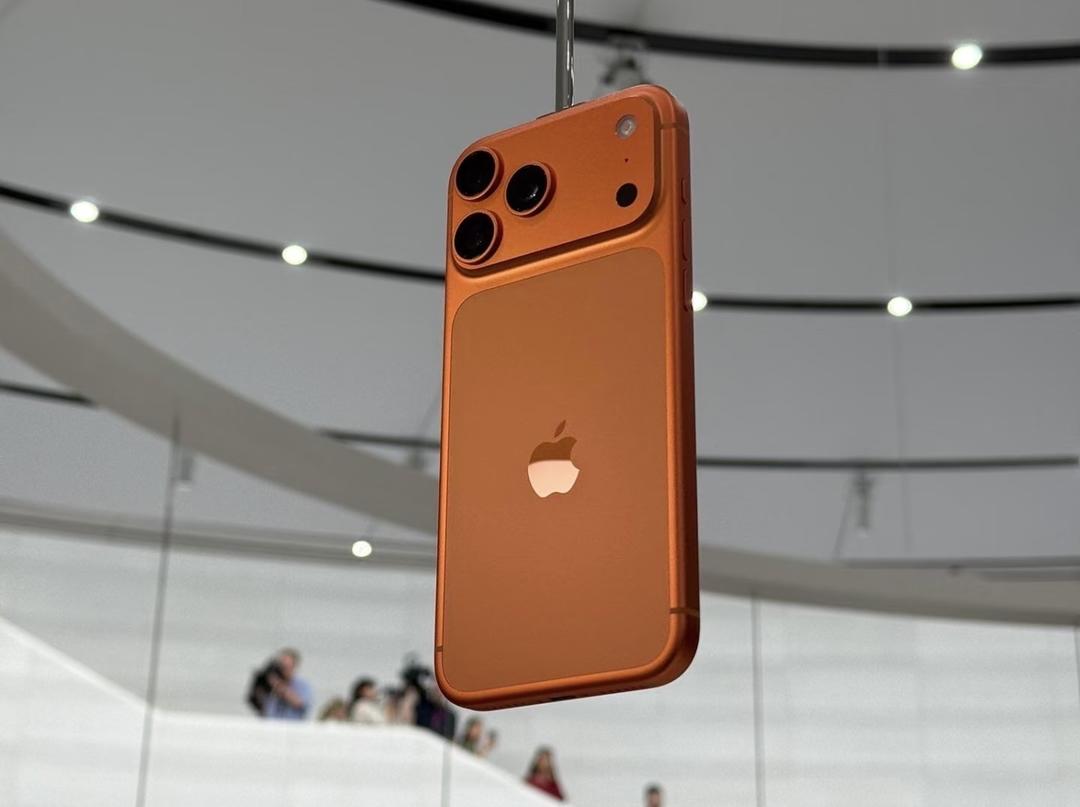
距离9月19日iPhone Air在国内正式发售仅剩一周的时间,这款手机买了能否在中国大陆市场正常使用成了大家热议的话题。 没有实体卡的eSIM 能实现一部手机多个号码 齐鲁晚报·齐鲁壹点记者 魏银科 孙佳琪 9月10日凌晨,苹果推出iPhone 17系列智能手机。让人没想到的是,这次苹果发售新机,却燃爆了联通,原因是号称"苹果史上最薄机型"的iPhone Air为了 实现其轻薄设计,取消实体SIM卡槽,全球统一采用eSIM,官网显示目前仅有联通线下营业厅可以办理eSIM业务。也就是说,iPhone Air装不了实体卡, 想要使用需要先办一张eSIM虚拟卡,联通目前作为国内唯一一家拥有eSIM授权运营商,却无手机eSIM办理先例,所以国内尚无运营商开展手机eSIM卡业 务。 "终于把最薄的iPhone给盼来了,但仔细一看,居然只能用eSIM卡,且目前仅支持联通,国内现在有这样的业务吗?手机买回来能用吗?有点魔幻了。"准 备换手机的果粉乐乐和朋友聊到。 所以问题来了,什么是eSIM?eSIM即嵌入式SIM卡(Embedded Subscriber Identity Module),是由全球移动通信协会(GSMA ...


苹果推无SIM卡手机,实名制与反电诈咋办
2 1 Shi Ji Jing Ji Bao Dao· 2025-09-11 05:46
Core Insights - Apple has launched the new iPhone Air, touted as the "thinnest iPhone ever," featuring eSIM technology for the first time in the Chinese market, allowing users to activate their devices without a physical SIM card [2][5][10] - China Unicom is currently the only operator supporting eSIM activation for the iPhone Air, requiring users to visit physical stores for activation [2][8] - The introduction of eSIM in China is seen as a strategic shift, with the potential to enhance user convenience, especially for travelers [5][7] Group 1: eSIM Technology - eSIM is a virtual SIM card embedded in the device, allowing multiple carrier plans without the need for physical cards, which is beneficial for travelers [2][7] - The technology has been slow to gain traction in China due to regulatory challenges and concerns over security and fraud [3][11] - The eSIM size is significantly smaller than traditional SIM cards, contributing to the design of thinner devices [5][10] Group 2: Market Dynamics - The launch of the iPhone Air represents a strategic pivot for Apple, aiming to capture more users in markets like China and India, where previous models struggled [5][10] - The eSIM technology is expected to become more prevalent as operators like China Mobile and China Telecom prepare to offer eSIM services [12][15] - The regulatory environment remains a critical factor in the adoption of eSIM, with operators needing to balance convenience with compliance and security measures [3][14][15] Group 3: Future Outlook - The success of eSIM in China will depend on the willingness of operators to embrace the technology and the regulatory framework that governs its use [3][15] - Other manufacturers, such as Huawei and OPPO, are also exploring eSIM capabilities in their upcoming devices, indicating a broader industry trend [15][16] - The potential for eSIM to enhance user experience and device design is significant, but its market acceptance will require time and regulatory adjustments [15][16]

苹果推无SIM卡手机,实名制与反电诈咋办
21世纪经济报道· 2025-09-11 05:43
Core Viewpoint - The launch of the new iPhone Air, touted as the "thinnest ever," introduces eSIM technology in the Chinese market, allowing users to activate their devices without a physical SIM card, marking a significant shift in mobile connectivity in China [1][4][10]. Group 1: eSIM Technology - eSIM is a virtual SIM card embedded in the device, allowing multiple carrier plans without the need for physical cards, which is particularly beneficial for travelers [1][8]. - The eSIM technology has been globally adopted, with 240 countries and regions offering eSIM services, and the number of supporting operators increasing from 45 in 2018 to 441 by 2024 [10]. - The eSIM's remote configuration capability poses regulatory challenges in China, as it allows for multiple numbers on a single card, which could be exploited for fraud [2][11]. Group 2: Market Dynamics - The iPhone Air represents a strategic shift for Apple, moving towards ultra-thin products to attract more users, especially in markets like China and India where previous models struggled [6]. - The current eSIM offering is limited to China Unicom, requiring users to activate their eSIM in-store, which may hinder widespread adoption [3][9]. - The success of eSIM in China will depend on the willingness of carriers to embrace the technology and the regulatory environment surrounding it [2][14]. Group 3: Regulatory Environment - The Chinese government has previously halted eSIM services due to security concerns, but recent developments indicate a potential reopening of the market as carriers prepare to offer eSIM services [10][12]. - New regulations have been introduced to ensure eSIM activation is secure, including prohibiting cross-border activation and requiring precise location verification [13][14]. - The balance between convenience and regulatory compliance will be crucial for the future of eSIM technology in China [14].
三大运营商均已布局eSIM手机业务
Zheng Quan Ri Bao· 2025-09-10 16:41
Core Viewpoint - The launch of the iPhone Air, featuring eSIM technology, is expected to stimulate demand for new mobile devices and potentially trigger a wave of upgrades in the smartphone market [4][6]. Group 1: eSIM Technology Overview - eSIM, or embedded SIM, is a new generation SIM card standard that allows for remote configuration and management of mobile networks without the need for a physical SIM card slot [4]. - The introduction of eSIM in the iPhone Air is seen as a significant move that could lead to increased adoption of eSIM technology across the industry [4][5]. Group 2: Market Impact and Industry Response - The iPhone Air's adoption of eSIM technology is anticipated to drive domestic smartphone manufacturers to follow suit, potentially leading to a new wave of smartphone upgrades [4]. - Industry experts express caution, noting that the complexity of eSIM activation compared to traditional SIM cards may affect user acceptance [4][5]. Group 3: Current State of eSIM in China - Currently, China Unicom is the only supported operator for iPhone eSIM in mainland China, while China Mobile and China Telecom are preparing to launch their eSIM services [2][3]. - The domestic eSIM ecosystem has developed a complete supply chain, covering chips, modules, platforms, and operators, and is applicable in various sectors including consumer electronics and IoT [4][5]. Group 4: Company Developments in eSIM - Unisoc Microelectronics is a leading player in the domestic eSIM market, with solutions already in commercial use across multiple countries and supporting over 400 operators [6]. - Hengbao Co., Ltd. has reported that its eSIM technology covers consumer electronics and IoT devices, aligning with global eSIM standards [6]. - Chutianlong Co., Ltd. is enhancing its eSIM product line and service capabilities to expand its domestic and international business [7].


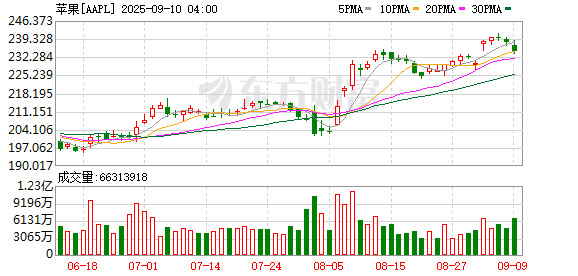
苹果股价,大跌3%
财联社· 2025-09-10 15:48
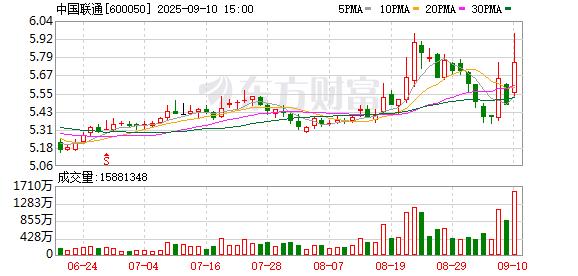
Core Viewpoint - Apple's stock price fell over 3% amid concerns that the newly released iPhone Air may not have sufficient cost-performance ratio to boost sales [1]. Group 1: Stock Performance - Apple's stock (AAPL) was trading at $227.116, down 3.00% from the previous close of $234.350, with a market capitalization of approximately $3.37 trillion and a P/E ratio of 33.95 [2]. - The trading volume was 33.66 million shares, with a total transaction value of $7.71 billion [2]. Group 2: Product Launch - Apple launched the iPhone 17 series, with the iPhone 17 Air being highlighted as the "thinnest iPhone ever" at just 5.6mm thick, lighter than Samsung's S25 Edge [2]. - The iPhone 17 Air features a titanium frame, the latest A19 Pro chip, and is the first to fully adopt eSIM technology globally, starting at a price of $999 [2]. Group 3: Design Innovation - The iPhone 17 Air represents the most significant design innovation from Apple in the past eight years, reflecting CEO Tim Cook's homage to the company's founder, Steve Jobs [3].

苹果新品引爆eSIM 国内eSIM业务或年底全面开放
Nan Fang Du Shi Bao· 2025-09-10 11:29
Core Viewpoint - Apple's annual event on September 10 introduced the iPhone Air, which exclusively supports eSIM technology, raising significant attention in the market [2][4]. Group 1: eSIM Technology Overview - The iPhone Air can only be activated through eSIM, making it incompatible with physical SIM cards. Users must choose a carrier that offers eSIM services and obtain a corresponding mobile service plan [4]. - eSIM technology allows for remote configuration of multiple carrier profiles, saving internal device space and enhancing user connectivity management. This technology is increasingly important as traditional SIM card growth plateaus [7][10]. Group 2: Current Market and Regulatory Landscape - In China, only China Unicom currently supports eSIM for the iPhone Air, while China Mobile and China Telecom are preparing to offer eSIM services and have submitted applications to the Ministry of Industry and Information Technology [6][18]. - China Unicom has been a leader in promoting eSIM, having launched eSIM services in 25 provinces and cities, and has previously collaborated with Huawei and Apple for eSIM-enabled devices [11]. Group 3: Future Prospects and Challenges - Despite the push for eSIM, its adoption has been slow, with applications primarily in wearables rather than smartphones. The industry aims to eliminate physical SIM slots to enhance device design and performance [10]. - Regulatory bodies have paused eSIM services due to security concerns, but there are indications that the three major Chinese telecom operators plan to fully restart eSIM services by the end of the year [15][18].


eSIM“卷土重来”!概念股齐涨
Shang Hai Zheng Quan Bao· 2025-09-10 10:44
Core Viewpoint - Apple has launched the thinnest iPhone ever, the iPhone Air, which utilizes eSIM technology to achieve a lightweight design. Currently, only China Unicom supports eSIM for this device, while China Mobile and China Telecom are expected to follow suit soon [1][2]. Group 1: eSIM Technology and Market Impact - eSIM is a digital SIM card that eliminates the need for a physical SIM card, offering greater flexibility and security. It is supported by over 500 global operators, including China Unicom, and facilitates easier international roaming [2][6]. - The global eSIM application is experiencing a growth wave driven by the demand for AI smart terminals, international roaming, and IoT devices. Investment opportunities are anticipated in cellular IoT communication modules and eSIM management platforms [1][6][7]. Group 2: Historical Context and Challenges - eSIM trials began in China in 2017, but the service was halted in 2023 due to operational upgrades. China Unicom resumed eSIM services in July 2023, indicating a renewed interest in this technology [4][5]. - Two main reasons for the previous stagnation in eSIM development in China include reduced user loyalty to operators and early security vulnerabilities that allowed misuse of eSIM technology [5][6]. Group 3: Future Prospects - The eSIM technology is expected to reshape the global mobile connectivity landscape, with its integration into various devices like smartphones, computers, and IoT devices. The market size for eSIM is projected to grow significantly as manufacturers increasingly embed eSIMs in their products [6][7].
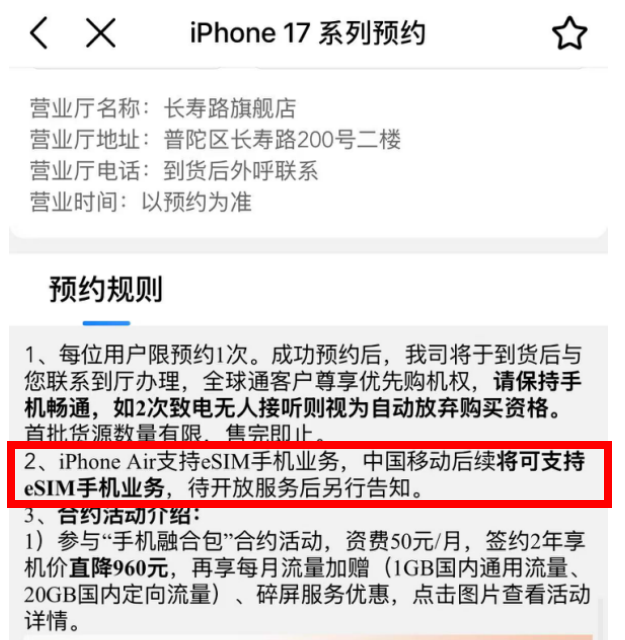
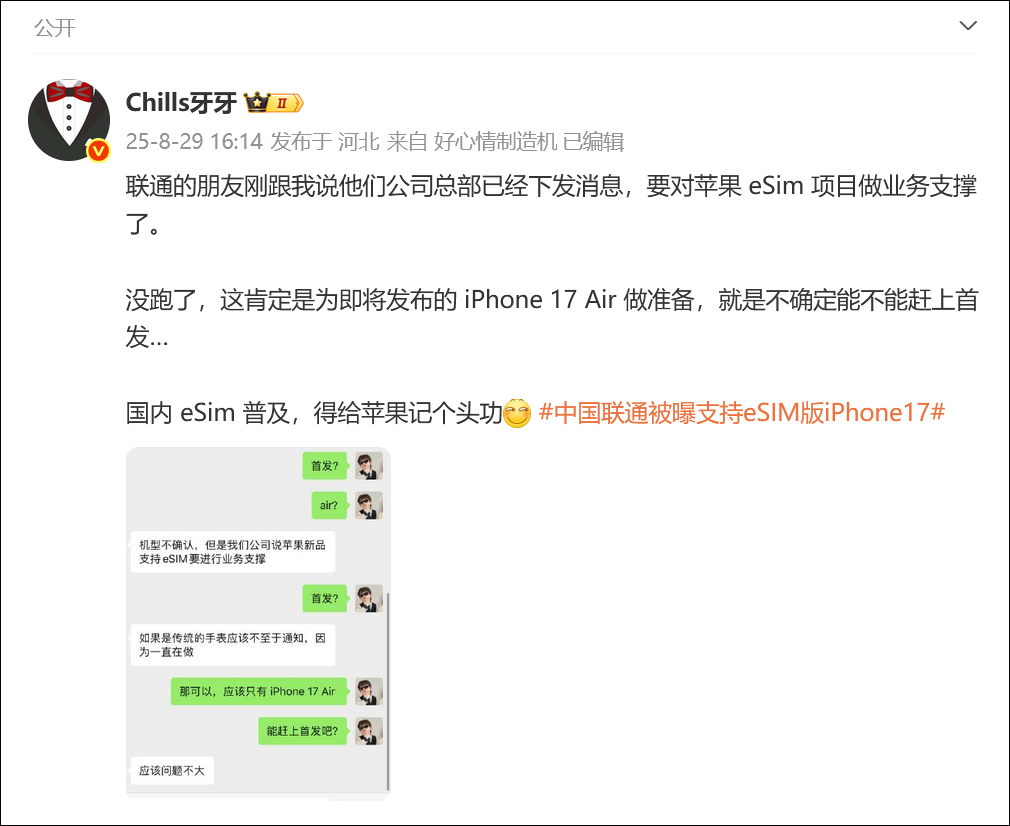
曝中国联通将支持eSIM版iPhone17
Guan Cha Zhe Wang· 2025-09-05 11:45
Core Viewpoint - Recent reports indicate that China Unicom has issued a notice to support the eSIM project for Apple, suggesting that eSIM functionality may soon be available for the Chinese version of Apple phones [1][3]. Group 1: China Unicom's eSIM Support - China Unicom has confirmed plans to support eSIM for the upcoming iPhone models, although it remains uncertain if the iPhone 17 series will completely lack a physical SIM card slot [3]. - Unicom staff mentioned that they are preparing for eSIM operations, but specific details and timelines are pending further notifications [3]. Group 2: eSIM Technology Overview - eSIM technology allows for embedded digital SIM capabilities, eliminating the need for physical SIM cards and enabling remote configuration for network connectivity, thus saving internal device space [3]. - In the U.S., Apple has already removed the SIM card slot starting with the iPhone 14, but the technology has not been widely adopted in other regions until now [3]. Group 3: iPhone 17 Series Expectations - Reports suggest that only the iPhone 17 Air model may support eSIM, while other models will retain traditional SIM card slots, possibly due to design constraints [5]. - The iPhone 17 Air is marketed as "5.5mm ultra-thin," but its battery capacity is limited to 2800mAh, falling short of 3000mAh [5]. - Apple is set to hold its fall launch event on September 10, with the iPhone 17 series expected to go on pre-sale on September 12, although the launch of the eSIM-enabled iPhone 17 Air in China may face delays due to infrastructure readiness [5].