
生物多样性

Search documents
戴庄建设全省首家生物多样性研学基地
Zhen Jiang Ri Bao· 2025-05-14 23:14
Core Viewpoint - The establishment of the Daizhuang Biodiversity Research and Learning Base marks a significant step in promoting biodiversity conservation and ecological agriculture in the region, serving as a model for integrating agricultural resources with educational initiatives [1][2][3] Group 1: Biodiversity Research and Learning Base - The Daizhuang Biodiversity Research and Learning Base, located in Juyuan City, is the first of its kind in the province, completed with an investment of over 2 million yuan, and opened to the public [1] - The base features multiple functional areas, including a center for showcasing local agricultural products and a research classroom for hands-on learning about organic agricultural ecosystems [1][2] - The base is expected to attract around 5,000 visitors annually, supporting the integration of agriculture, rural resources, and cultural industries [2] Group 2: Ecological Agriculture Practices - Daizhuang Village has adopted ecological agriculture practices, such as using natural predators like mantises and frogs instead of pesticides, resulting in a significant increase in biodiversity, with 130 species found in organic rice fields compared to only 27 in conventional fields [2] - The village has been exploring biodiversity agriculture and organic planting for 15 years, with the research base serving as a platform to promote the benefits of biodiversity to a wider audience [3] - The local agricultural practices have led to improved soil quality and increased populations of beneficial insects and birds, creating a positive feedback loop that enhances vegetable quality [3]
《2024年北京市生态环境状况公报》发布 优良天数创有监测以来新纪录
Yang Shi Xin Wen· 2025-05-13 08:20
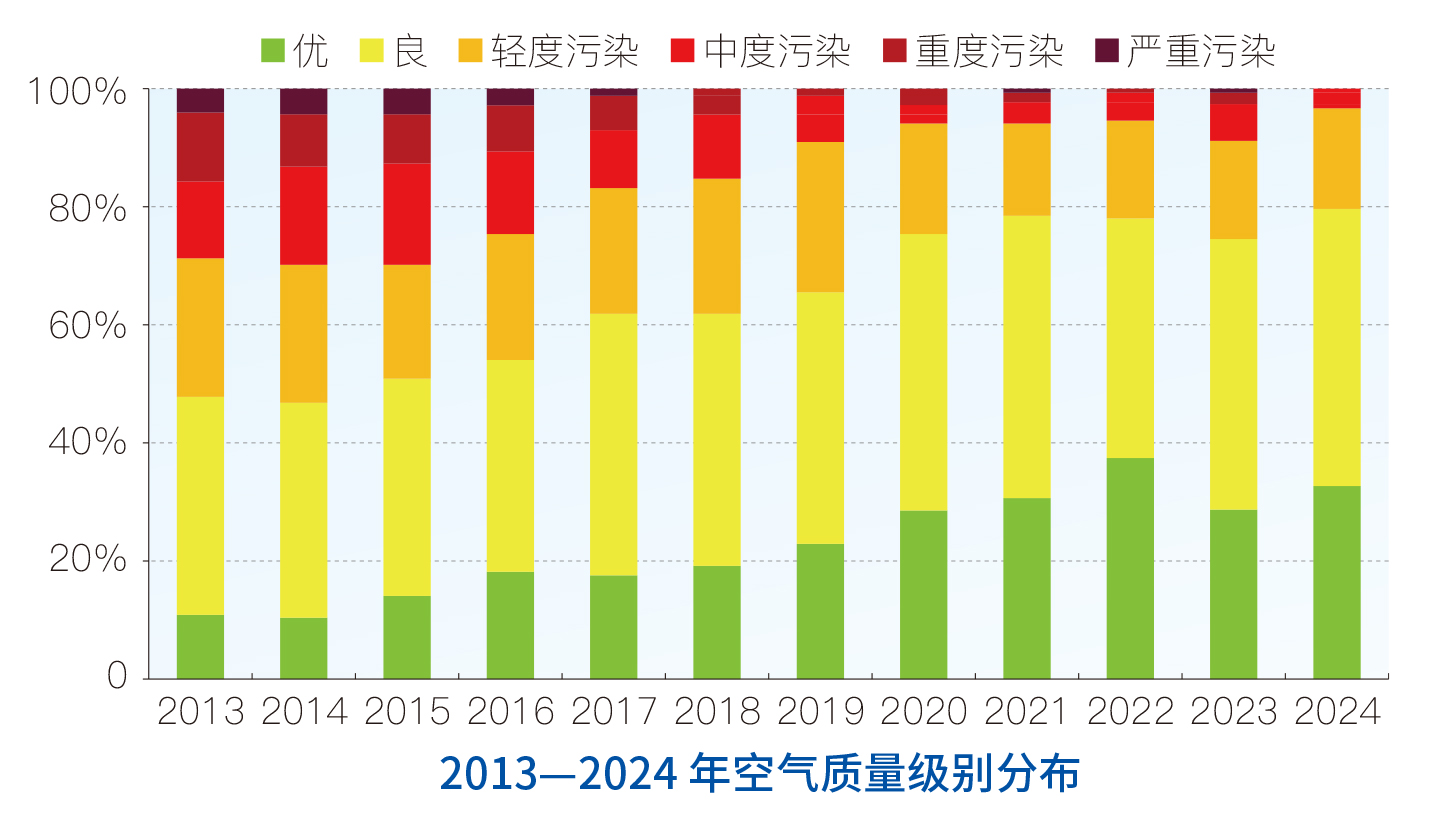
Group 1 - The core viewpoint of the report is that Beijing's ecological environment has shown steady improvement, with significant achievements in air quality, water quality, and biodiversity [1][3][6] - In 2024, the annual average concentration of PM2.5 in Beijing was 30.5 micrograms per cubic meter, meeting the national air quality secondary standard for four consecutive years, with a record high of 290 good air quality days [1] - Major pollutants have seen a significant reduction, with PM2.5 concentration decreasing by 65.9% compared to 2013, and the number of heavily polluted days reduced to 2, the lowest on record [1] Group 2 - The water ecological environment in Beijing has improved, with over 70% of rivers reaching good quality levels, and the proportion of good water quality rivers increasing to 87.2%, up 15.9 percentage points year-on-year [3] - All five major river systems in Beijing have been restored to flowing rivers for four consecutive years, with a total length of 2551.6 kilometers monitored [3] - Beijing was recognized as a "Biodiversity Charming City," with an ecological environment quality index (EI) of 71.4, an increase of 0.85% year-on-year, and a green view rate of 26.98% in urban construction areas [6] Group 3 - The report also reviews the achievements in ecological civilization construction, carbon market trading, pollution prevention, and collaborative environmental governance in the Beijing-Tianjin-Hebei region [10] - In 2025, Beijing will continue to focus on building a beautiful city, promoting carbon reduction, pollution reduction, and green expansion, while balancing high-quality development with high-level protection [10]

专家称救助雪豹“凌小蛰”具多重价值
Zhong Guo Xin Wen Wang· 2025-05-06 08:12
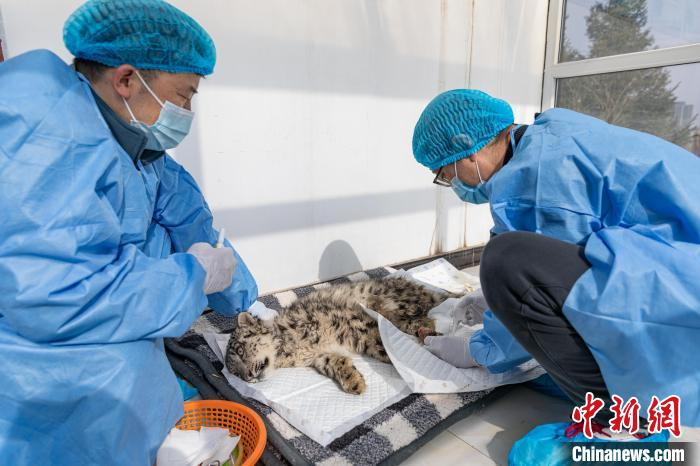
从颈椎骨折、生命垂危到第一次爬出巢箱、自主站立、行走扑跳、淘气"炫饭"……两个月来,在西 宁野生动物园社交平台官方账号中,众多网友持续"追更"雪豹"凌小蛰"的康复日志,密切关注其体况改 善。 3月5日,6月龄重伤雪豹幼崽在三江源腹地、青海省玉树藏族自治州治多县野外被巡护员发现,及 时送往青海野生动物救护繁育中心治疗。目前,这只名为"凌小蛰"的雪豹身体渐渐好转,它将何去何 从、能否放归等话题持续引发讨论。 齐新章说:"一只雪豹的生存活动需要相当规模的食草动物、草场支撑,它的种群健康于整体高山 生态系统而言具有典型指示意义。" 3月15日,救助人员为雪豹"凌小蛰"治疗。 (西宁野生动物园供图) 在连新明看来,雪豹作为三江源生物链顶端掠食者,具备科学研究、自然教育、文化传播等多元价 值。 "以几年前救助的雪豹'凌蛰'为例,它放归时佩戴的卫星追踪项圈,可用于观测记录迁徙路线。"连 新明称,"我们看到,它的活动范围很大,涉及多地超1057公里,这可能就是未来雪豹避开人类干扰的 栖息廊道。收集这些信息作为打造廊道的基础,从而保证雪豹栖息地完整性,让破碎片区的种群得以联 结、交流。" "应该说,救助和保护行动其实都是以人类 ...
为闹市保留2000平方米生机 90%的植物来自乡土 “一江一河”首座生境花园开放
Jie Fang Ri Bao· 2025-04-27 01:30
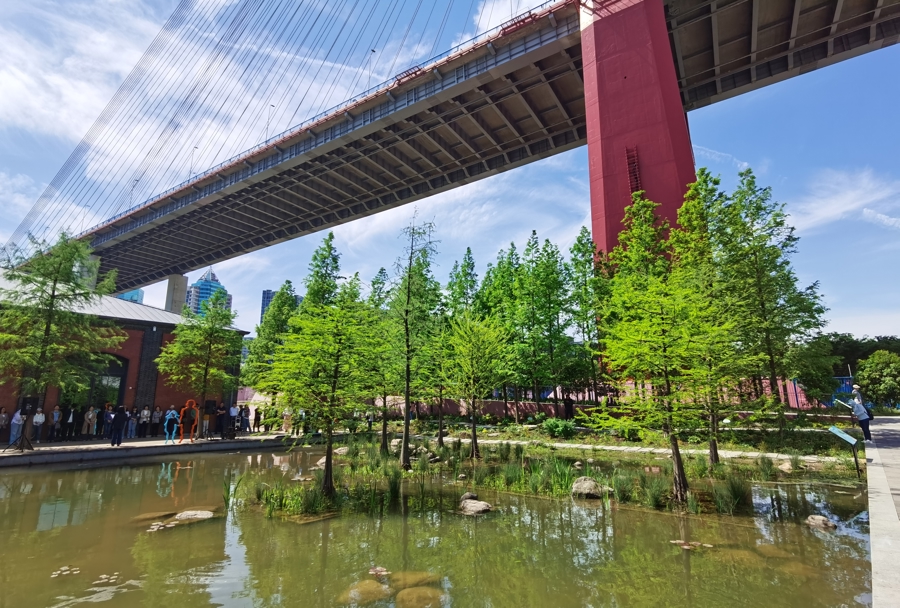
记者 陈玺撼 王海燕)沿着浦东滨江岸线走到杨浦大桥下,一座2000平方米的花园映入眼帘,惊喜不止于此,池塘边的梭鱼 草中,一只市区里不多见的黄翅蜻正翩翩起舞……这是上海"一江一河"滨水区域首座生境花园"生境东岸",昨天正式建成开 放。 留基底 将"生境"与"花园"融合在一起——这种具有生物栖息环境功能的花园有5个特点:使用本土植物,杜绝外来入侵植物,丰富 植物群落,减少农药化肥的使用,为城市野生动物提供辅助的食物、水源或庇护所。 "城市的快速发展不断挤压自然精灵的生息空间,是这片自然基底的顽强,唤醒了我们的责任感。"东岸集团党委办公室副 主任鲍伶俐介绍。此前的生物多样性调查在这里发现了14种鸟类、4种蜻蜓、5种传粉昆虫和20余种植物。"闹市"中蕴藏的这片 生机令人震撼,让管理者重新审视公共空间的功能性。 追求"生境"功能,就不能大拆大建,要营造更适宜已有"住户"繁衍生息的环境。大自然保护协会(TNC)上海保护项目总 监俞霖琳告诉记者,这片空间原有的水杉全部被保留了下来,在原有600多平方米人工水体基础上,净化水质、补种各类适应湿 地环境的植物,形成了这座生境花园的雏形。 造"跳板" 城市令原本连通的生境被割裂 ...
开放科学实现可持续需要做什么
Bei Jing Shang Bao· 2025-03-28 18:13
Core Viewpoint - Open science is emerging as a transformative paradigm in research, emphasizing the need for international cooperation and open sharing of scientific knowledge to address global challenges [1][2][3] Group 1: Importance of Open Science - Open science is essential for enhancing scientific collaboration and information sharing, allowing science to benefit society [1] - The necessity for open science is increasingly urgent due to global sustainability demands, such as climate change and biodiversity [1][2] - Open science represents a shift from traditional research paradigms, advocating for open access to research results and data [1] Group 2: Challenges and Solutions - The current era is characterized by complex, interconnected challenges that cannot be addressed by individual countries or laboratories alone [2] - To promote open science, it is crucial to improve policy environments, share experiences, and create frameworks that support open science initiatives [3] - Establishing a global scientific community is vital for addressing challenges like climate change and health crises, necessitating international collaboration on large-scale scientific projects [3] Group 3: Mechanisms for Open Science - Enhancing the sharing of research infrastructure and establishing international open sharing platforms can improve efficiency and resource utilization [3] - Open sharing is viewed as a potential accelerator for increasing research efficiency, speeding up technology diffusion, and fostering cross-national collaboration [2]