
GDP growth

Search documents
Expect a slowdown in GDP growth, so three rate cuts likely, says Citi's Rob Rowe
CNBC Television· 2025-07-08 15:58
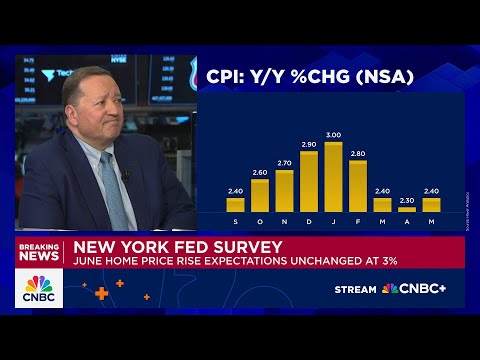
Let's stick with the tariffs and the impact on markets as the major indices come off their worst day since about the middle of June. Joining us here at Post 9 this morning is city's research headed global strategy Rob once again with us. Welcome back Rob.Good to see you. Thank you very much. Hi Courtney.The president says August 1 is the date. Does that introduce new uh instability for equities or not. right now.I think, you know, I think it's going to be up and down because we're in this negotiation period ...

摩根士丹利:中国经济评论- 第二季度增长强劲,未来面临更多阻力
摩根· 2025-07-03 02:41
Investment Rating - The report does not explicitly provide an investment rating for the industry Core Insights - China's GDP growth is expected to remain robust at 5.0-5.2% YoY for Q2 2025, supported by front-loading of exports and earlier government stimulus measures [4][32] - The property market continues to face challenges, with 30-city property sales declining by 10% YoY in June, and top 100 developers' contract sales volume down by 35% YoY [9][19] - Manufacturing PMIs show slight improvements, with NBS manufacturing PMI at 49.7 and Caixin manufacturing PMI at 50.4 in June, indicating a less negative growth momentum [7][10] Economic Data Summary - **GDP Growth**: Q2 GDP growth is projected at 5.0-5.2% YoY, with a slower sequential growth compared to Q1 [4][32] - **Industrial Production**: Expected to soften to 5.4% YoY in June, down from 5.8% YoY in May [3][16] - **Retail Sales**: Anticipated to moderate to 6% YoY in June, slightly down from 6.4% YoY in May [23] - **Fixed Asset Investment (FAI)**: Overall FAI growth likely recorded 3% YoY in June, with property investment declining by 10-12% YoY [20] - **Exports and Imports**: Export growth expected to edge down to 4% YoY in June, while imports may improve to 1% YoY [23] Sector-Specific Insights - **Manufacturing Sector**: NBS manufacturing PMI increased by 0.2ppt to 49.7 in June, with improvements in new orders and production indices [7][10] - **Property Sector**: The property market continues to weaken, with significant declines in sales and new starts [9][19] - **Automotive Sector**: Auto retail sales growth picked up to 24% YoY in June, driven by a low base and trade-in subsidies [23][38] High-Frequency Data - **PMIs**: NBS non-manufacturing PMI edged up to 50.5 in June, indicating slight growth in services, while construction PMI improved significantly [8] - **Port Activities**: Port cargo throughput growth moderated to 1% YoY in June, reflecting a slowdown in trade activities [9][17] - **Credit Growth**: Total social financing (TSF) credit growth likely edged up to 8.8% YoY in June, with new RMB loans at approximately RMB 1.85 trillion [30][31]

What’s Keeping the Fed on Hold? | Presented by CME Group
Bloomberg Television· 2025-06-26 15:33
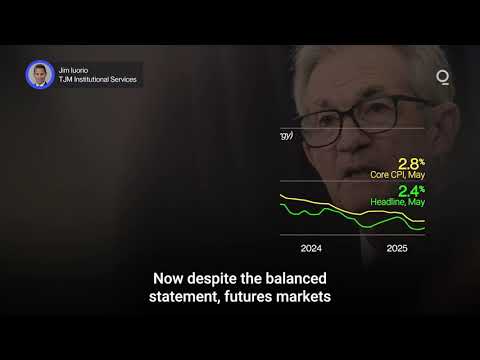
Monetary Policy - The Federal Reserve maintained the Fed funds rate unchanged for the fourth consecutive time, continuing to monitor inflation and labor market data amid economic uncertainty [1] - The chairman highlighted uncertainty regarding the inflationary effects of tariff policy, noting that these effects are expected to become more apparent in the coming months [1] - Futures markets are pricing in over 60 basis points (0.6%) of rate cuts by the end of 2025 [2] Economic Projections - The Fed reduced its GDP growth projection for 2026 to 1.4%, a decrease of over 0.6% from current levels above 2% [3] - Inflation expectation projections were raised to 3%, raising concerns about a potential stagflationary period possibly fueled by exogenous forces [3] Upcoming Data - The CPI data on July 15th is expected to provide a clearer picture of the inflation path and could influence expectations for the next Fed rate cut [3]
巴克莱:美国展望_ 现在谈美联储政策转向还为时过早
2025-06-18 00:54
Summary of Key Points from the Conference Call Industry Overview - The discussion primarily revolves around the **US economy**, focusing on inflation trends, trade policies, and Federal Reserve monetary policy. Core Insights and Arguments 1. **Inflation Trends**: - May's inflation data showed a softer-than-expected increase, with Core CPI rising only **0.13% m/m (2.8% y/y)**, significantly below expectations of **0.27%** and **0.30%** from Barclays and consensus respectively [2][4] - The overall CPI inflation was also soft at **0.08% m/m (2.3% y/y)**, influenced by declining gasoline prices [2][4] 2. **Trade Policy Impact**: - The US-China trade discussions have not made significant progress, with the current truce set to expire on **August 10**. The administration is considering restoring country-specific tariffs and increasing sectoral tariffs on autos [4][11] - Businesses are expected to pass through approximately **50%** of tariff costs to consumer prices, which could significantly impact retail margins [6][11] 3. **Federal Reserve's Stance**: - The FOMC is expected to maintain the current target range for the funds rate at **4.25-4.50%**, with only one rate cut anticipated this year and three in **2026** [17][31] - Updated projections are likely to reflect higher inflation and downgraded GDP growth for **2025**, with core PCE inflation expected at **3.1%** [18][31] 4. **Economic Growth Projections**: - The GDP growth forecast for the current quarter is projected at **1.2% q/q saar**, with consumer spending showing signs of strength despite inflationary pressures [25][31] - The unemployment rate is expected to rise to **4.5%** by **2025**, indicating a potential slowdown in the labor market [18][31] 5. **Consumer Sentiment and Spending**: - Recent consumer sentiment data showed improvement, with the current conditions index rising to **63.7** and expectations increasing to **58.4** [14][27] - Retail sales are anticipated to show weakness, with a forecasted decline of **1.0% m/m** due to falling vehicle sales and gasoline prices [15][31] Other Important but Overlooked Content - The **PPI** for final goods rose only **0.1% m/m (2.6% y/y)**, indicating a continued soft trajectory since March [3][4] - The **Treasury budget deficit** grew to **$316.0 billion** in May, highlighting ongoing fiscal challenges [27] - Initial jobless claims have remained elevated, indicating some deterioration in labor market conditions, with claims at **248k** for the week ending June 7 [13][27] This summary encapsulates the critical insights from the conference call, focusing on the economic outlook, inflation trends, trade policy implications, and the Federal Reserve's monetary policy stance.

高盛:6 月FOMC前瞻:对关税的谨慎看法
Goldman Sachs· 2025-06-17 06:17
Investment Rating - The report does not explicitly provide an investment rating for the industry Core Insights - Trade tensions have diminished somewhat since the last FOMC meeting, with low inflation and limited signs of economic softening observed [2][5] - The FOMC is expected to maintain a cautious stance regarding tariffs and economic projections, emphasizing the uncertainty in the economic outlook [6][16] - Economic forecasts include a projected 14 percentage point increase in the effective tariff rate, leading to a peak core PCE inflation of 3.4%, GDP growth slowing to 1.25% in 2025, and an unemployment rate increase to 4.4% [7][8][17] Economic Projections - The median projection for 2025 indicates slightly higher inflation at 3.0%, lower GDP growth at 1.5%, and a higher unemployment rate at 4.5% [17][21] - The FOMC is anticipated to deliver the first of three normalization cuts in December, with a terminal rate of 3.5-3.75% expected by 2026 [25][27] - The report highlights that aside from tariffs, inflation news has been relatively soft, with wage growth expectations and new tenant rent growth declining [26][30] Tariff Impact - The report outlines that tariffs are expected to reduce GDP growth by almost 1 percentage point due to their tax-like effect on consumer spending and the uncertainty they create for business investment [8][10] - The effective tariff rate is projected to increase significantly, with over 9 percentage points attributed to tariffs already in effect [7][10] Summary of Economic Projections - Real GDP growth is forecasted at 1.3% for 2025, with an unemployment rate of 4.4% and core PCE inflation at 3.0% [19][20] - The FOMC's interest rate projections are expected to remain unchanged, with a close split among participants regarding future cuts [21][24]
CBO Director Phillip Swagel addresses accusations of being partisan
CNBC Television· 2025-06-16 12:55
boosting the richest by $12,000 a year. Joining us right now is Phil Swagel. He's the director of the Congressional Budget Office.And Phil, let's talk through some of the criticism you've received. Russ Vought said on X that this bill reduces deficits by $1.4% trillion. When you adjust for the CBO's one big gimmick, not using a realistic current policy baseline.Caroline Leavitt said that the CBO assumes long term GDP growth of an anemic 1.8%. And that's absurd. And then you had President Trump himself sayin ...
Israel-Iran attacks are absolutely inflationary, says Apollo's Torsten Slock
CNBC Television· 2025-06-13 19:33
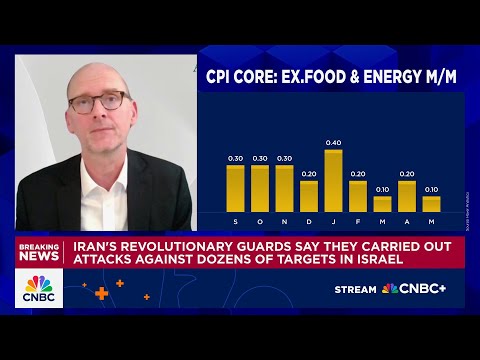
And let's bring in Torston Slock. He is partner and chief economist at Apollo. And Torstston, don't worry.We're not going to ask you to pine on any of the geopolitical stuff. You your job as an economist is to factor in all the costs that we see and establish a conclusion. Here's the reality about the price of oil. We we think about the price of oil when it comes to gasoline.And that's true. About half of a barrel of oil goes into gasoline. But oil goes into a lot of things.Plastics, natural gas, by the way ...
CEA Chair Miran on Inflation, Tax Bill and China Tariffs
Bloomberg Television· 2025-06-11 21:55
Inflation & Economic Policy - The administration believes its policies are driving down inflation by boosting the economy's supply side, enabling firms to produce more efficiently [1][2] - Concerns exist that companies may hesitate to pass on tariff-related costs due to fears of reduced consumer demand, potentially impacting economic growth and bottom lines [3] - The theory of tax incentives suggests the more inflexible party bears the tariff burden, with American consumers potentially changing consumption patterns [4][5] Trade & Tariffs - Firms can adjust supply chains, sourcing from countries with favorable trade deals, to avoid tariffs [6][7] - Tariffs aim to encourage countries to lower barriers to US products, creating more balanced trade and offering alternative markets [21] - Reciprocal tariffs remain a negotiating tool, potentially implemented if trade negotiations don't progress [19][22] - The president intends to use tariffs to incentivize countries to advance negotiations and make concessions, fostering a fair trade environment [24] Fiscal Policy & Deficit - The administration asserts it takes the deficit seriously and has a plan to reduce it through tax relief, deregulation, energy abundance, and trade renegotiation, aiming for 3% GDP growth [12][13] - Increased GDP growth, tariff revenues, and supply-side expansion are expected to contribute to deficit reduction [13] - Incentives like full expensing of equipment, R&D, and new factories are designed to stimulate investment in America, expanding productive capacity and keeping inflation low [8][9][10] - The administration anticipates deficit reduction through better economic growth, tariff revenue, reduced interest expenses, and cuts to waste, fraud, and abuse [16] - The administration projects 3 to 4 percentage points of GDP worth of deficit reduction, not fully reflected in the CBO score [15]
高盛:宏观速览-最新观点与预测
Goldman Sachs· 2025-06-05 06:42
Investment Rating - The report does not explicitly provide an investment rating for the industry discussed [3]. Core Insights - The global real GDP growth is expected to slow to 2.4% year-on-year in 2025, influenced by higher US tariffs and trade policy uncertainty [4][5]. - In the US, real GDP growth is projected to be 1.0% in 2025, with a 35% probability of entering a recession within the next 12 months [4]. - The Euro area is anticipated to see a real GDP growth of 0.9% year-on-year in 2025, affected by elevated trade policy uncertainty [4]. - China is expected to achieve a real GDP growth of 4.6% year-on-year in 2025, despite ongoing challenges in the property market [5]. Economic Forecasts - The LME aluminum price forecast for 2025 has been raised to $2,400 per metric ton, while the 2026 forecast has been lowered to $2,230 per metric ton [1]. - Core inflation in the US is expected to rise to 3.6% year-on-year by the end of 2025, driven by higher tariffs [4]. - The unemployment rate in the US is projected to increase to 4.5% by the end of 2025 [4]. - The European Central Bank (ECB) is expected to implement a series of rate cuts, reaching a policy rate of 1.75% by July 2025 [4]. Regional Insights - In the US, consumer spending and business investment are anticipated to be negatively impacted by elevated policy uncertainty and rising tariffs [4]. - The Euro area is expected to experience a cooling in services inflation, contributing to a decline in core inflation to 2.1% by the end of 2025 [4]. - In China, inflation is projected to remain very low, with CPI inflation expected to end the year at 0% and PPI inflation at -2.1% [5].
香港经济-更乐观的增长前景
2025-06-02 15:44
Summary of Key Points from the Conference Call Industry Overview - **Industry**: Hong Kong Economic Outlook - **Key Focus**: Economic growth projections, trade dynamics, financial sector performance, and tourism recovery Core Insights and Arguments 1. **Upward GDP Revision**: The GDP growth projection for 2025 has been revised up to 2.2% from a prior projection of 1.0%, surpassing the current market consensus of 2.0% [1][4] 2. **Strong 1Q Growth**: Hong Kong's GDP growth accelerated to 3.1% year-on-year in 1Q25, compared to 2.5% in 4Q24, marking the fastest sequential expansion since 1Q23 [2][4] 3. **Investment Growth**: Key supporting factors for the strong 1Q growth include improvements in investment growth and net service export growth, particularly in machinery, computer, and software investments [2][11] 4. **Financial Sector Momentum**: Despite the April tariff shock, financial sector activity has shown significant improvement, which is expected to support overall growth into 2Q25 [3][21] 5. **Tourism Recovery**: The May Golden Week holiday saw the highest daily visitor arrivals since the COVID shock, with nearly 20% growth in visitor arrivals, indicating a recovery in tourism [3][23][26] 6. **Tariff Risks**: Despite the positive outlook, growth is projected to moderate due to elevated trade tariff uncertainties, with significant risks tied to US-China trade talks [4][40] Additional Important Insights 1. **Interbank Rates**: The 3-month HIBOR fell to 1.37% as of May 26, down from 3.99% at the end of April, which is seen as positive for the economy, particularly for interest-sensitive sectors [6][40] 2. **Domestic Consumption**: Outbound consumption has shown signs of slowing, while inbound consumption is picking up, suggesting potential for domestic sector recovery if visitor numbers continue to rise [3][19][28] 3. **Investment Trends**: There is a noted stabilization and uptick in investment in machinery and equipment, which is crucial for supporting economic growth [13][11] 4. **Economic Indicators**: The report includes a summary of macro indicators, showing a projected real GDP growth of 2.2% for 2025, with private consumption expected to grow by 2.0% [8][4] This summary encapsulates the key points discussed in the conference call regarding the economic outlook for Hong Kong, highlighting both opportunities and risks in the current environment.