L4级自动驾驶

Search documents
文远知行-W(00800.HK)拟全球发售8825万股发售股份 预计11月6日上市
Ge Long Hui· 2025-10-27 23:13
Core Viewpoint - The company, WeRide, is planning a global offering of 88.25 million shares, with a maximum public offering price of HKD 35.0 per share, aiming to raise approximately HKD 2.9321 billion for various strategic initiatives in the autonomous driving sector [1][4]. Group 1: Company Overview - WeRide is a global pioneer in Level 4 (L4) autonomous driving, with its products and solutions deployed in over 30 cities across 11 countries, including China, UAE, Saudi Arabia, Switzerland, France, Singapore, and Japan [1][2]. - The company has established itself as one of the first service providers to achieve large-scale commercial operations in both China and the Middle East [1]. Group 2: Market Position and Strategy - According to Zhaoshang Consulting, WeRide ranks second globally in revenue generated from L4 and above autonomous driving on urban roads, holding a market share of 21.8% as of 2024 [1]. - The company has deployed a fleet of over 1,500 autonomous vehicles, including 1,108 self-owned vehicles and 415 vehicles in collaboration with third parties, with a focus on markets showing significant long-term potential for autonomous driving [2]. Group 3: Competitive Advantage - WeRide has established a leading international presence and significant first-mover advantages in key overseas markets, being the only company to successfully deploy L4 autonomous driving solutions in France, Switzerland, and Belgium [3]. - In Singapore, WeRide is the only company with both autonomous taxi and shuttle deployments, leading the next market entrant by at least 1.5 years in L4 development [3]. Group 4: Use of Proceeds - The estimated net proceeds of approximately HKD 2.9321 billion from the global offering will be allocated as follows: 40% for developing the autonomous driving technology stack, 40% for accelerating the commercialization of the L4 fleet, 10% for establishing marketing teams and branches, and 10% for working capital and general corporate purposes [4].

L4级自动驾驶领域的全球先行者文远知行-W启动港股招股 预计11月6日挂牌
Zhi Tong Cai Jing· 2025-10-27 22:57
Group 1 - The company, WeRide, is planning a global offering of 88.25 million shares, with 5% allocated for public offering in Hong Kong and 95% for international offering, along with a 15% over-allotment option [1] - The expected net proceeds from the global offering are approximately HKD 2.932 billion, assuming the over-allotment option is not exercised [1] - The allocation of proceeds includes 40% for developing autonomous driving technology stack, 40% for accelerating commercialization of L4 fleet, 10% for establishing marketing teams and branches, and 10% for working capital and general corporate purposes [1] Group 2 - WeRide is a global pioneer in the L4 autonomous driving sector, with its products and solutions deployed in over 30 cities across 11 countries, including China, UAE, Saudi Arabia, Switzerland, France, Singapore, and Japan [2] - The company ranks second globally in revenue generated from L4 and above autonomous driving on urban roads, holding a market share of 21.8% as of 2024 [2] - As of the latest feasible date, WeRide has deployed over 1,500 autonomous vehicles, including 1,108 self-operated vehicles and 415 vehicles in collaboration with third parties [2] - The company reported revenues of approximately CNY 402 million and CNY 361 million for 2023 and 2024 respectively, with gross profits of approximately CNY 183 million and CNY 112 million [2] - In the first half of 2025, the company achieved revenue of approximately CNY 200 million and a gross profit of CNY 61.059 million [2]
L4级自动驾驶领域的全球先行者文远知行-W(00800)启动港股招股 预计11月6日挂牌
智通财经网· 2025-10-27 22:56
Group 1 - The company, WeRide, plans to conduct a global offering of 88.25 million shares from October 28 to November 3, 2025, with a maximum public offering price of HKD 35.0 per share [1] - The expected net proceeds from the global offering are approximately HKD 2.932 billion, with 40% allocated for the development of autonomous driving technology stack and 40% for accelerating the commercialization of L4 fleet [1] - The company will also allocate 10% for establishing marketing teams and branches, and another 10% for working capital and general corporate purposes [1] Group 2 - WeRide is a global pioneer in the L4 autonomous driving sector, with its products and solutions deployed in over 30 cities across 11 countries, including China, UAE, Saudi Arabia, Switzerland, France, Singapore, and Japan [2] - The company ranks second globally in revenue generated from L4 and above autonomous driving on urban roads, holding a market share of 21.8% in 2024 [2] - As of the latest feasible date, WeRide has deployed over 1,500 autonomous vehicles, including 1,108 self-owned vehicles and 415 vehicles in collaboration with third parties, with a focus on markets showing significant long-term potential [2] Group 3 - In 2023 and 2024, the company achieved revenues of approximately HKD 402 million and HKD 361 million, with gross profits of about HKD 183 million and HKD 112 million, respectively [2] - For the first half of 2025, the company reported revenue of approximately HKD 200 million and a gross profit of HKD 61.05 million [2]
文远知行(00800) - 全球发售
2025-10-27 22:19
股份代號 : 0800 (於開曼群島註冊成立以不同投票權控制的有限責任公司) 全球發售 聯席保薦人、整體協調人、聯席全球協調人、聯席賬簿管理人及聯席牽頭經辦人 WeRide Inc. 文遠知行* (按字母順序排列) 整體協調人、聯席全球協調人、聯席賬簿管理人及聯席牽頭經辦人 聯席賬簿管理人及聯席牽頭經辦人 * 僅供識別 重要提示 重要提示:閣下如對本招股章程的任何內容有任何疑問,應獲取獨立專業意見。 WeRide Inc. 文遠知行 * (於開曼群島註冊成立以不同投票權控制的有限責任公司) 全球發售 | 全球發售的發售股份數目 | : 88,250,000股發售股份 | | --- | --- | | | (視乎超額配售權行使與否而定) | | 香港發售股份數目 | : 4,412,500股發售股份(可予重新分配) | | 國際發售股份數目 | : 83,837,500股發售股份(可予重新 | | | 分配及視乎超額配售權行使與否而定) | | 最高公開發售價 | : 每股發售股份35.0港元,另加1.0% | | | 經紀佣金、0.00015%會財局 | | | 交易徵費、0.0027%證監會交易徵費 | ...
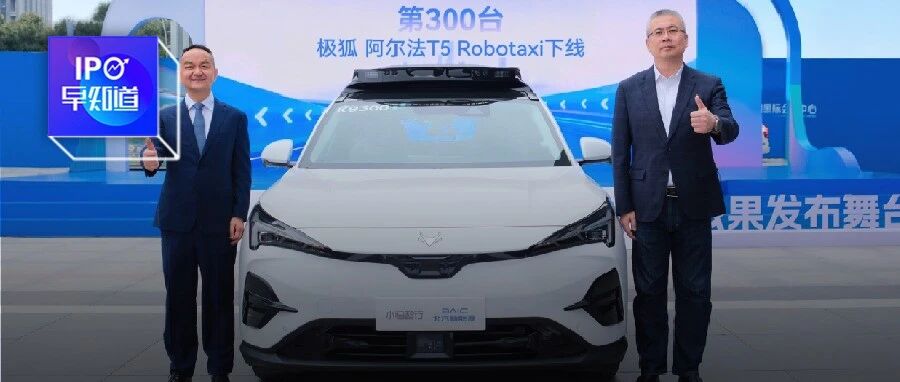
小马智行第300台Robotaxi下线:中国L4量产驶入快车道
Zhong Guo Jing Ying Bao· 2025-10-25 11:34
Core Insights - The joint venture between Pony.ai and BAIC New Energy has successfully rolled out the 300th unit of the Alpha T5 Robotaxi, marking a significant milestone in the mass production of L4 autonomous vehicles in China [2][3] - The Alpha T5 Robotaxi integrates advanced autonomous driving technology from Pony.ai with BAIC's high-end manufacturing capabilities, establishing itself as a benchmark in the Robotaxi sector and providing a replicable model for the smart connected vehicle industry [2][3] Group 1: Production and Commercialization - The seventh-generation Robotaxi achieves a closed-loop system of "production-oriented operation," allowing each unit to be directly deployed for testing and service, thus shortening the technology validation cycle and paving the way for commercialization [3] - Since the start of their collaboration, Pony.ai and BAIC New Energy have streamlined various aspects including R&D, production line construction, supply chain management, and road testing, with plans to deploy the Robotaxi in major Chinese cities and expand to markets in the Middle East and Europe [3] Group 2: Cost and Safety Innovations - The mass production breakthrough of the seventh-generation Robotaxi is supported by significant innovations in cost and safety, with the cost of the autonomous driving kit reduced by 70% compared to previous generations, overcoming the cost barrier for L4 production [4] - The safety framework is built on BAIC's fully redundant chassis and Pony.ai's multi-layer safety architecture, backed by over 55 million kilometers of real-world testing, ensuring a safety standard ten times that of human drivers for commercial operations [4] Group 3: Expansion and Testing - Pony.ai is actively expanding its service scenarios, including automated shuttle services connecting key transport hubs like airports and train stations, and conducting 24-hour testing to explore nighttime travel solutions [5] - The Alpha T5 Robotaxi is being utilized to promote regular demonstration operations in Beijing's Yizhuang area, contributing to the broader deployment of intelligent driving technologies [5]


小马智行与北汽量产下线第300台L4级极狐阿尔法T5车型,打造中国Robotaxi标杆车型
IPO早知道· 2025-10-25 02:36
Core Viewpoint - The successful rollout of the 300th L4 Robotaxi, the Jihu Alpha T5, developed by Pony.ai and BAIC New Energy, marks a significant milestone in the collaboration between the two companies, establishing a benchmark for Robotaxi models in China and providing a key example for the development of the intelligent connected vehicle industry [4][5]. Group 1: Production and Technology - The Jihu Alpha T5 Robotaxi, which began mass production in July, is equipped with Pony.ai's seventh-generation autonomous driving solution, capable of operating in all weather, scenarios, and time periods [4][5]. - Each seventh-generation Robotaxi produced is designed to have full autonomous driving capabilities, creating a closed-loop system that facilitates faster service delivery to users by shortening the path between technology validation and operational deployment [5][7]. - The collaboration has achieved significant advancements in L4 autonomous vehicle development, including positive research and development, production line construction, supply chain setup, and road testing [5][7]. Group 2: Market Deployment and Expansion - The Jihu Alpha T5 Robotaxi has received road testing permits in cities like Beijing and Shenzhen, preparing for large-scale deployment this year [5][7]. - The successful production of the new model supports Pony.ai's goal of establishing a fleet of 1,000 Robotaxis [5][7]. - Plans are in place to explore deployment in Middle Eastern and European markets, aiming to provide safer and more comfortable smart mobility services globally [5][7]. Group 3: Cost and Safety Innovations - The cost of the autonomous driving kit has been reduced by 70% compared to previous generations, achieved through the large-scale use of automotive-grade components and pre-installed production lines, thus breaking the cost bottleneck for mass production of autonomous vehicles [7]. - The safety of the L4 autonomous driving operation is underpinned by BAIC New Energy's fully redundant chassis and Pony.ai's multi-layered safety architecture, supported by over 55 million kilometers of real-world testing data, ensuring safety levels surpassing human drivers by tenfold [7][8]. Group 4: Industry Trends - The successful launch of the 300th vehicle signifies a clearer strategic vision for Pony.ai's Robotaxi initiative, indicating a shift from vision to reality in the L4 production benchmark [8]. - The emergence of intelligent connected vehicles represents a new high ground in automotive intelligence, driven by both quality and cost-effectiveness [8].
刷新自动驾驶融资纪录,超豪华投资人阵容,新石器凭什么?
Feng Huang Wang· 2025-10-24 12:55
Core Insights - The company New Stone Technology has achieved a significant milestone in the L4 autonomous driving sector by completing a $600 million Series D funding round, marking a record for single financing in China's autonomous driving industry [1][2][3] - The year 2025 is anticipated to be pivotal for large-scale applications of unmanned delivery, with New Stone Technology positioning itself as a leader in this emerging market [1][14] Funding and Investment - The Series D funding was led by UAE-based Leish Capital, with participation from several prominent investors, indicating strong confidence in the company's potential for large-scale commercialization [1][3] - This funding round follows a previous C+ round investment of over 1 billion RMB from logistics giants and investment firms, showcasing sustained investor interest [2][3] Market Expansion - New Stone Technology plans to use the UAE as a launchpad for international expansion, having recently obtained the first RoboVan license in the region [3][14] - The company has established partnerships with major domestic logistics firms, capturing over 70% market share in the express delivery sector [4][6] Technology Advancements - The introduction of "no-map" technology allows New Stone Technology to operate without reliance on high-definition maps, significantly reducing operational costs and compliance challenges in international markets [7][9] - This technology enables the company to adapt to real-time logistics demands, expanding its service capabilities beyond fixed-route deliveries [7][9] Operational Strategy - The company emphasizes a deep understanding of the logistics industry and a commitment to refined operational practices as its core competitive advantage [10][12] - New Stone Technology aims to create a healthy ecosystem that provides value to partners, ensuring sustainable growth and collaboration within the industry [13][15] Future Outlook - The market for unmanned urban delivery is projected to reach 3 trillion RMB, with New Stone Technology expecting to achieve significant revenue growth, potentially reaching 1 billion RMB by 2025 [14][15] - The company anticipates a rapid increase in demand for its services, with over 70% of future orders expected to come from sectors outside traditional express delivery [15][17]
对话新石器CEO余恩源:融资逾6亿美元,无人配送正进入规模化商用阶段
Xin Lang Ke Ji· 2025-10-23 15:07
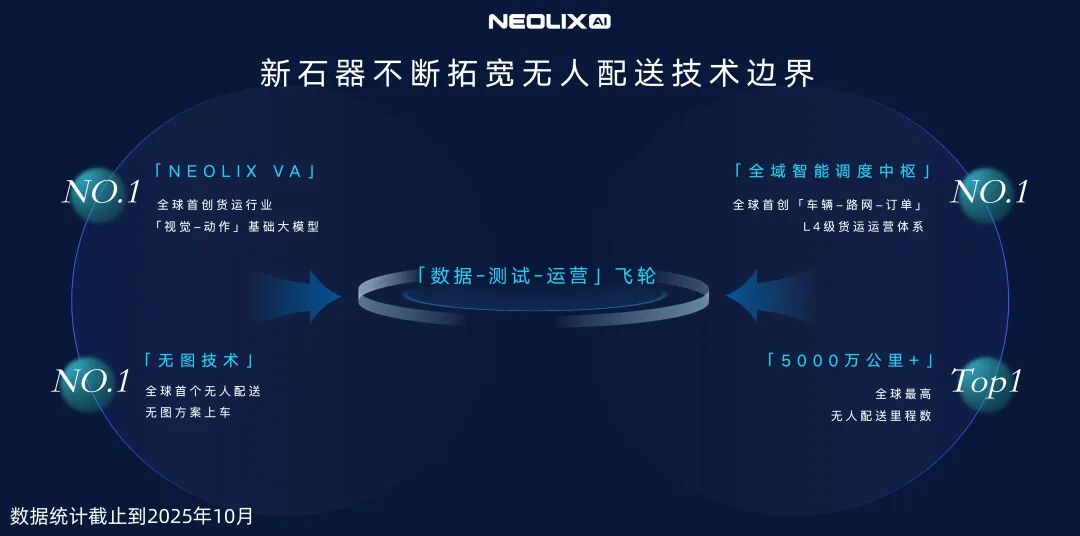
Core Insights - Neolix, a provider of L4 autonomous delivery solutions, has completed over $600 million in Series D financing, marking the largest private equity financing in China's autonomous driving sector to date and one of the largest in China's private equity market this year [1] Group 1: Company Developments - Neolix has delivered over 10,000 L4 autonomous vehicles, becoming the first company globally to achieve this milestone in L4 vehicle fleet [1] - The company is currently delivering more than 2,000 vehicles per month, with plans to increase this to 3,000 vehicles per month by the end of the year [1] - Neolix's revenue has reached a scale of 1 billion, achieving near break-even, with expectations for full profitability next year [2] Group 2: Industry Trends - The autonomous delivery sector is transitioning from research and testing phases to large-scale commercial deployment [1] - The expansion of Neolix's business into urban and instant delivery, along with the opening of nighttime logistics rights, is expected to significantly broaden the company's market potential [1]
头部企业再获融资无人配送赛道趋热
Shang Hai Zheng Quan Bao· 2025-10-22 18:09
Core Insights - The article highlights the recent $100 million Series B4 funding round completed by Jiushi Intelligent, led by Ant Group, bringing the total funding in the B round to $400 million. This reflects a growing trend of significant investments in the autonomous delivery vehicle sector, indicating a shift towards commercialization and scalability in the industry [1][2]. Funding and Investment Trends - Jiushi Intelligent focuses on L4 autonomous delivery vehicles, aiming to provide standardized transportation solutions for logistics, retail, and express delivery sectors. The recent funding will enhance R&D in autonomous driving technology and accelerate global market expansion [2][3]. - The funding landscape for the autonomous delivery sector has seen a surge, with several leading companies securing substantial investments. For instance, New Stone Unmanned Vehicle raised $1.5 billion in February, and Jiushi Intelligent previously secured $300 million in April [2][3]. - As of Q3 2025, the financing scale in the domestic autonomous delivery vehicle sector reached approximately 8.97 billion yuan, indicating a shift from pilot testing to large-scale replication [2]. Market Growth and Projections - The market for autonomous delivery vehicles is experiencing rapid growth, with New Stone Unmanned Vehicle's monthly sales increasing from 200-300 units to nearly 2,000 units within a year. The company achieved its target of delivering over 10,000 vehicles ahead of schedule [4]. - Jiushi Intelligent has expanded its operations to over 300 cities in China, with a total of over 10,000 vehicles delivered and a safe driving mileage exceeding 50 million kilometers [4][5]. - The demand for autonomous delivery vehicles is expected to grow significantly, with projections indicating that by the end of 2025, the industry will be in the early stages of large-scale commercialization [5]. Industry Challenges and Considerations - The advancement of autonomous delivery vehicles is contingent upon the establishment of unified management and access regulations at the provincial and national levels. The industry is currently facing challenges in achieving full automation and integration with existing logistics systems [6][7]. - Balancing vehicle reliability and cost in complex traffic scenarios remains a significant challenge. The industry must address issues related to extreme scenario recognition and response, as well as the need for high-quality components to meet commercial vehicle standards [7]. - Public acceptance and safety concerns are critical factors for the successful integration of autonomous delivery vehicles into urban environments. Companies are focusing on demonstrating the value of these vehicles in enhancing logistics efficiency and promoting sustainable development [7].
无人驾驶双雄对决:文远知行亏损率曾高达697%压力显著 靠海外业务支撑30%毛利率
Xin Lang Zheng Quan· 2025-10-21 10:57
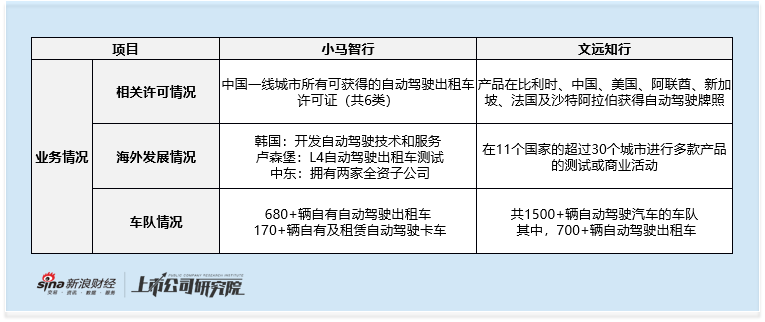
Core Viewpoint - The article discusses the recent listings of two major players in China's autonomous driving sector, Xiaoma Zhixing and Wenyuan Zhixing, on the Hong Kong stock market, highlighting their differing strategies and financial performances in a challenging industry environment [1]. Business Strategy Differences - Xiaoma Zhixing focuses on deepening its presence in China's first-tier cities and has obtained all available autonomous taxi licenses, while also exploring overseas markets like Luxembourg and the UAE [3][4]. - Wenyuan Zhixing adopts an "overseas first" strategy, concentrating on regions with clear economic advantages for autonomous vehicle operations, particularly in Europe and the Middle East, where it has established a leading position [3][4]. Fleet Composition and Scale - Wenyuan Zhixing operates a fleet of over 1500 autonomous vehicles, primarily focusing on taxi services, while Xiaoma Zhixing has a dual fleet strategy with over 680 autonomous taxis and 170 autonomous trucks, catering to both urban mobility and logistics [4]. Financial Performance - Both companies are experiencing significant losses, with Xiaoma Zhixing projected to generate $75.03 million in revenue and incur a net loss of $280 million in 2024, while Wenyuan Zhixing is expected to have $50.41 million in revenue and a net loss of $350 million [6][7]. - Wenyuan Zhixing maintains a gross margin above 30%, significantly higher than Xiaoma Zhixing's margins, indicating potential for profitability despite high loss rates [6]. Future Performance Predictions - Analysts predict that Wenyuan Zhixing may outperform Xiaoma Zhixing in 2025, with expected revenues of $89.6 million compared to Xiaoma's $82.1 million, and a narrower net loss for Wenyuan [7]. Additional Challenges for Xiaoma Zhixing - Xiaoma Zhixing faces increased scrutiny following a short-selling report that raised concerns about its technology, operational efficiency, and financial health, adding uncertainty to its future performance in the market [8].