Trade War

Search documents
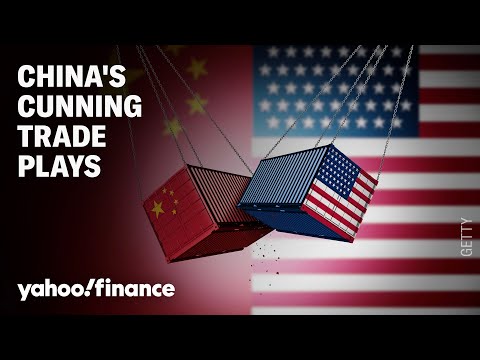
Why China has the 'upper hand' in trade negotiations
Yahoo Finance· 2025-10-15 16:39
Speaking at a press conference in Washington, US Treasury Secretary Scott Besson said the US and China are aiming to derisk the ongoing trade war. He also confirmed that President Trump is still set to meet with Chinese President Xiinping later this month. So, what does this mean for investors in both US and emerging markets.Let's bring in Jay Pilowski, TPW advisory founder. Jay, it's good to see you. Um, you know, again, we're sort of back to the daybyday trying to figure out where the trade winds are blow ...

Canadian jobs ‘sacrificed on Trump's altar' as Stellantis announces US investment
The Guardian· 2025-10-15 16:30
Core Viewpoint - The announcement by Stellantis to transfer production of the Jeep Compass from Canada to the US is seen as a significant loss for Canadian auto jobs, attributed to the impact of US tariffs and trade policies under Donald Trump [1][2][4]. Group 1: Stellantis Investment and Job Creation - Stellantis is making its largest investment in the US, amounting to $13 billion, which is expected to create 5,000 jobs in the Midwest [1]. - The decision to move the Jeep Compass production from Brampton, Ontario, to Illinois is part of this investment strategy [1]. Group 2: Impact on Canadian Auto Workers - Unifor, representing Canadian autoworkers, has criticized the move, stating that Canadian jobs are being sacrificed due to US trade policies [2]. - Ontario's Premier Doug Ford expressed disappointment, emphasizing the negative impact on the 157,000 workers in Ontario's auto sector [3]. Group 3: Trade Policy and Tariffs - The current US tariffs have created uncertainty for Canadian autoworkers, and the reshoring of auto jobs is a key aspect of Trump's trade policy [3][5]. - Mark Carney, who is involved in trade discussions, noted that Stellantis's decision is a direct consequence of these tariffs [4]. Group 4: Future Outlook for Canadian Auto Industry - Experts suggest that Canada should prepare for a gradual loss of auto assembly jobs, as US tariffs are unlikely to change [5]. - There is a recommendation for Canada to focus on becoming a key supplier of auto parts for US assembly plants [6].


Braving Trump, Apple's Tim Cook promises to boost China investment
Yahoo Finance· 2025-10-15 11:04
Core Points - Apple plans to increase investment in China despite cautious sentiment among U.S. companies regarding relations with the country [1][2] - The specific size of the projected investment was not disclosed during the meeting between Tim Cook and China's industry minister [2] - Apple has managed to remain relatively unaffected by the U.S.-China trade war, unlike other companies such as Nvidia and Qualcomm [3] Investment Strategy - Tim Cook previously announced a commitment to invest an additional $100 billion in U.S. manufacturing while also establishing a clean energy fund in China worth 720 million yuan ($101 million) [5] - Apple is attempting to diversify its manufacturing by shifting some capacity to India while maintaining strong ties with Chinese suppliers [6] Government Relations - U.S. companies are navigating a complex relationship with the U.S. government while trying to maintain a positive image in China [4] - China's industry minister expressed hope that Apple will continue to explore the Chinese market and collaborate with local suppliers [7]

Hayes: Trump could hurt American farmers with Argentina bailout
MSNBC· 2025-10-15 10:28
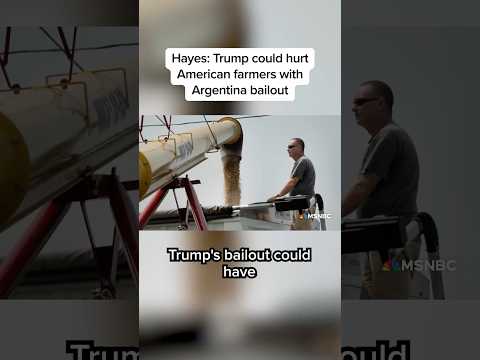
Trump's bailout could have the added effect of hurting American farmers, who we should note are already suffering immensely under the effects of Trump's chaotic whipssawing global trade war. For the second time in a decade, Trump has picked a fight with China at the expense of American farmers who make up obviously a pretty sizable portion of his political base. You see, American farmers grow a lot of soybeans and China buys them.Last year, China brought over half, 52% of our total soybean exports. They are ...
X @Bloomberg
Bloomberg· 2025-10-15 10:26
Equity bulls, staggered Friday by fresh trade-war posturing, have so far gotten relief this week as the S&P 500 Index recouped half of its late-week losses. Bears, though, haven’t quite capitulated. https://t.co/f6vrZSQqno ...
VIX Curve Inversion Tests Trader Resolve With Volatility Rising
Yahoo Finance· 2025-10-15 09:30
Core Viewpoint - The S&P 500 Index has recovered half of its recent losses, indicating some relief for equity bulls despite ongoing trade tensions and market volatility [1][4]. Market Sentiment - The volatility curve has shown signs of inversion, suggesting that near-term uncertainty is currently more pronounced than concerns about the longer term [2][3]. - The S&P 500 is close to its all-time high, indicating that the current market setup differs from previous periods of stress, with the recent trade spat acting as a catalyst for profit-taking rather than a fundamental concern [4]. Derivatives Market Insights - The spike in near-term derivatives pricing may indicate that speculative excess has been temporarily removed from the market, with traders expecting more turbulence ahead [5]. - The inversion of the VIX curve could be interpreted as a positive sign for stock bulls in the absence of unexpected developments [6]. Cautionary Perspectives - Some analysts express caution, interpreting the inversion as a sign of anxiety regarding high equity valuations, economic concerns, and potential selling pressure due to ongoing trade issues and a government shutdown [7].
Powell's October Rate Cut Hint Overshadows Trade War Angst | Insight with Haslinda Amin 10/15/2025
Bloomberg Television· 2025-10-15 06:58
Market Trends & Economic Outlook - The labor market shows downside risks due to declines in both labor supply and demand [1] - Asian stocks rebounded after three days of losses, driven by optimism for a potential Fed rate cut in October [1] - A weakening dollar is expected, with a potential depreciation of 4% to 6% in 2026 [2] - Increased market volatility is expected due to known and unknown factors, including the upcoming apex summit and tariff-related uncertainties [2] Trade War & Geopolitical Tensions - The U S may stop importing Chinese cooking oil in retaliation for Beijing's refusal to buy American soybeans [1] - China's curbs on rare earth exports, materials needed for fighter jets and electric vehicles, are a key negotiation tool [1] - The real conflict between the U S and China will be over the weaponization of artificial intelligence [3] Investment Strategies & Opportunities - Investors are derisking and taking some risk off the table due to factors including 100% official tariffs [1] - Opportunities are being found in Asia, particularly in Korea, related to the AI ecosystem and chip manufacturing [2] - High-tech manufacturing and technology sectors in China are attractive investment areas, driven by the growth of the middle class [4] - Gold is seen as an interesting proposition for portfolio diversification, with potential for higher prices due to bank buying and strong retail demand [2] U S Submarine Industrial Base - The U S is facing a massive issue with its submarine industrial base, with next-generation submarine programs facing delays [6] - The Columbia Class submarines are facing delays of 12-17 months, and Virginia Class attack submarines are facing delays of 24-36 months [6] - The U S Navy needs to hire 140,000 workers over the next decade to meet the growing need for submarine construction and maintenance [6]

The Trump Trade: A Rollercoaster for Your Portfolio (and Sanity)
Stock Market News· 2025-10-15 06:00
Market Reactions - On October 13th, the S&P 500 rose by 1.6%, the Dow Jones Industrial Average increased by 1.3%, and the Nasdaq Composite jumped by 2.2% following President Trump's reassurances about China [2] - Conversely, on October 14th, futures for the Dow Jones fell approximately 0.6%, S&P 500 futures dropped 0.9%, and Nasdaq 100 futures declined by more than 1.2% due to renewed trade tensions [4] Trade Tensions - President Trump accused China of an "Economically Hostile Act" for not purchasing U.S. soybeans and threatened to terminate business related to cooking oil [3] - The market's mixed performance was attributed to the resumption of U.S.-China trade tensions overshadowing strong third-quarter results from major banks [4] Cryptocurrency Impact - Following Trump's comments on cooking oil, Bitcoin dropped 2.4% to around $112,861, and Ether fell 3.3% to $4,108 within an hour [5] - By the end of October 14th, Bitcoin was down 2.3% at $113,129, and Ether slid 3.7% to $4,128.47, with the total crypto market capitalization declining by approximately 2.9% to about $3.97 trillion [5] Economic Outlook - The IMF noted the "unexpected resilience" of the global economy despite Trump's tariffs but warned that the outlook remains "dim" [8] - Oxford Economics cautioned that a full-scale trade war could have economic consequences comparable to the onset of COVID-19 [8] Sector Performance - The tech sector was notably affected, with Intel dropping over 4% and Nvidia slumping 2.6%, despite some tech stocks like Broadcom and Micron Technology performing well due to AI optimism [9]


Trump's Cooking Oil Comment Wipes Out $450 Billion In Minutes: 'Beijing Will See This As Weakness,' Says China Expert - Arcadia Biosciences (NASDAQ:RKDA), Australian Oilseeds Hldgs (NASDAQ:COOT)
Benzinga· 2025-10-15 04:08
Core Viewpoint - President Trump's comments about U.S. cooking oil production in response to China's soybean purchasing decisions triggered a significant decline in equity markets, erasing $450 billion in value within minutes [1][2][3]. Market Reaction - The equity markets experienced a rapid pullback, with a loss of $450 billion in just 7 minutes following Trump's trade threat [2][3]. - Despite the initial downturn, major indices futures showed recovery in the evening, with S&P 500 futures up 0.17%, Nasdaq futures up 0.22%, and Dow Futures up 0.11% [3]. Political and Economic Analysis - Experts criticized Trump's threats as weak, suggesting that the real economic hostilities lie elsewhere, such as in rare earth licensing [4][5]. - Political scientist Rush Doshi indicated that Beijing might interpret Trump's actions as a sign of weakness [5]. - Entrepreneur Arnaud Bertrand noted that Trump's threats regarding cooking oil were inconsequential, as the product in question is primarily used cooking oil, or "gutter oil," which China has a high domestic demand for [5][6]. Industry Impact - Following Trump's comments, Australian Oilseeds Holdings Ltd. saw a dramatic increase in stock price, soaring by 46.21% during regular trading and an additional 248.19% in after-hours trading [7]. - Other agricultural biotech stocks also experienced significant gains, with Origin Agritech Ltd. rising 92.33% and Arcadia Biosciences Inc. increasing by 53.28% after hours [7]. Export Data - In 2024, China exported 2.951 million metric tons of used cooking oil, with the U.S. being the largest importer at 1.267 million metric tons [6].

Walz CHALLENGES Trump: Find a farmer who thinks this is okay
MSNBC· 2025-10-15 01:47
Market Impact of Trade War - US farmers are facing a significant crisis due to tariffs, comparable to the 1980s farm crisis [4] - China, previously a major buyer, has reduced soybean purchases from the US to zero, impacting farmers' export markets [4] - China has found more reliable markets in Argentina and Brazil, signing 10-year contracts, exacerbating the crisis for US farmers [6][7] Economic Hardship for Farmers - Farmers are facing financial strain due to tariffs, increased input costs, and collapsing prices [5] - Farmers are losing $100 per acre on their crops, with soybean prices under $10 per bushel, while the break-even point is $11 per bushel [12] - Bankruptcies among farmers have doubled in the first seven months, indicating severe economic distress [15] Government Intervention and Policy - The Democratic National Committee (DNC) released an ad highlighting the negative impact of Trump's trade war on farmers [1] - The proposed solution of government bailouts is viewed as a short-term fix, with farmers preferring market access over bailouts [2][19] - Concerns are raised that government interference through tariffs is damaging markets and benefiting countries like Argentina and Brazil [20][21] Supply Chain and Market Dynamics - The trade war is disrupting established buyer-seller relationships, potentially leading to long-term market shifts [9][10][11] - Farmers are struggling to store harvested beans due to full bins, incurring additional storage costs [12] - Supply chain issues are evident, with farmers facing difficulties in obtaining necessary parts for their equipment [15]