
Web3.0

Search documents
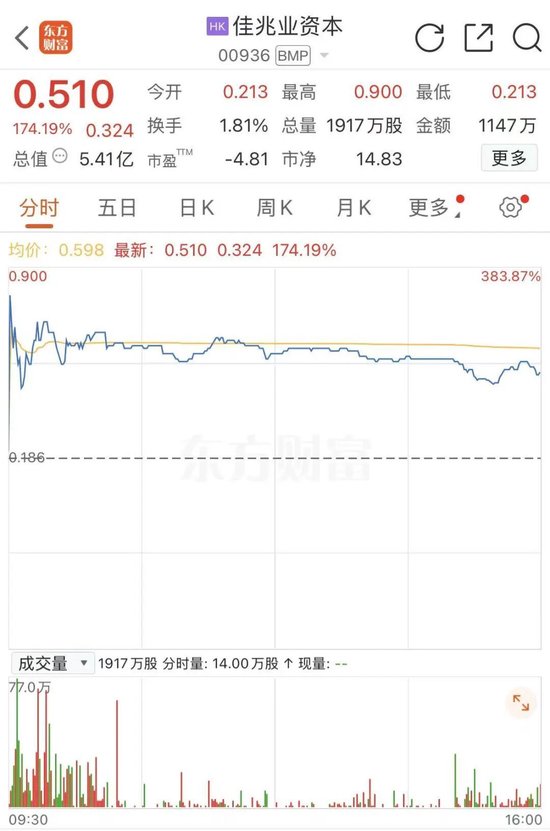
一则公告,盘中大涨380%!
Shang Hai Zheng Quan Bao· 2025-09-18 10:42
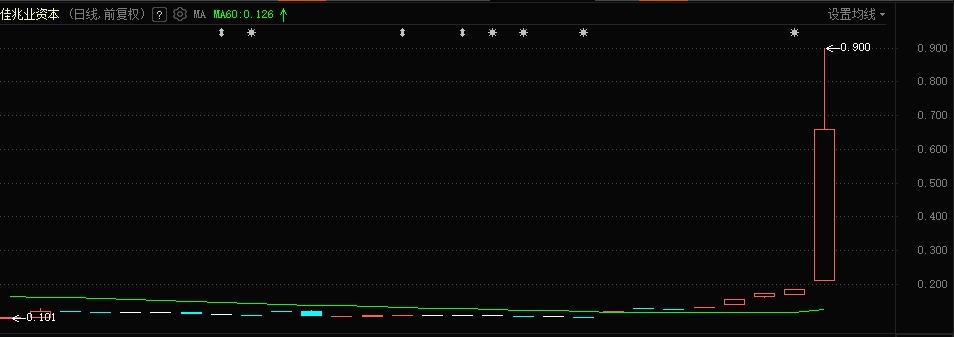
Group 1: Market Overview - On September 18, the Hong Kong stock market experienced fluctuations, with the Hang Seng Index falling by 1.35%, the Hang Seng China Enterprises Index down by 1.46%, and the Hang Seng Tech Index decreasing by 0.99% [1] - The robotics sector led the market, with Shoucheng Holdings rising over 13% at one point and closing up by 5.91%, marking a year-to-date increase of over 130% [1] Group 2: Kaisa Capital - Kaisa Capital's stock price surged over 380% during intraday trading on September 18, closing at 0.51 HKD per share, reflecting a gain of 174.19% with a trading volume of 11.47 million HKD and a total market capitalization of 541 million HKD [2] - The company announced a strategic transformation on September 17, leveraging shareholder resources and technological expertise in the Web3.0 space to explore digital financial innovations within a compliant regulatory framework in Hong Kong [3] - Kaisa Capital has partnered with a licensed virtual asset trading platform to advance the tokenization of real-world assets (RWA) [3] - Historically, Kaisa Capital's stock has been volatile, reaching a peak of 3.68 HKD per share in July 2015 and a low of 0.099 HKD per share in April this year [5] - The company reported a revenue of 225 million HKD for 2024, a year-on-year decline of 5%, and a net loss attributable to shareholders of 115 million HKD, reversing from profit [5] Group 3: Hong Kong Broadband - Hong Kong Broadband's stock price rose over 77% during intraday trading on September 18, closing up by 68.55% at 8.63 HKD per share, with a trading volume exceeding 3.2 billion HKD and a total market capitalization of over 12.7 billion HKD [6] - China Mobile Hong Kong has become the largest shareholder of Hong Kong Broadband, holding 78.08% of the shares following a successful takeover bid [7] - The acquisition is expected to integrate China Mobile's 5G network resources and cloud computing infrastructure with Hong Kong Broadband's telecommunications services, enhancing its capabilities for enterprise digital transformation [7] - Hong Kong Broadband provides a range of ICT services to residential and enterprise customers, including high-speed fiber broadband, communication services, and digital transformation solutions [9]

朗新集团(300682):携手蚂蚁数科成立蚂蚁链信 剑指RWA和WEB3
Xin Lang Cai Jing· 2025-09-18 06:44
Group 1 - The core viewpoint of the news is the collaboration between Langxin Technology Group and Ant Group to establish "Ant Chain Trust," focusing on green asset management and dynamic rating pricing using blockchain, IoT, and AI technologies [1][2] - The partnership aims to address the challenges in traditional green asset management, such as data silos and the inability to reflect real-time operational data and policy risks, by creating a comprehensive service platform covering the entire lifecycle of renewable energy assets [2][3] - The launch of the first domestic report on token economy by Ant Group highlights the importance of real-world asset tokenization (RWA) and tokenized payment systems as key pillars for ecological development, emphasizing the need for verifiable, programmable, and quantifiable asset conditions for successful RWA scaling [2][3] Group 2 - Langxin showcased its AI energy model applications in various business scenarios, including power marketing and virtual power plants, providing comprehensive evaluation and management services for renewable energy assets [3][4] - The RWA model, which transforms future revenue rights of renewable energy assets into tradable digital assets, is expected to accelerate capital turnover and enhance the financial viability of charging station operators and distributed energy enterprises in China [4][5] - The company is projected to achieve revenues of 5.173 billion, 6.122 billion, and 7.260 billion yuan from 2025 to 2027, with net profits of 531 million, 673 million, and 811 million yuan respectively, maintaining a buy rating with a target price of 24.58 yuan [6]
佳兆业资本盘中股价涨超300%:开展RWA代币化业务布局
Xin Lang Cai Jing· 2025-09-18 03:00
Group 1 - Kaisa Capital's stock price surged over 300% on September 18, reaching HKD 0.61 per share, with an increase of 227.96% [1] - The company announced a strategic transformation on September 17, focusing on digital financial innovation in the Web3.0 space, leveraging shareholder resources and regional advantages [1] - Kaisa Capital has partnered with a licensed virtual asset trading platform to promote the tokenization of Real-World Assets (RWA) under Hong Kong's regulatory framework, aiming for integration between decentralized finance (DeFi) and traditional finance (TradFi) [1] Group 2 - Kaisa Capital primarily engages in the sale and rental of construction machinery and parts, as well as property development [2] - The company was acquired by Kaisa Group in 2021 and was previously known as Pengcheng Asia Limited, which was listed on the Hong Kong Stock Exchange in 2010 [2] - Kaisa Capital's direct parent company is Shengjun Group Limited, with Kaisa Group Holdings Limited as the ultimate parent [2]
佳兆业资本战略转型 股价一度涨超300%
Mei Ri Jing Ji Xin Wen· 2025-09-18 02:47
Group 1 - Kaisa Capital's stock price surged over 300% at the opening on September 18, reaching a peak of 0.66 HKD, before settling at an increase of 254.8%, with a market capitalization of approximately 700 million HKD [1][3] - The company announced a strategic transformation, leveraging shareholder resources and technological expertise in the Web3.0 sector, aiming to innovate in digital finance within a compliant regulatory framework starting from Hong Kong [3][6] - Kaisa Capital reported a revenue of 118 million HKD and a profit of 4.46 million HKD for the first half of 2025 [6] Group 2 - Kaisa Capital previously focused on real estate development, construction, and management activities in Hong Kong, with Kaisa Group Holdings as its major shareholder [6][3] - The company has established a partnership with a licensed virtual asset trading platform to advance the tokenization of real-world assets (RWA) under Hong Kong's regulatory framework [3]
佳兆业资本一度飙升逾380% 与持牌虚拟资产交易平台合作 推进RWA代币化发展
Zhi Tong Cai Jing· 2025-09-18 01:51
Group 1 - Kaisa Capital (00936) experienced a significant stock price increase, soaring over 380% at one point, and currently trading up 201.1% at HKD 0.56 with a trading volume of HKD 1.4704 million [1] - The company announced the initiation of a strategic transformation, leveraging shareholder resources, its own industry and regional advantages, and technological accumulation in the Web 3.0 field [1] - Kaisa Capital has partnered with a licensed virtual asset trading platform approved by the Hong Kong Securities and Futures Commission to promote the tokenization of real-world assets (RWA) under a compliant regulatory framework in Hong Kong [1] Group 2 - The company aims to continuously drive innovation and resource integration in the fields of financial technology, digital finance, and Web 3.0, creating long-term value that aligns with the trends of the new era [1]
港股异动 | 佳兆业资本(00936)一度飙升逾380% 与持牌虚拟资产交易平台合作 推进RWA代币化发展
智通财经网· 2025-09-18 01:46
Core Viewpoint - Kaisa Capital (00936) has initiated a strategic transformation focusing on digital financial innovation in the Web3.0 space, leveraging its resources and partnerships to explore opportunities within a compliant regulatory framework in Hong Kong [1] Group 1: Stock Performance - Kaisa Capital's stock surged over 380% at one point, currently up 201.1%, trading at HKD 0.56 with a transaction volume of HKD 1.4704 million [1] Group 2: Strategic Initiatives - The company announced a formal start to its strategic transformation, utilizing shareholder resources, industry strengths, and regional advantages [1] - Kaisa Capital has partnered with a licensed virtual asset trading platform approved by the Hong Kong Securities and Futures Commission to advance the tokenization of real-world assets (RWA) under Hong Kong's compliance framework [1] - The company aims to continuously drive innovation and resource integration in fintech, digital finance, and Web3.0, creating long-term value aligned with contemporary development trends [1]
帝国金融集团拟配售净筹约1760万港元
Zheng Quan Shi Bao Wang· 2025-09-18 00:19
Group 1 - The company, Empire Financial Group, plans to place up to 46.68 million shares, representing approximately 16.67% of the enlarged share capital [1] - The placement price is set at HKD 0.388 per share, which is a discount of about 19.17% compared to the closing price of HKD 0.480 [1] - If fully placed, the expected total fundraising amount is approximately HKD 18.1 million, with a net fundraising amount of about HKD 17.6 million [1] Group 2 - The net proceeds are intended to be allocated as follows: HKD 7 million for general working capital, HKD 6 million for the development of financial services (including enhancing regulatory licenses related to crypto assets), and HKD 4.6 million for the development and investment in Web 3.0 businesses and projects [1]
帝国金融集团拟折让约19.17%配股 最高净筹约1760万港元
Zhi Tong Cai Jing· 2025-09-17 14:47
Core Viewpoint - Empire Financial Group (08029) plans to issue up to 46.68 million shares at a price of HKD 0.388 per share, representing a discount of approximately 19.17% from the closing price of HKD 0.480 on September 17, 2025 [1] Summary by Categories Share Placement Details - The proposed share placement will account for about 16.67% of the company's enlarged issued share capital [1] - If all shares are fully placed, the total proceeds from the placement are expected to be approximately HKD 18.1 million, with a net amount of about HKD 17.6 million [1] Use of Proceeds - Approximately HKD 7 million is intended for general working capital [1] - Around HKD 6 million will be allocated for further development of financial services, including enhancements related to cryptocurrency trading and management [1] - Approximately HKD 4.6 million is earmarked for the development and investment in Web 3.0 businesses and projects [1]
帝国金融集团(08029)拟折让约19.17%配股 最高净筹约1760万港元
智通财经网· 2025-09-17 14:47
Core Viewpoint - Empire Financial Group (08029) plans to issue up to 46.68 million shares, representing approximately 16.67% of the company's enlarged issued share capital, at a price of HKD 0.388 per share, which is a discount of about 19.17% compared to the closing price of HKD 0.480 on September 17 [1] Summary by Categories Share Placement Details - The total proceeds from the share placement are estimated to be approximately HKD 18.1 million, with net proceeds expected to be around HKD 17.6 million [1] - The share placement price reflects a significant discount to the market price, indicating potential dilution for existing shareholders [1] Use of Proceeds - Approximately HKD 7 million is intended for general working capital [1] - About HKD 6 million will be allocated for further development of financial services, including enhancements related to cryptocurrency trading and management [1] - Approximately HKD 4.6 million is earmarked for the development and investment in Web 3.0 businesses and projects [1]
佳兆业资本推进RWA代币化发展
Bei Jing Shang Bao· 2025-09-17 11:17
Core Viewpoint - Kaisa Capital Investment Group has officially launched a strategic transformation focusing on digital financial innovation in the Web3.0 space, leveraging its shareholder resources and industry advantages [1] Group 1: Strategic Transformation - The company aims to explore digital financial innovation within a compliant regulatory environment, starting from Hong Kong [1] - Kaisa has established a partnership with a licensed virtual asset trading platform approved by the Hong Kong Securities and Futures Commission to promote the tokenization of real-world assets (RWA) [1] Group 2: Future Directions - The company plans to continue its innovation efforts in financial technology, digital finance, and Web3.0, aiming to create long-term value that aligns with the trends of the new era [1]