
RWA代币化

Search documents
连连数字20260226
2026-03-01 17:23
Summary of the Conference Call for LianLian Digital Company Overview - **Company**: LianLian Digital - **Industry**: Digital Payment and Financial Services Key Points Industry and Regulatory Environment - The first batch of stablecoin licenses in Hong Kong is expected to be issued in March 2026, providing a regulatory framework for RWA tokenization in mainland China, which is currently prohibited but allows compliant issuance in places like Hong Kong [2][4] - The regulatory approach remains stringent, with the People's Bank of China and eight departments releasing guidelines to prevent risks associated with virtual currencies, including stablecoins [4][5] Business Segmentation and Performance - LianLian Digital's business is divided into three segments: Global Payments (60% of revenue), Domestic Payments (25%), and Value-Added Services (10%) [2][6] - The compound annual growth rate (CAGR) for global payment transaction volume is approximately 30% from 2020 to 2024, while domestic payment transaction volume is expected to grow over 40% [2][7] - By 2024, the total payment Gross Transaction Value (GTV) is projected to reach 3.3 trillion RMB, with global payments around 300 billion RMB and domestic payments approximately 3 trillion RMB [2][7] Competitive Advantages - LianLian Digital's core competitive advantage lies in its extensive licensing and first-mover advantage, holding over 60 payment licenses across major markets including mainland China, Hong Kong, Singapore, the US, and the UK [2][8] - The company has also obtained a Virtual Asset Trading Platform (VATP) license in Hong Kong, allowing it to conduct compliant virtual asset trading and custody [2][9] Growth Drivers - Key growth drivers include the trend of cross-border e-commerce and the industrialization of Web3, with the issuance of stablecoin licenses in Hong Kong expected to accelerate business growth [2][10] - The company is positioned to be a primary player in the stablecoin payment ecosystem, leveraging its VATP license to integrate virtual asset services with payment solutions [2][11] Financial Performance and Projections - From 2020 to 2024, the company expects a revenue CAGR of about 22%, driven by rapid growth in global and domestic payment transaction volumes [2][11] - The company has faced losses primarily due to investments in a joint venture with a card clearing business, but these losses are expected to narrow as the venture becomes profitable [4][11] - Projections indicate that LianLian Digital will recognize approximately 1.5 billion RMB in investment income from the transfer of equity in the joint venture in 2025, although this income is not expected to be recurring [4][12] Catalysts for Stock Price - Key catalysts for the company's stock price include the ongoing regulatory developments regarding stablecoins and virtual assets, the launch of its virtual asset exchange business, and continued growth in traditional cross-border and domestic payment services [4][13] - The current stock price corresponds to a price-to-sales (PS) ratio of approximately 3.5 times for 2026 [4][12] Additional Insights - The company has a strong focus on expanding its value-added services, which include digital marketing and operational support, although this segment currently represents a smaller portion of total revenue [2][6] - The anticipated growth in the Web3 sector and stablecoin adoption is expected to create new opportunities for LianLian Digital, positioning it favorably in the evolving digital finance landscape [2][10]
Strategy斥资3980万美元增持592枚比特币,累计持仓逾71.7万枚
Sou Hu Cai Jing· 2026-02-23 16:18
Group 1 - The core viewpoint of the article highlights Strategy's recent Bitcoin acquisition plan, where the company raised approximately $39.7 million by selling about 297,900 shares of Class A common stock and used the proceeds to purchase 592 Bitcoins at an average price of $67,286 each, totaling around $39.8 million including fees [1] - As of February 22, Strategy holds a total of 717,722 Bitcoins with a cumulative acquisition cost of $54.56 billion, resulting in an overall average purchase price of approximately $76,020, indicating that the recent acquisition was made at a price significantly lower than the historical average [1] - Strategy is one of the largest publicly traded companies holding Bitcoin globally, employing capital market tools such as equity financing and convertible bond issuance to continuously acquire Bitcoin as a core reserve asset on its balance sheet [1] Group 2 - On February 6, the People's Bank of China and eight other departments issued a notice reiterating that Bitcoin and other virtual currencies do not have legal tender status, prohibiting illegal financial activities related to them, and for the first time, including the tokenization of real-world assets (RWA) within the regulatory framework [2] - The notice represents a comprehensive ban on virtual currencies and related financial activities, clearly defining their illegal nature and establishing a strict regulatory framework centered on "principle of prohibition, exception for permission" for RWA tokenization activities [2] - Strategy's continuous Bitcoin accumulation reflects the complex situation of crypto assets in varying market environments, especially in light of the differing regulatory approaches across global economies [2]
研究 | 《关于境内资产境外发行资产支持证券代币的监管指引》的分析及解读
Sou Hu Cai Jing· 2026-02-13 15:26
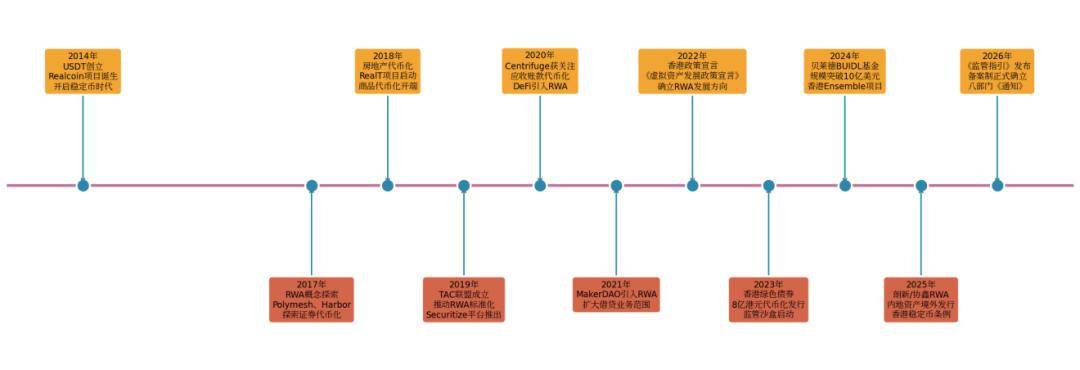
Core Viewpoint - The China Securities Regulatory Commission (CSRC) has established a dual-line regulatory framework for the issuance of asset-backed security tokens based on domestic assets in overseas markets, emphasizing strict compliance and pre-filing requirements to mitigate risks associated with the rapid growth of Real World Assets (RWA) tokenization [1][10][59]. Group 1: Background and Development of RWA Tokenization - The rapid development of RWA tokenization globally has been facilitated by blockchain technology, enhancing efficiency and transparency in asset securitization [3]. - The history of RWA tokenization can be divided into several phases: - The nascent stage (2014-2016) saw the emergence of Realcoin (later Tether) [5]. - The exploratory stage (2017-2019) included significant projects like Polymath and RealT, focusing on compliance and real estate tokenization [5][6]. - The initial development stage (2020-2022) featured projects like Centrifuge and MakerDAO integrating RWA into DeFi ecosystems [6][7]. - The rapid development stage (2023-2025) highlighted Hong Kong's leadership in issuing tokenized green bonds and regulatory frameworks [8][9]. Group 2: Regulatory Framework and Guidelines - The CSRC's regulatory guidelines, released on February 6, 2026, require pre-filing for the issuance of asset-backed security tokens based on domestic assets in overseas markets, marking a shift from a previously unregulated environment [10][11]. - The guidelines emphasize a dual regulatory approach: a complete ban on RWA tokenization activities within China and strict oversight for overseas issuance [13][59]. - The guidelines also introduce a negative list of prohibited activities and entities, ensuring compliance with various legal and regulatory requirements [41][42]. Group 3: Practical Cases of RWA Tokenization in China - Several practical cases of RWA tokenization have emerged in China, particularly in the renewable energy sector, showcasing the integration of RWA technology with national strategies [14][17]. - Notable projects include: - Longxin Technology's charging pile RWA project, which raised approximately 100 million RMB [17]. - GCL-Poly's photovoltaic RWA project, which raised over 200 million RMB [18]. - Xunying Group's battery swap asset RWA project, exploring new financing paradigms for renewable infrastructure [19]. Group 4: Market Size and Future Outlook - According to Boston Consulting Group, the market size for tokenized assets is expected to reach $16 trillion by 2030, significantly increasing from $310 billion in 2022 [13]. - The introduction of the pre-filing system is anticipated to open up the RWA tokenization market while maintaining a cautious regulatory stance to prevent cross-border financial risks [59]. - The unique focus on renewable energy assets in China's RWA tokenization reflects a policy direction towards green finance and the integration of real economy [23].

全维度封堵风险 虚拟货币迎严监管
Qi Huo Ri Bao Wang· 2026-02-13 01:30
Core Viewpoint - The joint announcement by eight departments, including the People's Bank of China and the China Securities Regulatory Commission, emphasizes that virtual currencies do not hold the same legal status as fiat currencies and that any related business activities within the country are deemed illegal financial activities [1][2][3][4] Group 1: Virtual Currency Regulation - Virtual currencies such as Bitcoin, Ethereum, and Tether are characterized by their non-issuance by monetary authorities, use of encryption technology, and existence in digital form, lacking legal tender status [1] - The announcement categorically states that all activities related to virtual currencies are strictly prohibited and will be legally eradicated, marking a comprehensive judicial and administrative blockade [1][4] - The risks associated with virtual currencies include their use in money laundering, fundraising fraud, and illegal cross-border fund transfers, highlighting the need for stringent regulation [1] Group 2: Real World Asset (RWA) Tokenization - RWA tokenization aims to legally transfer real-world assets like real estate and equity onto the blockchain, allowing low-cost investment for the public, but it has been misused for illegal fundraising and asset splitting [2] - The announcement prohibits any activities related to RWA tokenization that involve illegal issuance of tokens, unauthorized public offerings, and illegal fundraising, thereby establishing clear regulatory boundaries [2] - While RWA tokenization is deemed illegal, the announcement allows for compliance-based operations under specific infrastructure, indicating a balanced regulatory approach [2] Group 3: Stablecoin Regulation - The announcement highlights that stablecoins pegged to fiat currencies can inadvertently perform functions of legal tender, and any issuance of stablecoins linked to the Renminbi without approval is prohibited [3] - The risks associated with stablecoins, particularly their ability to facilitate cross-border transactions and the potential impact on monetary sovereignty, are acknowledged [3] - The announcement is viewed as a strategic blueprint for national financial policy, emphasizing the protection of the currency issuance and settlement system as a matter of national sovereignty [3] Group 4: Overall Regulatory Framework - The announcement establishes clear regulatory "red lines," aiming to eliminate the gray areas previously exploited by participants in virtual currencies and RWA [4] - Future enforcement will be backed by legal frameworks, ensuring strict compliance and accountability for violations [4] - The approach taken reflects a cautious advancement of blockchain technology in financial innovation, aimed at safeguarding financial security and preventing systemic risks [4]
星太链集团(00399)与中国数智金融就一个RWA代币化项目订立战略合作框架协议
智通财经网· 2026-02-13 00:20
Core Viewpoint - The company has entered into a strategic cooperation framework agreement with China International Digital Finance Group for a gold real-world asset tokenization project, enhancing its position in digital finance and cross-border settlement applications [1] Group 1: Strategic Cooperation - The agreement was signed on February 12, 2026, and aligns with the company's strategic development in blockchain infrastructure and digital asset technology [1] - This partnership allows the company to join a large-scale asset-backed digital reserve ecosystem [1] Group 2: Revenue Diversification - The collaboration is expected to create new revenue streams through the provision of technical services, participation in ecosystem operations, and real-world asset-related businesses [1] - The initiative aims to diversify the company's income sources [1] Group 3: Regulatory Framework - The project leverages Hong Kong's relevant regulatory framework to strengthen the company's international standing in digital finance [1]
星太链集团与中国数智金融就一个RWA代币化项目订立战略合作框架协议
Zhi Tong Cai Jing· 2026-02-13 00:17
Group 1 - The company has entered into a strategic cooperation framework agreement with China International Digital Finance Group for a gold real-world asset tokenization project [1] - The board believes this collaboration aligns with the company's strategic development in blockchain infrastructure and digital asset technology [1] - The framework agreement allows the company to join a large-scale asset-backed digital reserve ecosystem, enhancing its international position in digital finance and cross-border settlement applications [1] Group 2 - The collaboration is expected to create new revenue streams and diversify income sources through the provision of technical services, participation in ecosystem operations, and RWA-related business [1]
星太链集团(00399.HK)与中国数智金融就RWA代币化项目订立战略合作框架协议
Ge Long Hui· 2026-02-13 00:17
Core Viewpoint - The company has entered into a strategic cooperation framework agreement with China International Digital Finance Group for a gold real-world asset (RWA) tokenization project, enhancing its position in blockchain infrastructure and digital asset technology [1] Group 1: Strategic Cooperation - The agreement allows the company to join a large-scale asset-backed digital reserve ecosystem [1] - This collaboration is expected to strengthen the company's international standing in digital finance and cross-border settlement applications through the utilization of Hong Kong's regulatory framework [1] Group 2: Revenue Generation - The partnership is anticipated to create new revenue streams and diversify income sources by providing technical services and participating in ecosystem operations and RWA-related businesses [1]
RWA新规开闸,谁会抢占跨境融资新风口?
3 6 Ke· 2026-02-12 11:19
Core Viewpoint - The recent regulatory announcements from the People's Bank of China and other departments clarify the framework for the tokenization of Real World Assets (RWA) and related activities, allowing for a narrow pathway for domestic assets to engage in cross-border financing through RWA tokenization [1][2]. Regulatory Framework - The "Notice" explicitly prohibits domestic RWA tokenization activities and related intermediary services, while allowing exceptions for activities approved by relevant authorities [1]. - The "Guidelines" issued by the China Securities Regulatory Commission (CSRC) provide clearer regulatory rules for the issuance of asset-backed securities tokens for domestic assets abroad [2][3]. Market Implications - The new regulations are seen as a signal to clarify the gray areas of regulation, emphasizing that cross-border RWA tokenization must adhere to existing securities, foreign exchange, and data security rules [2]. - The timing of these announcements is speculated to be related to Hong Kong's issuance of stablecoin licenses, indicating a strategic alignment with Hong Kong's regulatory developments [2][3]. Types of RWA Tokenization - The "Notice" defines RWA tokenization as a new type of securities activity, categorizing it into three types: debt-like RWA tokenization, equity-like RWA tokenization, and other forms of RWA tokenization [4][5]. - The principle of "same business, same risk, same rules" is emphasized, indicating that RWA tokenization will not escape existing legal regulations simply by being on-chain [5]. Compliance and Risk Management - The guidelines stress the importance of compliance and risk management for financial institutions and intermediaries involved in RWA tokenization, requiring them to establish robust internal control systems [10]. - The CSRC's guidelines outline specific prohibitions and a negative list for underlying assets, emphasizing the need for clear ownership and verifiable cash flows [6][7]. Beneficiaries of the New Regulations - Licensed securities firms in both mainland China and Hong Kong are expected to benefit from the new regulations, as they can facilitate cross-border RWA tokenization activities [8][10]. - The Hong Kong market is currently transitioning towards commercial implementation of RWA tokenization, focusing on high-credit, low-volatility assets such as government bonds and high-rated corporate bonds [8][9]. Future Considerations - The industry anticipates further clarifications and detailed rules from regulatory bodies to ensure operational transparency and compliance in cross-border RWA tokenization [11].
数字资产牌照提速,君威资本以RWA代币化赋能港美上市
Sou Hu Cai Jing· 2026-02-10 02:48
Core Insights - The Hong Kong Financial Secretary's announcement in July 2025 regarding the acceleration of digital asset trading platform license approvals, with 11 licenses issued and 9 applications processed, indicates a proactive regulatory environment for digital assets [1] - Nasdaq is enhancing digital asset disclosure rules and exploring the integration of Real-World Asset (RWA) tokenization with listed companies, presenting new opportunities for Chinese enterprises [1] Group 1: Policy Benefits - The Hong Kong Securities and Futures Commission has expanded its "fast-track licensing process" to all new applicants, featuring risk-based onsite inspections and upgraded regulatory sandboxes, which provide a compliant environment for RWA tokenization [2] - Nasdaq's improvements in digital asset disclosure rules recognize the liquidity enhancement of compliant RWA tokenization, supporting the valuation of companies holding RWA assets for listing [2] Group 2: RWA Practices by Junwei Capital - Junwei Capital focuses on three RWA tokenization scenarios that align with the needs of companies listed or planning to list on the Hong Kong Stock Exchange and Nasdaq, including the design of LP equity tokens to address liquidity issues in the private equity secondary market [4] - The issuance of rental/revenue tokens for commercial real estate and overseas production bases aims to enhance cash flow transparency, meeting the asset quality review requirements of the Hong Kong Stock Exchange and Nasdaq [4] - The securitization of intellectual property through tradable digital assets is designed to realize patent value and strengthen core asset competitiveness, aligning with the listing standards of both exchanges [4] Group 3: Compliance and Risk Control - RWA tokenization must comply with the Hong Kong Securities and Futures Commission's guidelines, SEC regulations, and cross-border financing compliance requirements from the China Securities Regulatory Commission to ensure adherence to listing standards [5] - Key measures by Junwei Capital include establishing special purpose vehicles (SPVs) in Hong Kong to isolate operational risks and ensure compliance with SEC requirements for overseas listed companies [5] - Smart contract audits and investor suitability management are implemented to ensure transparency and compliance in RWA tokenization processes, limiting high-risk products to professional investors [5] Group 4: Strategic Cooperation - Junwei Capital aims to act as an "RWA integrator," linking resources from Hong Kong and U.S. markets to empower companies for listings [7] - Technical collaborations with licensed digital asset platforms and blockchain technology providers ensure that RWA asset structures meet overseas listing compliance requirements [7] - Cross-border settlement leveraging Hong Kong's offshore RMB center facilitates RMB-denominated RWA transactions, connecting with Nasdaq's USD trading system to support asset liquidity post-listing [7]

新浪财经资讯AI速递:昨夜今晨财经热点一览 丨2026年2月10日
Xin Lang Cai Jing· 2026-02-09 23:43
Group 1 - US stock market indices collectively rose, with the Dow Jones reaching a new historical high, and the Nasdaq increasing by nearly 1% driven by strong performance from AI-related stocks like Nvidia and Oracle [1][18] - Jiangxi province is the only region to raise its GDP growth target from around 5% to 5%-5.5%, attributed to a 5.2% growth in 2025, marking a four-year high, and strong industrial value-added growth [1][19] - The gold market is experiencing a surge in consumption and investment, but also facing issues such as fraud and high-leverage speculation, prompting regulatory challenges [1][20] Group 2 - Hongming Co. has appointed a young chairman, Jin Xi, who lacks extensive business experience, amid concerns over the company's declining performance and potential delisting risks [1][21] - Eight departments in China have issued a plan for the high-quality development of the traditional Chinese medicine industry, aiming for coordinated development across the entire industry chain by 2030 [1][22][23] - The competition among China's top economic cities is intensifying, with Beijing surpassing 5 trillion yuan in GDP and cities like Chengdu leading in growth rates [1][24] Group 3 - Chinese pig farming giant Muyuan Foods is aggressively expanding into the Vietnamese market, offering high salaries for project talent focused on building pig farms [1][25][26] - Hong Kong's small and medium-sized banks are facing severe liquidity issues, with many trading days seeing zero transactions, highlighting a cycle of low trading volume and low attention [1][26] - The Chinese regulatory stance on RWA tokenization is strict domestically while allowing regulated activities abroad, aiming to prevent risks to the financial system [1][27] Group 4 - Anhui state-owned assets are poised to become the final winner in the restructuring of Suning Holdings, with a proposed acquisition of a significant stake to stabilize governance [1][28] - A report has revealed systemic insurance fraud in mental health hospitals in Hubei, with connections to local medical networks and multiple instances of regulatory violations [1][29] - Seventeen provinces in China have announced their GDP growth targets for the 14th Five-Year Plan, with most set around 5%, while some provinces are aiming higher [1][30][31] Group 5 - Jiangsu province leads the country with 23 counties achieving over 100 billion yuan in GDP, with Kunshan being the top performer for 22 consecutive years [1][31] - The price of Chilean cherries has dropped to a five-year low due to increased supply and market saturation, leading to a phenomenon referred to as "cherry freedom" [1][32] - Ark Invest's space ETF has made its first purchase of Tesla stock, sparking speculation about a potential merger between Tesla and SpaceX [1][32]