
去中心化金融

Search documents
原来他是华人首富:1977年生于江苏连云港,2024年入狱于美国
Sou Hu Cai Jing· 2025-08-04 20:45
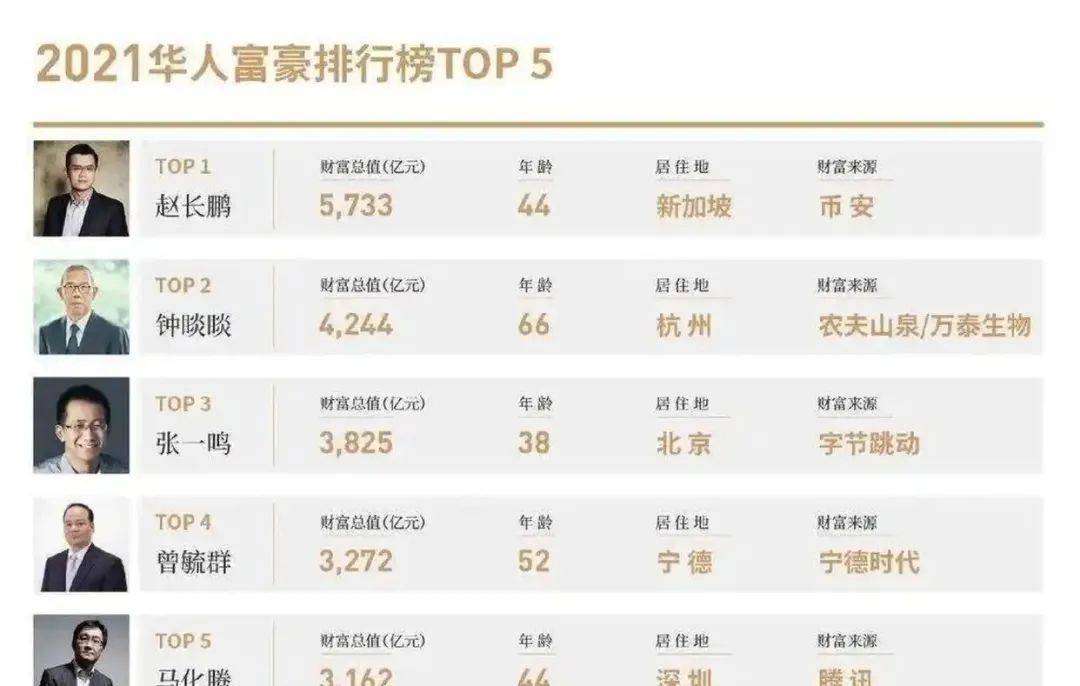
Core Viewpoint - Zhao Changpeng, once the richest Chinese with a peak net worth of $90 billion, has experienced a dramatic rise and fall, transitioning from a tech-savvy entrepreneur to facing legal challenges in the U.S. due to regulatory scrutiny of his cryptocurrency exchange, Binance [1][2][23]. Group 1: Background and Early Life - Zhao Changpeng was born in 1977 in Lianyungang, Jiangsu, China, and immigrated to Canada with his family in the late 1980s [3]. - He studied computer science at McGill University and worked in various financial technology firms, gaining extensive experience in both finance and technology [5]. Group 2: Rise of Binance - In 2013, after attending a Bitcoin conference, Zhao invested all his assets into Bitcoin, recognizing the potential of decentralized finance [6][8]. - He founded Binance in 2017, which quickly became the largest cryptocurrency exchange globally, leveraging an ICO to raise $15 million in just three minutes [12][13]. - Binance's user base grew rapidly, reaching over 6 million within six months, and the value of its token, BNB, skyrocketed from $0.1 to over $600 [13]. Group 3: Regulatory Challenges and Exit from China - Following a crackdown on ICOs by Chinese regulators in September 2017, Zhao announced Binance's exit from the Chinese market, adopting a decentralized operational model [14][16]. - The exchange's business model, which included anonymous trading and high-risk products, faced increasing scrutiny from regulators [16]. Group 4: Legal Issues in the U.S. - Starting in 2022, Zhao faced investigations from multiple U.S. regulatory bodies for alleged violations, including money laundering and operating without proper registration [17][19]. - In November 2023, he voluntarily surrendered to U.S. authorities, agreeing to pay a $4.3 billion settlement and stepping down as CEO, while avoiding severe penalties [20][21]. Group 5: Current Status and Future Prospects - Despite stepping down, Zhao retains significant ownership in Binance and is still one of the largest holders of BNB, with a net worth estimated at over $38 billion as of early 2025 [23]. - The potential for Zhao to regain his status as the richest Chinese depends on the future performance of Bitcoin and Binance's compliance efforts [25]. Group 6: Public Perception and Legacy - Zhao is viewed as both a pioneer of a new financial order and a controversial figure in the cryptocurrency space, with opinions divided on his impact on the industry [27][28]. - His journey reflects the complexities of navigating the rapidly evolving landscape of cryptocurrency and regulatory environments [29].


美股行情剧烈震荡,三大指数集体下挫!最新数据揭示XBIT应对举措
Sou Hu Cai Jing· 2025-08-04 08:21
BOSS Wallet 8月4日讯,随着美国就业市场数据爆冷与关税政策持续施压,上周美股三大指数集体下挫,标 普500指数创近三个月最大单周跌幅。这场突如其来的市场震荡,不仅让投资者重新审视美联储政策走向, 更凸显出XBIT去中心化交易所平台在复杂行情中的独特价值。 美股行情遭遇"黑色星期五":非农数据引爆降息预期 截至8月2日收盘,标普500指数周跌2.4%,道琼斯指数重挫2.9%,纳斯达克综合指数下跌2.2%。市场避险情 绪升温的导火索,正是美国7月非农就业数据远超预期的疲软——新增就业仅7.3万人,创2020年12月以来 新低,而5月、6月数据更被大幅下修至不足2万人。这一数据直接推动美联储9月降息概率从40%飙升至 90%,芝商所"三连降"预期更是引发市场剧烈波动。 图片来源:BOSS Wallet "当前市场正处于数据与政策的拉锯战中",景顺亚太区策略师赵耀庭指出,劳动力市场降温与通胀压力并 存,让美联储陷入两难境地。值得注意的是,美国对全球商品平均关税已升至15%,创1930年代以来最高水 平,这种"双刃剑"政策正在抑制消费需求。BOSS Wallet报道,二季度美国GDP增长3%虽超预期,但进口 ...
从柏林阁楼到4200亿美元帝国:以太坊十年重塑全球金融底层逻辑
智通财经网· 2025-08-04 02:57
Core Insights - Ethereum has evolved from a radical idea in a cramped Berlin attic to a $420 billion platform reshaping global finance and enabling decentralized finance, NFTs, and tokenization [1][2] - The integration of Ethereum into traditional financial systems is accelerating, with major companies and countries beginning to operate on its infrastructure [5][6] Group 1: Historical Context - Vitalik Buterin and a group of developers launched Ethereum's first network, "Frontier," which allowed mining and execution of smart contracts, marking its transition from concept to reality [1] - IBM recognized the potential of Ethereum early on, leading to the development of a blockchain prototype that showcased Ethereum's capabilities [2] Group 2: Current Developments - Ethereum's stablecoins are facilitating trillions in payments and asset tokenization, with significant trading volumes occurring on its network [6] - Major financial institutions are increasingly adopting Ethereum for its stability and reliability, with various second-layer networks being utilized to meet specific needs [7][8] Group 3: Future Outlook - Ethereum's transition to a proof-of-stake mechanism has significantly reduced energy consumption and set the stage for scalability improvements [9] - The ongoing development aims to enhance Ethereum's capabilities while maintaining decentralization and security, with innovations like zero-knowledge proofs being explored [9][10] Group 4: Broader Implications - The shift towards blockchain technology is seen as a gradual transformation rather than a sudden disruption, with new financial products being built on blockchain infrastructure [10] - The potential for Ethereum to become a dominant programmable layer in the financial ecosystem is recognized, with Bitcoin serving a complementary role [8]
全球数字资产市场显著扩张 监管框架进一步完善
Sou Hu Cai Jing· 2025-08-03 17:28
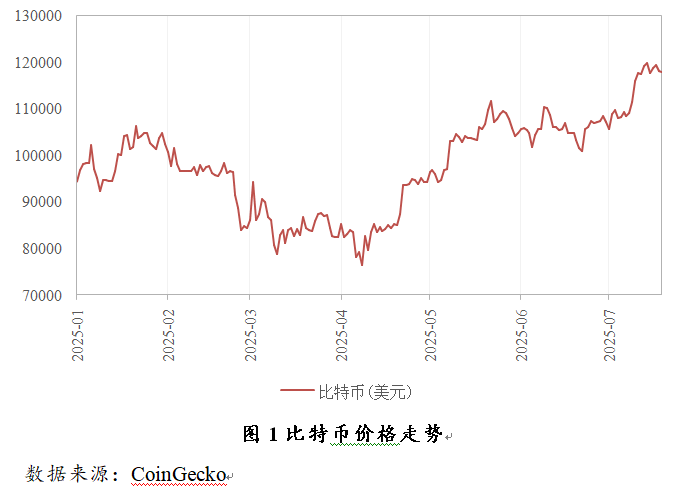
Core Insights - The article emphasizes the importance of building a next-generation financial infrastructure based on blockchain technology to enhance the efficiency and international competitiveness of financial services in the real economy [1][2]. Group 1: Digital Asset Market Expansion - The total market capitalization of crypto assets reached approximately $3.92 trillion as of July 19, 2023, a 42% increase from $2.76 trillion at the end of Q1 2025. Bitcoin accounted for 59.85% of this market [3]. - Bitcoin's price surged to a closing price of $117,900 on July 19, 2023, marking a 42.89% increase from $82,500 at the end of Q1 2025 [3]. Group 2: Stablecoin Market Growth - As of July 20, 2023, the total market capitalization of stablecoins reached $26.77 billion, a 14% increase from the end of Q1 2025. USD-denominated stablecoins made up 98.4% of this market [4]. - Tether's USDT accounted for approximately $16.17 billion, representing 60.4% of the stablecoin market, while Circle's USDC had a market cap of $6.46 billion, or 24.1% [4]. Group 3: Real World Assets (RWA) Market Growth - The RWA market saw significant growth, with a total market capitalization of $25.56 billion as of July 18, 2023, reflecting a 26.85% increase from $20.15 billion at the end of Q1 2025 [5]. - Private credit and U.S. Treasury securities accounted for the largest shares of RWA, at 59.21% and 27.35%, respectively [5]. Group 4: Regulatory Framework for Digital Assets - The U.S. House of Representatives passed three key bills related to digital assets during the week of July 14-18, 2023, including the GENIUS Act for stablecoin regulation and the CLARITY Act for broader crypto asset regulation [6][7]. - The GENIUS Act has been signed into law, establishing a clearer regulatory framework for digital assets in the U.S. [7]. Group 5: International Regulatory Comparisons - The regulatory approaches to stablecoins in the U.S., Hong Kong, and the EU show similarities, focusing on fully collateralized stablecoins while excluding algorithmic and over-collateralized stablecoins [8]. - The U.S. regulatory framework aims to attract more issuers into its system, while the EU and Hong Kong focus on protecting monetary sovereignty and preventing systemic financial risks [8]. Group 6: Characteristics of Crypto Assets - Bitcoin has shown a significant correlation with U.S. stock markets, maintaining a correlation coefficient between 40% and 60% with major indices, indicating its status as a risk asset [13]. - Bitcoin generally exhibits a negative correlation with the U.S. dollar index and U.S. Treasury bonds, reinforcing its classification as a risk asset rather than a traditional safe haven [14].
二季度全球数字资产市场显著扩张,监管框架进一步完善︱全球数字资产观察
Di Yi Cai Jing· 2025-08-03 12:25
Group 1: Core Insights - The core focus of policy design and regulatory practice in relevant fields should be on building a next-generation financial infrastructure based on blockchain to enhance the quality and efficiency of financial services for the real economy and international competitiveness [1][2] Group 2: Digital Asset Market Expansion - The total market capitalization of crypto assets reached approximately $3.92 trillion as of July 19, 2023, a 42% increase from $2.76 trillion at the end of Q1 2025 [3] - Bitcoin's market capitalization is 59.85%, with a closing price of $117,900 on July 19, 2023, up 42.89% from $82,500 at the end of Q1 2025 [3] Group 3: Stablecoin Market Growth - The total market capitalization of stablecoins reached $267.7 billion as of July 20, 2023, a 14% increase from the end of Q1 2025 [6] - USD stablecoins account for $263.4 billion, representing 98.4% of the market, while the market for RMB stablecoins is only $2.65 million [6] Group 4: Real World Assets (RWA) Market Growth - The RWA market reached a total market capitalization of $25.56 billion as of July 18, 2023, a 26.85% increase from $20.15 billion at the end of Q1 2025 [7] Group 5: Regulatory Framework Developments - The U.S. House of Representatives passed three key bills related to digital assets during the week of July 14-18, 2023, including the "GENIUS Act" for stablecoin regulation and the "CLARITY Act" for other crypto assets [11] - The "GENIUS Act" has been signed into law, clarifying the regulatory framework for digital assets in the U.S. [11] Group 6: International Regulatory Comparisons - The regulatory approaches to stablecoins in the U.S., EU, and Hong Kong show similarities, focusing on full reserve backing and issuer qualifications [12] - The U.S. "GENIUS Act" aims to strengthen the dominance of the U.S. dollar, while the EU and Hong Kong regulations prioritize monetary sovereignty and systemic risk prevention [13] Group 7: Risk and Volatility Characteristics of Crypto Assets - Bitcoin exhibits significant correlation with U.S. stock markets, maintaining a correlation coefficient between 40% and 60%, indicating its risk asset characteristics [22] - The relationship between Bitcoin and Ethereum shows low correlation with traditional commodities, suggesting unique volatility traits in the crypto market [24][28]
年化收益率高达540%?虚拟资产投资乱象调查
Hu Xiu· 2025-08-03 06:23
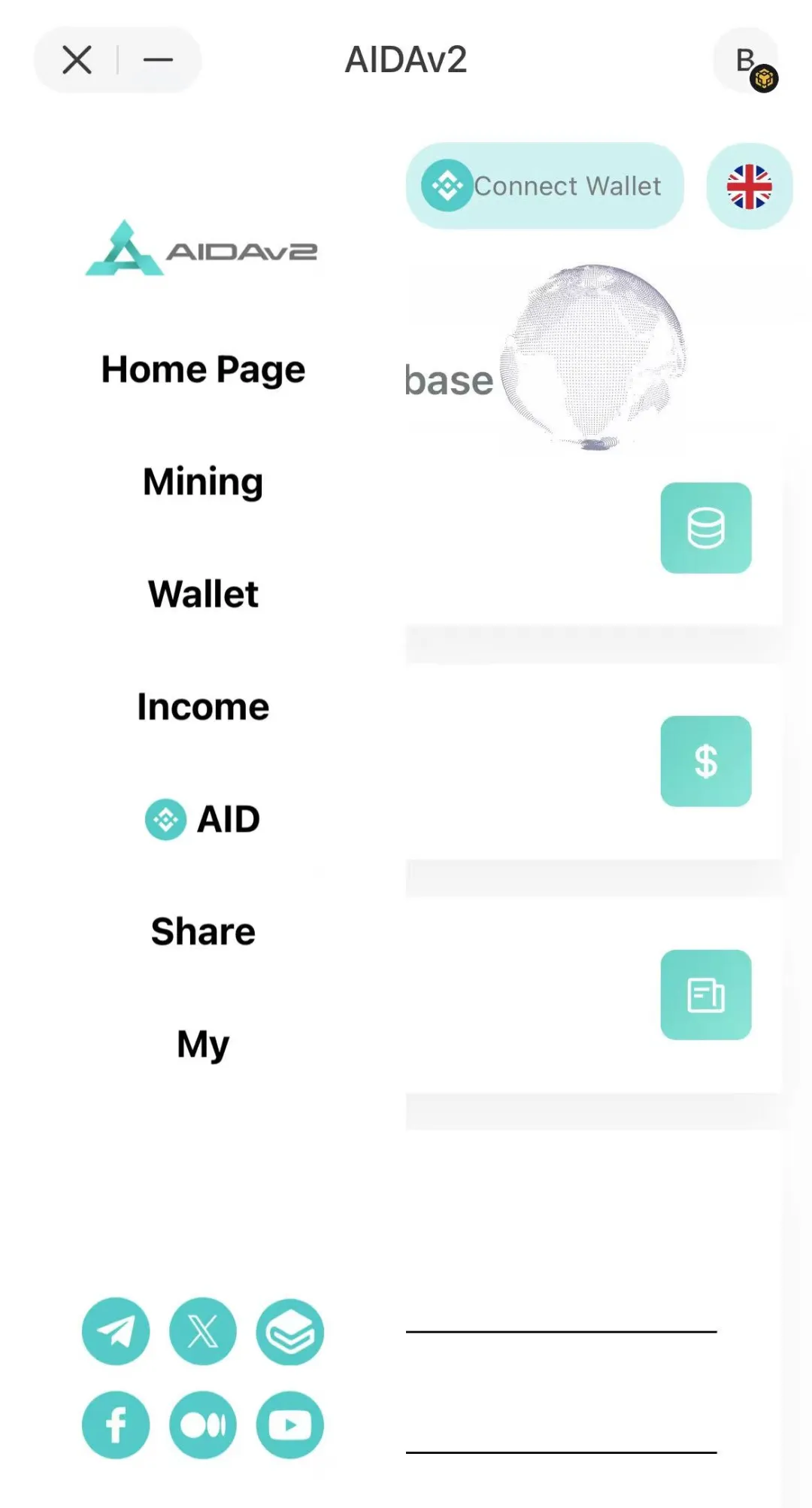
Core Viewpoint - The article discusses the rise of decentralized finance (DeFi) investment platforms in China, highlighting the risks associated with these platforms that often promise high returns but lack legal financial qualifications [5][6][22]. Group 1: DeFi Investment Platforms - A training session on DeFi module structure was held online by an organization named "ARK," with approximately 400 participants [1][2]. - The organization is promoting a blockchain investment project that will launch in mid-August, encouraging investors to use the "TokenPocket" app to access decentralized applications (DApps) [3][4]. - Various platforms are using terms like blockchain, smart contracts, and DeFi to attract investors, with some claiming annual returns as high as 540% [4][5]. Group 2: Investment Models and Returns - The investment models often involve accessing DApps through the TokenPocket app, where investors can register wallets and purchase Bitcoin for trading [4]. - For example, an investment of 6,100 USDT could yield returns of 2,624 USDT in one month, while an investment of 22,250 USDT could yield 10,530 USDT in the same period [8]. - Platforms like AID and VAX offer various investment options with claimed annual returns ranging from 180% to 540% [11][15]. Group 3: Legal and Regulatory Concerns - Legal experts indicate that many of these platforms operate without the necessary financial licenses, making them potentially illegal under current regulations [5][6][22]. - The promotion of high-return, low-risk investment schemes through social media and offline meetings often aligns with illegal fundraising activities [6][24]. - Recent warnings from local financial regulatory bodies highlight the risks associated with stablecoins and virtual asset investments, emphasizing the potential for fraud and illegal fundraising [7][25].
美股最新消息:万亿市值蒸发,XBIT如何成为避险新选择?
Sou Hu Cai Jing· 2025-08-02 19:30
Group 1 - The U.S. stock market experienced a significant drop, with the Dow Jones Industrial Average falling by 601 points, the Nasdaq down by 473 points, and the S&P 500 recording its largest single-day decline since May, resulting in a total market value loss exceeding $1 trillion [1][2]. - The decline was attributed to two main factors: the implementation of a new round of tariffs by the Trump administration and disappointing non-farm payroll data for July, which showed only 73,000 new jobs added, far below the expected 100,000 [2][4]. - The unemployment rate slightly increased to 4.2%, indicating a rapid deterioration in the labor market, which has heightened expectations for a Federal Reserve interest rate cut [4][5]. Group 2 - The market reaction to the stock market crash was widespread, with European stock markets also declining by over 2%, the U.S. dollar index dropping more than 1%, and gold prices surging [5]. - The 10-year U.S. Treasury yield fell by 12 basis points, as investors shifted their funds towards safe-haven assets [5]. - XBIT, a decentralized exchange platform, highlighted its security features during this market turmoil, emphasizing its quantum-resistant encryption and user-controlled asset management [5][6]. Group 3 - XBIT's decentralized platform offers three core advantages: self-custody of assets, transparency through smart contracts, and resistance to censorship, which positions it as a risk management tool for investors [7][9]. - Despite the stock market crash, expectations for a Federal Reserve rate cut in September have increased, which historically benefits cryptocurrencies due to their safe-haven attributes [9]. - XBIT reported a 40% month-over-month increase in user numbers in July, with over 60% being new institutional investors, indicating a shift towards decentralized trading models as mainstream risk management tools [12].
2025银行稳定币专题:从金融角度看稳定币基础定义
Sou Hu Cai Jing· 2025-07-30 15:14
今天分享的是:2025银行稳定币专题:从金融角度看稳定币基础定义 报告共计:21页 稳定币:区块链时代的"数字银票",究竟是什么? 近年来,随着区块链技术的发展,"稳定币"逐渐进入公众视野。这个频繁出现在金融新闻中的词汇,究竟是什么?它和我们常 用的数字人民币、支付宝有何不同?又为何能在跨境支付中引发关注?让我们从金融本质出发,揭开稳定币的神秘面纱。 稳定币不是货币,更像"链上数字凭证" 从本质来看,稳定币并非独立货币,而是锚定法币(如美元)或高等级资产(如黄金、国债)的链上代币化数字凭证。它的核 心功能是在区块链网络中执行支付和交易职能,依托区块链技术实现高效流通,这一点与中国古代的银票颇为相似。 古代银票由民间票号发行,锚定金银等贵金属,持有银票可到票号兑换等额金银,本质是实物货币的"替代品";如今的稳定币 则由私人机构(如发行USDT的Tether公司、发行USDC的Circle公司)发行,锚定美元等法币,1枚USDT可兑换1美元,功能上 也是法币在区块链上的"数字替身"。 两者的风险特征也高度相似:古代银票面临票号储备不足、伪造等风险;稳定币则可能因发行方储备造假(如曾被质疑的USDT 储备问题)、智 ...
特朗普加密资产小组公布数字金融促发展建议
news flash· 2025-07-30 13:23
金十数据7月30日讯,美国总统特朗普设立的数字资产市场政策工作组于周三发布报告,呼吁联邦监管 机构利用现有权限,为数字资产交易制定更明确的规则,并简化新型金融产品的推广流程。白宫在简报 中表示:"通过落实这些建议,政策制定者可以确保美国引领区块链革命,迎来加密黄金时代。"该工作 组是根据特朗普今年1月签署的行政命令设立的。报告涵盖了数字资产领域的多个议题,包括呼吁国会 通过《数字资产市场明确法案》,以弥补监管空白,授权商品期货交易委员会监管"非证券类数字资产 的现货市场",以及支持去中心化金融技术的发展。 特朗普加密资产小组公布数字金融促发展建议 ...
李礼辉:稳定币与全球货币金融体系
Sou Hu Cai Jing· 2025-07-30 01:45
Group 1 - The core viewpoint of the articles emphasizes the dual nature of stablecoins, highlighting their potential for financial innovation while also acknowledging the systemic financial risks they pose [1][2][3] - Stablecoins are defined as digital assets that maintain stable value by being pegged to sovereign currencies and backed by reliable financial assets, with Tether's USD Tether being the first mainstream stablecoin [2][3] - The recent legislative developments in the U.S. and Hong Kong signify that stablecoins are officially entering the global financial stage, necessitating further observation of their roles in the global monetary system [3][4][5] Group 2 - The U.S. is accelerating the opening of decentralized finance, with significant regulatory changes such as the adoption of fair value accounting for crypto assets and the approval of Bitcoin spot ETFs [4][5] - The passage of the CLARITY Act and the Anti-CBDC Act in the U.S. Congress marks a significant step in promoting decentralized finance, allowing traditional financial institutions to participate in the crypto market [5][6] - The structural issues of the U.S. economy, particularly the "twin deficits," are highlighted as potential risks to the stability of the dollar and, consequently, the dollar-pegged stablecoins [6][7] Group 3 - Hong Kong's stablecoin regulations reflect a cautious approach, with a unified regulatory framework and strict requirements for issuance and management [7][8] - The core functions of Hong Kong's stablecoins are limited to payment mediums and value storage, contrasting with the broader investment functionalities seen in other stablecoins like Tether [8][9] - The potential for Hong Kong stablecoins to facilitate cross-border payments is significant, especially as they could connect China with global markets, enhancing their utility [10][11] Group 4 - The internationalization of the Renminbi (RMB) is supported by the development of Hong Kong's stablecoin, which may eventually be pegged to both the Hong Kong dollar and the RMB [13][14] - The Hong Kong government aims to position the region as a global innovation center for digital assets, with policies that promote the development of tokenized products and cross-border payment applications [13][14] - The articles suggest that stablecoins could create new scenarios for RMB internationalization, emphasizing the need for a diversified international monetary system [15][16] Group 5 - The articles call for close monitoring of decentralized finance trends, particularly in the context of U.S. developments, to understand their implications for global financial competitiveness [16][17] - Research is encouraged on the integration of decentralized finance with traditional financial systems, as well as the regulatory frameworks needed to manage associated risks [16][17]