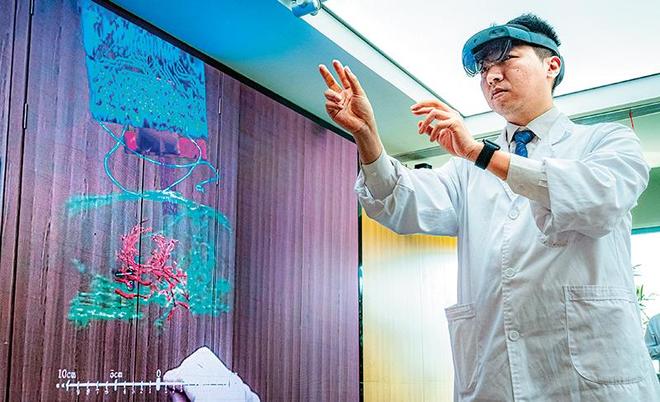
脑机接口技术

Search documents
脑机行业系列专家会议——脑机行业发展趋势解读
2025-09-04 14:36
Summary of Brain-Computer Interface Industry Conference Industry Overview - The brain-computer interface (BCI) industry is experiencing significant growth, with over 200 companies involved in China, including prominent players like Boruikang and JieTi [1][7]. - The industry chain is mature, with a maturity level of 80%-90%, encompassing upstream components like electrodes, chips, and algorithms [1][6]. Key Insights - **Boruikang's Position**: Boruikang has excelled in the education and rehabilitation sectors, focusing on semi-embedded devices that minimize brain damage and facilitate quicker clinical progress [1][2]. - **Market Growth**: The BCI market in China is projected to grow from approximately 3.8 billion yuan in 2024 to 5.5 billion yuan by 2027, with expectations to reach 7 billion yuan in the following years [3][16]. - **Device Segmentation**: Non-invasive devices currently dominate the market, holding over 80% of the share, but semi-embedded and fully implanted devices are expected to increase their market value significantly [3][16]. Technical Developments - **Cost Structure**: The primary costs in BCI devices are attributed to electrodes, chips, and algorithms, with implanted electrodes being the most expensive due to their single-use nature [3][11]. - **Signal Quality**: Non-invasive BCIs are gaining traction due to easier certification processes, but they face challenges in signal quality and accuracy compared to invasive methods [3][12]. - **Algorithm Importance**: Algorithms play a crucial role in signal processing, feature extraction, and virtual signal generation, which are essential for applications like speech recognition [9][10]. Clinical Applications - **Rehabilitation Focus**: Both semi-embedded and non-invasive BCIs are widely used in rehabilitation, with Boruikang developing devices that require minimal brain damage and can quickly advance clinical trials [5][18]. - **Surgical Advances**: JieTi has successfully completed the first fully implanted surgeries in China, marking a significant milestone in the field [7][8]. Challenges and Risks - **Certification Hurdles**: No domestic company has yet received medical device certification for embedded BCIs due to stringent clinical data requirements [4][24]. - **Market Perception**: Despite the potential, the capital market's attention towards the BCI industry remains limited compared to other countries, indicating a need for sustained investment interest [26][27]. Future Outlook - **Policy Support**: The Chinese government is expected to introduce policies to support the BCI industry, including subsidies for key projects and companies [20][30]. - **Technological Advancements**: Continued research and development are necessary to overcome existing challenges, particularly in high-channel count chips and understanding brain signal processing [13][28]. Conclusion The brain-computer interface industry is poised for growth, driven by technological advancements and increasing applications in rehabilitation and education. However, challenges related to certification, market perception, and the need for policy support remain critical for its future development.
以非侵入式脑机接口开启生命更多可能性
Zhong Guo Zheng Quan Bao· 2025-09-03 01:49
Core Insights - Strong Brain Technology's bionic hand is one of the few mass-produced prosthetics that allows users to control each finger through neural electrical signals without invasive surgery [1] - The non-invasive brain-computer interface (BCI) technology is gaining attention due to its higher safety and accessibility potential, marking a critical phase of transitioning from laboratory to commercialization [1][3] - Dao's Technology announced a $30 million investment in Strong Brain Technology's Pre-B round preferred shares, aiming to leverage its experience in materials to create an "AI + materials" platform [1] Company Developments - Strong Brain Technology aims to empower individuals with disabilities by providing bionic prosthetics that enable them to perform daily tasks such as grasping objects and walking [1][2] - The company has successfully mass-produced bionic prosthetics that enhance user experience, including a bionic leg that provides a natural walking experience and reduces the risk of falling [1][2] - Strong Brain Technology has become a leading supplier of dexterous hands for humanoid robots, capitalizing on its technological advancements in bionic hands [2] Technological Innovations - The company has made significant advancements in reading and interpreting weak human electrical signals, which are crucial for controlling bionic limbs [2] - Innovations in materials science and AI algorithms have enabled the company to capture and process these signals more effectively, simplifying the user experience [2][3] - The integration of AI in non-invasive BCI technology has accelerated industry growth, allowing for better extraction of relevant information from complex signals [3] Consumer Focus - Strong Brain Technology emphasizes the importance of understanding consumer needs to fulfill its vision of "unlocking more possibilities in life" [3] - The company aims to develop the next generation of bionic limbs that allow for bidirectional interaction, enabling users to sense external conditions [3] - Despite reducing the price of bionic limbs to one-fifth to one-tenth of European brands, the cost remains a burden for many disabled individuals [3][4] Social Responsibility - The company collaborates with local disability associations and charitable organizations to provide free bionic hands and legs to eligible individuals [4] - A project initiated by the Zhejiang Provincial Disabled Persons Welfare Foundation has already benefited 400 individuals, with plans to assist 2,000 more this year [4]
强脑科技合伙人何熙昱锦:以非侵入式脑机接口开启生命更多可能性
Zhong Guo Zheng Quan Bao· 2025-09-03 00:39
Core Insights - Strong Brain Technology's bionic hand is one of the few mass-produced prosthetics that allows users to control each finger through neural electrical signals without invasive surgery [1][2] - The non-invasive brain-computer interface (BCI) technology is gaining attention due to its higher safety and accessibility potential, marking a critical phase of transitioning from laboratory to commercialization [1][5] Group 1: Product and Technology - The bionic prosthetics produced by Strong Brain Technology enable users to perform daily tasks such as grasping objects, writing, and playing instruments [2] - The company has made significant advancements in signal collection, allowing users to control the bionic hand with minimal delay after a brief signal collection process [2][3] - Strong Brain Technology has become a leading supplier of dexterous hands for humanoid robots, leveraging its experience in bionic hands to address engineering challenges in robotics [3] Group 2: Innovation and Development - The company has achieved breakthroughs in materials science and AI algorithms, enhancing the sensitivity and stability of signal capture without the need for conductive gel on the skin [3][4] - AI algorithms play a crucial role in the development of non-invasive BCI technology, enabling the extraction of relevant information from complex and noisy signals [4] Group 3: Market and Social Impact - Strong Brain Technology aims to make bionic prosthetics more affordable, reducing prices to one-fifth to one-tenth of European brands, yet still recognizes the financial burden on many disabled individuals [5] - The company collaborates with local disability organizations and foundations to provide free bionic hands and legs to eligible individuals, with a goal to assist 2,000 disabled people in Zhejiang this year [5][6]
以非侵入式脑机接口 开启生命更多可能性
Zhong Guo Zheng Quan Bao· 2025-09-02 22:33
Core Insights - Strong Brain Technology's bionic hand is one of the few mass-produced prosthetics that allows users to control each finger through neural electrical signals without invasive surgery [1][2] - The non-invasive brain-computer interface (BCI) technology is gaining attention due to its higher safety and accessibility potential, marking a critical phase of transitioning from laboratory to commercialization [1][4] Company Developments - Dao's Technology announced a $30 million investment in Strong Brain Technology's Pre-B round preferred shares, aiming to leverage its experience in materials to create an "AI + materials" platform [1] - Strong Brain Technology has successfully mass-produced bionic prosthetics that enable users to perform daily tasks such as grasping objects and writing [2][3] Technological Innovations - The company has made significant advancements in reading and interpreting weak human electrical signals, which are crucial for controlling bionic limbs [3][5] - Innovations in materials science and AI algorithms have improved the sensitivity and stability of signal capture, allowing for direct skin contact without conductive gel [3][4] Market Trends - The demand for humanoid robots is increasing, with over half of the engineering challenges focused on the dexterity of robotic hands, which Strong Brain Technology is addressing through its expertise in bionic hands [3] - The rapid development of AI algorithms has facilitated the extraction of relevant information from complex signals, enhancing the capabilities of BCI technology [4] Social Impact Initiatives - Strong Brain Technology aims to make bionic limbs more affordable, reducing prices to one-fifth to one-tenth of European brands, while also collaborating with organizations to provide free prosthetics to eligible individuals [5][6] - The company plans to assist 2,000 disabled individuals in Zhejiang with free bionic limb installations, promoting social reintegration for marginalized groups [6]
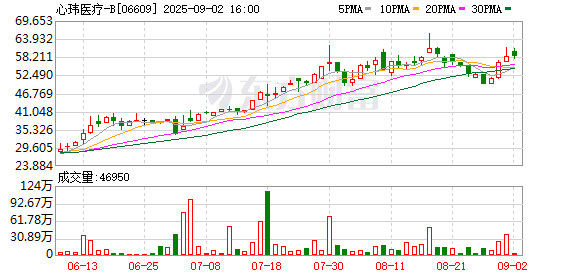
心玮医疗进入规模化盈利阶段 脑机接口预计明年临床试验
Zheng Quan Shi Bao Wang· 2025-09-02 13:44
Core Viewpoint - Company achieved profitability in the first half of the year with a net profit of 50.94 million yuan, entering a phase of scaled profitability [2] - The company plans to initiate clinical trials for its intravascular brain-machine interface by the end of next year and will conduct a share buyback of 80 million HKD to demonstrate confidence in future prospects [2] Financial Performance - The company reported sales revenue of nearly 200 million yuan, with a growth rate exceeding 40%, and an overall gross margin returning to nearly 70% [2] - Sales and management expense ratio decreased by 8 percentage points to 37% [2] - The company forecasts a profit level of approximately 70 to 80 million yuan for the full year of 2025, aiming for a compound annual growth rate of 35% in revenue and over 50% in profit growth in the coming years [2] Product Development and Market Expansion - The company has three main product lines: ischemic stroke, hemorrhagic stroke, and access devices, all showing strong performance this year [2] - In the hemorrhagic stroke sector, the company has rapidly expanded hospital partnerships, with nearly 200 new collaborations, aiming for over 400 to 500 hospital approvals by year-end [2] - The launch of the first domestic coated flow-directed stent positions the company as the only entity with a complete aneurysm treatment solution in China [2] Ischemic Stroke Sector - The company is focusing on promoting aspiration catheter products and related technologies, with a significant increase in active implanting hospitals and a 60% year-on-year growth in implant volume [3] - The projected market size for product terminal implantation is expected to approach 700 million yuan, with a conservative market share estimate of 10% to 12% [3] - New products, including carotid stents and intracranial drug-eluting stents, are in the registration process, with significant market potential anticipated [3] Interventional Access Products - Sales in this segment grew by 28% in the first half of 2025, with a market share exceeding 20% in the vascular closure field [3] - The company completed its first business development project in collaboration with Matrix to launch a new generation of occluders, which will further expand market share [3] International Expansion - The company's overseas business has reached over 30 countries and regions, with plans to expand to more than 50 by 2026 [3] - Expected overseas sales for this year are around 2 million USD, with growth rates projected between 50% and 100% in the coming years [3] Policy Environment - The company expressed optimism regarding healthcare policies, believing that innovative devices will benefit from diverse payment methods and that their products will be supported by commercial insurance [5] - The company anticipates that its innovative products, such as intracranial drug-eluting stents and brain-machine interfaces, will gain from favorable policy changes [5] Brain-Machine Interface Development - The company is set to begin formal clinical trials for its interventional brain-machine interface by the end of next year, utilizing a minimally invasive approach [6] - The brain-machine interface product, which uses stent electrodes, has shown high signal stability and clarity, with advantages over traditional methods [6] - The project has been in collaboration with Nankai University since 2021, with multiple animal experiments completed and theoretical validation concluded [6]

道氏技术控股子公司拟3000万美元认购强脑科技Pre-B轮优先股,布局脑机接口技术
Zheng Quan Shi Bao Wang· 2025-09-02 12:44
Group 1 - The core viewpoint of the news is that Daoshi Technology is investing in Brain Family Inc. to enhance its capabilities in AI and new materials, particularly in the application of brain-computer interface technology [1] - Daoshi Technology's subsidiary, Hong Kong Jiana, plans to invest $30 million in Brain Family Inc. to acquire minority shareholder rights [1] - Brain Family Inc. is recognized as one of the "Six Little Dragons of Hangzhou" and specializes in non-invasive brain-computer interface technology, with over 460 authorized patents and products certified by FDA and CE [1] Group 2 - Daoshi Technology, established in 2007 and listed in 2014, focuses on carbon materials, lithium battery materials, and ceramic materials, with major products including graphene conductive agents and ceramic inks [2] - In the first half of 2025, Daoshi Technology reported revenue of 3.654 billion yuan, a year-on-year decrease of 11.64%, while net profit attributable to shareholders increased by 108.16% to 230 million yuan [2] - The significant profit growth is attributed to the expansion of overseas business, increased production capacity of cathode copper, and rising cobalt metal prices, which improved the gross margin of cobalt products [2] Group 3 - Daoshi Technology is establishing an intelligent computing center to integrate atomic-level computing with AI algorithms, aiming to transform traditional material R&D from experience-based to data-driven approaches [3] - The company has formed strategic partnerships with Suzhou Nengsida Electronic Technology Co., Ltd. and Xinpeisen to accelerate the application of carbon materials in key components for humanoid robots [3]

道氏技术:香港佳纳拟认购强脑科技Pre-B轮优先股
Ge Long Hui· 2025-09-02 10:13
Core Insights - Daoshi Technology (300409.SZ) announced that its subsidiary, Hong Kong Jiana Co., Ltd., has signed a Pre-B round preferred stock subscription agreement with Brain Family Inc. and related parties [1] - The transaction will be completed after approval from Brain Family Inc.'s board and specific shareholders [1] - Hong Kong Jiana will invest $30 million to acquire minority equity in Brain Family Inc. [1] Company Overview - Brain Family Inc. is a global leader in brain-computer interface technology, possessing significant technological barriers and commercialization capabilities [1] - The core team of Brain Family Inc. includes members from top institutions such as Harvard and MIT [1] - The company holds over 460 authorized patents and its core products have received international certifications from FDA and CE [1] Application Fields - Brain Family Inc.'s technology is widely applied in various sectors, including medical rehabilitation, educational technology, consumer health, human-computer interaction, and entertainment [1]
道氏技术(300409.SZ):香港佳纳拟认购强脑科技Pre-B轮优先股
Ge Long Hui A P P· 2025-09-02 10:12
Core Viewpoint - Daoshi Technology (300409.SZ) announced a significant investment in Brain Family Inc. through its subsidiary Hong Kong Jiana, acquiring minority equity in the company by subscribing to Pre-B round preferred shares for $30 million [1] Company Summary - Hong Kong Jiana, a subsidiary of Daoshi Technology, will invest $30 million in Brain Family Inc. to acquire minority shareholder rights [1] - Brain Family Inc. is a leading global company in brain-computer interface technology, possessing unique technological barriers and commercialization capabilities [1] - The core team of Brain Family Inc. includes members from prestigious institutions such as Harvard and MIT, and the company holds over 460 authorized patents [1] - Brain Family Inc.'s core products have received international certifications from FDA and CE, and are widely used in various fields including medical rehabilitation, educational technology, consumer health, human-computer interaction, and entertainment [1]
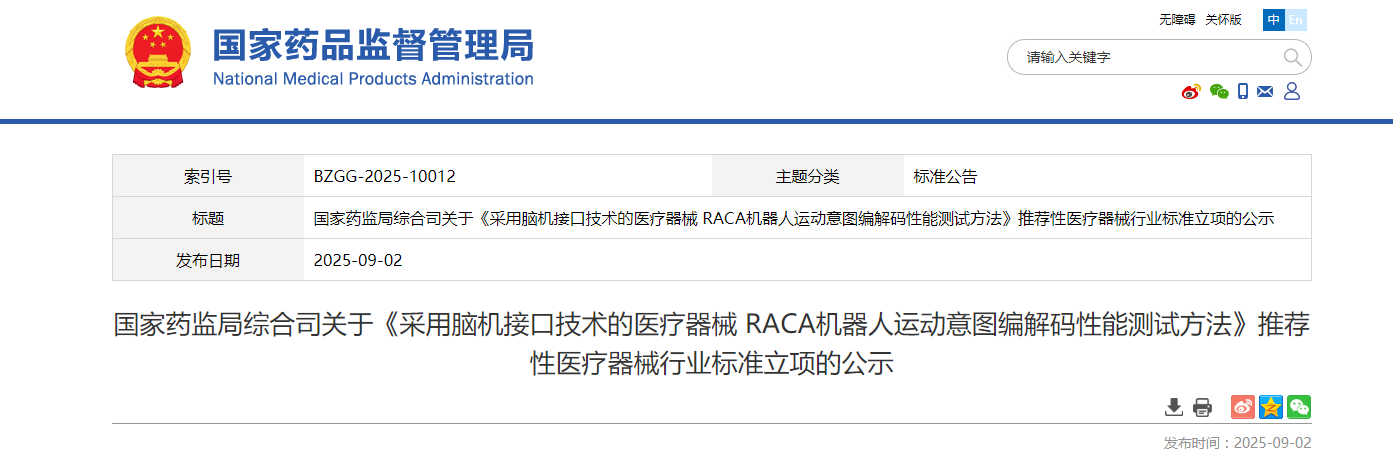
国家药监局综合司关于《采用脑机接口技术的医疗器械 RACA机器人运动意图编解码性能测试方法》推荐性医疗器械行业标准立项的公示
Zhong Guo Zhi Liang Xin Wen Wang· 2025-09-02 08:47
Group 1 - The National Medical Products Administration (NMPA) has established a plan for the formulation of a recommended industry standard for medical devices utilizing brain-computer interface technology, specifically focusing on the RACA robot's motion intention encoding and decoding performance testing methods [2] - The standard formulation plan was determined after public consultation and expert evaluation, indicating a structured approach to standardizing innovative medical technologies [2] - The public notice period for feedback on the proposed standard is set for 7 days from the date of the announcement, allowing stakeholders to voice any objections [2]

瞭望·政策解码 | 从脑出发 驱动未来
Xin Hua She· 2025-09-02 01:21
Core Viewpoint - The article emphasizes the importance of brain-computer interface (BCI) technology as a key direction for cultivating future industrial sectors in China, highlighting the recent implementation of policies to promote innovation and development in this field [1][3]. Industry Development - The Ministry of Industry and Information Technology and six other departments have issued the "Implementation Opinions" to guide the high-quality development of the BCI industry in China, aiming to overcome technical bottlenecks and improve the industrial ecosystem [3][4]. - The BCI technology is positioned as a critical force for future industrial development, with China making significant progress in this area, although challenges such as core technology limitations and an incomplete industrial ecosystem remain [3][5]. Key Tasks and Focus Areas - The "Implementation Opinions" outline five key tasks and 14 specific initiatives to enhance innovation capabilities in the BCI industry, focusing on the development of foundational hardware and software, high-performance products, and the application of technological achievements [5][6]. - The document emphasizes the need for breakthroughs in signal acquisition, processing, and application across the entire value chain, including advancements in sensor components and chip technology [5][8]. Technological Innovations - The article discusses the integration of various technologies, such as light, magnetic, and ultrasound, to enhance the performance of non-invasive electrodes and improve the adaptability of implanted electrodes in different brain regions [1][5]. - It highlights the importance of developing high-density integrated devices and optimizing existing products like deep brain stimulators and cochlear implants for better clinical applicability [6][9]. Application and Market Expansion - The BCI technology is expected to create new pathways for public services, particularly in providing precise rehabilitation solutions for disabled individuals and patients with neurological disorders, thereby enhancing quality of life [4][10]. - The article outlines targeted engineering projects aimed at addressing core bottlenecks in the industry, including the development of portable and wearable health monitoring devices and applications in various fields such as industrial manufacturing and healthcare [9][10].