万亿俱乐部

Search documents
30强城市经济半年报:广佛莞增速垫底 “北方第二城”悬念再起
Sou Hu Cai Jing· 2025-08-01 13:31
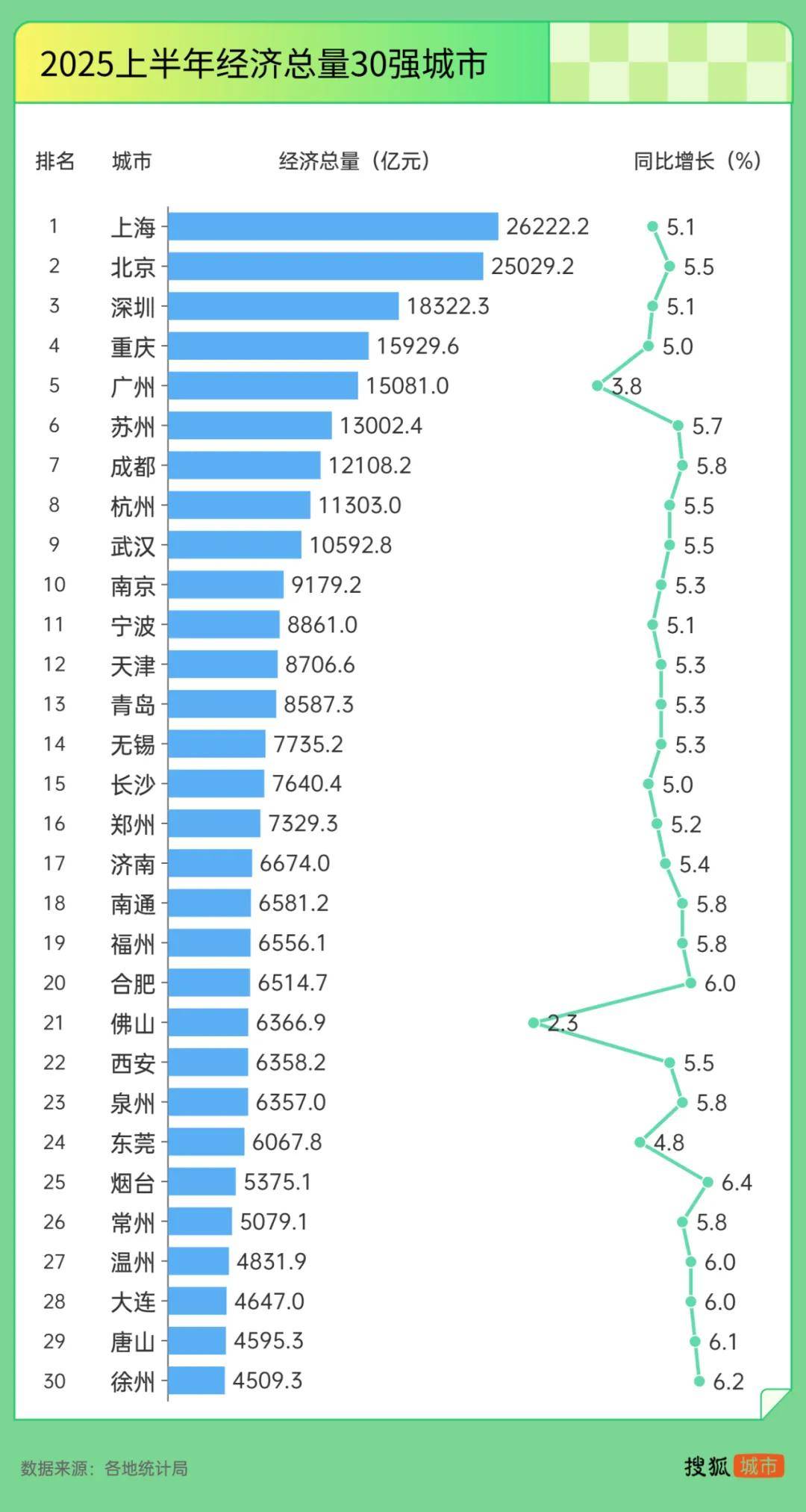
Economic Overview - Beijing is expected to join the "5 trillion club" this year, becoming the second city after Shanghai to achieve this milestone, with a GDP of 2.5 trillion in the first half of the year [5] - Qingdao and Tianjin are narrowing the gap for the title of "Northern Second City," with GDPs of 858.73 billion and 870.66 billion respectively, a difference of only 11.93 billion [5] - Several cities, including Wenzhou, Dalian, and Xuzhou, are collectively aiming to break into the "trillion club" this year [5] Economic Growth Rates - 21 major cities outperformed the national growth rate of 5.3%, with Yantai, Xuzhou, and Tangshan leading with growth rates exceeding 6.0% [5] - Beijing's growth rate of 5.5% is notable as it is the only first-tier city to exceed the national average [5][6] Industrial Performance - Guangzhou's industrial output has returned to positive growth after a year of decline, primarily driven by the automotive manufacturing sector [7][10] - Hefei has emerged as a significant player in the new energy vehicle sector, with a 13.1% increase in industrial output, marking 20 consecutive months of double-digit growth [10] - Shenzhen may lose its title as the "New Energy Vehicle Capital" due to changes in statistical methods affecting production reporting [11] Consumer Spending - National retail sales reached 24.5 trillion, growing by 5.0%, but over half of the major cities fell below this average [12] - Beijing and Tianjin are the only two cities with negative growth rates in consumer spending, at -3.8% and -0.7% respectively [15] - Chongqing has regained its position as the top city for consumer spending, surpassing Shanghai by a narrow margin [12][15] Foreign Trade - Shenzhen has reclaimed its position as the top city for foreign trade, with a total import and export value of 4.5 trillion, while Dongguan has surpassed Ningbo to take the fifth spot [17][20] - Beijing's import and export value has decreased by 16.1%, with significant drops in imports of crude oil, agricultural products, and automobiles [20] Investment Trends - Fixed asset investment in Shenzhen and Dongguan has decreased by over 10%, largely due to a decline in real estate development [21][23] - In contrast, Beijing's fixed asset investment has grown by 14.1%, driven by substantial increases in equipment and high-tech industry investments [23]

“苏超”火了,谁才是江苏楼市的“顶流”?
3 6 Ke· 2025-07-02 02:24
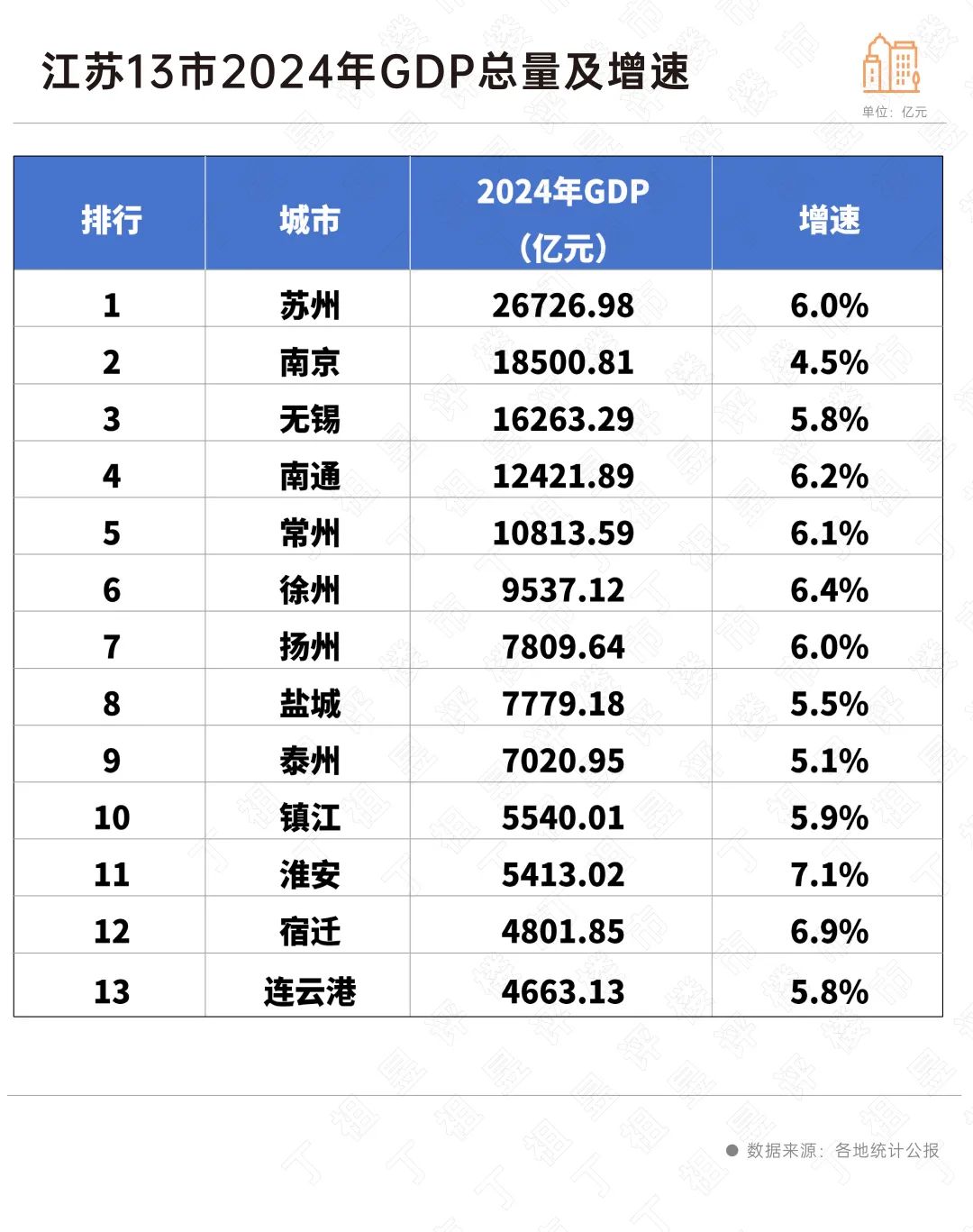
Core Viewpoint - The competition among the 13 cities in Jiangsu Province has evolved beyond sports, encompassing economic and demographic aspects, leading to a comprehensive evaluation of urban strength and real estate performance [2][23]. Economic Performance - Jiangsu Province is home to the most cities with a GDP exceeding 1 trillion yuan, with a total GDP of 13.70 trillion yuan in 2024, ranking second nationally [3]. - Suzhou leads the province with a GDP of 2.67 trillion yuan, followed by Nanjing at 1.85 trillion yuan, indicating a significant economic gap between the two cities [3][7]. - The top five cities in Jiangsu account for over 60% of the province's total economic output [3]. Real Estate Market - In the first five months of 2024, Suzhou's new housing sales volume decreased by 2%, while Nanjing's increased by 8%, indicating a divergence in market recovery [13]. - Salt City recorded the highest year-on-year growth in new housing sales at 30%, while Suzhou's total sales for the first half of the year reached 171.09 million square meters, a slight increase of 0.9% year-on-year [14][15]. - The average new housing price in Nanjing reached 27,329 yuan per square meter, the highest in the province, while cities like Huai'an and Xuzhou had prices below 10,000 yuan per square meter [17][20]. Population Dynamics - Suzhou has the largest permanent resident population in Jiangsu at 12.987 million, surpassing Nanjing's 9.577 million [9][11]. - Nanjing experienced the highest population growth in the province over the past five years, with an increase of 262,300 residents [10]. - The population in several northern Jiangsu cities, including Xuzhou, has been declining, reflecting a trend of out-migration [10][11]. Competitive Landscape - The competition among Jiangsu cities is intensifying, with Suzhou maintaining an advantage in population and GDP per capita, while Nanjing is strengthening its position as the provincial capital through population growth [23]. - Salt City and Nantong have emerged as "dark horses" in terms of new housing sales growth and price increases, respectively [23].