
不当得利

Search documents
“天降”30余万元,到底是谁的?
Ren Min Wang· 2025-11-25 01:09
Core Points - The article discusses a legal case involving a mistaken bank transfer where an individual accidentally transferred 341,000 yuan instead of the intended 34,100 yuan due to a typing error, leading to a dispute over the excess amount [1][2][3][4] Group 1: Incident Overview - The incident occurred in February 2025, when Zhang, a food supplier, mistakenly transferred 306,900 yuan more than intended to Wang, a regular supplier, due to a typing error on his mobile banking app [2][3] - After realizing the mistake, Zhang attempted to contact Wang for a refund but was ignored and subsequently blocked on messaging platforms [3][4] Group 2: Legal Proceedings - Zhang sought legal advice and filed a lawsuit against Wang in March 2025, demanding the return of the excess funds and compensation for losses incurred due to the delay [4][5] - The court ruled in favor of Zhang, stating that Wang had no legal basis to retain the excess funds, which constituted "unjust enrichment" under Chinese law [5][6] Group 3: Legal Principles - The court's decision was based on Article 122 of the Civil Code of the People's Republic of China, which allows individuals to request the return of unjustly obtained benefits [5] - The ruling emphasized that even if a mistake was made during the transaction, the recipient of the funds is obligated to return the excess amount if they are aware of the error [5][6]
“油罐车事件”余波未了:前湖北首富和金龙鱼“打”起来了
Feng Huang Wang Cai Jing· 2025-11-20 13:44
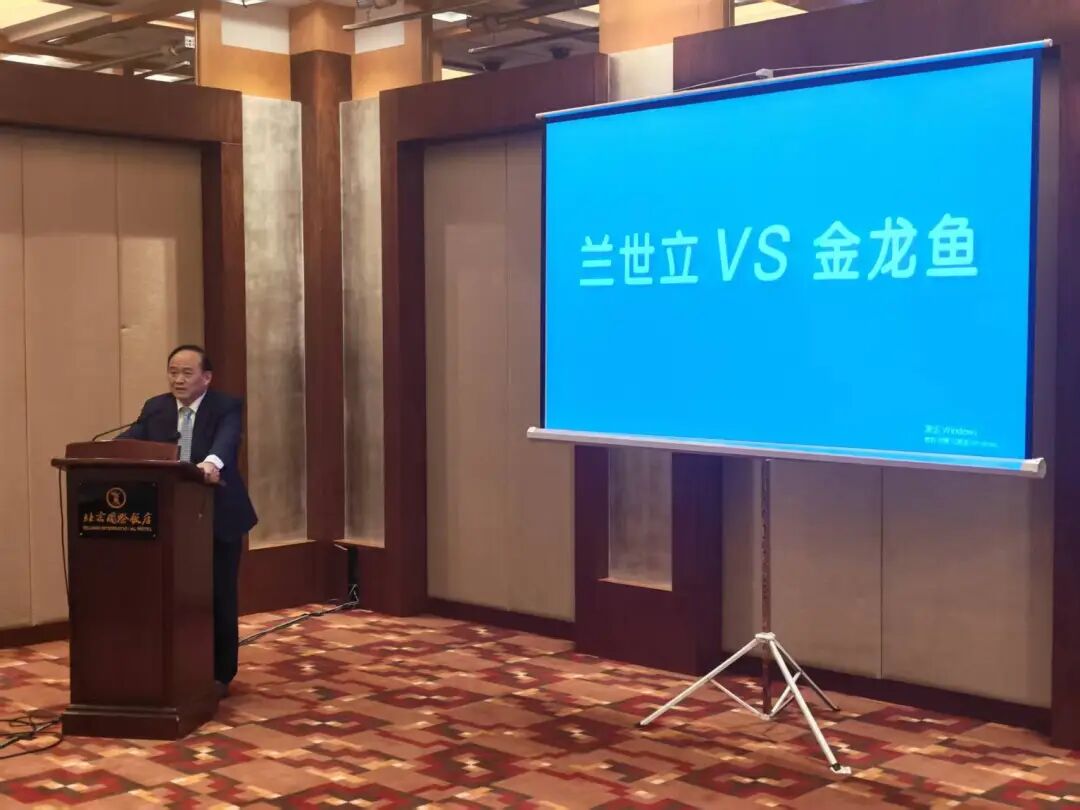
Core Viewpoint - The legal dispute between former Hubei billionaire Lan Shili and Yihai Kerry, the parent company of the grain and oil giant Jinlongyu, has escalated from a public controversy regarding food safety to a complex legal battle involving defamation and unjust enrichment claims [2][6][16]. Group 1: Incident Background - The controversy began in July 2024 when media reported on the "oil tanker mixed loading chaos," raising public concerns about the safety of edible oil transportation [7][8]. - Lan Shili released a video accusing Jinlongyu of using uncleaned oil tankers for transporting edible oil, claiming that the company's market value dropped by 650 billion [2][8]. - The video gained significant traction, amassing 46,000 likes and over 20,000 shares on Douyin by July 30, 2024 [8]. Group 2: Legal Proceedings - Yihai Kerry filed a lawsuit against Lan Shili for defamation, claiming his statements were false and damaging to their brand reputation [11][12]. - The Shanghai court ruled in favor of Yihai Kerry, ordering Lan Shili to apologize publicly and pay a total of 30,000 yuan in damages [13]. - Lan Shili appealed the decision, arguing that he was exercising his right to express concerns about a public issue, but the appeal was rejected [14]. Group 3: Escalation of Dispute - Following the court's decision, a new issue arose when Lan Shili mistakenly transferred 100,000 yuan instead of the ordered 10,000 yuan to Yihai Kerry [15]. - Lan Shili claimed that Yihai Kerry did not inform the court about receiving the payment and instead sought to freeze his bank account, leading to further legal action from his side [15][16]. - The dispute has now expanded to include claims of unjust enrichment, complicating the legal battle between the two parties [16].

百余名货车司机利用磅差倒卖货物,是“外快”还是犯罪?
Xin Jing Bao· 2025-09-15 02:03
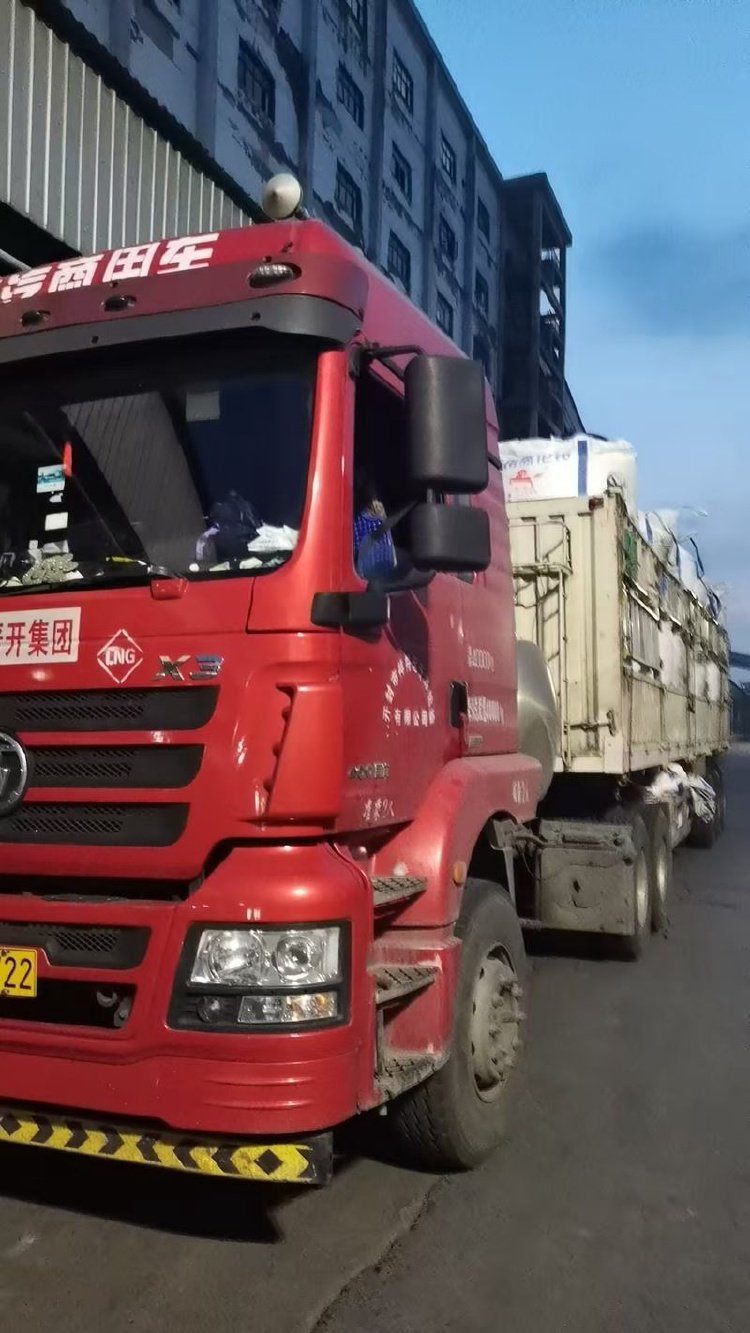
Core Viewpoint - The case involving over a hundred truck drivers accused of theft of fertilizer from a single company highlights the complexities of ownership and loss in the transportation industry, raising questions about the legality of their actions and the definition of theft in this context [1][4][12]. Summary by Sections Case Background - The case involves 137 truck drivers accused of stealing fertilizer from Jin Kai Company, with evidence including direct transactions and confessions from some drivers [5][6]. - The drivers allegedly sold excess fertilizer, which was often considered "gifts" due to weight discrepancies during weighing processes [4][7]. Legal and Industry Context - The legal definition of theft requires a victim, leading to disputes over the ownership of the sold fertilizer [12][13]. - The transportation industry often operates under informal rules, where drivers may sell excess goods, a practice that is widespread but rarely prosecuted [8][11]. Evidence and Charges - Evidence includes transaction records and confessions, but many drivers deny any wrongdoing, claiming their actions were common practice [5][8]. - The police initially identified theft amounts ranging from thousands to tens of thousands, later revised to a few thousand or less due to the nature of the transactions [8][9]. Industry Practices - The practice of selling excess goods is described as a "hidden rule" within the trucking industry, with many drivers acknowledging its prevalence [9][11]. - Drivers often face penalties for short deliveries, leading to a culture where selling excess goods becomes a coping mechanism for financial losses [11][15]. Legal Opinions - Legal scholars are divided on whether the drivers' actions constitute theft, with some arguing that the excess goods were effectively the property of the buyers, while others maintain that the drivers illegally appropriated company property [12][15]. - The case has drawn attention to the need for clearer definitions of ownership and loss in the context of transportation contracts [13][16].
百余名货车司机利用磅差倒卖货物 是“外快”还是犯罪?
Xin Jing Bao· 2025-09-15 00:15
Core Viewpoint - The case involving over a hundred truck drivers accused of stealing fertilizer from a single company has been ongoing for three years, with legal ambiguities surrounding the ownership of the sold goods and the definition of theft in this context [1][2][16]. Group 1: Case Background - The case began in May 2022 when several truck drivers were caught selling bags of fertilizer from their loads, leading to the arrest of over 130 drivers [4][3]. - Evidence against the drivers includes direct admissions of selling stolen goods, transaction records, and the capture of individuals selling the stolen fertilizer [1][4]. - The police initially identified a significant amount of theft, but the estimated value of the stolen goods has since decreased from tens of thousands to amounts below 30,000 yuan [1][9]. Group 2: Industry Practices - In the freight industry, it is common for sellers to provide extra goods to ensure buyers receive sufficient quantities, which the drivers have exploited by selling these "bonus" items [5][6]. - The practice of manipulating weight measurements using techniques to create discrepancies is widespread among truck drivers, with some drivers openly discussing these methods in industry groups [9][10]. - The drivers involved in the case argue that their actions are a common industry practice and do not constitute theft, as no party has suffered a loss [6][12]. Group 3: Legal Ambiguities - A central legal question is the ownership of the fertilizer sold by the drivers, with conflicting opinions on whether the goods belonged to the company or the buyers at the time of sale [16][17]. - Legal experts are divided on whether the drivers' actions constitute theft, with some arguing that the excess goods should be considered a loss accepted by the company, while others maintain that the company retains ownership [18][17]. - The ongoing legal proceedings have resulted in some drivers being convicted, while many others remain in limbo as the case continues to unfold [14][16].
内地卖淫团伙头目向境外汇款,被瑞银前高管私吞1.3亿港元
Mei Ri Jing Ji Xin Wen· 2025-09-05 08:03
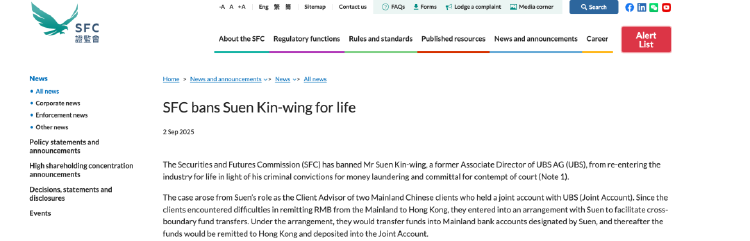
Core Points - UBS AG's former executive Sun Jianrong was convicted of money laundering and contempt of court, receiving a sentence of ten years and six months in prison for embezzling over HK$130 million from mainland clients [1][2][3] - The Hong Kong Securities and Futures Commission has permanently banned Sun from returning to the financial industry [1] Group 1: Embezzlement Details - Sun Jianrong misappropriated funds from clients, specifically the couple Yu Quanli and Lou Xiaojie, transferring a total of 1.3 billion RMB (approximately HK$1.5 billion) into various mainland bank accounts, including a direct transfer of 5 million RMB to his own account [2][3] - To deceive the clients, Sun provided forged bank statements and transfer requests, making it appear that the funds were in transit [2][3] Group 2: Misuse of Funds - Investigations revealed that the embezzled funds were funneled into Sun's controlled bank accounts, with significant amounts in various currencies, including HK$50.62 million and US$515,000 [3] - Sun used the misappropriated funds to purchase four properties in London and two in mainland China, totaling approximately HK$29 million, and acquired six luxury cars [3] Group 3: Criminal Background of Victims - The plaintiffs, Yu Quanli and Lou Xiaojie, were identified as individuals involved in organized illegal activities, specifically a prostitution ring in Nanjing, which raises questions about the source of the funds [4][6] - Yu Quanli was convicted in 2020 for running a large-scale prostitution operation and sentenced to 15 years in prison [6]

内地卖淫团伙头目向境外汇款,被瑞银前高管私吞1.3亿港元,“在伦敦买楼,还登记了6辆豪车”!法院判了
Mei Ri Jing Ji Xin Wen· 2025-09-05 05:49
Core Points - UBS Group's former deputy director, Sun Jianrong, was convicted of money laundering and contempt of court, receiving a sentence of ten years and six months in prison, along with a lifetime ban from the financial industry in Hong Kong [1][2] Group 1: Case Details - Sun Jianrong misappropriated over HK$130 million from clients, specifically the couple Yu Quanli and Lou Xiaojie, between November 2016 and February 2018, using fake documents to deceive them [1][2] - The funds were transferred to 29 different bank accounts, with a notable transfer of RMB 5 million directly into Sun's own account [1][2] - The investigation revealed that the misappropriated funds were funneled into two Hong Kong bank accounts controlled by Sun, with significant amounts in various currencies [2] Group 2: Victim Background - The plaintiffs, Yu Quanli and Lou Xiaojie, were identified as not being ordinary individuals, with the court suggesting that the funds likely originated from organized illegal activities, specifically a prostitution ring [3][4] - Yu Quanli was later convicted in 2020 for running a large-scale prostitution operation in Nanjing, receiving a 15-year prison sentence [7] Group 3: Legal Proceedings - The court found overwhelming evidence against Sun Jianrong, including his admission of using the misappropriated funds for personal investments and purchases [5] - The court ruled that the plaintiffs' claims for fraud and unjust enrichment were valid, despite the illegal nature of the funds involved [7][8]

错发30万元车补,广东一地发布“追回”公告后删除,当地商务局:内容仍有效,涉及个人隐私没必要公开
Mei Ri Jing Ji Xin Wen· 2025-08-11 00:38
Core Points - The Huizhou Municipal Bureau of Commerce announced a recovery of mistakenly issued subsidy funds amounting to 300,000 yuan due to an audit oversight, affecting 28 applicants [1][4] - The subsidies were incorrectly granted to applicants whose old vehicles were registered as light trucks, which do not meet the criteria for the passenger vehicle replacement subsidy program [4][6] - A legal framework is established for the recovery process, requiring recipients to return the funds by August 25, 2025, or face legal action and potential credit record implications [4][6] Group 1 - The Huizhou Municipal Bureau of Commerce identified an error in the issuance of automobile replacement subsidies, leading to a total of 300,000 yuan being incorrectly distributed [1] - The audit revealed that 28 applicants submitted old vehicle registration documents that classified their vehicles as light trucks, which are not eligible for the subsidy [4] - The Bureau has initiated a recovery process, mandating the return of the funds by a specified deadline to avoid legal consequences [4][6] Group 2 - The Bureau's announcement was later deleted, but officials confirmed that the content remains valid and that efforts are underway to communicate with the affected applicants [6] - Legal experts indicated that refusal to return the funds could lead to claims of unjust enrichment and potential administrative or criminal penalties for the recipients [6]
