中国学

Search documents
世界视野下的历史中国与当代中国
Ren Min Ri Bao· 2025-10-16 22:20
Group 1 - The theme of the conference emphasizes the importance of studying China from a global perspective, especially in the context of economic globalization and the current trend of de-globalization [1] - There is a need for dialogue between China and other countries to foster cooperation, as the role of the US in free trade is diminishing and international organizations are losing influence [1][2] - The unique role of China in strengthening political and economic ties is highlighted, particularly in the context of cooperation between Europe and China [1] Group 2 - The significance of understanding Chinese history and culture is stressed for fostering innovation and effective dialogue [4] - The development of Chinese studies is becoming increasingly important as China plays a key role in global economic growth, climate change, and governance [5] - The need for a deeper understanding of China's political system, particularly the role of the Communist Party, is emphasized for comprehending contemporary China [8] Group 3 - The importance of mutual understanding and cooperation between China and India is noted, particularly in technology and development [11] - China's approach to global governance is described as pragmatic and constructive, aiming for a balanced and win-win development vision [6][10] - The necessity for independent academic perspectives in studying China is highlighted, especially in the context of Western narratives [13][14]

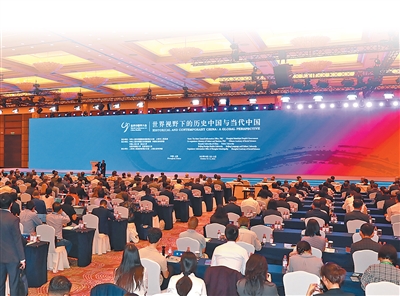
从“种草”到深耕:外国学者为何想要读懂中国?
Zhong Guo Xin Wen Wang· 2025-10-16 12:00
Core Viewpoint - The Second World Conference on Sinology is being held in Shanghai from October 13 to 15, gathering over 500 scholars from around the globe to discuss "Chinese Studies" from a "global perspective" [2] Group 1 - The conference highlights the continuous global interest in studying China, evolving from classical literature translation to contemporary global dialogue [2] - Foreign scholars are motivated to understand China, indicating a growing international curiosity and engagement with Chinese culture and society [2]

探讨“何以中国” 第二届世界中国学大会取得多项重要成果
Yang Shi Xin Wen Ke Hu Duan· 2025-10-16 06:29
Group 1 - The Second World Conference on Chinese Studies was held in Shanghai from the 13th to the 15th, with approximately 500 experts and scholars from over 50 countries and regions discussing "Historical China and Contemporary China from a Global Perspective" [1] - The conference introduced the "Shanghai Initiative," which calls for global scholars to enhance dialogue and cooperation, contributing to the prosperity of world civilization [1] - A recommended bibliography of world Chinese studies was released, featuring 54 works that reflect the research level of Chinese studies both domestically and internationally [1] Group 2 - The increasing global influence of China has led to the prevalence of the "China Question," prompting discussions on the advantages of Chinese-style modernization [3] - Scholars emphasized the importance of tracing historical roots and cultural foundations to answer the "China Question" [3] - German scholar Shi Hanwei expressed admiration for China's modernization, noting the significant changes since his first visit to Shanghai in 1984 [5] Group 3 - Italian scholar Li Jiya highlighted the warmth and hospitality of the Chinese people, attributing it to deep cultural roots, and noted a growing interest among tourists and students to visit China [7] - Australian award winner Wei Huade emphasized that Chinese studies should extend beyond classrooms and textbooks, advocating for the younger generation to experience Chinese stories firsthand [7]

海内外学者共寻何为中国、何以中国
Ren Min Ri Bao· 2025-10-15 23:14
Group 1 - The Second World Sinology Conference was held in Shanghai from October 13 to 15, 2025, with approximately 500 guests from over 50 countries and regions attending [1] - The theme of the conference was "Historical China and Contemporary China from a Global Perspective," focusing on the continuity and innovation of Chinese civilization [1] - President Xi Jinping expressed hope for experts and scholars to act as bridges between Chinese and foreign civilizations, promoting the study of world Sinology and cultural exchanges [2] Group 2 - Increasing numbers of scholars are focusing their research on China, establishing world Sinology as an important academic bridge connecting China and the world [2] - The conference highlighted that understanding contemporary China requires a deep understanding of its historical context, emphasizing the importance of historical perspectives in current studies [4] - The conference also addressed the need for cooperation and dialogue among different cultures and countries to foster a comprehensive understanding of China [6] Group 3 - The conference featured discussions on the significant changes in China over the past decades, with scholars noting the importance of firsthand experiences in understanding the country [3][4] - The release of the "Shanghai Initiative" emphasized that world Sinology is not only a research area but also a platform for civilizational dialogue, encouraging collaboration among experts from various fields [6]
从全球视角重估中国学的当代意义——第二届世界中国学大会侧记
Huan Qiu Shi Bao· 2025-10-15 23:07
Core Insights - The Second World Chinese Studies Conference held in Shanghai from October 13 to 15, 2023, focused on the theme "Historical and Contemporary China from a Global Perspective," inviting around 500 renowned experts and scholars from home and abroad [1][2] - The conference served as a platform for high-level dialogue, emphasizing the core spirit of Chinese studies: mutual learning and progress through communication and interpretation [2][3] Group 1: Historical Context and Development - Chinese studies have evolved from a marginal discipline to a prominent field in the U.S., reflecting a growing global interest [3] - The development of Chinese studies is characterized by a process of integrating Eastern and Western narratives, influencing global civilization [2][4] Group 2: Current Trends and Demands - The motivation for studying Chinese culture has shifted from pure curiosity about ancient civilization to a broader understanding of China's contemporary significance and its global connections [4][5] - The conference highlighted the increasing need for understanding China, as its influence on global affairs has become undeniable [4][5] Group 3: Academic Contributions and Innovations - The conference featured five parallel forums addressing various topics, showcasing the expansion of Chinese studies to include modern practices and interdisciplinary approaches [6] - A joint publication of 54 recommended research works in Chinese studies was released, illustrating the depth and breadth of the field's evolution [6] Group 4: Youth Engagement and Future Directions - The participation of young scholars was notable, as they bring fresh perspectives and utilize digital technologies to bridge academic research and global dialogue [7] - The conference underscored the critical role of youth in advancing Chinese studies and addressing contemporary global dynamics [7] Group 5: Cultural Exchange and Observations - The conference included visits to innovative sites in Shanghai, such as a robotics center and historical museums, demonstrating the blend of tradition and modernity in Chinese culture [8][9] - Observations from scholars highlighted China's governance model and cultural heritage as valuable lessons for other countries [9]
文化新观察丨“中国学”何以是世界的?——第二届世界中国学大会现场观察
Xin Hua Wang· 2025-10-15 23:00
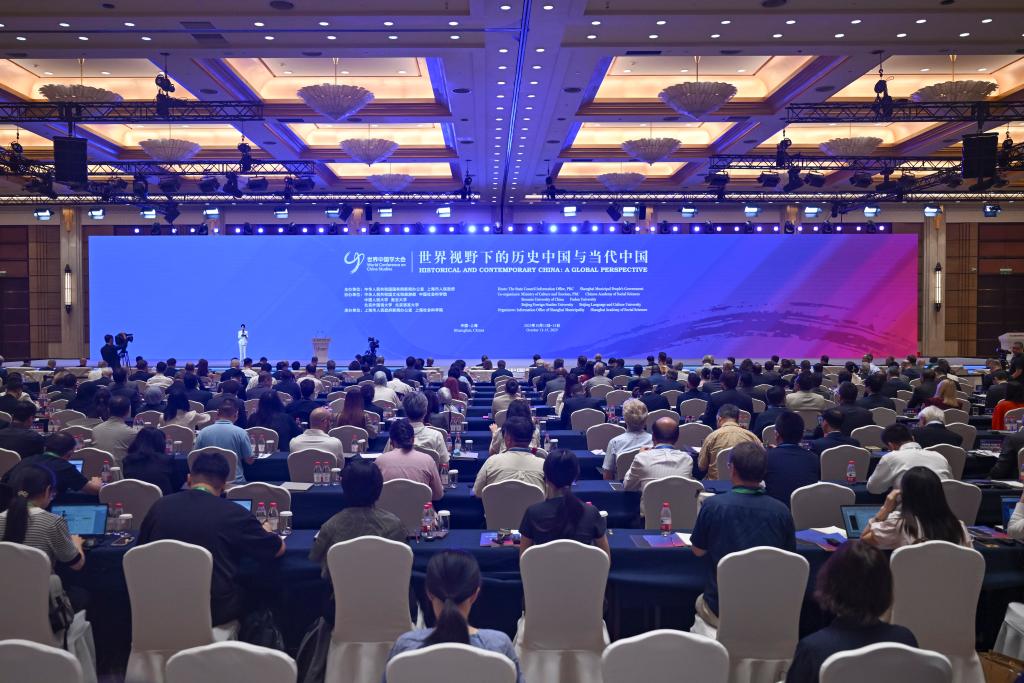
浦江潮涌,激荡思想涟漪;申城论道,谱写文明新篇。 10月14日,由国务院新闻办、上海市政府主办的第二届世界中国学大会拉开帷幕。大会包括开幕式、主论坛、5场平行分论坛及多项配套活动, 约500名海内外专家学者齐聚一堂,围绕"世界视野下的历史中国与当代中国"主题展开深入交流研讨,共同为推进中国学发展、推动文明互鉴贡献 学者力量。 学术之约:以世界视角把脉中国学发展 中国学是一门以中国为研究对象的学问,旨在更好理解古代中国、认识现代中国、把握未来中国。 第二届世界中国学大会上,专家学者以深入对话打破认知壁垒,以多元视角思考学术发展,汇聚起中国学发展的世界共识。 "随着中国的世界影响力与日俱增,对中国学的高度关注已然成为一种全球现象。"英国学者马丁·雅克表示,当中国在经济发展、气候变化、全球 治理、科技创新以及全球南方事务中扮演着愈发关键的角色,中国学也变得愈加重要。了解中国,正日益成为全球各领域专家的必备素养。 加拿大皇家学会院士赵月枝坦言,推动学术发展离不开构建中国学自主知识体系。"中国学是中国之学,也是世界之学,构建中国学自主知识体 系,要坚守好马克思主义这个魂脉和中华优秀传统文化这个根脉,也要基于人类共同的道 ...
穿透历史 链接当代:中外学者相聚上海再探“何以中国”
Xin Hua Wang· 2025-10-15 12:27
Core Insights - The Second World Chinese Studies Conference in Shanghai gathered around 500 scholars to explore the theme "Historical China and Contemporary China from a Global Perspective" [1][2] - Scholars emphasized the increasing globalization of Chinese studies, highlighting the need for a deeper understanding of China and its contributions to global civilization [2][3] Group 1: Understanding China - The concept of "China's Question" has gained prominence, prompting discussions on the advantages of Chinese-style modernization [2] - Experts argue that understanding China requires a historical and cultural foundation, advocating for a grounded approach to Chinese studies [3] Group 2: Learning from China - The conference showcased a shift in perspective, with scholars advocating for a new methodology that centers on China rather than a Western-centric view [4] - Participants from global South countries expressed a desire to learn from China's governance models and development strategies [6] Group 3: Future of Chinese Studies - Scholars discussed the importance of continuously refining the knowledge system of Chinese studies to better contribute to global discourse [7] - The exchange of wisdom from ancient Chinese texts is seen as valuable for contemporary global challenges, emphasizing the relevance of Chinese philosophy [9]
北京外国语大学谢韬:强调“当代性”的中国学更符合时代需要|聚焦世界中国学大会
Guo Ji Jin Rong Bao· 2025-10-15 11:57
Core Viewpoint - The second World Sinology Conference held in Shanghai focused on the theme of "Historical China and Contemporary China from a Global Perspective," highlighting the significance of Sinology in understanding modern China and its global implications [1][2]. Group 1: Key Themes of the Conference - The conference featured five parallel forums discussing topics such as the continuity and innovation of civilization from a global perspective, theoretical analysis and experiential insights of Chinese-style modernization, and the future of youth in Sinology [1]. - The emphasis was placed on the unique scale and speed of Chinese-style modernization, which has achieved what took Western developed countries over a century in less than eighty years within a nation of over one billion people [1][2]. Group 2: Leadership and Governance - The leadership of the Chinese Communist Party (CCP) is identified as a fundamental prerequisite for the modernization process, providing necessary political stability and order [2]. - The modernization is framed as a transformation of the national governance system and capabilities, with the primary goal of enhancing people's welfare and achieving national prosperity [2]. Group 3: Academic Development and Focus - Several Chinese universities are actively promoting the construction of Sinology and offering degree programs aimed at international students [3]. - A distinction is made between "Sinology," which traditionally focuses on ancient Chinese history and culture, and "Chinese Studies," which centers on contemporary China, aiming to help the world better understand its political, economic, and social dynamics [3].
美国学者高棣民:中国学架起文化交流的一座桥梁
Zhong Guo Xin Wen Wang· 2025-10-15 08:37
Core Points - The World Chinese Studies Conference was held in Shanghai from October 13 to 15, highlighting the role of Chinese studies in cultural exchange [1] - Gao Diming, a professor at UC Berkeley, emphasized that Chinese studies serve as a bridge for cultural exchange and enhance mutual understanding between countries [1] - Italian sinologist Fan Di noted that sinologists not only facilitate communication but also seek beneficial elements from Chinese culture for their own countries [1] - Approximately 500 participants from over 50 countries and regions attended the conference, indicating the global interest in Chinese studies [1] - Professor Naito Hill from Trinity College Dublin remarked on the globalization of Chinese studies and the potential for greater development if communication barriers are overcome [1]
“单一的西方视角无法真正理解当代中国”|聚焦世界中国学大会
Guo Ji Jin Rong Bao· 2025-10-15 04:20
Core Insights - The second World Chinese Studies Conference opened in Shanghai, emphasizing the significant development of Chinese studies in a global context [1] - Martin Jacques highlighted that understanding China requires moving beyond traditional Western perspectives, as the current dynamics of China are rapidly changing [1] Group 1: Evolution of Chinese Studies - Chinese studies are undergoing a profound transformation, becoming more open and inclusive compared to two decades ago, reflecting China's own development trajectory [3] - The role and importance of Chinese studies have increased as China plays a key role in global economic growth, climate change, global governance, technological innovation, and issues concerning the Global South [4] Group 2: Global South's Role - The Global South, including countries like Chile, Brazil, Malaysia, Nigeria, Pakistan, Kazakhstan, and Saudi Arabia, is emerging as a major growth area for Chinese studies, driven by the need to understand and connect with China [4] Group 3: Understanding China - Jacques pointed out that China's rich history, culture, efficient management systems, and diplomatic policies are still not fully understood globally, and the desire to comprehend China will only intensify in the future [4] - A significant challenge in Chinese studies is the paradigm gap between the West and China, as many Western scholars attempt to understand China through a Western lens, which is deemed outdated [4][5] - To truly understand China, research must start from China's historical context and modernization process, acknowledging its uniqueness and the profound differences between its past and present [4]