主理人

Search documents
主理人贬值史
3 6 Ke· 2025-08-22 08:47
Core Concept - The term "主理人" (zhǔ lǐ rén) has evolved from a translation issue related to the Japanese term "ディレクター" (director), which originally referred to a guide and has expanded in meaning over time to denote various leadership roles in different contexts [2][4][10]. Group 1: Origin and Evolution of the Term - The term "主理人" is derived from the Japanese translation of "director," which has a broader meaning than just "film director" [2][10]. - The term has historical roots in Latin, where "director" originally meant "guide," and has since been adapted in various professional contexts [4][5]. - The term gained popularity in the 1990s with the rise of street culture in Japan, where it was used to describe brand creators and leaders in the fashion industry [8][9]. Group 2: Cultural and Social Implications - "主理人" is closely associated with street culture, fashion, and celebrity branding, often used to describe individuals who lead their own brands or creative projects [11][12]. - The term has become a marketing tool, creating an image of exclusivity and high standards, despite the lack of formal qualifications required to claim the title [18][19]. - The proliferation of the term has led to a backlash, as many consumers perceive it as pretentious and disconnected from the actual work being done [16][20]. Group 3: Current Trends and Consumer Perception - As of 2023, the term "主理人" has expanded beyond niche markets, becoming commonplace across various industries, leading to a saturation of the title [15]. - The rise of "主理人" has resulted in a disconnect between the perceived high status of the title and the actual simplicity of the roles it describes [17][19]. - Consumers are increasingly skeptical of the "主理人" label, preferring straightforward descriptions of roles and responsibilities over inflated titles [20][21].
把“主理人”批倒批臭,就能让服务变好吗?
Hu Xiu· 2025-08-19 00:41
Group 1 - The term "主理人" (main person) is widely used across various industries, including the stand-up comedy scene, coffee shops, and bars in Shanghai [1][3] - The role of a "主理人" is ambiguous, with no clear definition whether it refers to a boss, partner, or manager [2][3] - The term can be applied to various positions within organizations, suggesting a flexible interpretation of roles and titles [3][4] Group 2 - The author expresses a preference for the term "主理人," indicating that it can be used for various roles, including legal positions and leadership titles [3][5] - There is a critique of the notion that certain titles should be reserved for specific individuals, arguing against a rigid hierarchy in naming conventions [5][6] - The term "假精致" (false sophistication) is mentioned, indicating that some view "主理人" as a representation of this concept, leading to its negative perception [6][7]

主理人餐厅越开越多,年轻人却不买账了
3 6 Ke· 2025-08-13 01:55
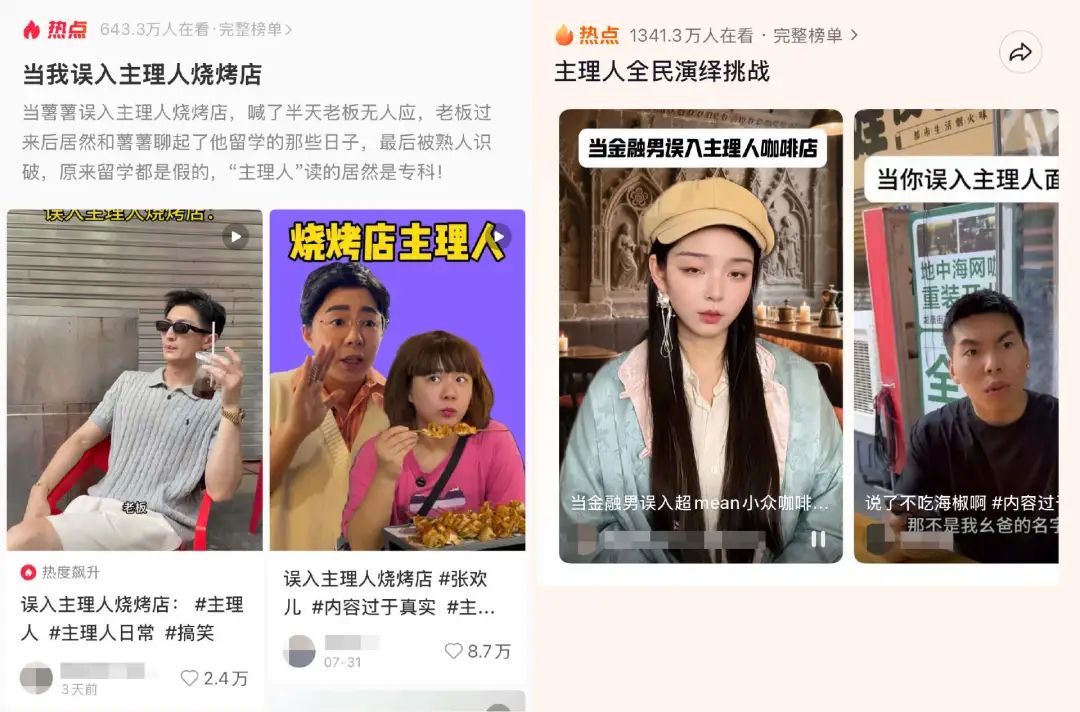
Core Viewpoint - The term "主理人" (zhǔ lǐ rén) has become a popular buzzword in the food and beverage industry, often used to describe restaurant owners or operators who emphasize a unique, high-end experience, but this trend is facing backlash as consumers begin to see through the pretentiousness associated with it [1][10][20] Group 1: Popularity and Usage of "主理人" - The term "主理人" has gained immense popularity, with discussions on social media exceeding millions, often humorously critiquing the concept as a sign of small business owners trying to elevate their status [6][8] - The term has evolved from its original meaning, which represented quality-focused, niche operators, to a more diluted version that is often associated with pretentiousness and inflated self-importance [10][17] Group 2: Consumer Backlash and Criticism - Consumers have started to "de-mystify" the term "主理人," identifying two main truths: the pretentious behavior of some operators and the excessive rules that create a negative dining experience [10][11] - Common complaints include arrogant attitudes, excessive rules for dining, and a lack of basic service awareness, leading to a perception that many "主理人" establishments prioritize image over quality [11][12][13] Group 3: Market Dynamics and Future Implications - Many establishments labeled as "主理人" are criticized for high prices paired with mediocre products, leading to a disconnect between consumer expectations and actual offerings [15] - The proliferation of the term has resulted in a market where genuine quality-focused operators are reluctant to use the title, as it has become synonymous with superficiality rather than authenticity [17][20]
大侠后宫:“男朋友把微信头像换成某瑞咖啡后......” 啊啊啊啊啊啊太可爱了!!!
猿大侠· 2025-08-12 04:11
Core Viewpoint - The article humorously discusses the absurdity of modern life and social interactions, particularly focusing on the concept of "主理人" (main person in charge) in various contexts, including workplace dynamics and personal relationships [42]. Group 1 - The term "主理人" is used to redefine roles in the workplace, suggesting a humorous take on ownership and responsibility among young professionals [42]. - The article highlights the absurdity of social expectations and interactions, using exaggerated scenarios to illustrate the humor in everyday life [10][12]. - There is a playful critique of consumer culture, particularly in the context of food and beverage preferences, showcasing a blend of sophistication and absurdity in modern consumption [9][12]. Group 2 - The article reflects on the identity crisis faced by young workers, using humor to address feelings of inadequacy and the pressure to perform in professional settings [42]. - It emphasizes the importance of humor as a coping mechanism for dealing with workplace stress and societal expectations [42]. - The narrative includes various humorous anecdotes and comments from readers, creating a community of shared experiences and laughter [8][10].
“主理人”:从网络热词到被群嘲,形式主义要不得
Sou Hu Cai Jing· 2025-08-07 02:17
Core Viewpoint - The term "主理人" (zhǔ lǐ rén) has transitioned from a respected title in the fashion and trend industry to a subject of ridicule due to its overuse and misapplication in various business contexts [1] Group 1 - The term originally referred to key figures in trendy brands but is now used by anyone starting a business, leading to a dilution of its value [1] - Social media has seen a rise in humorous critiques of the term, indicating a shift in public perception [1] - The behavior of some individuals claiming the title has contributed to negative sentiments, as they often provide poor customer service while maintaining high prices [1] Group 2 - The essence of being a "主理人" or "director" is fundamentally about running a business, and superficial branding without genuine customer engagement is seen as "formalism" [1] - Emphasis is placed on the importance of sincerity and quality service over flashy titles, as reputation is ultimately more valuable than a name [1]
老板会自称「主理人」的店,啥都敢涨价、规矩比服务还多
36氪· 2025-07-22 13:22
Core Viewpoint - The article discusses the evolving perception of the term "主理人" (zhǔ lǐ rén), which originally denoted a trendy and sophisticated image associated with small business owners in urban areas, but has now become a target of ridicule as it spreads to lower-tier cities and is often used to describe ordinary service roles [4][42][90]. Group 1: Definition and Origin - The term "主理人" emerged with the rise of e-commerce, where individuals began to self-brand as they managed all aspects of their businesses, from design to sales [80]. - Initially, it was associated with trendy urban shop owners who had a strong personal brand linked to their products, contrasting with traditional shopkeepers [82][84]. Group 2: Cultural Shift and Ridicule - The concept has shifted from a symbol of sophistication to a source of mockery, especially as it has infiltrated smaller cities where the term is applied to less glamorous businesses [42][90]. - Social media has amplified this ridicule, with content creators producing videos that highlight the absurdity of self-proclaimed "主理人" in less fashionable contexts [16][28]. Group 3: Characteristics of "主理人" Shops - Many "主理人" shops are characterized by arbitrary rules, such as requiring reservations or having minimum spending, which frustrates customers [30][33]. - There is a noticeable disparity in service quality, where regular customers receive less attention compared to familiar patrons, further fueling the perception of elitism [35][37]. Group 4: Market Dynamics - The article notes that the rise of "县城主理人" (county-level "主理人") reflects a broader trend where traditional business models are being rebranded to fit a more modern, albeit superficial, narrative [75][76]. - Many of these new "主理人" are young individuals with urban experiences, attempting to introduce more sophisticated business concepts to their hometowns, but often falling short of the expected standards [57][69]. Group 5: Consumer Response - Consumers are increasingly skeptical of the "主理人" label, often questioning the value and quality of products offered at inflated prices, leading to a backlash against perceived pretentiousness [46][88]. - The article concludes that while the term "主理人" may have lost its original allure, many small business owners continue to operate effectively without fully embracing the label [91][94].