
人工智能安全治理

Search documents
张林山:强化AI技术优势与产业根基深度耦合
Jing Ji Ri Bao· 2025-11-18 00:02
Core Insights - The 20th Central Committee of the Communist Party of China emphasizes accelerating high-level technological self-reliance and innovation as a key driver for building a modern industrial system, highlighting the importance of integrating technological and industrial innovation [1][2] - China's approach to transforming artificial intelligence (AI) into real productive forces is characterized by a strong connection between technological advantages and industrial foundations, creating a unique competitive edge [2][3] Industry Overview - China's AI core industry is projected to exceed 900 billion yuan by 2024, with over 5,000 AI companies operating in the country, showcasing the rapid growth and integration of AI technologies in various sectors [1] - The transformation of AI into practical applications is evident in sectors such as manufacturing, logistics, and agriculture, where AI-driven systems have significantly improved efficiency and reduced costs [1][2] Strategic Initiatives - The government is urged to strengthen the foundational computing power infrastructure, including the establishment of a national integrated computing network to ensure accessible and cost-effective high-performance computing resources for various industries [2] - Emphasis is placed on the need for a cross-disciplinary talent cultivation system that combines AI technology with industry knowledge, facilitating talent flow between universities, research institutions, and enterprises [3] Governance and Regulation - The development of regulations, ethical guidelines, and standards tailored to AI's growth is crucial for balancing innovation and risk management, with a call for active participation in global AI governance [3]
系好人工智能发展“安全带”
Jing Ji Ri Bao· 2025-10-17 21:41
Core Insights - The release of the 2.0 version of the "Artificial Intelligence Security Governance Framework" aims to provide clear guidelines for managing AI risks across different industries, enhancing the operability of AI safety governance and contributing to global AI governance with a Chinese solution [1][2] Industry Overview - The AI industry in China has become a significant driver of economic growth, with its scale exceeding 900 billion yuan in 2024, representing a 24% year-on-year increase, and the number of enterprises surpassing 5,300, forming a relatively complete industrial system [1] - AI is profoundly transforming traditional industries, with widespread applications in manufacturing, finance, and healthcare, showcasing significant potential in cost reduction, efficiency enhancement, and resource optimization [1] Risks and Challenges - Despite the benefits, AI also poses risks such as data breaches, model defects, and ethical issues, with approximately 74% of AI-related risk events from 2019 to 2024 directly linked to safety concerns [1] - From June 2024 to July 2025, there were 59 publicly reported safety incidents globally, involving issues like forgery fraud, algorithmic discrimination, and autonomous driving decision errors, highlighting the urgent need for a scientific AI governance system [1] Governance Principles - The governance approach should focus on three key areas: governance principles, risk classification, and collaborative governance [2] - The principle of inclusive prudence emphasizes the need for trustworthy AI that actively prevents uncontrolled risks, ensuring that AI remains under human control and aligns with fundamental human interests [2] Risk Classification - AI risks can be categorized into three types: inherent technical defects, interference during usage (e.g., hacking), and cascading effects (e.g., job market disruption) [2] - Targeted governance measures should be implemented based on risk types, clarifying obligations for stakeholders at each stage [2] Collaborative Governance - A comprehensive governance strategy involves participation from government, enterprises, research institutions, and the public, utilizing regulations, technological safeguards, and ethical guidance for full-chain management of AI [3] - Existing regulatory frameworks, such as the "Interim Measures for the Management of Generative AI Services," and academic proposals like the "AI Model Law 3.0," represent significant steps toward establishing a governance system with Chinese characteristics [3] Conclusion - Ensuring safety is a prerequisite for development, and governance is essential for innovation, as AI safety governance impacts social security, industrial development, and economic growth [4] - A systematic and effective governance framework is necessary for AI to become a safe and vital engine for high-quality economic development [4]
人工智能监管应因时而变(微观)
Ren Min Ri Bao· 2025-10-15 22:17
Group 1 - The core viewpoint of the articles emphasizes the urgent need for governance and regulation of generative artificial intelligence (AI) technologies due to their rapid development and the associated risks of misuse and misinformation [1][2][3] - As of 2024, the user base for generative AI products in China has reached 249 million, indicating a significant growth in the adoption of AI-generated content across various platforms [1] - The implementation of the "Artificial Intelligence Generated Synthetic Content Identification Measures" mandates explicit and implicit labeling of AI-generated content, which is crucial for user awareness and content traceability [1] Group 2 - The 20th Central Committee's Third Plenary Session proposed establishing a regulatory system for AI safety, highlighting the importance of legal frameworks such as the Cybersecurity Law and the Interim Measures for the Management of Generative AI Services [2] - The Supreme People's Court's 2024 judicial interpretation on antitrust civil litigation aims to regulate competitive behaviors by internet platforms using AI, showcasing the judiciary's role in refining legislative principles [2] - The establishment of an AI regulatory sandbox in Beijing aims to explore flexible governance and risk compensation rules, which could facilitate the industrial application of AI while managing compliance costs [3] Group 3 - The articles stress that AI governance should not merely focus on restriction but should also foster an environment where technology can thrive within a well-defined regulatory framework [3] - Future advancements in AI require a comprehensive rule system, ethical constraints, and enhanced governance effectiveness to ensure that the benefits of technological development are shared widely [3]
守护你我向“网”的生活
Xin Hua Wang· 2025-09-22 00:31
Core Viewpoint - The 2025 National Cybersecurity Awareness Week emphasizes the importance of cybersecurity for the public and its role in supporting high-quality development, featuring various activities to enhance societal awareness and skills in cybersecurity [1] Group 1: Cybersecurity Awareness and Education - The theme of this year's Cybersecurity Awareness Week is "Cybersecurity for the People, Cybersecurity Relies on the People," aiming to promote cybersecurity concepts and knowledge through engaging and accessible methods [1] - Various activities, including forums, exhibitions, and interactive events, have been organized to raise public awareness and improve cybersecurity skills across society [1][5] Group 2: Technological Innovations in Cybersecurity - The cybersecurity expo showcased advanced technologies such as AI-based fraud prevention services, which have already protected over 24 million users nationwide [2] - The introduction of the "AI technology prevention + fraud insurance compensation" model highlights the integration of technology in enhancing cybersecurity measures [2] Group 3: AI Governance and Frameworks - The release of the 2.0 version of the "Artificial Intelligence Security Governance Framework" aims to address new challenges and opportunities arising from technological advancements, emphasizing a collaborative approach to security governance [3] - Important outcomes during the Cybersecurity Awareness Week included the introduction of various safety standards and guidelines for AI applications in cybersecurity [3] Group 4: Community Engagement and Prevention Strategies - The rise of telecom fraud, with numerous tactics employed by scammers, underscores the need for public education on recognizing and preventing such scams [4] - Engaging activities, such as interactive workshops and informative sessions, have been conducted nationwide to enhance public understanding of cybersecurity risks and prevention strategies [5]
守护你我向“网”的生活——2025年国家网络安全宣传周观察
Xin Hua She· 2025-09-21 12:51
Core Viewpoint - The 2025 National Cybersecurity Awareness Week emphasizes the importance of cybersecurity for the public and highlights the role of advanced technologies in enhancing security measures across various sectors [1][3]. Group 1: Events and Activities - The National Cybersecurity Awareness Week, held from September 15 to 21, features a range of activities including a main forum, sub-forums, and an international exhibition showcasing cybersecurity products and services [1]. - The event aims to promote cybersecurity awareness and skills among the public through engaging and accessible methods [1][5]. Group 2: Technological Innovations - The exhibition showcased advanced cybersecurity technologies, including AI-based fraud detection and prevention services, such as "Zhongyi Xihe Guardian," which has protected over 24 million users nationwide [2]. - The release of the "Artificial Intelligence Security Governance Framework" 2.0 aims to address evolving cybersecurity risks and enhance collaborative efforts in AI safety governance [3]. Group 3: Public Engagement and Education - Various educational activities were conducted to raise awareness about telecom fraud, emphasizing the need for public knowledge to prevent scams [4][5]. - Interactive and engaging formats, such as legal comedy shows and knowledge competitions, were utilized to effectively communicate cybersecurity concepts to the public [5].
AI造谣“有图有真相”,我们该如何对抗?
Xin Lang Cai Jing· 2025-09-17 09:24
Core Viewpoint - The rise of AI-generated rumors has created a black market that poses new challenges for social governance, with significant implications for public safety and trust in information sources [2][4]. Group 1: AI Rumors and Their Impact - AI-generated rumors are increasingly realistic and can mislead both ordinary users and professionals, creating a "chain of evidence" that appears credible [2][4]. - Economic and enterprise-related rumors, as well as public safety rumors, are the most prevalent and fastest-growing categories of AI-generated misinformation [4]. Group 2: Regulatory and Governance Responses - The Central Cyberspace Affairs Commission launched a special action in July to address the dissemination of false information by self-media, focusing on AI-generated content that deceives the public [5]. - The release of the "Artificial Intelligence Security Governance Framework" 2.0 emphasizes the need for improved regulatory standards and mechanisms to combat AI misinformation [5]. - New media platforms are encouraged to enhance intelligent recognition mechanisms for AI-generated rumors and reform revenue-sharing models to reduce profit incentives for spreading misinformation [5]. Group 3: Legal Framework and Enforcement - The Ministry of Public Security is actively conducting operations to combat online rumors, with legal consequences outlined for those who create and disseminate false information that disrupts social order [5][6]. - Penalties for spreading false information about emergencies can include imprisonment for up to seven years, depending on the severity of the consequences [5]. Group 4: Collaborative Efforts for Mitigation - A multi-faceted approach involving legislation, judicial action, platform responsibility, and public participation is essential to establish a comprehensive governance system against AI-generated rumors [6].


一系列重要成果亮相2025年国家网络安全宣传周
Xin Hua She· 2025-09-16 02:24
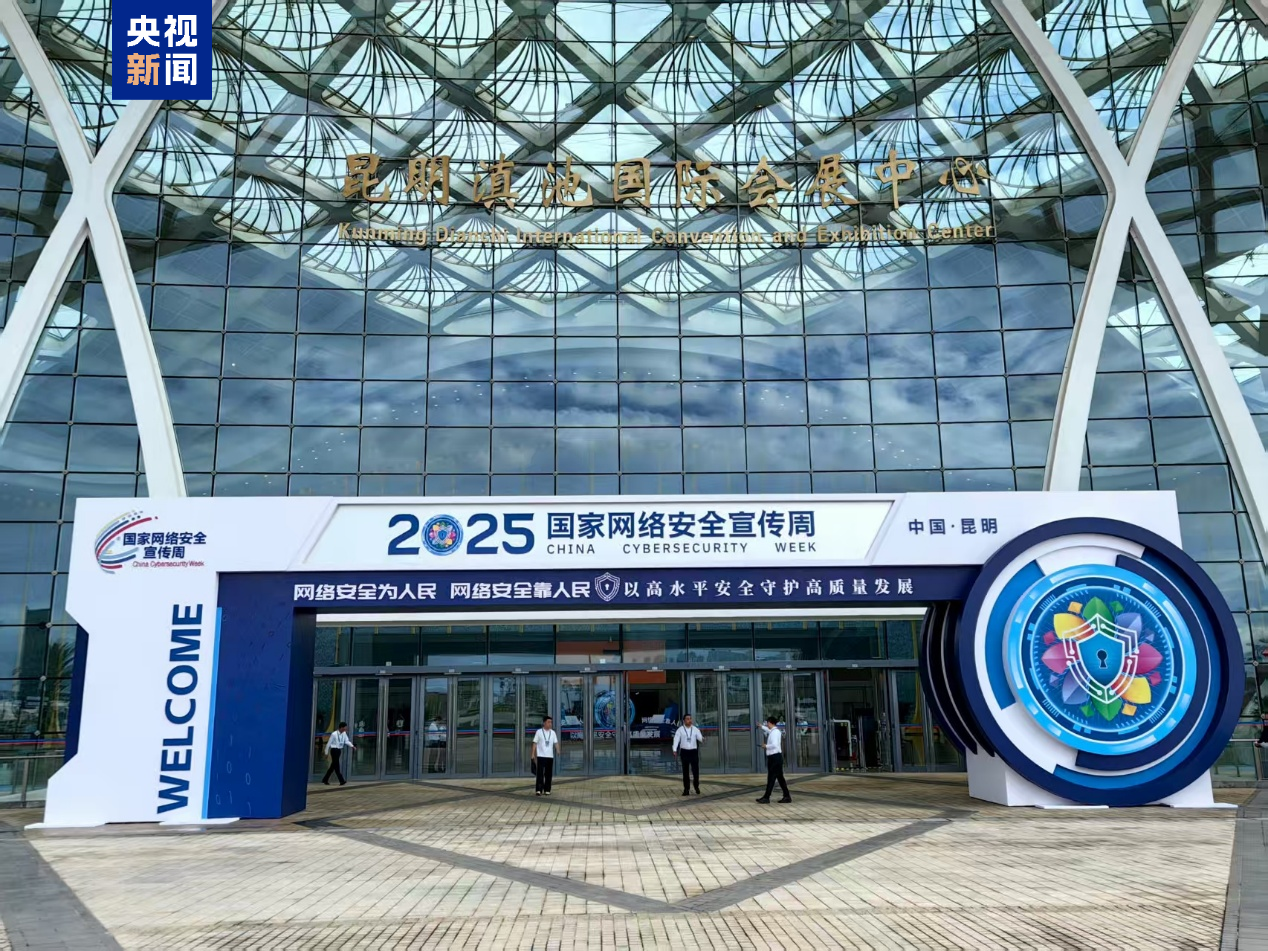
Group 1 - The 2025 National Cybersecurity Publicity Week will be held from September 15 to 21 nationwide, with the opening ceremony and key activities taking place in Kunming, Yunnan [4] - Important results such as the 2.0 version of the "Artificial Intelligence Security Governance Framework" and the "Security Specifications for Government Model Applications" were released during the Cybersecurity Technology Summit Forum [4] - The theme for the 2025 National Cybersecurity Publicity Week is "Cybersecurity for the People, Cybersecurity Relies on the People - Protecting High-Quality Development with High-Level Security," organized by ten government departments including the Central Propaganda Department and the Ministry of Public Security [4]

新华社权威快报丨一系列重要成果亮相2025年国家网络安全宣传周
Xin Hua She· 2025-09-15 09:16
Group 1 - The 2025 National Cybersecurity Publicity Week will be held from September 15 to 21 nationwide, with key events taking place in Kunming, Yunnan [3] - Important outcomes such as the "Artificial Intelligence Security Governance Framework" version 2.0 and "Security Standards for Government Model Applications" will be released during the event [3] - The theme for the 2025 National Cybersecurity Publicity Week is "Cybersecurity for the People, Cybersecurity Relies on the People - Protecting High-Quality Development with High-Level Security" [3] Group 2 - The event is jointly organized by ten departments, including the Central Propaganda Department, the Central Cyberspace Affairs Commission, and the Ministry of Education [3] - A high-level cybersecurity technology forum will be a significant part of the event, focusing on the integration of AI technology in enhancing cybersecurity applications [3]

2025年国家网络安全宣传周今天启动
Yang Shi Xin Wen Ke Hu Duan· 2025-09-15 02:21
Core Points - The 2025 National Cybersecurity Awareness Week has been launched with the theme "Cybersecurity for the People, Cybersecurity Relies on the People - Safeguarding High-Quality Development with High-Level Security" [1] Group 1: Event Overview - The opening ceremony and key activities of the 2025 National Cybersecurity Awareness Week are held in Kunming, Yunnan [3] - The 12387 Cybersecurity Incident Reporting Platform was officially launched during the opening ceremony [3] - A series of significant achievements in artificial intelligence security governance will be released, including the 2.0 version of the "Artificial Intelligence Security Governance Framework" and the "Security Specifications for Government Large Model Applications" [3] Group 2: Forums and Activities - Twelve sub-forums will be held focusing on topics such as collaborative defense in cybersecurity, security of government information systems, artificial intelligence security, personal information protection, data compliance governance, and more [3] - The Cybersecurity Expo and International Promotion Conference for Cybersecurity Products and Services will take place from September 14 to 18, showcasing important achievements in cybersecurity technology, industry, talent, and education [8] - A talent recruitment fair for cybersecurity and information technology will be organized from September 15 to 17, inviting various organizations to participate and provide employment guidance for recent graduates [8] Group 3: Thematic Days and Community Engagement - The event will feature thematic days, including Campus Day, Telecom Day, Rule of Law Day, Finance Day, Youth Day, and Personal Information Protection Day, from September 16 to 21 [8] - Community outreach activities will be organized to promote cybersecurity awareness in various settings such as communities, rural areas, enterprises, and schools [8]
从Safety到Security:西方叙事下全球AI安全治理淡化
3 6 Ke· 2025-08-20 12:12
Group 1 - The G7 summit in Alberta, Canada, released the "AI for Prosperity Declaration," focusing on the benefits and opportunities of artificial intelligence, while neglecting the term "safety" entirely [1][2] - The shift in G7's AI policy reflects a broader realignment among Western democracies, moving from early concerns about AI risks to an emphasis on its economic benefits [1][3] - The 2025 declaration significantly reduced previous global concerns about AI risks, only mentioning issues related to the power grid and the risk of being excluded from the current technological revolution [2][3] Group 2 - The trend of downplaying AI risks is not isolated to the G7 but represents a larger shift in global AI dialogues, as seen in the 2023 UK AI Safety Summit and the 2024 Seoul AI Summit [3][4] - NATO's recent policy revisions have also shifted focus from AI risks to the need to "win the technology adoption race," indicating a higher tolerance for emerging technology risks [5][6] - The U.S. Congress is considering banning most state AI laws without replacing them with federal legislation, further illustrating the diminishing emphasis on safety in AI discussions [5][6] Group 3 - The transition in AI policy is driven by multiple factors, including the change in U.S. administration and the influence of industry interests, as seen in France's shift towards self-regulation in AI [6][7] - The AI industry is experiencing a new sentiment of fear of missing out on opportunities, with significant investments flowing into AI companies like OpenAI and Mistral [8][9] - Governments are recognizing AI's potential for enhancing military capabilities, with major contracts awarded to companies like Anthropic and Google, indicating a focus on economic and military advantages [10][11] Group 4 - The lack of effective international governance structures for AI risks poses a significant challenge, as there are no mature institutions like the IAEA for nuclear technology [12][13] - The rapid development of AI may outpace the ability of nations to establish effective multilateral policies, raising concerns about emerging global AI risks, including biological threats and misinformation [12][13] - The abandonment of safety considerations in AI policy could represent a significant gamble, as the balance between caution and optimism becomes increasingly difficult to achieve [13]