
仿生技术

Search documents
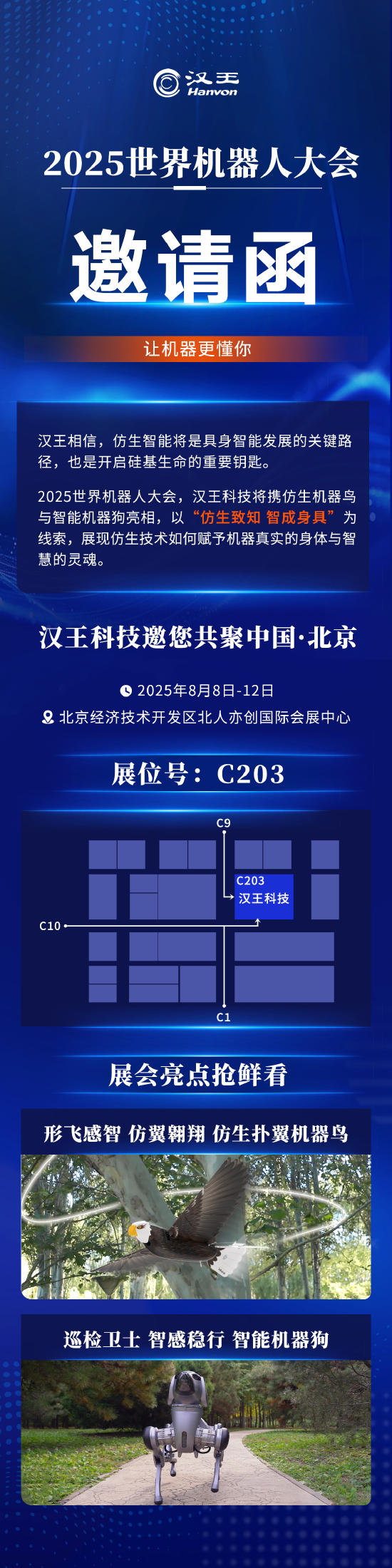
汉王科技将发布仿生机器鸟与智能机器狗
Xin Lang Ke Ji· 2025-08-04 05:18
Core Insights - Hanwang Technology will showcase its bionic robotic bird and intelligent robotic dog at the 2025 World Robot Conference, emphasizing how bionic technology endows machines with real bodies and intelligent souls [1] - The conference will take place from August 8 to 12, 2025, at the Beijng Economic and Technological Development Zone [1] - Over 200 domestic and international leading robotics companies will present more than 1,500 exhibits, marking a 25% increase in participating companies compared to last year [1] - More than 100 new products will be launched, nearly doubling the number from the previous year [1] Event Details - The 2025 World Robot Conference will be held at the Beijng Economic and Technological Development Zone, specifically at the Beiren Yichuang International Exhibition Center [3] - Hanwang Technology's booth numbers will include C203, C9, C10, and C1 [3]


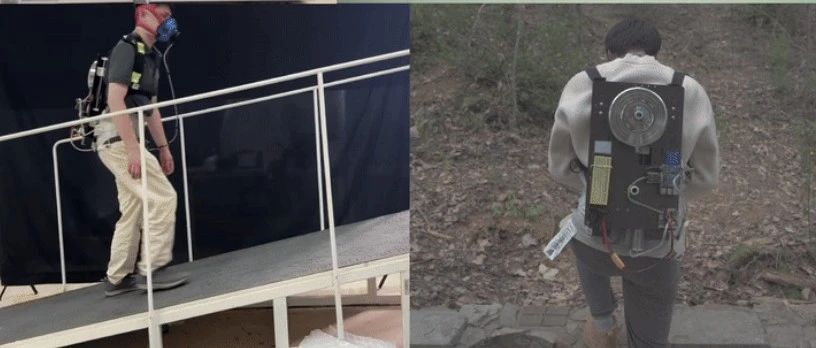
IEEE TRO发表!华科团队打造仿生隔振 + 负载调控的“双减压”悬浮背包,破解越野负重痛点
机器人大讲堂· 2025-06-07 10:43
Core Viewpoint - The article discusses the development of an active suspension backpack system that integrates wearable technology and active control mechanisms to reduce load impact and enhance user comfort and metabolic efficiency during long-distance walking and outdoor activities [1][4]. Group 1: Active Suspension Backpack Development - The active suspension backpack system is designed to dynamically adjust the load distribution between the shoulders and waist, alleviating shoulder pressure and improving metabolic efficiency [3][4]. - The design is inspired by biological mechanisms, particularly the load distribution observed in long-legged birds, which allows for better stability and vibration damping in complex terrains [3][14]. - The system incorporates a dual-support structure that redistributes load from the shoulders to the waist, significantly reducing shoulder strain [7][8]. Group 2: Performance Testing and Results - Systematic experiments were conducted to validate the performance of the active suspension backpack across various terrains, showing an average metabolic efficiency improvement of 18.68% on flat ground, 9.58% on stairs, and 12.35% in complex terrains [4][21][24]. - In flat ground tests, shoulder pressure was reduced by an average of 45.7%, with peak shoulder pressure decreasing by 46.6% and maximum load acceleration reduced by 72.7% [21]. - During stair climbing, shoulder pressure was reduced by 44.6% on average, with peak pressure decreasing by 48.4% and maximum load acceleration reduced by 55.5% [23]. - In complex terrain tests, shoulder pressure was reduced by 36.6% on average, with peak pressure decreasing by 38% and maximum load acceleration reduced by 44.6% [24]. Group 3: Future Prospects - The research team aims to further enhance the active suspension backpack's intelligent perception and adaptive control capabilities, focusing on dynamic load adjustment and endurance for high-intensity tasks in military, emergency rescue, and outdoor exploration scenarios [29].
博览会好物多多 中东欧客商爱上了中国造仿生产品
Yang Shi Xin Wen Ke Hu Duan· 2025-05-25 01:43
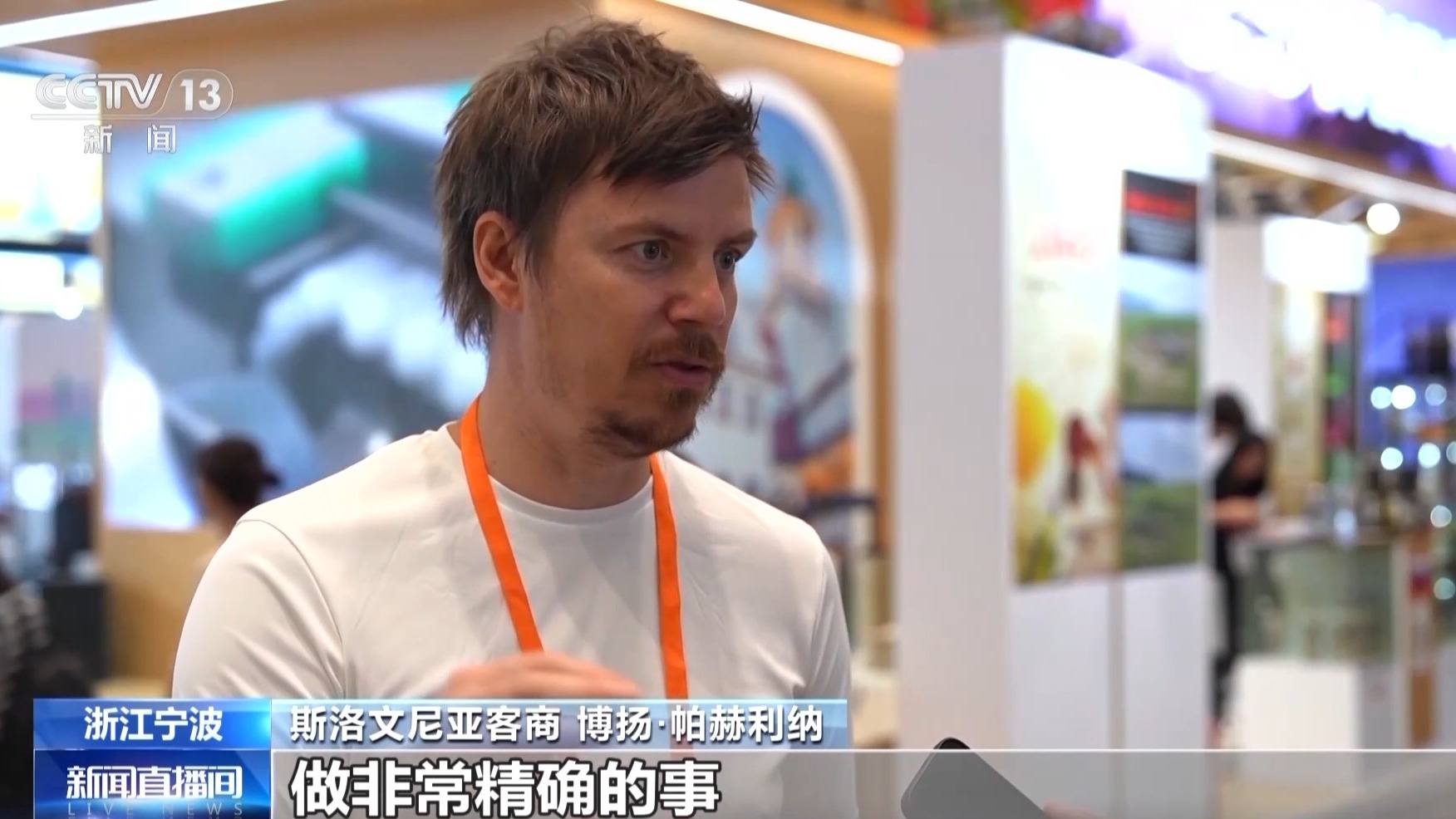
Group 1 - The Fourth China-Central and Eastern European Countries Expo and International Consumer Goods Expo is being held in Ningbo, Zhejiang, showcasing innovative products from Chinese manufacturing that have gained widespread attention due to technological advancements and superior quality [1] - The expo features a newly established Smart Central and Eastern Europe exhibition area, highlighting nearly a hundred "black technology" products in artificial intelligence and robotics, including humanoid robots and bionic technology [1][5] - A Slovenian businessman expressed enthusiasm for a bionic hand, noting its potential for precise tasks and the possibility of entering the global market [3] Group 2 - The Zhejiang Humanoid Robot Innovation Center presented its latest humanoid robot, "Navigator 2," which can be applied in various fields such as manufacturing, retail, guiding, and inspection [5] - A company engaged in international trade of pet products signed a cooperation agreement worth over 200 million yuan with a Serbian company to develop the pet nutrition market, with a total of 30 companies completing contracts worth 2.49 billion yuan [7] - The expo gathered over 8,000 unique Central and Eastern European products, including specialty foods and high-tech items like VR glasses and smart home appliances [7] Group 3 - A VR experience area was set up at the expo, providing a unique and spacious VR experience that is not yet widely available in China, indicating a clear and broad market opportunity for exhibitors [9] - The expo also featured a European chocolate area where visitors could experience the production and tasting of Hungarian chocolate, highlighting the cultural exchange aspect of the event [11] - Increasing numbers of skincare and beauty products are being introduced to the Chinese market, with exhibitors recognizing China as a significant market for their high-quality products at competitive prices [12][14]
仿生技术为影视拍摄增色 AI全方位融入电影制作成为“创作合伙人”
Yang Shi Wang· 2025-05-24 05:14
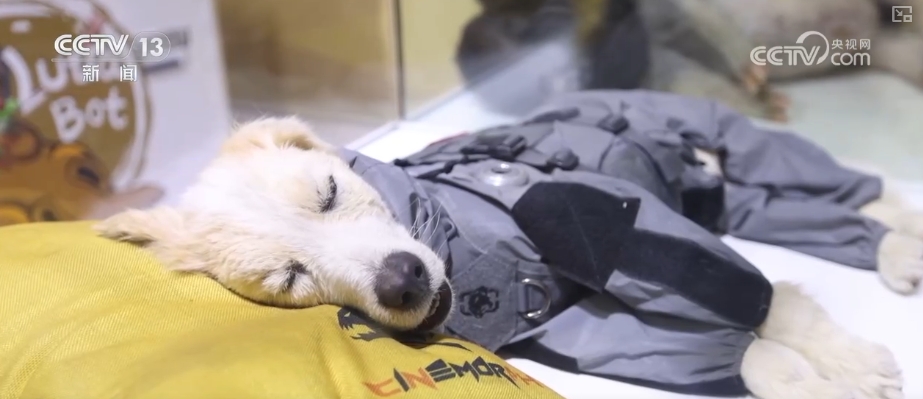
Core Viewpoint - The 21st China (Shenzhen) International Cultural Industries Fair showcases advanced bionic technology in robotics, highlighting its application in the film industry and the integration of AI in various production processes [1][6]. Group 1: Bionic Technology in Film - Bionic robots, such as a lifelike robotic dog and panda, are being utilized in films, demonstrating realistic expressions and movements that mimic real animals [3][5]. - These robots employ facial capture technology to replicate human expressions, enhancing their interaction capabilities [5]. Group 2: AI Integration in Film Production - AI is becoming a creative partner throughout the entire film production process, contributing to various stages of filmmaking [6]. - A movie AI dubbing system has been developed, capable of translating dialogue into any language while preserving character traits and emotions, successfully used in the English version of "Chang'an San Wan Li" [8]. - The "Yingpu" AI model will assist in script generation, evaluation, and modification, set to be available to the industry by August 2025 [10]. - Director visual creativity AI systems convert directors' visions into tangible images, while AI preview systems simulate actors' performances in pre-production [11]. - AIGC short film creative systems generate coherent narratives and character settings, mimicking human thought processes [11].
德国费斯托经营百年的奥秘
Jing Ji Guan Cha Wang· 2025-05-23 14:11
Core Insights - Festo has become a centennial enterprise, established in 1925, and is a global leader in automation technology with over 200 subsidiaries and 12 production bases worldwide [2][3] - The company invests over 8% of its annual revenue into research and development, allowing it to stay ahead with innovative technologies [4] - Festo has successfully integrated biomimicry into its automation solutions, drawing inspiration from various biological entities to enhance its product offerings [5][6][7] Innovation and Technology - Festo's innovation is rooted in its ability to adapt and evolve, exemplified by its development of the Fin Ray effect for automation tasks [5] - The company has created various biomimetic technologies, including robotic designs inspired by creatures like octopuses and dragonflies, to improve automation processes [6][7] - Festo's commitment to R&D has led to the creation of unique products that cater to diverse industrial needs, enhancing its market presence [4][12] Market Adaptation - Festo's strategy of "adapting to the market" has been crucial for its longevity, focusing on localizing production and meeting specific customer demands [9][10] - The establishment of the Jinan production center reflects Festo's commitment to localizing its operations in China, allowing for customized production based on local market needs [11] - The company has transitioned from merely producing for China to producing specifically for the Chinese market, aligning with the growing demand from the middle-income group [10] Business Focus and Diversification - Festo maintains a strong focus on its core business of industrial automation while diversifying across 35 different industries, including automotive, renewable energy, and pharmaceuticals [12] - The company emphasizes steady and sustainable growth rather than rapid expansion, ensuring resilience against market fluctuations [12][13] - Festo's future plans include a continued focus on key sectors such as renewable energy, semiconductors, and life sciences, with increased investment in R&D [14]
脑机接口柔性微电极植入机器人问世;仿生技术让水下机器人像鱼一样灵活游动丨智能制造日报
创业邦· 2025-05-23 03:11
Group 1 - The article discusses advancements in biomimetic technology, highlighting the development of the FlowSight sensor that enables underwater robots to navigate like fish by sensing water flow changes [1] - A new brain-machine interface flexible microelectrode implantation robot named CyberSense has been developed, which can precisely implant microelectrodes into animal brains, enhancing the efficiency and success rate of brain-machine interface research [2] - The successful first flight of the Rainbow-YH1000 unmanned logistics aircraft is reported, showcasing its capabilities for long-range operations up to 1500 kilometers and adaptability to various takeoff and landing environments [3] - The AG600 amphibious aircraft has completed its first adaptive flight in the Daxing'anling region, marking a significant step in familiarizing the aircraft with local geographical and climatic conditions [4]
新研究:生物体系中的质子转移受量子力学影响
Xin Hua She· 2025-05-16 13:59
Core Insights - A new study from Israel reveals that the proton transfer process in biological systems is significantly influenced not only by chemical factors but also by the quantum property of electron spin, providing a new physical perspective on energy and information transfer within cells [1][2] - The research indicates a coupling relationship between electron spin and proton transfer in chiral biological systems, challenging the traditional view of proton transfer as a purely chemical process [1][2] Group 1 - The research team from Hebrew University of Jerusalem published findings in the Proceedings of the National Academy of Sciences, demonstrating that injecting electrons with specific spin directions into lysozyme crystals significantly reduces proton mobility [1] - The study confirms the existence of a coupling mechanism between electron spin and proton transfer, suggesting that energy and information transfer in living systems may be more selective and controllable than previously thought [2] Group 2 - The findings align with the "chiral-induced spin selectivity" effect in quantum chemistry, indicating that chiral molecules interact selectively with electrons of different spin directions [2] - This research provides important evidence for the potential integration of quantum mechanisms in biological phenomena, paving the way for new biomimetic technologies aimed at controlling intracellular information transfer [2]