
企业会计准则

Search documents
这家券商,大股东计提6.9亿元减值准备!什么情况?
券商中国· 2025-12-20 05:21
Core Viewpoint - The article discusses the recent accounting adjustment by Shandong High-Speed Group regarding its investment in Dongxing Securities, which involves a proposed impairment of approximately 690 million yuan due to the upcoming merger with CICC [2][4][7]. Group 1: Investment and Impairment - Shandong High-Speed announced a planned impairment of 690 million yuan for its long-term equity investment in Dongxing Securities, reflecting a necessary accounting adjustment following the merger announcement with CICC [2][3][4]. - The impairment is not indicative of a poor investment but rather a compliance measure to align the book value of the investment with the fair value of the new asset (CICC shares) post-merger [4][6]. Group 2: Historical Context - Shandong High-Speed has been a significant shareholder in Dongxing Securities since 2016, initially acquiring 120 million shares at a price of 18.81 yuan per share, totaling an investment of 2.257 billion yuan [5]. - The company's stake in Dongxing Securities has fluctuated, with a current holding of 3.71%, allowing it to exert significant influence despite owning less than 20% [6]. Group 3: Financial Impact - The impairment is expected to reduce Shandong High-Speed's consolidated profit by approximately 690 million yuan for the fiscal year 2025 [7]. - The investment in Dongxing Securities contributed 45.57 million yuan to Shandong High-Speed's investment income in the first three quarters of 2025, highlighting the importance of this asset in the company's overall financial performance [6].





武商集团:公司自持的物业资产主要用于自主经营
Zheng Quan Ri Bao Wang· 2025-12-04 10:13
Core Viewpoint - Wushang Group (000501) emphasizes that its self-owned property assets are primarily used for self-operation and are accounted for using the cost method in accordance with the Enterprise Accounting Standards, which accurately reflects the company's asset value [1] Group 1 - The company has responded to investor inquiries regarding its property asset management [1] - The self-owned properties are utilized mainly for the company's own operations [1] - The accounting method used is the cost method, which aligns with regulatory standards and ensures accurate asset valuation [1]

【致同研究之年报分析】收入准则应用披露示例(16):主要责任人或代理人的披露示例
Sou Hu Cai Jing· 2025-11-30 17:07
Core Viewpoint - The article discusses the ongoing research by Zhihong on the application of accounting standards in the annual reports of listed companies, focusing on the execution of key accounting policies and regulatory requirements, along with practical application examples [1][2]. Group 1: Research Focus - Zhihong is releasing a series of articles analyzing the application of accounting standards in annual reports, including significant accounting policy choices and practical application cases [1]. - The upcoming publication in March 2025 will include practical guidelines for the application of accounting standards in annual reports for 2024 [2]. Group 2: Accounting Standards and Regulatory Requirements - The research covers various accounting standards such as Long-term Equity Investment (CAS2), Business Combinations (CAS20), Consolidated Financial Statements (CAS33), Government Grants (CAS16), Share-based Payment (CAS11), Asset Impairment (CAS8), and others [2]. - Specific areas of focus include the differences in execution of domestic and overseas standards for A+H shares, revenue deductions, and disclosures of non-recurring gains and losses [2]. Group 3: Revenue Recognition Examples - The article provides examples of revenue recognition based on whether a company acts as a principal or an agent in transactions, emphasizing the importance of control over goods before transfer to customers [3][4]. - Companies must analyze the substance of transactions to determine their role, using total revenue recognition for principals and net revenue recognition for agents [3][4]. Group 4: Practical Guidelines for Implementation - Companies can refer to three indicators when determining their role: assuming primary responsibility for transferring goods, bearing inventory risk before or after transfer, and having the authority to set prices [5][6]. - The article stresses that these indicators support the assessment of control but do not replace the need for a comprehensive evaluation of control [5][6]. Group 5: Case Studies - Several case studies illustrate the application of these principles in different business models, such as retail and construction, highlighting the nuances in revenue recognition based on control and responsibility [10][12][29]. - The examples demonstrate how companies should assess their control over goods and services to determine the appropriate method for revenue recognition [10][12][29].

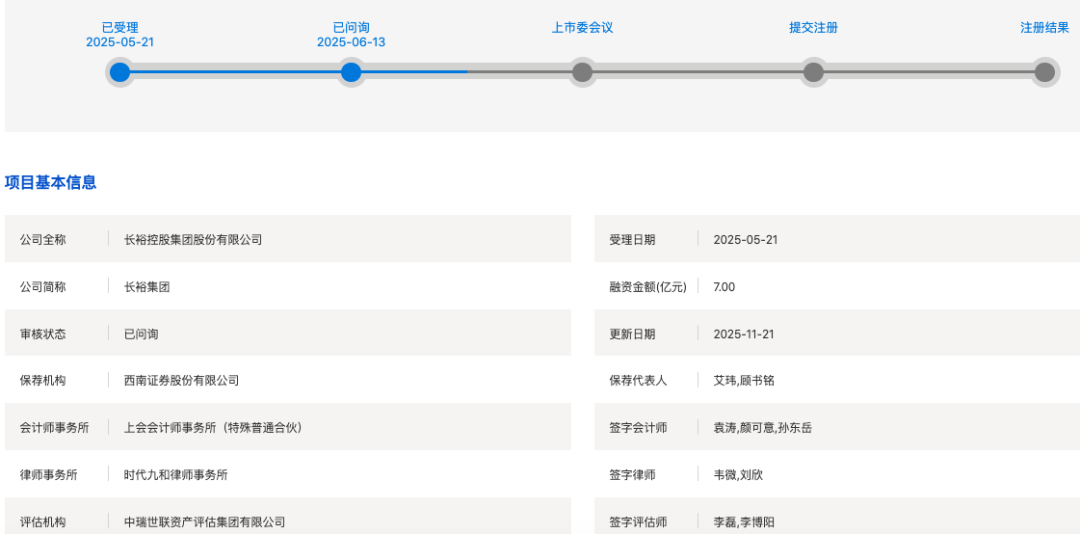
行业地位是否“注水”?核心产品均价、毛利率走低!长裕集团回应三大核心问题
Shen Zhen Shang Bao· 2025-11-24 15:43
Core Viewpoint - Changyu Group is undergoing a second round of IPO review by the Shanghai Stock Exchange, addressing key issues related to consolidated financial statements, industry representation, and accounting treatment [1][2]. Group 1: IPO Details - Changyu Group's IPO was accepted on May 21, 2025, with a fundraising target of 7.13 billion yuan [2]. - The company is primarily engaged in the research, production, and sales of zirconium products, specialty nylon products, and fine chemical products [2]. - The IPO proceeds will be used for projects including 45,000 tons of ultra-pure zirconium chloride and 10,000 tons of high-performance nylon elastomer products [3]. Group 2: Financial and Operational Performance - The company reported fluctuating financial performance from 2022 to mid-2025, with revenues of 1.669 billion yuan, 1.608 billion yuan, 1.638 billion yuan, and 897 million yuan, and net profits of 263 million yuan, 195 million yuan, 212 million yuan, and 113 million yuan respectively [9]. - The average selling price of zirconium products has been declining, with prices of 24,000 yuan/ton, 20,200 yuan/ton, 18,000 yuan/ton, and 17,800 yuan/ton over the reporting periods [10][11]. - The gross profit margin for the main business has shown volatility, with rates of 28.35%, 23.27%, 23.83%, and 23.54% during the reporting periods [10]. Group 3: Market Position and Industry Representation - Changyu Group claims to be the largest producer of zirconium chloride globally, with a production capacity of 75,000 tons per year [5]. - The company estimates a domestic market share of approximately 29.64% and a global market share of about 22.62% for zirconium chloride in 2024 [6]. - The Shanghai Stock Exchange has requested further evidence regarding the company's market share and industry ranking [5]. Group 4: Accounting and Compliance Issues - The Shanghai Stock Exchange raised concerns about the consolidation of joint ventures, questioning whether Changyu Group has control over its joint ventures based on their governance structures [4]. - The company has defended its accounting treatment of CIF shipping costs, asserting compliance with international trade terms and accounting standards [8].
中国中煤能源股份有限公司2025年第三季度报告
Shang Hai Zheng Quan Bao· 2025-10-27 22:56
Core Viewpoint - The company reported a significant decline in coal business revenue and profit for the first nine months of 2025 compared to the same period in 2024, primarily due to falling coal prices and reduced sales volume [6][8][10]. Financial Performance - For the first nine months of 2025, the coal business achieved operating revenue of 89.33 billion yuan, a decrease of 28.52 billion yuan or 24.2% compared to 117.85 billion yuan in the same period of 2024 [6][7]. - The revenue from self-produced coal sales was 48.13 billion yuan, down 9.18 billion yuan or 16.0% year-on-year, mainly due to a price drop of 97 yuan per ton [6][7]. - The operating cost for the coal business was 66.81 billion yuan, a reduction of 21.79 billion yuan or 24.6% compared to 88.60 billion yuan in the previous year [7][8]. - The gross profit for the coal business was 22.52 billion yuan, down 6.73 billion yuan or 23.0% from 29.25 billion yuan in the same period last year [8][9]. Production and Sales Data - The total sales volume of coal for the first nine months of 2025 was 14.45 million tons, an increase from 12.94 million tons in the same period of 2024 [9]. - The unit sales cost of self-produced coal was 257.67 yuan per ton, a decrease of 28.93 yuan per ton or 10.1% year-on-year [9]. Shareholder Information - As of September 30, 2025, the company held 7,614,346,308 A-shares, accounting for 57.43% of the total issued share capital [10][11]. - The company’s major shareholders include China Coal Energy Group, which holds approximately 58.43% of the total issued share capital through its subsidiaries [10][11]. Board Meeting Decisions - The board approved the third-quarter report for 2025 with unanimous support [15][16]. - The board also approved the acquisition of a 30% stake in Shanxi Zhongmei Pingshuo New Energy Co., Ltd. for 114.93 million yuan [15][16]. - Additionally, the board approved revisions to the senior management compensation management measures and the compensation plans for 2024 and 2025 [17][19].

苏豪弘业股份有限公司 获得政府补助的公告
Zhong Guo Zheng Quan Bao - Zhong Zheng Wang· 2025-09-11 01:03
Group 1 - Company received a government subsidy of 4.1377 million yuan on September 9, 2025, which accounts for 12.38% of the net profit attributable to the parent company for the most recent audited fiscal year [2] - The subsidy is classified as a revenue-related government grant and will be recognized in the current profit and loss statement [3] - The final impact of the subsidy on the company's financial results will be determined based on the annual audit by the accounting firm [3] Group 2 - Company has been involved in a lawsuit with Meyer Holdings Limited, with the latest ruling from the Jiangsu Provincial High Court maintaining the original judgment [5][6] - The court's decision rejected the appeal from Meyer Holdings and upheld the previous ruling, with the appeal costs borne by Meyer Holdings [6] - Company had previously recognized a provision of approximately 1.9982 million yuan for this case, and the final financial impact will be confirmed in the audited annual report [6]

*ST生物: 关于娄底金弘新材料有限公司的审计报告(众环审字[2025]1700094 号)
Zheng Quan Zhi Xing· 2025-09-05 16:33
Company Overview - Loudi Jinhong New Materials Co., Ltd. was established on November 9, 2022, with an initial registered capital of 45 million yuan, which was later increased to 98.4867 million yuan by July 2025 [1] - The company and its subsidiaries primarily engage in the recycling and processing of renewable resources [1] - The ultimate parent company is Hunan Haihong Logistics Group Co., Ltd., with Li Tiexiang as the actual controller [1] Financial Reporting Basis - The financial statements are prepared based on the going concern assumption and in accordance with the accounting standards issued by the Ministry of Finance [2] - The accounting records are maintained on an accrual basis, with historical cost as the measurement basis, except for certain financial instruments [2] Compliance with Accounting Standards - The financial statements prepared by the company comply with the requirements of the accounting standards, accurately reflecting the financial position as of July 31, 2025, and the operational results and cash flows for the periods of January to July 2025 and the year 2024 [2] Important Accounting Policies - The accounting period is divided into annual and interim periods, with the fiscal year running from January 1 to December 31 [2] - The company uses the Chinese yuan as its functional currency for accounting purposes [2] Business Combinations - Business combinations are classified into those under common control and those not under common control, with specific accounting treatments for each type [3][4] - For combinations under common control, assets and liabilities are measured at the book value on the merger date, while for combinations not under common control, the acquisition cost includes the fair value of assets and liabilities on the purchase date [4] Financial Instruments - Financial assets are classified based on the business model and cash flow characteristics, with categories including those measured at amortized cost and those measured at fair value [12][13] - The company recognizes financial assets and liabilities when it becomes a party to the financial instrument contract [12] Inventory Management - Inventory includes raw materials, work in progress, and finished goods, measured at cost or net realizable value [24][25] - The company uses a perpetual inventory system and applies the weighted average method for inventory valuation [25] Non-Current Assets Held for Sale - Non-current assets are classified as held for sale when they are expected to be sold rather than used, and they are measured at the lower of carrying amount and fair value less costs to sell [26][27] Termination of Operations - The company recognizes the results of operations from discontinued segments separately in the income statement, including any impairment losses [28]
中国广核: 中广核惠州核电有限公司审计报告及财务报表2024年度及2025年1-6月
Zheng Quan Zhi Xing· 2025-09-05 12:19
Company Overview - China General Nuclear Power Corporation Huizhou Nuclear Power Co., Ltd. was established on September 16, 2013, in Huizhou, Guangdong Province, with a registered capital of 9.2439 billion yuan [3]. - The company is primarily engaged in the investment, development, construction, and operation of nuclear power plants, as well as the sale of generators and related technical services [3]. Financial Reporting Basis - The financial statements are prepared in accordance with the accounting standards issued by the Ministry of Finance, reflecting the company's financial position as of December 31, 2024, and June 30, 2025, along with the operating results and cash flows for the year 2024 and the first half of 2025 [2]. Accounting Policies - The company adopts the accrual basis of accounting and uses historical cost as the measurement basis, with the functional currency being the Renminbi [4]. - Financial instruments are classified at initial recognition based on the business model and cash flow characteristics, including categories such as financial assets measured at amortized cost and those measured at fair value [5][7]. Revenue Recognition - Revenue is recognized when the company fulfills its performance obligations in the contract, which occurs when the customer gains control of the related goods or services [36]. - The transaction price is determined based on the expected consideration to be received, excluding amounts collected on behalf of third parties [36]. Asset Management - Fixed assets are recognized when it is probable that economic benefits will flow to the company and the cost can be reliably measured, with depreciation calculated using the straight-line method over their useful lives [22]. - Inventory is measured at the lower of cost and net realizable value, with specific methods for different types of inventory [19][20]. Impairment Testing - The company conducts impairment testing for long-term assets, including fixed assets and intangible assets, whenever there are indications of impairment, measuring recoverable amounts based on fair value less costs to sell or the present value of future cash flows [32][30]. Employee Compensation - The company recognizes short-term employee benefits as liabilities and expenses in the period in which the services are rendered, including social insurance contributions and other employee welfare expenses [33][34].
中国广核: 中广核惠州第三核电有限公司审计报告及财务报表2025年2月16日至2025年6月30日
Zheng Quan Zhi Xing· 2025-09-05 12:19
Company Overview - China General Nuclear Power Corporation Huizhou Third Nuclear Power Co., Ltd. was established on February 16, 2025, in Huizhou, Guangdong Province, with a registered capital of RMB 1.8 billion [3] - The company operates in the nuclear power generation industry, with business activities including power generation, transmission, and distribution [3][4] Financial Reporting - The financial statements are prepared in accordance with the accounting standards issued by the Ministry of Finance, reflecting the company's financial position as of June 30, 2025 [4] - The reporting currency is Renminbi, and the accounting period is from February 16, 2025, to December 31, 2025 [2][4] Accounting Policies - The company follows the accrual basis of accounting and uses historical cost as the measurement basis for most assets [4][5] - Cash and cash equivalents are defined as cash on hand and deposits that are readily convertible to known amounts of cash [4] Financial Instruments - Financial assets are classified at initial recognition as either measured at amortized cost, at fair value through other comprehensive income, or at fair value through profit or loss [6][7] - The company assesses expected credit losses on financial instruments based on historical data and current economic conditions [14][15] Fixed Assets - Fixed assets are recognized when it is probable that future economic benefits will flow to the company and the cost can be measured reliably [18] - Depreciation is calculated using the straight-line method based on the estimated useful life of the assets [19] Intangible Assets - Intangible assets are recognized when it is probable that future economic benefits will flow to the company and the cost can be measured reliably [28] - Research phase expenditures are expensed as incurred, while development phase expenditures can be capitalized if certain criteria are met [30] Borrowing Costs - Borrowing costs that are directly attributable to the acquisition or construction of qualifying assets are capitalized [24] - Capitalization of borrowing costs ceases when the asset is ready for use or sale [24] Employee Benefits - The company recognizes short-term employee benefits as liabilities and expenses in the period in which the services are rendered [31] - Contributions to defined benefit plans are recognized based on the present value of the defined benefit obligation [33]
中国广核: 中广核惠州第二核电有限公司审计报告及财务报表2024年度及2025年1-6月
Zheng Quan Zhi Xing· 2025-09-05 12:19
Company Overview - The company is engaged in the electricity and heat production and supply industry, with main operations including power generation, transmission, and distribution, as well as port operations [1][5]. - The company is a limited liability company established on September 16, 2023, with a registered capital of RMB 761.2 million [5][6]. Financial Reporting - The financial statements are prepared based on the going concern principle and comply with the accounting standards issued by the Ministry of Finance [2][3]. - The accounting period is from January 1 to December 31 each year, with the company using RMB as its functional currency [3]. Accounting Policies - The company follows specific accounting policies and estimates tailored to its operational characteristics, including revenue recognition and financial instruments [3][7]. - Financial assets are classified based on the business model and cash flow characteristics, with categories including amortized cost and fair value [7][8]. Asset Management - Fixed assets are recognized when economic benefits are likely to flow to the company, and they are measured at cost, considering depreciation and impairment [19][21]. - The company assesses fixed assets for impairment at each reporting period, and any impairment loss is recognized in the current period [21][22]. Revenue Recognition - Revenue is recognized when the company fulfills its performance obligations in contracts, which occurs when customers obtain control of the related goods or services [31][32]. - The company allocates transaction prices to performance obligations based on their standalone selling prices [32][33]. Government Grants - Government grants are classified into asset-related and income-related grants, with recognition based on the conditions attached to the grants [35].