共享制造

Search documents
利好!七部门,重磅发布!
Zheng Quan Shi Bao· 2025-10-11 09:43
Core Viewpoint - The implementation plan aims to enhance the integration of advanced manufacturing and modern service industries, promoting the development of service-oriented manufacturing from 2025 to 2028, with a focus on innovation, technology integration, and the establishment of a robust service-oriented manufacturing ecosystem [1][2]. Background of the Implementation Plan - Service-oriented manufacturing is crucial for deepening the integration of advanced manufacturing and modern services, enhancing the value creation capacity of the manufacturing sector, and improving its quality and efficiency [2]. - The plan is a response to the emphasis placed by the Chinese government on the development of service-oriented manufacturing, as highlighted in various national reports and guidelines since 2016 [2]. Overall Requirements and Development Goals - The plan is guided by Xi Jinping's thoughts and aims to create a modern industrial system centered on advanced manufacturing, promoting deep integration of information technology and industrialization [3]. - By 2028, the plan targets to enhance the role of service-oriented manufacturing in high-quality development, establish 20 standards, create 50 leading brands, and build 100 innovation development hubs [3]. Main Tasks of the Implementation Plan - The plan outlines seven main tasks, including strengthening key common technology research, promoting the growth of key productive service industries, and enhancing the standard system [4][5]. - Three special actions are also proposed: fostering shared manufacturing, enhancing service-oriented manufacturing brands, and innovating application scenarios [5]. Shared Manufacturing Action - The action involves building shared manufacturing platforms and factories to meet common manufacturing needs and enhance resource sharing [6]. Brand Enhancement Action - The plan aims to cultivate leading service-oriented manufacturing enterprises and brands, with a goal of establishing 100 leading enterprises and 50 brands by 2028 [7]. Innovation Application Scenario Action - The action encourages the creation of application scenarios that meet production, consumption, and national strategic needs, promoting the adoption of new technologies and models [8]. Development of Innovation Hubs - The plan proposes to establish innovation development hubs in high-tech industrial parks and clusters, focusing on policy coordination and innovation application [9]. Key Common Technology Research - The plan emphasizes the need for strengthening research on key common technologies and encourages enterprises to increase innovation investment [10]. Promotion of Service-oriented Manufacturing Models - The plan aims to categorize and promote the application of service-oriented manufacturing models across various industries, enhancing the integration of services into manufacturing [11]. Support for Productive Service Industries - The plan highlights the importance of developing productive service industries to support service-oriented manufacturing, including technology services, industrial design, and financial services [12]. Implementation Guarantees - Four measures are proposed to ensure the implementation of the plan, including policy support, public service improvement, talent development, and international cooperation [12].
抓好质量提升 推广共享制造 河北邢台做优特色产业集群
Jing Ji Ri Bao· 2025-08-02 21:51
Group 1 - Hebei Province's Xingtai City has launched a "Standard Quality Improvement Year" initiative focusing on six areas: standard leadership, quality foundation, quality enhancement, enterprise assistance, brand empowerment, and rectification improvement [1] - The initiative aims to enhance the scale and quality of characteristic industrial clusters, with a target revenue of over 650 billion yuan for 44 clusters this year [1] - Xingtai is promoting quality improvement and technological innovation, accelerating the development of shared intelligent manufacturing based on digitalization [1] Group 2 - The city has established seven new provincial-level quality inspection centers, achieving full coverage of provincial-level inspection and testing institutions for characteristic industrial clusters [1] - Over 4,000 chief quality officers have been appointed to cover all regulated industrial enterprises and extend support to small and medium-sized enterprises in characteristic industrial clusters [1] - The "Enterprise Assistance and Intelligence" service has helped over 90 companies attract more than 110 international quality experts to enhance their quality levels [1] Group 3 - Xingtai City promotes resource optimization and collaborative division of labor by establishing shared manufacturing scenarios among industrial clusters, with 34 enterprises building shared factories or platforms [1] - More than 2,200 participating enterprises have seen an average profit margin increase of 10% [1] - The city is also fostering industry-university-research integration to address innovation development needs and technical bottlenecks in key industrial clusters [2]
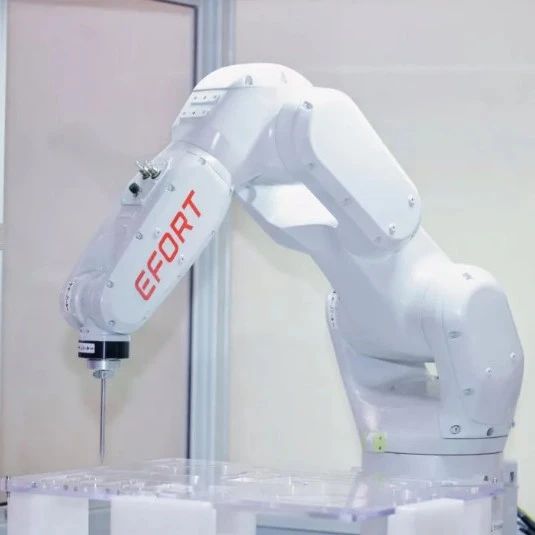
豪掷1.3亿逆势加码研发,埃夫特智能底座发力,整机产销逆势增长30%
机器人大讲堂· 2025-05-06 10:03
Core Viewpoint - The automotive industry in 2024 is facing challenges such as intense competition in the new energy vehicle market, leading to investment failures and reduced investments in manufacturing. This has also affected the domestic industrial robot sector, which is experiencing a downturn [1]. Group 1: Company Performance - Efort's revenue for 2024 was 1.37 billion yuan, a year-on-year decrease of 27.2%, but its net operating cash flow increased by 105.1% to 11.41 million yuan, indicating a contraction in business [1]. - Efort's R&D investment reached 133 million yuan, an increase of 44.78% year-on-year, representing 9.72% of its total revenue, marking the highest R&D investment in the past five years [1]. Group 2: Market Strategy - Efort has maintained rapid growth in its core business, with robot sales increasing by over 30% year-on-year and domestic market share rising to 5.5%. The company has identified over 80 lighthouse customers and significantly increased sales in sectors like 3C electronics and automotive [1]. - The company is adopting a "domestic substitution" and "leapfrog" strategy to differentiate itself from foreign brands, focusing on the localization and mass application of core components to control costs [2]. Group 3: Product Development - Efort launched a new series of heavy-load robots capable of handling up to 300 kg, featuring advanced transmission technologies that meet international standards for load, reach, and precision [3]. - The company achieved a 99.9% localization rate for its controllers in 2024, enhancing its core technology capabilities and improving the performance of its robots [5]. Group 4: Technological Innovation - Efort is integrating AI and developing new products, including a general-purpose technology base for manufacturing, which addresses the challenges of using robots for small-batch production [6]. - The company is also exploring humanoid and composite robots, with prototypes for dual-arm and bipedal robots already developed, focusing on improving their capabilities in industrial manufacturing [7]. Group 5: New Business Models - Efort is exploring a new business model called "shared manufacturing," which optimizes production capacity and reduces costs through a standardized spraying robot workstation [9]. - The company is expanding its overseas market presence by building a sales network and technical support system, actively participating in major exhibitions to enhance brand recognition [9]. Group 6: Future Outlook - Efort is positioned to benefit from increasing domestic demand for industrial robots and government support for smart manufacturing, aiming to become a leading global player in the robotics industry [10][12].