
冷冬

Search documents
今年冬天是“超级冷冬”?最新回应
Xin Lang Cai Jing· 2025-10-22 14:41
Core Viewpoint - The discussion around this winter being extremely cold has gained attention, with insights provided by Zhang Daqian, the chief forecaster at the National Climate Center [1]. Group 1: Definitions and Standards - The National Standards for "Cold Winter" (GB/T33675-2017) and "Warm Winter" (GB/T21983-2020) provide clear definitions for these terms, indicating that a winter is classified as cold or warm only if more than half of the meteorological observation stations meet the respective temperature criteria [2]. - In meteorology, the concepts of cold and warm winters are not predictive but rather retrospective classifications based on winter temperature conditions [2]. Group 2: Current Temperature Predictions - Current numerical models suggest that this winter's temperatures in China will be close to or slightly warmer than the historical average, although there will be significant fluctuations between cold and warm periods [4].

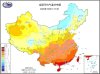
今年会出现极寒冷冬吗?
Yang Shi Wang· 2025-10-22 01:28
Group 1 - The National Oceanic Environment Forecast Center predicts a slightly warmer sea temperature in China's Bohai Sea and southern East China Sea by 0.5°C to 1°C, and in the Yellow Sea and central and northern East China Sea by 1°C to 2°C this winter [1] - Experts indicate that a weak La Niña event may form this autumn and winter, with the equatorial central and eastern Pacific expected to be in a neutral to slightly cold state [1][2] - The La Niña phenomenon is characterized by abnormally cold sea surface temperatures in the equatorial central and eastern Pacific, which can influence winter temperatures in China [2] Group 2 - The occurrence of La Niña does not necessarily equate to a colder winter in China, as winter temperatures are also influenced by the strength of the East Asian winter monsoon, Arctic sea ice, Eurasian snow cover, and natural variability in atmospheric circulation [2] - Statistical data suggests that the probability of a colder winter increases with the occurrence of La Niña events, but the impact of the expected weak La Niña this year on winter temperatures remains uncertain [2]
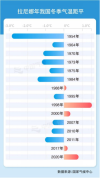
山东最低气温跌破0℃
Da Zhong Ri Bao· 2025-10-22 00:53
Core Viewpoint - The recent significant drop in temperatures across Shandong province is attributed to the influence of cold air masses, marking a shift from previous weather patterns characterized by persistent rainfall to a drier and colder climate [2][3]. Summary by Sections Current Weather Conditions - Shandong province has experienced a dramatic decline in temperatures, with the lowest recorded temperature at -0.2℃ on October 21, marking a new low for the second half of the year [2]. - The average temperature for October in Shandong is typically around 15.2℃, but current temperatures have fallen below this average, approaching the climate levels expected in November [2]. Causes of Temperature Drop - The primary reason for the ongoing low temperatures is the intensified cold air activity from Siberia, which has been able to penetrate the province due to the retreat of the subtropical high pressure [3]. - This cold air has not only caused a drop in temperatures but has also led to a shift from a "wet cold" to a "dry cold" climate, resulting in clearer skies as moisture is dispersed [3]. Short-term Weather Forecast - A gradual warming trend is expected from October 22 to 24, although the increase in temperatures will be slow [3]. - Following this brief warming period, a weak cold air mass is anticipated to bring light rain and a subsequent drop in temperatures around October 25 to 26 [3]. Long-term Weather Predictions - For November, the average temperature is projected to be between 7.5℃ and 8.5℃, slightly above the normal average of 7.5℃, with precipitation expected to be 20-50% lower than usual [4]. - The winter of 2025 is forecasted to have an average temperature of 1.0℃ to 2.0℃, which is also above the normal average of 0.6℃, with overall precipitation expected to be lower than average [4].
“冷冬”预期催化 煤炭板块领涨红利资产
Zhong Guo Zheng Quan Bao· 2025-10-20 22:21
Core Viewpoint - The dividend sector, particularly banks and coal, is showing resilience amid increasing market volatility, with significant inflows into dividend-themed ETFs indicating a preference for high-yield assets [1][2][3] Summary by Category Market Performance - On October 20, the CSI Dividend Index rose by 0.74%, with a trading volume of 61.843 billion yuan, indicating active trading [2] - The coal and energy stocks led the gains, with Pingmei Shenma (601666) up over 9% and Lu'an Environmental Energy (601699) up over 7% [2] Fund Flows - Last week, the total net inflow into dividend-themed ETFs reached 4.258 billion yuan, with Huatai-PB CSI Dividend Low Volatility ETF receiving the most at 2.773 billion yuan [3] - Bank ETFs were particularly favored, with several gaining over 5% and a total net inflow exceeding 8 billion yuan [3] Sector Analysis - Long-term prospects for the coal sector are positive, with expectations of a cold winter potentially leading to price increases similar to previous years [2] - The banking sector is expected to maintain stable performance, with a projected increase in dividends and a favorable risk-return profile [3][4] Investment Strategy - Analysts recommend focusing on high-dividend blue-chip stocks, such as those in the banking and public utility sectors, which are suitable for conservative investors [4] - The market is also advised to consider high-growth sectors like renewable energy and AI, although these come with higher volatility [4]


我省正式进入气象意义上的冬季
Liao Ning Ri Bao· 2025-10-18 00:33
Core Points - The province officially entered meteorological winter on October 17, three days earlier than the average date in previous years [1] - The start of winter is defined as the first day when the average daily temperature remains below 10°C for five consecutive days [1] - The province is currently experiencing significant temperature drops due to the strongest cold air mass of the year, with maximum temperatures falling to around 10°C [1] - Some areas, including Fushun, Benxi, and Tieling, are expected to see light snow [1] - The cold air mass is projected to reach its peak between October 19 and October 20, with minimum temperatures dropping below freezing, marking the lowest temperatures since the beginning of the second half of the year [1] - Meteorological experts indicate that an early onset of winter does not necessarily correlate with a cold winter, as there is no inherent connection between the two [1]