分布式架构

Search documents
2025版腾讯云商业银行核心系统分布式转型白皮书
腾讯云· 2025-07-31 14:25
Investment Rating - The report does not explicitly state an investment rating for the industry Core Insights - Financial technology has become a crucial engine for structural reform in financial supply and enhancing financial services to the real economy, driven by rapid digital technology evolution [9][13] - The banking sector's core system construction is one of the most mature and comprehensive areas in terms of digitization, with a strong focus on high performance, stability, and security [9][13] - The shift towards domestic technology solutions in banking IT infrastructure is gaining momentum, with cloud computing and distributed databases becoming more prevalent [9][10] Summary by Sections 1. Industry Challenges - Traditional banking core systems face multiple challenges, including inability to adapt to intense market competition and slow product innovation cycles [35][39] - Existing systems struggle with differentiated interest rate pricing and are often based on outdated technology architectures [41][42] - High concurrency demands from online activities expose the limitations of traditional centralized architectures, necessitating a shift to more flexible systems [43][44] 2. Distributed Transformation - The report emphasizes that distributed transformation is an inevitable path for upgrading banking core systems, moving from centralized to distributed architectures [54][56] - The transition involves breaking down monolithic systems into microservices and independent modules to enhance agility and responsiveness [57][58] 3. Construction Models - Two primary construction models for new banking cores are identified: technical migration and planning reconstruction, with the latter being more challenging and requiring collaboration across departments [76] - The report outlines a three-dimensional six-stage model for guiding the planning and reconstruction of new core systems [76][80] 4. Key Features of New Core Systems - New core systems should exhibit high availability, performance, scalability, and ease of maintenance, while also being self-controllable and open to integration [59][61] - The design should focus on customer-centric approaches, enabling rapid innovation and differentiated service capabilities [65][66]

数商云Java源码实战:从0到1搭建百万级订单系统
Sou Hu Cai Jing· 2025-07-25 02:29
Core Insights - The article emphasizes the importance of a high-performance, scalable order system in the B2B e-commerce sector, highlighting the transition from traditional monolithic architectures to distributed microservices as a critical solution for handling millions of orders efficiently [2][7]. Technical Challenges and Architectural Evolution - Traditional monolithic order systems face three main bottlenecks: system crashes during peak periods, high service coupling leading to failures, and limited scalability due to hardware constraints [2]. - A case study of a traditional manufacturing e-commerce platform illustrates the financial impact of system failures, with losses exceeding 20 million yuan during peak sales events [2]. Distributed Microservices Architecture Design - The architecture of the Shushang Cloud Java Mall source code is based on a "distributed + microservices" model, which includes independent services for order management, inventory, payment, and logistics, enhancing scalability and performance [3]. - The implementation of ShardingSphere for database sharding limits individual table sizes to 5 million records, significantly improving query performance, as evidenced by a case where order query transactions per second (TPS) increased from 800 to 3200 after sharding [3]. Core Module Practices - The system employs distributed locks and unique order number generation to prevent duplicate orders, achieving a reduction in duplicate order rates from 0.3% to 0.01% [4]. - The payment process integrates multiple channels and features an intelligent payment routing engine that optimizes transaction costs and processing times [6]. Performance Optimization Practices - The article discusses various optimization strategies, including the use of multi-level caching, read-write separation, and dynamic scaling based on CPU usage and order queue length, which collectively enhance system performance [5][6]. - A specific case shows that a food e-commerce platform reduced CPU load from 85% to 30% through read-write separation [6]. Future Outlook - The article predicts that the evolution of order systems will increasingly incorporate AI and cloud-native technologies, positioning them as central components in driving digital transformation for businesses [7]. - The performance metrics indicate that the system can now handle an average of 500,000 orders per day, with peak TPS reaching 3500, and operational costs reduced by 40% through server optimization [8].


“百行计划”完成,OceanBase不断拓宽能力边界
Cai Jing Wang· 2025-06-20 06:06
Core Insights - The digital transformation of financial institutions is at a critical juncture, with database capabilities being reshaped [1] - OceanBase has achieved its "Hundred Banks Plan," providing database services to over 100 banks and more than 1,000 key business systems [1][2] - The release of OceanBase version 4.4.0 enhances transaction processing, real-time analysis, and AI-native capabilities to meet the demands of financial institutions [1][8] Company Performance - OceanBase has been recognized as the market leader in distributed database market share according to multiple reports [2] - The company has supported core system upgrades for major financial institutions, including all policy banks and a significant portion of state-owned banks and insurance groups [2][3] - OceanBase's database has demonstrated strong cost-saving capabilities, with clients achieving significant data compression and overall cost reductions [6] Technological Advancements - The new version 4.4.0 integrates transaction processing, real-time analysis, and AI capabilities into a unified data platform [8] - OceanBase is evolving from a traditional database to a platform-level scheduling engine, enhancing its role in AI-driven decision-making [7][8] - The company is exploring new capabilities such as retrieval-augmented generation (RAG) for applications in knowledge bases and risk control modeling [7] Market Strategy - OceanBase aims to expand its collaboration with small and medium-sized banks, focusing on affordable and effective database solutions [3] - The company is transitioning from serving primarily large institutions to also addressing the needs of mid-tier and international markets [8] - OceanBase's strategy includes building a comprehensive AI data foundation to support the next generation of financial services [7][8]
华为鸿蒙PC发布:迈向科技主权的一大步
Canalys· 2025-06-12 04:15
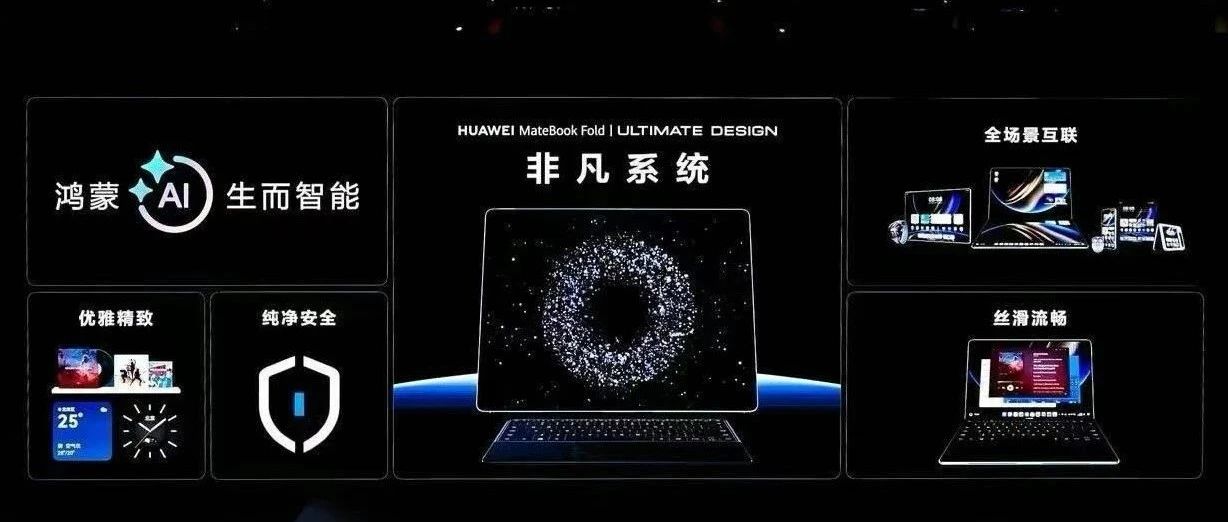
Core Viewpoint - Huawei's transition to a fully self-developed software and hardware ecosystem marks a significant milestone, especially with the cessation of Windows licensing by March 2025 and the impact of U.S. export controls on key chip suppliers [1][11]. Group 1: Product Development and Launch - Huawei has accelerated the development of its self-researched operating system and chips for mobile devices and PCs, with a focus on achieving technological independence [1]. - By the end of 2024, Huawei shipped approximately 103 million smartphones and 21 million tablets running on the HarmonyOS, indicating growing acceptance among consumers and developers [1]. - The first batch of HarmonyOS 5 PCs was officially launched in mainland China on May 19, 2025, featuring two main models believed to be powered by Huawei's self-developed Kirin X90 chip [1][11]. Group 2: Key Features of HarmonyOS PCs - The initial HarmonyOS PCs showcase three major highlights: a foldable design, self-developed chips, and enhanced security features [2]. - The MateBook Fold introduces a new product form factor, combining portability and performance, while achieving significant improvements in battery efficiency, heat dissipation, and system security through integrated hardware and software [2]. Group 3: AI Integration and Multi-Device Collaboration - A standout feature of the HarmonyOS PCs is the deep integration of AI and seamless multi-device collaboration, allowing real-time file, application, and task sharing with Huawei smartphones and tablets [3]. - The built-in AI assistant "Xiao Yi" supports various functions such as meeting transcription, translation, content creation, and search assistance, reflecting Huawei's commitment to enhancing user experience [3]. Group 4: Application Ecosystem Challenges - The first batch of HarmonyOS PCs supports over 1,000 applications, including 150 native PC applications, with a goal to exceed 2,000 by the end of 2025 [4]. - Key international software like Adobe Creative Suite and Microsoft Office has yet to be adapted for HarmonyOS PCs, prompting Huawei to invest billions in developer incentives to accelerate application development [4]. Group 5: Short-term Challenges - Huawei needs to clarify user positioning and create differentiated advantages, as current HarmonyOS PCs lack a compelling value proposition for specific consumer or business segments [6]. - Strategies such as dual-boot support, discounts, trade-in programs, and bundled services could help minimize user attrition during the system transition [7]. Group 6: Long-term Success Factors - Establishing a mature and competitive application ecosystem will require long-term investment and collaboration with mainstream software partners [8]. - Huawei must leverage the growing interest in AI applications to explore innovative opportunities within its full-stack strategy [9]. Group 7: Multi-Device Ecosystem Strategy - Huawei's "1+8+N" strategy aims to create a cohesive ecosystem across smartphones, PCs, wearables, smart home devices, and automotive systems, similar to Apple's high-engagement ecosystem [10]. - To compete effectively with global giants like Apple and Microsoft, Huawei must enhance the seamlessness of data flow, consistency of AI experiences, and innovation in interface design [10]. Group 8: Strategic Implications - The launch of HarmonyOS PCs represents a strategic shift towards platform autonomy and technological independence for Huawei, aiming to build a comprehensive ecosystem from chips to software [11]. - Future success will depend on precise product planning, effective marketing strategies, and ongoing investment in AI innovation to meet the productivity and compatibility needs of PC users [11].
研判2025!中国银行业信息化建设与IT应用行业产业链、行业现状及重点企业分析:金融科技赋能转型,银行业IT市场蓬勃发展[图]
Chan Ye Xin Xi Wang· 2025-04-17 01:24
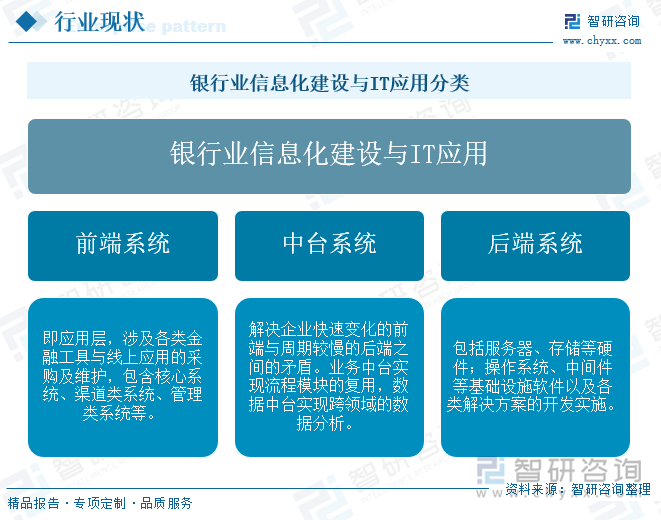
Core Viewpoint - The Chinese banking industry's information technology construction and application are rapidly developing, with a market size projected to reach 213.5 billion yuan in 2024, reflecting an 8.7% year-on-year growth [1][11]. Industry Overview - The banking information technology construction and application involve optimizing and innovating business processes, management structures, and customer services through extensive use of information technology [8]. - The market structure is primarily focused on business, channel, and management solutions, with key investment areas including core business systems, credit management systems, and risk management [11]. Industry Development History - The industry has evolved through five stages: 1. Electronic phase (1970s-1990s) where basic computer technology was introduced for simple accounting [4]. 2. Networking phase (1990s-2000s) where banks began to connect their systems for improved efficiency [4]. 3. Data centralization phase (2000-2010) focusing on unified data management across branches [5]. 4. Mature core system deployment phase (2010-2018) with the adoption of high-performance IT systems [5]. 5. Domestic system localization and digital transformation phase (2019-present) driven by national initiatives [6]. Industry Status - The industry is currently experiencing a shift towards digital and intelligent transformation, with significant growth in market size and investment in emerging solutions like data intelligence and smart marketing [11]. - The transition from centralized to distributed architecture is underway, with an accelerated pace of domestic substitution in IT systems [11]. Industry Trends - Distributed architecture and cloud-native technologies are becoming mainstream, enhancing flexibility and scalability in banking IT systems [18]. - There is a growing demand for intelligent and personalized services, driven by advancements in big data and artificial intelligence [19]. - Data sharing and privacy protection are critical issues, with privacy computing technologies gaining traction to ensure data security while enabling collaborative analysis [20]. Key Companies - Leading companies in the industry include Yuxin Technology, Shenzhou Information, and Hengsheng Electronics, which leverage their technological strengths and market positions to drive innovation [13][14]. - Yuxin Technology reported a revenue of 2.351 billion yuan in the first three quarters of 2024, a decrease of 23.05% year-on-year [14]. - Shenzhou Information achieved a revenue of 6.680 billion yuan in the same period, with a net profit decline of 235.96% [16].