卫星遥感技术

Search documents
“武汉一号”成为城市治理“天眼” 武汉地图实现每月更新
Chang Jiang Ri Bao· 2025-12-25 01:04
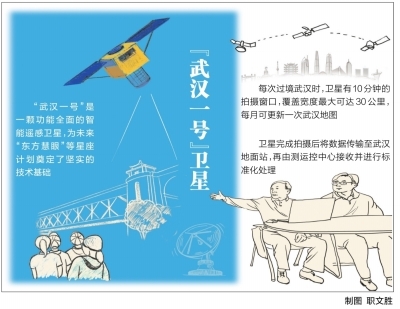
Core Viewpoint - The "Wuhan No. 1" satellite is a comprehensive intelligent remote sensing satellite that significantly enhances urban management capabilities through high-frequency data acquisition and advanced imaging technologies [6][7]. Group 1: Satellite Features and Capabilities - "Wuhan No. 1" satellite features a high resolution of 0.5 meters, 10 meters for hyperspectral, and 30 meters for infrared imaging, along with video and night imaging capabilities [6]. - The satellite operates in a sun-synchronous orbit, allowing for continuous monitoring of urban dynamics, with a maximum coverage width of 30 kilometers during its 10-minute imaging window over Wuhan [6]. Group 2: Applications and Impact - The satellite is positioned to serve as a "heavenly eye" for urban governance, improving precision and efficiency in disaster warning, engineering supervision, and environmental protection [7]. - The satellite's data will support the "monthly update" goal for Wuhan's maps, enhancing urban planning and management [6]. Group 3: Collaborative Projects and Innovations - The "Wuhan No. 1" satellite is part of a project that integrates satellite data with drone technology for periodic monitoring of urban land use violations, marking a significant step in the fusion of satellite applications with urban governance [8]. - The collaboration aims to leverage the satellite's high-frequency imaging and the drone's rapid response capabilities for dynamic monitoring and precise alerts regarding land use changes [8].

北京通州检察建议守护候鸟栖息地
Xin Lang Cai Jing· 2025-12-21 20:41
Core Viewpoint - The article highlights the threat posed by the invasive species prickly pear (刺果瓜) to the bird habitats along the banks of the North Canal in Tongzhou District, Beijing, and the subsequent actions taken by local authorities to address this ecological issue [1] Group 1: Invasive Species Identification and Impact - The prickly pear was identified as an invasive species listed in the "List of Invasive Alien Species in China's Natural Ecosystems," which can lead to the decline of local plant communities and nutrient imbalance in the soil, adversely affecting the survival environment of birds and other animals [1] - Initial investigations revealed that the invasion of prickly pear had severely impacted the growth of native plants and damaged bird habitats along the North Canal, causing substantial harm to the ecological environment of the region [1] Group 2: Response and Remediation Efforts - The local procuratorate utilized satellite remote sensing technology to accurately determine the coverage area of prickly pear, which was found to have invaded a significant area [1] - Following the identification of the issue, the procuratorate issued recommendations to relevant administrative bodies, leading to a collaborative meeting involving various departments to formulate a remediation plan [1] - A total of 174.75 acres of prickly pear were completely removed, and a regular inspection mechanism was established to enhance dynamic monitoring of key areas to prevent future invasions of alien species [1]
“武汉一号”,实现武汉地图月度更新
Chang Jiang Ri Bao· 2025-12-18 09:03
Core Viewpoint - The "Wuhan No. 1" satellite is a comprehensive intelligent remote sensing satellite that is set to enhance urban management and disaster response capabilities through high-frequency data acquisition and advanced imaging technology [6][11]. Group 1: Satellite Features and Capabilities - "Wuhan No. 1" satellite has a high resolution of 0.5 meters, 10 meters for hyperspectral, and 30 meters for infrared imaging, along with video and night imaging capabilities, placing it at an international leading level among similar satellites [6]. - The satellite operates in a sun-synchronous orbit, allowing it to continuously monitor urban dynamics and achieve a monthly update of Wuhan's maps by utilizing a 10-minute imaging window during each pass over the city [11]. Group 2: Applications and Impact - The satellite's data acquisition capabilities are expected to significantly improve the precision and efficiency of urban management in mega-cities, with applications in disaster warning, engineering supervision, and environmental protection [11]. - The "Wuhan No. 1" satellite is part of a broader initiative, with its data being integrated into a collaborative monitoring project with drones for periodic monitoring of urban land violations, showcasing the innovative fusion of satellite applications and urban governance [14][15].
“电力工程号”卫星,发射成功!
Zhong Guo Dian Li Bao· 2025-12-15 05:53
Core Viewpoint - The successful launch of the "Electric Power Engineering" satellite marks a significant breakthrough for the State Grid Corporation in key technology areas, enhancing national energy security and contributing to the construction of a new power system [1][5]. Group 1: Satellite Development and Purpose - The "Electric Power Engineering" satellite is designed to meet the growing demand for remote sensing data in power grid development, particularly as high-voltage projects expand into complex environments [2][3]. - The satellite aims to address the limitations of existing general-purpose optical satellites, which often fall short in resolution, revisit frequency, and data specificity, especially during emergency situations [2][3]. Group 2: Technological Innovations - The satellite features several technological innovations, including a spatial resolution better than 0.5 meters, allowing for precise observation of power grid infrastructure [3][4]. - It employs a new observation mode that enables continuous monitoring of over 200 kilometers of transmission corridors in a single pass, significantly improving monitoring efficiency for major projects [3][4]. Group 3: Applications and Impact - Post-launch, the satellite will be utilized for power engineering surveys, corridor inspections, and disaster prevention, enhancing the safety and emergency management capabilities of the power grid [5][6]. - The satellite is expected to improve the precision of satellite surveys and line inspections by over five times and increase the efficiency of disaster response by nearly seven times, with an estimated economic benefit exceeding 1 billion yuan [6].
巴中特快:绿色低碳城市什么样?/5G+明厨助力食安监管/AI大模型问诊
Zhong Guo Jing Ji Wang· 2025-10-21 07:30
Group 1 - Chinese companies are collaborating with Pakistani officials to explore satellite remote sensing technology to modernize agriculture, focusing on crop monitoring and disaster management [2] - Pakistan's National Bank has launched a digital scheme named "Zarkhez-e" to facilitate unsecured financing for local farmers, aiming to improve access to financial services for marginalized farmers [4][5] - The "Zarkhez-e" financing plan allows for a maximum of 100,000 PKR per acre and up to 1 million PKR for landowners, with at least 75% of the funds provided in kind to ensure quality agricultural inputs [5] Group 2 - China and Pakistan have signed 11 comprehensive education cooperation agreements to promote digital vocational training and agricultural technology innovation [9][10] - The agreements aim to enhance educational collaboration between the two countries, focusing on skills development in agriculture and technology sectors [10]

最高检发布6件检察技术支持公益诉讼检察典型案例
Yang Shi Wang· 2025-10-14 02:23
Core Viewpoint - The Supreme People's Procuratorate has released six typical cases of public interest litigation supported by technical means, emphasizing the integration of advanced technologies in legal processes to enhance environmental protection and public safety [1][2]. Group 1: Typical Cases Overview - Six typical cases were selected from 49 submissions by 27 provincial procuratorates, focusing on various issues such as ecological protection, illegal land use, personal information protection, food safety, and electronic cigarette regulation [1][2]. - The cases include: 1. Jiangxi Province's ecological environment protection case 2. Sichuan Province's illegal land use case 3. Shanghai's illegal use of facial recognition by real estate companies 4. Beijing's food safety case involving adulterated lamb skewers 5. Zhejiang Province's counterfeit bee glue products case 6. Jilin Province's electronic cigarette regulation case [1][2]. Group 2: Technical Support and Methodologies - The cases highlight the use of advanced technologies such as satellite remote sensing, drone surveillance, and rapid testing methods to gather evidence and support legal actions [2][8]. - For instance, the Jiangxi case utilized satellite imagery to track historical changes in the environment, while the Beijing case employed DNA testing to identify adulterated food products [2][8][9]. Group 3: Impact and Significance - The typical cases demonstrate the effectiveness of integrating technology into public interest litigation, providing a replicable model for future cases [2][12]. - The use of technology not only aids in evidence collection but also enhances the efficiency and accuracy of legal proceedings, thereby promoting better governance and public safety [2][12][18].

“天眼”瞰护八桂山水
Guang Xi Ri Bao· 2025-09-23 02:18
Core Viewpoint - The article emphasizes the importance of ecological protection in Guangxi, highlighting the innovative use of remote sensing technology to monitor and manage natural resources effectively [1][2][4]. Group 1: Remote Sensing and Forest Management - The Guangxi Natural Resources Remote Sensing Institute has developed a smart management platform for forest resources, enhancing the precision of forestry management through real-time data updates [2]. - The remote sensing monitoring project has improved interpretation efficiency by over 35% and reduced fieldwork by more than 15%, contributing to an increase in forest coverage from 62.31% in 2017 to 62.55% in 2021 [2]. Group 2: Ecological Monitoring and Protection - The institute utilizes drone technology and 3D modeling for the investigation of ancient trees and regular monitoring of forest resources, providing visual and informational oversight of rare resources [3]. - A comprehensive remote sensing monitoring database for mangrove ecosystems has been established, supporting ecological protection and restoration efforts in Guangxi [4]. Group 3: Coastal Ecosystem Management - The institute has initiated a pilot project for unified natural resource rights registration in the Beihai mangrove nature reserve, covering an area of approximately 80.23 square kilometers [4]. - The project aims to strengthen ecological supervision responsibilities and provide a regulatory basis for mangrove protection and restoration [4]. Group 4: Mining and Land Restoration - The institute has developed a comprehensive monitoring and analysis system for abandoned mines, addressing significant land damage and historical restoration challenges [6]. - A new management information system for abandoned mine ecological restoration was launched in October 2023, facilitating data sharing and operational efficiency [6]. Group 5: Standards and Regulations - A group standard for the construction of ecological restoration regulatory databases at the municipal and county levels was implemented in March 2025, enhancing data sharing and collaboration across departments [7]. - The institute has pioneered a three-dimensional visualization platform for natural resource registration, transitioning from flat to three-dimensional management models [8]. Group 6: Economic Valuation of Natural Resources - The institute has conducted a comprehensive assessment of public natural resource assets in Guangxi, establishing a database for economic valuation and promoting replicable practices [9]. - The successful completion of a collective forest rights pilot project in 2022 demonstrated a 63% reduction in investigation costs, gaining widespread public approval [9].
科技推动金融行业创新,服务更加高效
Sou Hu Cai Jing· 2025-08-20 07:46
Group 1 - The core viewpoint emphasizes the rapid transformation of the financial industry through the integration of advanced technologies such as artificial intelligence, blockchain, and cloud computing, leading to increased efficiency and broader access to financial services [2] Group 2 - Technology is restructuring service processes, significantly reducing loan approval times from days to minutes through big data analysis and machine learning, with a notable decrease in bad loan rates by 1.2 percentage points [3] - AI and blockchain technologies are enhancing efficiency in various sectors, such as insurance and cross-border payments, with costs reduced by over 60% and real-time transaction capabilities [3] Group 3 - The rise of inclusive finance is evident as technology bridges service gaps, with mobile payments and digital credit reaching underserved rural areas, providing credit loans to over 30 million agricultural users with an average credit limit increase of three times [5] - Financial technology development in China has led to a 28% increase in banking service coverage and a 4.2 percentage point reduction in financing costs for small and micro enterprises [5] Group 4 - Regulatory technology is evolving to enhance risk management, with the central bank's financial risk monitoring platform integrating data from over 2 million financial institutions for proactive risk alerts [6] - Local regulators are employing blockchain for comprehensive management of innovative businesses, ensuring that innovation occurs within a controlled risk environment [6] Group 5 - The future of finance is expected to see deeper integration of technology, with advancements like 5G and IoT facilitating automatic payment settlements and quantum computing enhancing financial security [7] - The emergence of generative AI may lead to the development of "digital employees" that participate in customer service and investment research, making financial services more seamless and user-friendly [7] - This technological revolution is anticipated to expand from efficiency improvements to deeper changes in service models, industry ecosystems, and social governance, promoting high-quality economic development [7]

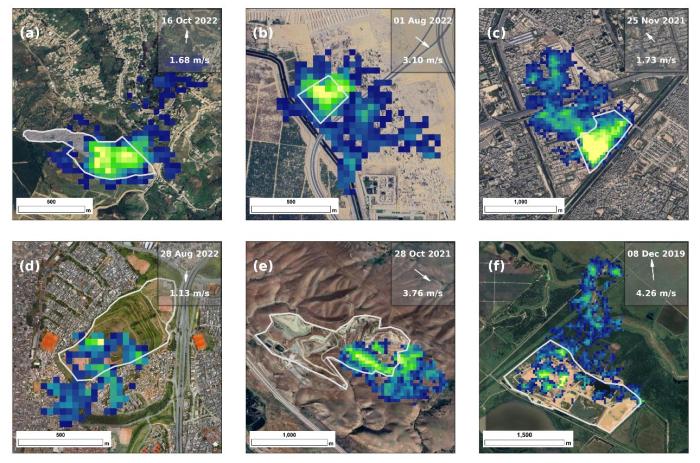
卫星遥感直击!全球垃圾填埋场甲烷排放精准画像出炉
Xin Hua She· 2025-08-17 12:00
Core Insights - The research team from the Chinese Academy of Sciences has made significant progress in monitoring methane emissions from landfills using high-resolution satellite remote sensing technology, developing a new method for precise quantification of methane emissions [1][3] - Landfills are the third largest anthropogenic source of methane emissions globally, accounting for approximately 18% of total anthropogenic methane emissions, highlighting the importance of accurate monitoring [3] - The study utilized satellite data to assess methane emissions from 102 landfills worldwide, detecting 367 effective methane plumes and achieving precise quantification of emissions [3][4] Methodology and Findings - Traditional methane monitoring methods are limited in coverage, precision, and cost, while the new satellite-based approach offers higher spatial and temporal resolution for global methane emission quantification [3] - The research differentiated between open landfills without protective measures and sanitary landfills designed for safe waste treatment, revealing that open landfills emit methane at an average intensity 4.8 times higher than sanitary landfills [3][4] - The study's findings provide a scientific basis for correcting biases in current emission databases and support the formulation of global reduction policies with reliable data [4]
【中国新闻网】利用卫星遥感“火眼金睛” 中国团队精准量化全球垃圾填埋场甲烷排放
Zhong Guo Xin Wen Wang· 2025-07-30 01:41
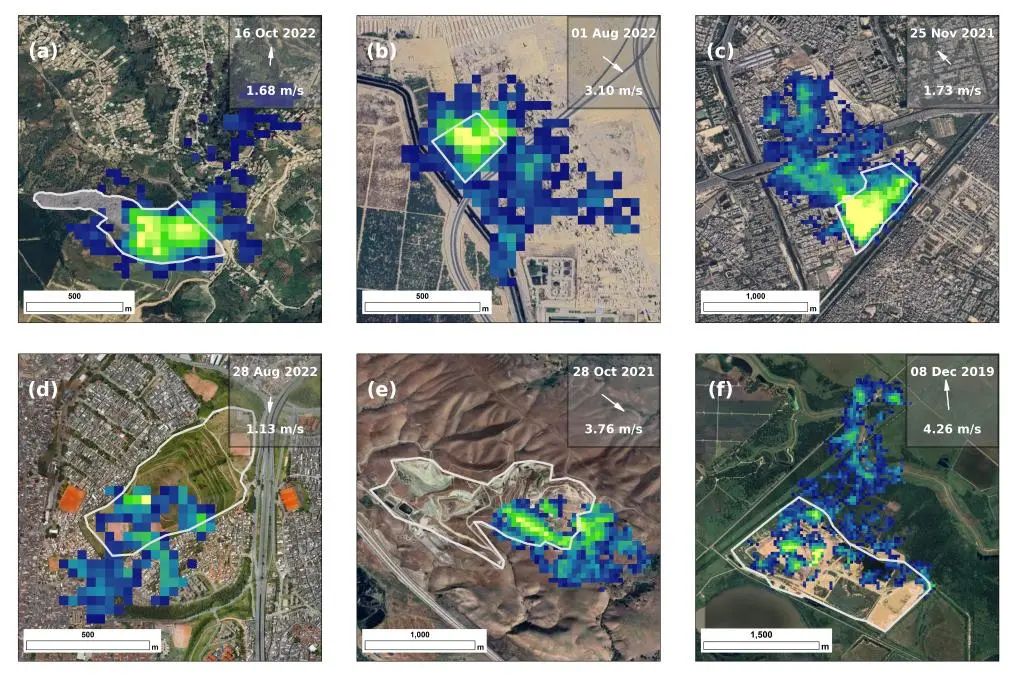
Core Viewpoint - The research team from the Chinese Academy of Sciences has developed a new method using high-resolution satellite remote sensing technology to accurately quantify methane emissions from landfills, addressing the significant role of landfills as a major source of anthropogenic methane emissions, which account for approximately 18% of global emissions [4][5]. Group 1: Research Methodology - The new method utilizes satellite remote sensing with a spatial resolution of 30 meters and a spectral resolution of 10 nanometers, combined with matched filtering algorithms and integrated mass enhancement methods to identify and quantify methane plumes from 102 landfills globally, detecting a total of 367 effective plumes [5][6]. - Traditional methane monitoring methods are limited in coverage, precision, and cost, while satellite technology allows for unified quantification of methane emissions on a global scale [5]. Group 2: Findings and Implications - The study reveals that methane emissions from landfills are significantly influenced by management practices, with open landfills emitting methane at an average intensity 4.8 times higher than sanitary landfills [6]. - The research indicates that existing global atmospheric emission databases, particularly those published by the EU, underestimate emissions from high-emission open landfills by an average factor of five, providing a scientific basis for correcting these discrepancies [6]. - The research team advocates for improved landfill management and the establishment of a global satellite monitoring data-sharing platform to ensure equitable access to critical emission data for resource-limited countries [6]. Group 3: Future Monitoring and Applications - The new method is expected to facilitate large-scale, continuous monitoring of methane emissions from landfills, enhancing the accuracy of gas emission models and establishing a detailed time series database for solid waste methane emissions [7]. - Experts have noted the significant scientific value and application potential of this research, suggesting it represents a breakthrough in remote sensing technology for solid waste management, transitioning from isolated measurements to a comprehensive monitoring system akin to weather forecasting [7].