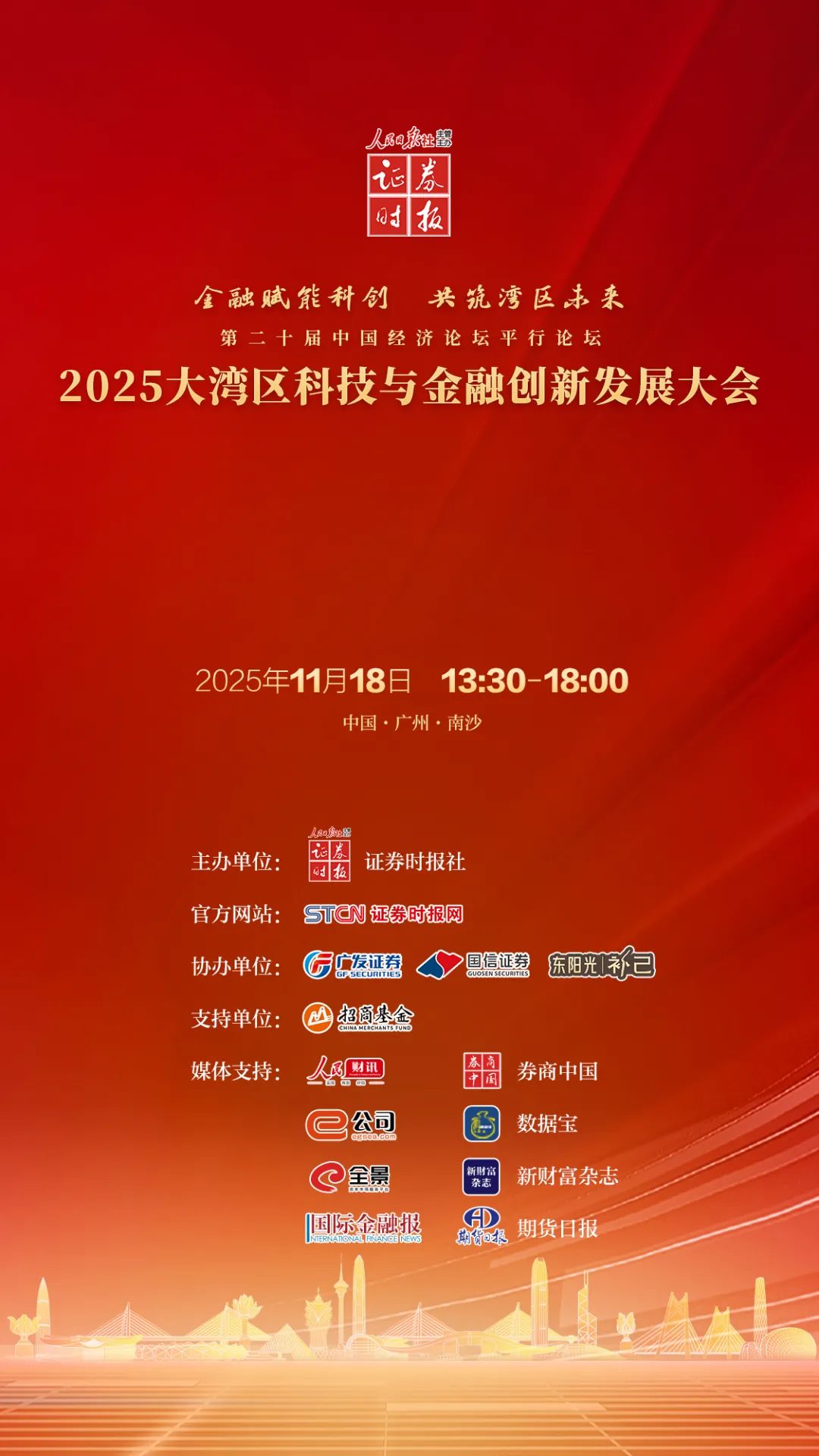
科技与金融融合

Search documents
广东股交:力争年增融资交易额100亿元 增强优企集聚效应
Nan Fang Du Shi Bao· 2026-02-24 12:50
Core Viewpoint - Guangdong aims to enhance its regional equity market by increasing the number of listed companies, targeting 6,000 quality enterprises by the end of 2030, with 5,000 being technology and "specialized, refined, unique, and innovative" companies [1][2]. Group 1: Development Goals - The Guangdong Equity Exchange Center plans to establish a comprehensive nurturing and incubation system for technology enterprises, focusing on empowering small and medium-sized technology enterprises [1]. - The provincial government emphasizes the rapid and orderly increase of listed companies in the regional equity market, with a target of reaching 10,000 by the end of the 14th Five-Year Plan [2]. Group 2: Financial Infrastructure - The regional equity market serves as a crucial financial infrastructure, facilitating the growth of technology enterprises from inception to higher capital markets [1]. - The Guangdong Equity Exchange will collaborate with Shenzhen Qianhai Equity Exchange to implement a special action plan aimed at nurturing quality SMEs [2]. Group 3: Financing and Support Mechanisms - The exchange will utilize diverse private financing tools such as equity, convertible bonds, and stock options to meet the funding needs of startups [1]. - A tiered nurturing system will be established to provide tailored governance, financing advice, policy application, and restructuring guidance for enterprises at different growth stages [2][3]. Group 4: Service Platforms and Ecosystem - A comprehensive service platform for prospective listed companies will be created, enhancing connections with provincial and municipal listing reserves and facilitating access to various financing options [3]. - The initiative aims to foster a favorable ecosystem for private investment management services, encouraging more "patient capital" to flow into technology SMEs [3].
广东股交:力争年增融资交易额100亿元,增强优企集聚效应
Nan Fang Du Shi Bao· 2026-02-24 12:38
Core Viewpoint - Guangdong aims to enhance its regional equity market by increasing the number of listed companies, targeting 6,000 quality enterprises by the end of 2030, with 5,000 being technology and "specialized, refined, unique, and innovative" companies [2][3] Group 1: Development Goals - The Guangdong Equity Exchange Center plans to establish a comprehensive incubation system for technology enterprises, focusing on empowering small and medium-sized tech firms [2] - The provincial government emphasizes the rapid and orderly increase of listed companies in the regional equity market, aiming for 10,000 by the end of the 14th Five-Year Plan [3] Group 2: Financial Infrastructure - The regional equity market serves as a crucial financial infrastructure, facilitating the growth of tech companies from startup to higher capital markets [2] - The Guangdong Equity Exchange will collaborate with Shenzhen Qianhai Equity Exchange to implement a special action plan for nurturing quality SMEs [3] Group 3: Financing and Support Mechanisms - The exchange will utilize diverse private financing tools such as equity, convertible bonds, and stock options to meet the funding needs of startups [2] - A tiered cultivation system will be established to provide tailored governance, financing advice, and policy application services for companies at different growth stages [3][4] Group 4: Service Platforms - A comprehensive service platform for prospective listed companies will be created, enhancing connections with provincial and municipal listing reserves [4] - The aim is to improve the quality and quantity of IPOs and new three-board transfers through the regional equity market during the 14th Five-Year Plan [4] Group 5: Innovation in Financing - A full lifecycle capital service system for tech enterprises will be developed, including innovative financing models such as entrepreneurial debt and preferred shares [5] - The goal is to increase financing transaction volume by 10 billion yuan annually, driving high-quality industrial development through financial innovation [5]


万亿券商巨头,换帅
Nan Fang Du Shi Bao· 2026-01-26 04:37
Core Viewpoint - Huatai Securities has appointed Wang Huiqing as the new chairman of the board, with a term of three years, and approved a capital increase of up to 9 billion HKD for its wholly-owned subsidiary to support overseas business development [2][4]. Group 1: Leadership Changes - Wang Huiqing has been elected as the chairman of Huatai Securities, succeeding Zhang Wei, who served as chairman for over five years [2][8]. - Zhang Wei's tenure saw stable company performance, with revenue growth rates of 26.47% and 20.55% in 2020 and 2021, respectively, followed by a recovery in 2023 and 2024 [9]. - Wang Huiqing has a diverse background in both government and financial institutions, previously serving as the secretary of the party committee at Huatai Securities [6][7]. Group 2: Financial Performance - In the first three quarters of 2025, Huatai Securities achieved operating revenue of 27.129 billion CNY, a year-on-year increase of 12.55%, and a net profit attributable to shareholders of 12.733 billion CNY, up 1.69% [10]. - The total assets of Huatai Securities grew from approximately 389 billion CNY at the end of 2018 to about 1.03 trillion CNY by the end of September 2025, marking a significant increase [11]. Group 3: Strategic Initiatives - The company aims to enhance its wealth management and institutional services through a dual-driven strategy of technology empowerment, while optimizing its asset, liability, and income structure [7]. - Huatai Securities is actively exploring new growth points, with international business becoming a significant driver of growth, supported by the recent capital increase for its subsidiary [11].

合肥举办“汽车+”产业科创路演 助力长三角汽车产业创新发展
Xin Lang Cai Jing· 2026-01-13 06:22
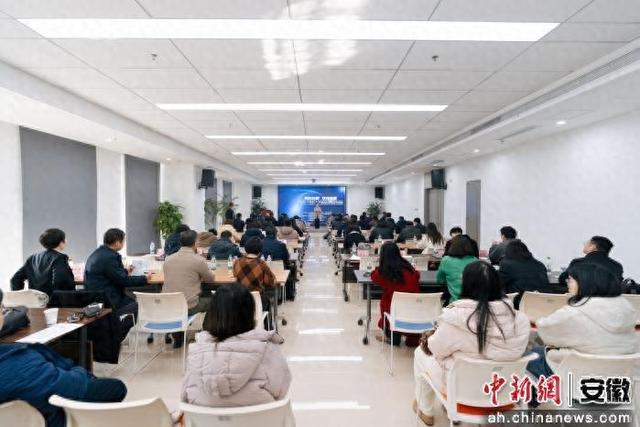
Group 1 - The "Automobile+" industry innovation roadshow was held in Hefei to connect industry and capital, promoting technological innovation and the transformation of achievements in the automotive sector [1][3] - The event was co-hosted by multiple organizations, including the Yangtze River Delta Automotive Innovation Academy and the Hefei Investment Promotion Bureau, with support from various local institutions [3] - A total of 14 innovative enterprises participated, with a combined financing demand exceeding 400 million yuan, covering key areas such as semiconductors, intelligent chassis, solid-state batteries, autonomous driving, and smart logistics [3][4] Group 2 - The founder of the Yangtze River Delta Automotive Innovation Academy emphasized the importance of the roadshow as a connection between entrepreneurial projects and the capital market, aiming to provide substantial support in funding, talent, resources, and development direction [3] - Hefei's automotive industry development is attributed to leading enterprises, collaborative support, and innovation-driven strategies, with a focus on smart connectivity and core components by 2026 [3] - The integration of technology and finance is seen as crucial for industrial upgrading, with the roadshow facilitating the construction of an open and collaborative industrial financial ecosystem [3][4] Group 3 - Over 30 investment institutions engaged in discussions with roadshow representatives regarding technological advantages, market prospects, and profit models, leading to preliminary cooperation intentions [4] - The Yangtze River Delta Automotive Innovation Academy plans to deepen its service model, providing comprehensive support for automotive innovation enterprises through various initiatives [4]
绿色金融破局关键:科技与金融深度融合
2 1 Shi Ji Jing Ji Bao Dao· 2025-12-17 03:36
Group 1 - The core viewpoint of the articles emphasizes the necessity of integrating green finance with technological innovation to facilitate sustainable development and address climate change challenges [1][4]. - Experts at the forum highlighted that green transformation cannot rely solely on policy or donations, but must establish a sustainable business logic, focusing on efficient capital allocation [1][2]. - Green finance tools can lower project costs, solve incentive compatibility issues, and diversify risks, which are essential for the feasibility of green projects [2][3]. Group 2 - Green finance tools can reduce the financing costs of green projects, making previously unfeasible projects viable, as demonstrated by case studies such as the issuance of transformation bonds by China Bank [2][3]. - Sustainable development-linked loans are an innovative financial tool that adjusts interest rates based on ESG performance, incentivizing companies to improve their environmental standards [3][4]. - The physical and transition risks posed by climate change are significant factors affecting financial stability, with China experiencing rapid temperature increases and extreme weather events [4][5]. Group 3 - A climate risk assessment framework is proposed to evaluate the financial impact of companies' adaptability to climate risks, integrating non-financial data and smart technology to enhance risk prediction accuracy [5][6]. - The data landscape in green finance has fundamentally changed, requiring risk assessment models to match the complexity of new data types, including text and multi-modal information [6]. - Current practices among small and medium banks involve a dual approach of traditional statistical models for compliance and deep learning models for enhanced predictive performance, with a future focus on integrating macroeconomic insights [6].
守护“膝”望:南京银行上海分行金融活水赋能医疗科技企业稳健前行
2 1 Shi Ji Jing Ji Bao Dao· 2025-12-15 06:09
Core Viewpoint - The article emphasizes the rapid development of the medical technology industry in China, particularly in the orthopedic joint replacement sector, driven by innovation and financial support, showcasing the capabilities of companies like KuanYue Medical on a global stage [1][5]. Group 1: Company Overview - KuanYue Medical was founded in 2015 by Wang Junwen, who aimed to create a "Chinese Johnson & Johnson," with a unique strategy of "overseas R&D, Chinese manufacturing, and global sales" [2]. - The company has established an international R&D center led by top scientists, ensuring its technology aligns with global standards [7]. Group 2: Market Potential - The orthopedic joint replacement market is undergoing structural changes, with increasing disposable income and health awareness leading to a shift in patient attitudes from "having to undergo surgery" to "choosing to improve quality of life" [3]. - The penetration rate of joint replacement surgeries in China is approximately 0.01%, which is only one-tenth of that in the U.S., indicating significant growth potential [4]. Group 3: Competitive Advantage - KuanYue Medical has set a high internal testing standard of 30 million cycles for its artificial joints, far exceeding the FDA's requirement of 5 million cycles, demonstrating its commitment to product durability and quality [6][7]. - The company has successfully penetrated 15 global markets and is the first domestic company to achieve actual implantations in the U.S., with international sales accounting for over 60% of its revenue [5]. Group 4: Financial Empowerment - KuanYue Medical's growth has been supported by strategic investments from various financial institutions, including a significant partnership with Nanjing Bank, which has evolved from a small credit line to a comprehensive financial support system [8]. - The collaboration with Nanjing Bank includes innovative financing models such as "loans + equity rights," enhancing the company's financial strategy as it aims for a Hong Kong listing [8][9]. Group 5: Future Outlook - The aging population in China and the substantial gap in joint replacement penetration compared to the U.S. present a promising growth trajectory for KuanYue Medical [9]. - Nanjing Bank is positioned to transition from a mere funding provider to a deep strategic partner, supporting KuanYue Medical throughout its industrial and capital cycles [9].

三大巨头联手“杀入”,中国第90家财险公司来了
Hua Xia Shi Bao· 2025-11-26 02:18
Core Insights - The establishment of Fabaa Tianxing Property Insurance Co., Ltd. marks the 90th entity in China's property insurance market, reflecting the ongoing opening of the financial sector in China [2][8] - The company is backed by a strong shareholder structure, including international insurance giants and leading Chinese technology firms, indicating a trend towards innovative partnerships in the insurance industry [3][4] Shareholder Structure - The shareholder composition includes France's Paris Insurance Group (49% stake), Xiaomi's Sichuan Yinmi Technology (33%), and Volkswagen Financial Services (18%), creating a forward-looking capital and business combination [3][4] - Paris Insurance Group aims for a dual presence in both property and life insurance in China, while Xiaomi's involvement is seen as a key step in its "people-car-home" ecosystem strategy [3][4] Business Focus and Challenges - Fabaa Tianxing's business scope includes motor insurance, property engineering insurance, liability insurance, marine cargo insurance, short-term health and accident insurance, and reinsurance, with motor insurance identified as a core focus [4][5] - The company faces challenges in the motor insurance sector, particularly with high loss ratios and costs associated with new energy vehicles, raising questions about its ability to break industry stagnation [5][6] Technological Integration - The implementation of Usage-Based Insurance (UBI) is a focal point, requiring the integration of various data sources for risk assessment, which poses significant technical challenges [5][6] - Experts emphasize the need for effective data utilization and regulatory support to achieve profitability in UBI, particularly in the context of new energy vehicles [5][6] Management Team - The management team combines international experience and local expertise, with the chairman having over 30 years in the insurance industry and the general manager being one of China's first property insurance actuaries [6][7] - This blend of backgrounds is viewed as crucial for navigating the complexities of the Chinese market [7] Market Positioning - The approval of Fabaa Tianxing's operations is indicative of China's financial market's continued openness, with foreign insurance firms accelerating their presence since the lifting of ownership restrictions in 2018 [8] - The competitive landscape is shifting, with foreign firms needing to leverage specialized capabilities and global resource integration to maintain an edge in the evolving market [8]


科技与金融共奏交响曲构筑“创新双引擎”
Zheng Quan Shi Bao· 2025-11-23 23:01
Group 1 - The integration of finance and technology is evolving from simple support to a mutually beneficial relationship, creating an "innovative dual engine" for future development [1] - Financial support is becoming a key force in overcoming technological barriers in high-end manufacturing and other advanced technology sectors [1] - Capital plays a significant role in economic development, influencing resource allocation and production, and is increasingly viewed as a "stabilizer" for technological innovation [1] Group 2 - The deep integration of technology and finance faces challenges, particularly in valuation, as high-end equipment companies exhibit characteristics of high investment, high R&D, high technical barriers, and niche markets [2] - The exit mechanism for capital investment in hard technology companies is a critical concern, especially if these companies cannot answer key questions about product potential and growth [2] - AI is a major battlefield for technological innovation, rapidly narrowing gaps between companies and individuals [2] Group 3 - The emergence of AI has sparked innovation within public funds, enhancing research structures and delivering tailored content to clients [3] - AI also presents new challenges for financial institutions, particularly in terms of the potential for misuse and the need for improved discernment [3] - There is a caution against over-reliance on AI, emphasizing the necessity of human oversight in decision-making processes [3]
科技与金融共奏交响曲 构筑“创新双引擎”
Zheng Quan Shi Bao· 2025-11-23 21:42
Core Insights - The integration of finance and technology is evolving from simple support to a mutually beneficial relationship, creating a "dual engine" for innovation [1] - Financial support is becoming a key force in overcoming technological barriers in high-end manufacturing and other advanced technology sectors [1] - Capital markets are increasingly valuing the growth potential of technology companies, leading to changes in pricing systems [1] Group 1: Financial Support and Innovation - Financial backing is crucial for long-term research and development, as highlighted by the experience of Jia Shite, which received significant investment that helped them through tough times [1] - Investment institutions provide not only capital but also resources and governance support, creating a conducive ecosystem for technological innovation [1] Group 2: Challenges in Technology and Finance Integration - There are significant challenges in valuing high-end technology companies, particularly those characterized by high investment, high R&D, high technical barriers, and niche markets [2] - The exit mechanisms for capital investment in hard technology companies remain a critical concern, especially when companies struggle to answer key growth questions [2] Group 3: The Role of AI in Innovation - AI is becoming a central battlefield for technological innovation, helping companies streamline operations and reduce gaps between competitors [3] - While AI offers opportunities for innovation in financial institutions, it also presents challenges, particularly in terms of fraud detection and the need for human oversight in decision-making [3]
一汪创投活水,润泽大湾区“科创雨林”
Zheng Quan Shi Bao· 2025-11-14 02:26
Core Insights - The integration of private venture capital, state-owned capital, and Hong Kong-Macau resources is creating a comprehensive capital network that supports the entire lifecycle of enterprises in the Guangdong-Hong Kong-Macau Greater Bay Area [1] - The Greater Bay Area is rapidly becoming a global hub for technological innovation and venture capital, driven by the collaboration of various capital sources [1] Group 1: Private Venture Capital - Private venture capital is a significant highlight in the Greater Bay Area, with firms like Dongfang Fuhai, Dacheng Caizhi, and others deeply engaged in the market [3] - The professional specialization among private venture capital firms is deepening, with specific focuses such as consumer sectors, hard technology, and precision medicine, enhancing investment accuracy and creating a collaborative ecosystem [3] - The success story of Ying Shi Innovation, which saw a 164% increase in R&D investment and a 90% rise in revenue, exemplifies the effective partnership between capital and technological innovation [2][3] Group 2: State-Owned Capital - State-owned venture capital plays a crucial role in the investment landscape, acting as a key funding source and shaping the investment framework in the Greater Bay Area [4] - The establishment of various funds, including a 150 billion yuan angel fund and a 500 billion yuan venture capital fund, demonstrates the commitment to fostering innovation and supporting emerging industries [4][5] - Shenzhen's state-owned capital has built a comprehensive innovation ecosystem, facilitating significant projects in the semiconductor industry and supporting early-stage investments through a network of seed funds [5][6] Group 3: Cross-Border Collaboration - Cross-border collaboration is being enhanced through institutional innovations, with many investment firms establishing connections between mainland China and Hong Kong to explore diverse investment opportunities [7][8] - The establishment of funds like the Qianhai Shenzhen-Hong Kong Youth Dream Factory Fund illustrates the growing trend of integrating resources and capital across borders to support early-stage projects in various sectors [7][8] - The unique conditions of the Greater Bay Area, characterized by "one country, two systems," present both challenges and opportunities for regional integration and development [8]