
印刷OLED技术

Search documents
印刷OLED领域获关注企业布局规模化商用落地
Zhong Guo Zheng Quan Bao· 2025-11-19 20:13
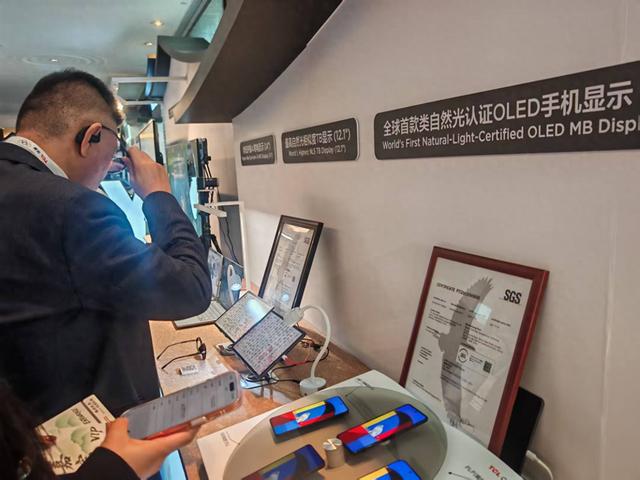
Core Insights - The article discusses the advancements in printed OLED technology and its potential for large-scale commercial application, highlighting the role of leading companies like TCL Huaxing in driving innovation and establishing a competitive ecosystem [1][2][3] Group 1: Technological Advancements - TCL Huaxing has made significant breakthroughs in printed OLED technology, showcasing multiple new display solutions at the DTC2025 event, including the world's first Real Stripe RGB OLED mobile display with a resolution of 390 PPI [1][2] - The printed OLED technology offers competitive advantages in cost and display quality, with a material utilization rate exceeding 90%, significantly higher than the 30% of traditional evaporation methods [3][4] Group 2: Commercialization Efforts - The T8 project, a collaboration between TCL Huaxing and the Guangzhou government, represents the world's first mass production line for G8.6 generation printed OLED, with a total investment of approximately 29.5 billion [2][3] - The T8 project is expected to process about 22,500 glass substrates per month, accelerating the large-scale application of printed OLED technology in the global mid-to-high-end market [3][4] Group 3: Market Potential and Applications - Printed OLED technology is anticipated to cover a wide range of applications from 5-inch mobile devices to 65-inch televisions, indicating its versatility and broad market potential [4] - TCL Huaxing aims to build an open and collaborative ecosystem for printed OLED, working with upstream partners on key materials and equipment, and engaging with downstream customers to identify optimal application areas [4]

TCL华星赵军:印刷OLED具备其他OLED技术无法替代的优势
Zhong Guo Jing Ying Bao· 2025-11-18 02:49
Core Viewpoint - TCL Huaxing has established a leading advantage in key technologies for printed OLED after 12 years of continuous investment and research, aiming to promote the application of printed OLED in collaboration with partners [1][2]. Group 1: Technology Development and Challenges - TCL Huaxing has faced and overcome numerous challenges in printed OLED technology, including PPI, lifespan, power consumption, and yield, with clear solutions identified for major bottlenecks [2][10]. - The transition from polymer to small molecule material systems has opened up the material ecosystem for printed OLED, with plans for further iterations to enhance performance [3][10]. - Printed OLED technology offers advantages in picture quality, efficiency, and cost, making it competitive in the mid-size display market [4][10]. Group 2: Market Position and Strategy - The total investment of domestic panel manufacturers in production lines has reached 170 billion yuan, with competition expected to intensify as new production lines come online [3][10]. - TCL Huaxing has strategically focused on mid-size applications for printed OLED, including laptops, monitors, and automotive displays, while also planning to expand into small-size applications like mobile phones [5][6]. - The company has showcased advancements in mobile display technology, achieving a pixel density of 390 PPI, comparable to mainstream mobile resolutions [6][10]. Group 3: Key Decisions and Future Directions - Key strategic decisions include the choice of printed OLED technology, focusing on mid-size applications, and relocating production lines to enhance efficiency and integration [7][8]. - The recent launch of the Guangzhou t8 project signifies TCL Huaxing's confidence in achieving large-scale commercialization of printed OLED technology [8][10]. - Future challenges include improving power consumption and yield rates, with current yield rates on the 5.5 generation line reaching 70% and plans to replicate this success on the 8.6 generation line [10][11].
并跑→领跑,印刷OLED时代到来?
Guan Cha Zhe Wang· 2025-11-17 13:21
Core Viewpoint - The Chinese display industry has transitioned from catching up to running ahead, with printed OLED technology being a key focus for leading the market [1] Group 1: Technology and Innovation - TCL Technology's CEO highlighted the breakthrough of the world's first small-sized OLED product using high-precision printing technology, achieving a physical resolution of 390 PPI and a visual equivalent of 490 PPI [1] - The traditional evaporation process used by competitors like Samsung and BOE has significant cost and efficiency drawbacks, with equipment costs being approximately double that of printing technology [4][11] - Printed OLED technology offers a material utilization rate of over 90%, significantly reducing raw material costs by nearly 40% compared to evaporation methods [11] Group 2: Market Dynamics - The introduction of printed OLED technology is expected to intensify competition with established players like Samsung and BOE, who have historically dominated the high-end display market [1][4] - TCL's new G8.6 generation printed OLED production line is designed to process approximately 22,500 glass substrates per month, aiming to accelerate the technology's market adoption [12] - The printed OLED technology is anticipated to expand into various high-value display applications, including mobile devices, potentially disrupting the current market share held by traditional OLED manufacturers [12][18] Group 3: Challenges and Considerations - Despite the advantages of printed OLED, challenges remain in achieving comparable power efficiency and yield rates to established evaporation technologies, particularly in high-end applications [15][17] - The industry still prioritizes display quality and stability, where evaporation technology currently holds a significant edge due to its ability to produce uniform and dense film layers [16] - Market entry barriers exist as existing products designed around evaporation screens may require significant redesign to accommodate printed OLED technology, posing a challenge for TCL in gaining traction with manufacturers [18]

TCL华星明年印刷OLED出货量将达百万级
Di Yi Cai Jing· 2025-11-14 05:12
Core Insights - TCL Technology's CTO, Yan Xiaolin, announced significant production capacity increases for TCL Huaxing's OLED panel lines at the 2025 Global Display Ecological Conference [1] - The monthly production capacity of the 5.5-generation printed OLED panel line will rise from 3,000 large panels to 9,000 large panels, with expected shipments reaching one million units next year [1] - The 8.6-generation printed OLED panel line is projected to achieve its first product mass production by the fourth quarter of 2027 [1] - A new 5.65-inch printed OLED mobile display with a resolution of 390 PPI was unveiled, indicating an expansion of TCL Huaxing's OLED applications from medium-sized fields like medical and IT to smaller sizes such as mobile devices [1]
技术迭代引爆中尺寸OLED需求
Zheng Quan Shi Bao Wang· 2025-11-03 02:46
Core Insights - The global display panel industry is shifting its competitive focus towards medium-sized OLED panels, with significant investments from major players like TCL, BOE, and Visionox [1][9] Group 1: Industry Developments - TCL's T8 project, the world's first large-scale production line for 8.6-generation printed OLED, has commenced in Guangzhou with a total investment of 29.5 billion yuan and a designed monthly capacity of 22,500 glass substrates [1][5] - The combined investment in 8.6-generation OLED production lines by Samsung Display, BOE, Visionox, and TCL has reached nearly 170 billion yuan, indicating a collective push in the medium-sized OLED market [6][9] Group 2: Technological Advancements - The T8 project is expected to provide over 15% cost advantage compared to other OLED technologies due to its high material utilization rate of 90% and elimination of expensive vacuum processes [4][5] - The T8 line will integrate AI and smart manufacturing technologies, enhancing production efficiency and reducing defect rates significantly [5][10] Group 3: Market Trends - The medium-sized OLED market is projected to experience substantial growth, with compound annual growth rates of 33% for laptop OLED panels and 27% for automotive displays by 2030 [7][9] - The penetration rate of OLED in medium-sized applications is expected to rise sharply, driven by new product launches from major brands like Apple and Samsung [7][8] Group 4: Competitive Landscape - BOE and Visionox are also advancing their own 8.6-generation OLED projects, with BOE investing 63 billion yuan and Visionox focusing on its proprietary ViP technology [6][9] - The collective efforts of these companies are reshaping the global competitive landscape, moving China from a "follower" to a "leader" in the medium-sized OLED sector [1][9] Group 5: Future Outlook - The medium-sized OLED industry is expected to undergo significant transformations, with a focus on quality improvement and technological innovation over mere scale expansion [11] - The T8 project is anticipated to play a crucial role in establishing a complete domestic supply chain, enhancing the localization of materials and equipment [10][11]

技术迭代引爆中尺寸OLED需求国内显示面板企业竞相扩产力争上游
Zheng Quan Shi Bao· 2025-11-02 18:09
Core Insights - The global display panel industry is shifting its competitive focus towards medium-sized OLED panels, with significant investments from major players like TCL, BOE, and Visionox [1][5][7] Group 1: TCL Huaxing's T8 Project - TCL Huaxing's T8 project, the world's first large-scale production line for 8.6-generation printed OLED, has commenced construction in Guangzhou with a total investment of 29.5 billion yuan and a designed monthly capacity of 22,500 glass substrates [1][2] - The T8 project is expected to achieve mass production by the second half of 2027, with the first consumer electronic products set to ship in the first half of 2026, targeting medium-sized applications such as monitors and laptops [3][4] - The T8 project will integrate AI and smart manufacturing technologies, aiming for a 50% localization rate for equipment and significant energy savings compared to traditional methods [3][8] Group 2: Competitive Landscape - BOE and Visionox have also initiated their own 8.6-generation OLED projects, creating a competitive environment among the three companies [4][6] - BOE has invested 63 billion yuan in its project, which is set to begin mass production in the fourth quarter of 2026, focusing on the reliability of its technology [4][5] - Visionox is pursuing its proprietary ViP technology, which combines the advantages of both traditional and printed OLED methods [4][5] Group 3: Market Dynamics - The medium-sized OLED market is projected to experience significant growth, with compound annual growth rates of 33% for laptop OLED panels and 27% for automotive displays by 2030 [5][7] - The shift from LCD to OLED in high-end IT products, such as Apple's iPad Pro, is expected to drive demand for medium-sized OLED panels [7][9] - The collective efforts of TCL, BOE, and Visionox are seen as a strategic move to break the overseas monopoly in the mid-to-high-end display market, with a focus on technological innovation and supply chain independence [7][9]

技术迭代引爆中尺寸OLED需求 国内显示面板企业竞相扩产力争上游
Zheng Quan Shi Bao· 2025-11-02 18:05
Core Insights - The global display panel industry is shifting its competitive focus towards medium-sized OLED panels, with significant investments from major players like TCL, BOE, and Visionox [1][5][7] Group 1: TCL Huaxing's T8 Project - TCL Huaxing's T8 project, the world's first large-scale production line for 8.6-generation printed OLED, has commenced construction in Guangzhou with a total investment of 29.5 billion yuan and a designed monthly capacity of 22,500 glass substrates [1][2] - The T8 project is seen as a critical breakthrough for China's display industry, marking a transition from a "follower" to a "leader" in the medium-sized OLED sector, with expected cost advantages of over 15% compared to other OLED technologies [2][3] - The T8 project aims to integrate AI and smart manufacturing technologies, significantly enhancing production efficiency and reducing defect rates [3][8] Group 2: Competitive Landscape - BOE and Visionox have also initiated their own 8.6-generation OLED projects, creating a competitive environment among the three companies [4][6] - BOE has invested 63 billion yuan in its project, which is set to begin mass production in Q4 2026, focusing on ensuring product stability and technological upgrades [4][5] - Visionox is pursuing its proprietary ViP technology, which combines the advantages of both evaporation and printing methods, targeting the medium to large-sized market [4][5] Group 3: Market Dynamics - The medium-sized OLED market is projected to experience significant growth, with compound annual growth rates of 33% for laptop OLED panels and 27% for automotive displays by 2030 [5][7] - The shift from LCD to OLED in high-end IT products, such as Apple's iPad Pro, is expected to drive demand for medium-sized OLED panels [7][8] - The collective efforts of TCL, BOE, and Visionox are reshaping the global competitive landscape, breaking the long-standing dominance of companies like Samsung and LGD in the high-end display market [7][9] Group 4: Future Outlook - The Chinese medium-sized OLED industry is poised for a collective breakthrough, with a focus on technological innovation and supply chain collaboration [9] - The next 3 to 5 years are expected to see a diversification of production routes and a convergence of production rhythms, with multiple lines entering mass production [9]
TCL科技前三季度归母净利润同比增长99.8%,显示中小尺寸业务成增长引擎
Feng Huang Wang· 2025-10-30 14:56
Financial Performance - TCL Technology Group reported a revenue of 135.9 billion yuan for the first three quarters of 2025, representing a year-on-year growth of 10.5% [1] - The net profit attributable to shareholders reached 3.05 billion yuan, showing a significant increase of 99.8% year-on-year [1] - The core panel business, TCL Huaxing, contributed 78.01 billion yuan in revenue and 6.1 billion yuan in net profit, with year-on-year growth rates of 17.5% and 53.5% respectively [1] Business Segments - The display business exhibited balanced and rapid growth, with the TV and commercial display market share increasing to 25%, maintaining a leading global profit level [1] - In the IT product line, notebook panel sales surged by 63%, and monitor sales grew by 10% year-on-year [1] - In mobile terminals, the market share of tablet panels rose to second globally, while LCD mobile panel shipments increased by 28% [1] - The automotive display sector also experienced rapid growth [1] Technological Advancements - TCL Technology is accelerating the commercialization of advanced display technologies, with the construction of the 8.6 generation printed OLED production line recently commenced [2] - The G5.5 generation printed OLED production line is steadily increasing capacity, with products already applied in the medical display field, and mass production expected in the first half of next year [2] - The company’s Micro LED technology is set to achieve mass production and stable delivery by the end of this year, positioning it to seize opportunities in the new display technology cycle [2] Global Expansion - TCL Technology's capacity layout and globalization strategy are progressing steadily, with the t11 and t9 production lines forming a complementary structure covering mainstream and high-end markets [2] - In the overseas market, the TV large-size products in India have doubled in growth, and a new module factory in Vietnam is expected to start bulk shipments in the fourth quarter, providing new growth points for overseas business [2]
TCL科技:前三季度归母净利润同比增长99.8%,显示中小尺寸业务成增长引擎
Huan Qiu Wang· 2025-10-30 11:57
Core Insights - TCL Technology reported a significant increase in revenue and profit for the first three quarters of 2025, with total revenue reaching 135.9 billion yuan, a year-on-year growth of 10.5%, and net profit attributable to shareholders at 3.05 billion yuan, up 99.8% [1] - The strong performance is primarily driven by the panel business, which generated 78.01 billion yuan in revenue, a 17.5% increase, and a net profit of 6.1 billion yuan, reflecting a 53.5% year-on-year growth [1][2] Business Performance - The panel business shows a positive trend with large-size panels maintaining a leading market share of 25% in the TV and commercial display sectors, while small and medium-sized panels are experiencing rapid growth [2] - In the IT sector, monitor sales increased by 10%, and notebook panel sales surged by 63%. In the mobile terminal sector, LCD smartphone panel shipments rose by 28%, and the tablet panel market share increased to 13%, ranking second globally [2] Production and Technology - The company is advancing its capacity integration and technology layout, with the T11 production line achieving significant cost reductions through refined operations, while the T9 line focuses on high-end markets [2] - The T4 (G6 generation) OLED line is operating steadily, with the flexible OLED smartphone market maintaining the fourth position globally, and the proportion of high-end model shipments is continuously improving [2][3] Innovation and Market Expansion - TCL Huaxing is accelerating the commercialization of cutting-edge technologies such as printed OLED and Micro LED, with the 8.6-generation printed OLED production line recently commencing construction [3] - The company has seen significant success in expanding overseas markets, particularly in India, where large-size TV products have doubled in growth, and a new module factory in Vietnam is expected to contribute to overseas business growth in the fourth quarter [3] Future Outlook - Industry experts believe that TCL Technology is entering a new phase of high-quality development, benefiting from a recovering industry trend and the gradual release of technological dividends, with new businesses like printed OLED and Micro LED entering a critical customer validation period [3]
超15%成本优势,TCL华星入局中尺寸OLED竞技赛!
WitsView睿智显示· 2025-10-23 08:46
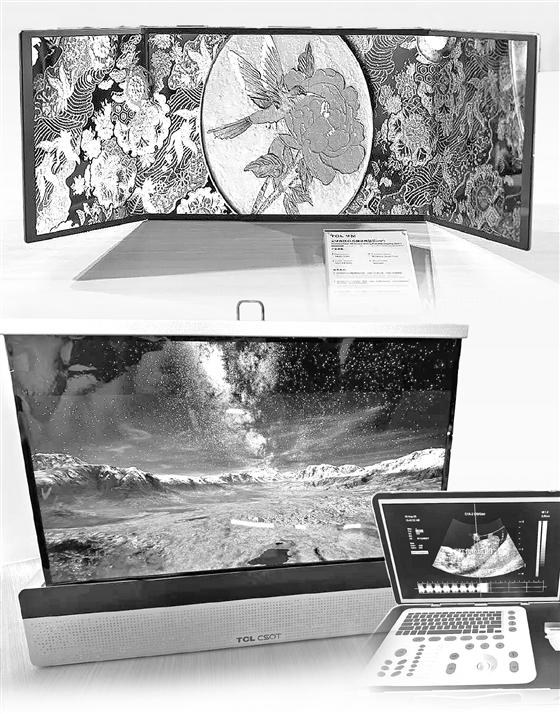
Core Viewpoint - TCL Huaxing has officially commenced the construction of its G8.6 printed OLED production line (T8 project) with a total investment of 29.5 billion yuan, aiming for a monthly capacity of 22,500 glass substrates by the end of 2027 [2][19]. Summary by Sections Project Launch and Capacity - The T8 project represents a significant investment in printed OLED technology, with a planned capacity of 22,500 pieces per month [2]. - The project is expected to achieve mass production by the end of 2027, following a structured approach to construction and production [2]. Technological Breakthroughs - TCL Huaxing has made three major breakthroughs in printed OLED technology: resolution, material performance, and yield [4][11]. - The latest products showcased at the launch event demonstrate advancements in resolution, including the world's first 2.8K R-angle printed OLED display with a resolution of 2880*1920 [7][9]. Product Innovations - The company introduced the world's first 4K foldable portable display, which features a 28-inch screen and a brightness of 400 nits [8][11]. - The printed OLED products are expected to offer a cost advantage of approximately 15% compared to existing OLED technologies, making them more accessible to consumers [14][21]. Market Trends and Future Outlook - The mid-size OLED market is projected to enter a rapid growth phase starting in 2026, with TCL Huaxing well-positioned to meet this demand through its T12 and T8 production lines [17]. - The overall OLED display market is expected to see a significant increase in shipments, with a forecasted 86% year-on-year growth by 2025 [17]. Competitive Landscape - TCL Huaxing aims to leverage its cost-performance advantage to promote the widespread adoption of OLED technology, collaborating with other industry players to expand the market [21]. - Competitors such as Samsung, BOE, and Visionox are also accelerating their G8.6 OLED production line developments, indicating a competitive environment [18][19]. Environmental and Quality Considerations - The printed OLED technology emphasizes low energy consumption and high material utilization rates, achieving a material utilization rate of 90% compared to 30% for traditional methods [16]. - The technology also focuses on reducing blue light exposure, enhancing visual comfort for users [15]. Future Developments - TCL Huaxing is not only focused on printed OLED technology but also aims to advance quantum dot electroluminescence (QD-EL) technology, which could significantly enhance display performance [23].
