反电信网络诈骗

Search documents
中信银行南昌洪都北大道支行开展“全民反诈、守好群众钱袋子”主题宣传活动
Zhong Guo Jin Rong Xin Xi Wang· 2025-11-05 03:10
Core Viewpoint - The article highlights the efforts of China CITIC Bank to educate the public on preventing telecom network fraud through various promotional activities and community engagement initiatives [1][2]. Group 1: Public Awareness Campaign - China CITIC Bank's Hongdu North Avenue branch launched a theme campaign titled "National Anti-Fraud, Protecting the Public's Wallet" in October to enhance public awareness of telecom fraud prevention [1]. - The campaign included posting posters, distributing brochures, and using electronic LED screens to display anti-fraud slogans, as well as encouraging the public to download the National Anti-Fraud Center App [1]. Group 2: Community Engagement - The bank collaborated with nearby branches to conduct outreach activities at Nanchang Bayi Sports Park, educating local residents about the "Anti-Telecom Network Fraud Law" and payment security [2]. - The campaign emphasized the importance of payment safety with the message "Do not listen, do not believe, do not transfer" [2]. - Interactive activities, such as a fun quiz on anti-fraud knowledge, were organized, with small gifts awarded to participants, resulting in positive community engagement [2]. Group 3: Ongoing Commitment - The bank plans to continue fulfilling its social responsibility by regularly conducting anti-telecom fraud awareness activities to deepen public understanding of telecom fraud risks [2].

储户质疑办张银行卡被“多重审核”,反诈与客户便利该如何平衡?
Xin Lang Cai Jing· 2025-10-18 00:13
Core Viewpoint - The balance between the convenience of banking services and the necessity of anti-fraud measures is under scrutiny, as banks face pressure from law enforcement to implement stringent account management practices while also serving customer needs [2][10]. Group 1: Customer Experience - Customers are experiencing increased difficulty in opening bank accounts due to stringent requirements for documentation, including proof of local residency and employment, which were not previously necessary [3][7]. - The limitations on account types, such as the issuance of only secondary accounts with lower transaction limits, are causing frustration among customers who require more flexibility for transactions [3][4]. - The banking staff's explanations indicate that these measures are in place to comply with anti-fraud regulations, but they also acknowledge that communication with customers may lead to misunderstandings regarding the requirements [7][8]. Group 2: Regulatory Environment - The Chinese government has reported significant financial losses due to telecom fraud, exceeding 300 billion yuan annually, prompting banks to adopt stricter measures to prevent such incidents [2][10]. - The People's Bank of China has established guidelines that categorize bank accounts into different types, each with specific transaction capabilities, which banks must adhere to when processing account applications [6]. - Banks are required to verify customer identities rigorously, and if standard identification is insufficient, additional documentation may be requested to mitigate fraud risks [6][8]. Group 3: Industry Response - Some banks have implemented automated systems to adjust transaction limits based on customer behavior, which can lead to unexpected restrictions for users [9]. - Industry experts suggest that banks should enhance their operational precision and utilize technology to minimize unnecessary restrictions while still complying with legal requirements [10][11]. - There is a call for law enforcement to avoid overstepping legal boundaries in their interactions with banks, ensuring that customer rights are protected while still addressing fraud concerns [11].
重磅!多家银行集体行动,清理长期不动账户
Mei Ri Jing Ji Xin Wen· 2025-10-17 12:22
Core Viewpoint - Multiple banks in China are initiating the cleanup of long-term inactive accounts, which is seen as a measure to enhance operational efficiency and mitigate risks associated with fraud and money laundering [2][3][13]. Group 1: Cleanup Initiatives - Xinjiang Hetian Rural Commercial Bank announced a cleanup of personal mobile banking accounts that have been inactive for four years or more [1][8]. - Hubei Yuan'an Rural Commercial Bank is also conducting a cleanup of personal bank accounts, targeting long-term inactive accounts and those with missing or expired identity information [2][4]. - Other banks, including Guizhou Development Village Bank and branches like Hohhot Bank and Xinjiang Weili Rural Commercial Bank, have issued similar announcements regarding the cleanup of inactive accounts [6][10]. Group 2: Criteria for Cleanup - The criteria for identifying long-term inactive accounts vary among banks but generally focus on low balances and a lack of active transactions [2][6]. - For instance, Industrial Bank has adjusted its criteria from accounts with a balance of 100 yuan and 180 days of inactivity to accounts with a balance of 10 yuan and 365 days of inactivity [6][7]. - The cleanup also includes accounts with multiple registrations under the same identity and those with the same phone number linked to different customers [4][11]. Group 3: Rationale Behind Cleanup - Industry experts suggest that the cleanup of long-term inactive accounts serves as a technical adjustment to improve operational efficiency and as a risk control measure against illegal activities such as telecom fraud and money laundering [3][13]. - The cleanup is also aimed at optimizing resource allocation within banks, as maintaining dormant accounts incurs costs and can lead to inefficiencies [11][13]. - The initiative aligns with regulatory guidelines aimed at preventing the misuse of dormant accounts for illicit activities [12][13]. Group 4: Consumer Impact and Recommendations - The cleanup is expected to benefit consumers by encouraging them to consolidate their financial resources and avoid unnecessary management fees associated with multiple inactive accounts [13][14]. - Banks are advised to enhance communication with customers regarding the cleanup process, particularly for vulnerable groups such as the elderly [14]. - Customers are encouraged to regularly review their accounts and take action to maintain those that are valuable, while being cautious of potential scams related to account management [14].


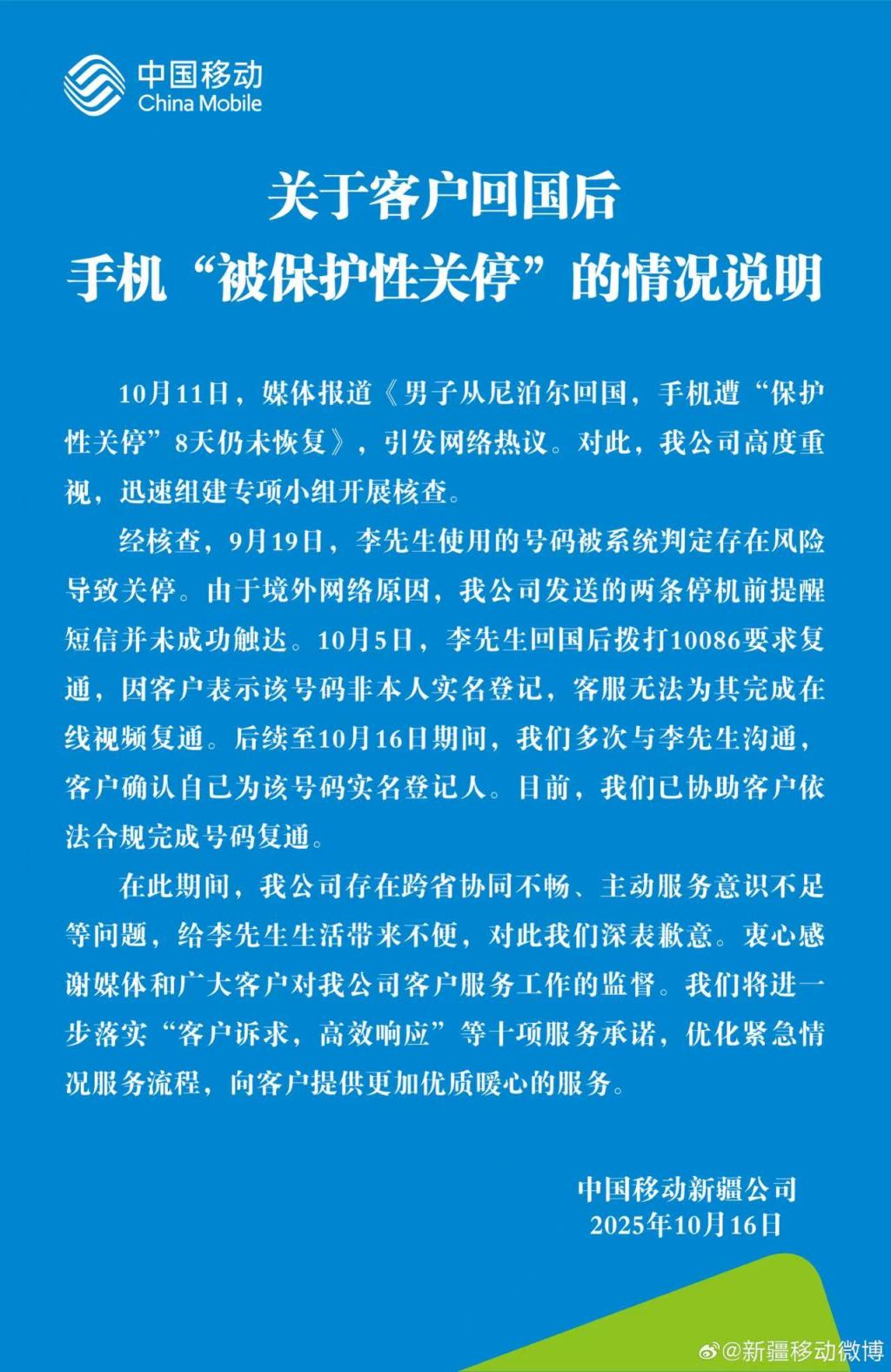
男子回国手机遭“保护性关停”,中国移动致歉:号码被系统判定存在风险,已协助客户依法合规完成号码复通
Mei Ri Jing Ji Xin Wen· 2025-10-16 09:07
Core Viewpoint - The incident involving a customer whose phone was "protectively shut down" after returning from Nepal has raised significant public concern, prompting the company to investigate and address the situation [1][2][5]. Group 1: Incident Details - On September 19, the customer's phone number was flagged as risky and subsequently shut down due to system detection [1]. - The customer, Mr. Li, experienced difficulties in restoring service upon returning to China on October 5, as he was unable to complete the necessary verification due to network issues and service availability [5][6]. - The company acknowledged shortcomings in cross-province coordination and service responsiveness during this incident, leading to customer inconvenience [1]. Group 2: Company Response - The company has formed a special team to investigate the incident and has communicated with the customer to confirm his identity as the registered user of the phone number [1]. - The company expressed gratitude for media and customer oversight and committed to improving service processes and response times to customer needs [1]. - The company reiterated its commitment to customer service by implementing ten service promises aimed at enhancing emergency response and overall service quality [1]. Group 3: Regulatory Context - The incident is linked to the enforcement of the Anti-Telecom Network Fraud Law, which mandates telecom operators to conduct re-verification of users flagged for suspicious activity [6]. - The company stated that the shutdown was a precautionary measure to protect users from potential fraud, with notifications sent prior to the action [5][6].


用户手机被保护性关停?中移动致歉:已协助客户依法合规完成号码复通
Xin Lang Cai Jing· 2025-10-16 07:58
Core Points - China Mobile responded to the incident involving a customer, Mr. Li, whose phone was "protectively shut down" upon returning from Nepal, citing risk detection as the reason for the shutdown [1][3] - The company acknowledged issues in communication and service efficiency during the incident, leading to inconvenience for the customer [1] Group 1: Incident Details - Mr. Li's phone number was flagged for risk and subsequently shut down on September 19, with the company unable to deliver warning messages due to overseas network issues [1][3] - Upon Mr. Li's return on October 5, he was unable to reactivate his number due to it not being registered in his name, despite him being the actual registrant [1] Group 2: Regulatory Context - The incident aligns with the provisions of the Anti-Telecom Network Fraud Law, which mandates telecom operators to re-verify the identity of users flagged for potential fraud [3] - Operators are required to implement differentiated verification measures based on risk levels, with the authority to restrict or suspend services for non-compliance [3] Group 3: Company Response - China Mobile expressed regret for the inconvenience caused and committed to improving customer service and response efficiency [1] - The company plans to enhance its emergency service processes and uphold ten service commitments to better serve customers in the future [1]
层层转租1068短信码号资源 6家公司成电诈“帮凶”
Mei Ri Shang Bao· 2025-10-13 22:20
Core Viewpoint - The article discusses a telecom fraud case involving the illegal rental and resale of SMS code resources, leading to significant financial losses for victims and highlighting the need for stricter regulations in the telecom industry [1][2][3] Group 1: Fraud Mechanism - Fraudsters disguised as ticket scalpers used SMS messages from a specific code (1068) to deceive victims into believing they had successfully purchased concert tickets [1] - The fraudulent messages were sent through a complex network of companies that illegally rented out the SMS code, ultimately resulting in the dispatch of 6,525 fraudulent messages [2] Group 2: Legal Proceedings - The Hangzhou Internet Court held a civil public interest lawsuit against six defendants, including various telecom companies, for their roles in facilitating the fraud by failing to comply with anti-fraud regulations [3] - The court ordered the defendants to publicly apologize and pay a total of 500,000 yuan in damages for their negligence in preventing telecom fraud [3] Group 3: Industry Implications - The case represents a significant shift in accountability, expanding the scope of responsibility to telecom operators who do not adhere to anti-fraud measures, thereby tightening the legal framework against telecom fraud [3]

浙江两部法规将于12月1日起施行
Mei Ri Shang Bao· 2025-09-29 00:35
Group 1: Anti-Telecom Fraud Measures - The Zhejiang Provincial Government has introduced the "Implementation Measures for the Anti-Telecom Network Fraud Law," which is the first local regulation in the anti-fraud field in China, aimed at curbing telecom fraud crimes that have been on the rise [2][3] - The measures include a dedicated chapter on public education to enhance awareness and ability to identify fraud, requiring innovative outreach activities tailored to specific industries, regions, and demographics [2] - Telecom operators are mandated to implement real-name registration and network security protocols, with the authority to refuse service under specific circumstances, and must provide risk warnings for international messaging and call services [2][3] Group 2: Financial Governance in Fraud Prevention - Financial institutions, including banks and non-bank payment agencies, are empowered to refuse account openings under certain conditions to prevent the transfer of fraudulent funds [3] - The measures require these institutions to classify and manage accounts based on risk levels, enhancing monitoring of suspicious transactions [3] Group 3: Emergency Medical Response Regulations - The "Zhejiang Province Pre-Hospital Medical Emergency Regulations" emphasize the public service nature of emergency medical services and mandate the establishment of emergency points that meet biological and chemical safety standards [4][5] - The regulations require 24-hour staffing at emergency centers and stations, ensuring immediate dispatch upon receiving emergency calls, and establishing a mechanism for coordinating medical treatment and transport in disaster scenarios [4][5] - There is a focus on public education regarding emergency response, with requirements for schools and organizations to incorporate first aid training into their curricula [6]
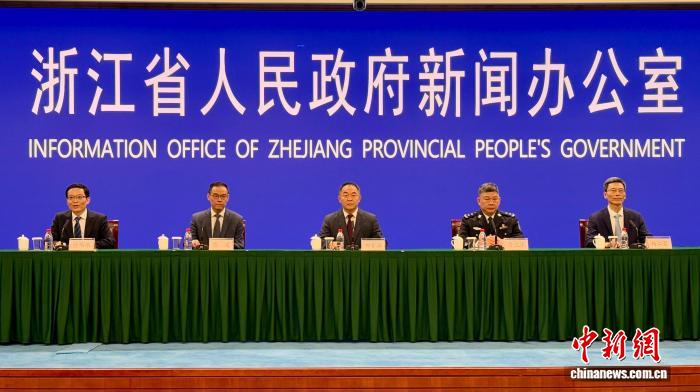
浙江查明境外诈骗窝点452个 摧毁犯罪团伙843个
Zhong Guo Xin Wen Wang· 2025-09-28 12:49
Core Points - Zhejiang Province has identified 452 overseas fraud dens and dismantled 843 criminal gangs, recovering losses of 932 million yuan for victims this year [1][3] - The local police have adopted a "zero tolerance" approach, forming 468 specialized task forces to combat telecom fraud through various strategies [1][3] - A total of 26,000 suspects have been arrested, including 40 leaders of fraud groups, and red notices have been issued for 63 fugitives [1][3] Summary by Category Crime Prevention and Control - Zhejiang police, in collaboration with various government agencies, have intercepted over 1.1 billion fraudulent messages and blocked more than 75 million fraudulent calls this year [3] - The authorities have successfully prevented losses of 5.236 billion yuan through warning and intervention measures [3] - Funds amounting to 1.476 billion yuan intended for fraudulent bank accounts have been blocked, and 2,427 money laundering suspects have been apprehended [3] Crime Statistics and Trends - There has been a year-on-year decrease in the number of telecom fraud cases, losses, and major incidents by 11.98%, 37.78%, and 65.85% respectively [3] - Despite the achievements, the trend of professionalization, industrialization, and internationalization of telecom fraud remains a significant challenge [3] Future Strategies - Zhejiang plans to enhance international law enforcement cooperation and utilize new technologies like artificial intelligence to strengthen defenses against telecom fraud [3]
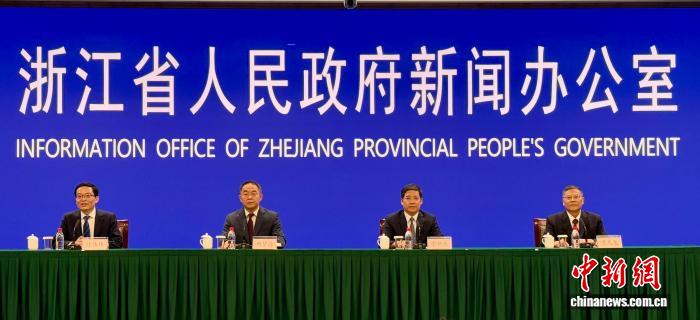
全国首部反诈领域地方性法规将于今年12月起实施
Zhong Guo Xin Wen Wang· 2025-09-28 12:36
Core Points - The first local regulation in the anti-fraud field in China will be implemented in December 2025, specifically in Zhejiang Province [1][3] - The regulation aims to address the rising issue of telecom network fraud, which has seen high incidence rates and significant financial losses [3][4] Group 1: Legislative Framework - The Zhejiang Provincial Implementation Measures for the Anti-Telecom Network Fraud Law was passed by the 14th People's Congress of Zhejiang Province and will take effect on December 1, 2025 [1][3] - The regulation is a response to the urgent need for effective measures against telecom fraud, which has been a major concern for the public [3] Group 2: Responsibilities and Collaboration - The regulation outlines responsibilities for various government bodies, including leadership from the government, police, and industry regulators in finance and telecommunications [3][4] - It emphasizes the need for collaboration among departments and the establishment of a mechanism for inter-provincial cooperation [3] Group 3: Technical Measures - The regulation mandates telecom operators to enhance monitoring and interception capabilities for fraudulent calls, with over 75 million harmful calls intercepted this year [4] - It requires the implementation of user identity verification and network security protocols by telecom and internet service providers [4][5] Group 4: Financial Sector Involvement - Financial institutions are given the authority to refuse account openings under specific circumstances to prevent the transfer of fraudulent funds [5] - The regulation calls for dynamic risk management and monitoring of suspicious transactions by banks and payment institutions [5]
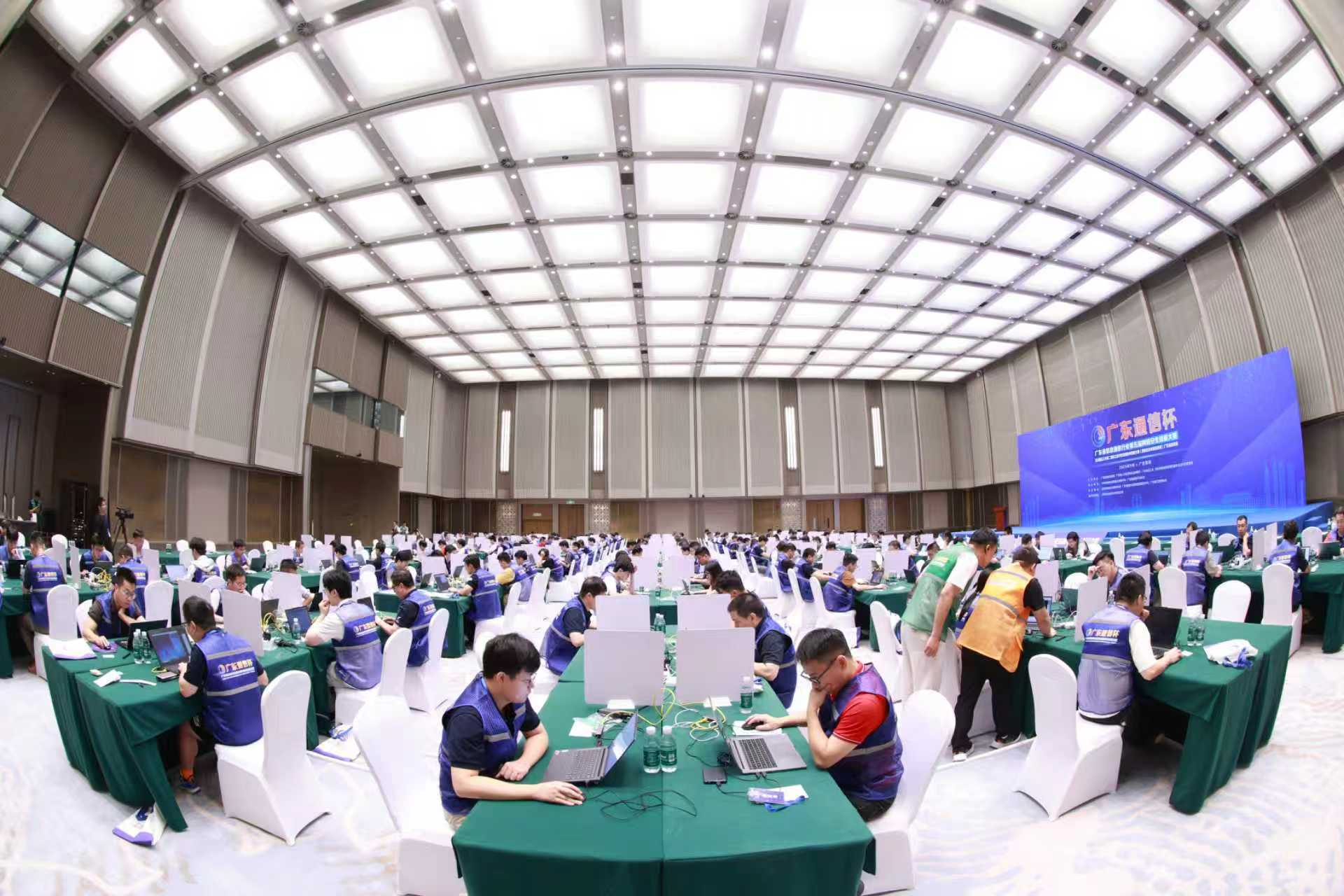
“广东通信杯”第五届网络安全技能大赛在深圳落幕
Sou Hu Cai Jing· 2025-09-07 13:15
Group 1 - The "Guangdong Communication Cup" cybersecurity skills competition concluded successfully in Shenzhen, focusing on data security and digital application technology [1][3] - The event was co-hosted by multiple government bodies and organizations, emphasizing the importance of cybersecurity in various sectors [3] - The competition featured a theme of "AI forging the network, safeguarding security," addressing current trends in cybersecurity, including AI, data security, and IoT security [3] Group 2 - A total of 185 participants competed in the individual category, while 192 individuals formed 64 teams for the team competition, showcasing a wide range of industry representation [3] - Awards were given to outstanding individuals and teams, with notable achievements from Zhongshan Unicom and Foshan Mobile, highlighting the competitive nature of the event [4] - The event also saw the establishment of new initiatives, such as the "Internet Fraud Prevention Professional Committee" and a "Network and Data Security Joint Laboratory," enhancing cybersecurity efforts in Guangdong [4]