
命运共同体

Search documents
中国—东盟合作稳步迈入提质升级新阶段
Ren Min Ri Bao· 2025-11-22 00:04
Core Points - The "2025 China-ASEAN Week" held in Fuzhou, China, focuses on the theme of "Shared Destiny: Connecting ASEAN 2045 Vision with Chinese Modernization" [1] - The event highlights the strong partnership and vibrant cooperation between China and ASEAN over the past 30 years, contributing significantly to regional peace, stability, and prosperity [1] - The event aims to address challenges posed by unilateralism and protectionism, proposing a "China-ASEAN Solution" to create a closer community of shared destiny [1] Group 1 - The opening ceremony featured the release of the "China-ASEAN Trade and Investment Cooperation Progress Report (2024-2025)" [1] - Representatives from various ASEAN countries emphasized the importance of deepening international cooperation across multiple fields [2] - The event is seen as a platform to showcase the achievements of China-ASEAN cooperation and to promote the construction of a community with a shared future [1][2] Group 2 - New initiatives such as the launch of the China-ASEAN Seafood Exchange's cross-border business and the "China-ASEAN Digital Cultural IP Library" signify a shift towards substantial cooperation [2] - There is a call to expand cooperation beyond traditional areas like trade and investment into emerging fields such as digital transformation, green economy, and technological innovation [2] - The integration of Malaysia's manufacturing capabilities with ASEAN's digital infrastructure and China's innovations in AI and high-tech is aimed at building a more resilient and integrated supply chain [2]
冰岛首现蚊子为何引关注(新知)
Ren Min Ri Bao· 2025-11-11 22:40
Group 1 - The discovery of the mosquito species Aedes vexans in Iceland indicates a significant shift in the region's climate adaptability, as it can survive in sub-zero temperatures, marking Iceland as no longer one of the last mosquito-free areas, with Antarctica now being the only remaining region without mosquitoes [1] - Climate change is contributing to longer summers and milder winters in Iceland, creating a more suitable environment for mosquito survival, which raises concerns about the potential spread of mosquito-borne diseases [1][2] - The increase in extreme weather events globally correlates with the spread of disease-carrying mosquitoes, such as Aedes albopictus, into non-tropical regions, heightening the risk of diseases like dengue and chikungunya [2] Group 2 - Global climate challenges necessitate collective action, as no country can remain unaffected by climate change, emphasizing the importance of international cooperation in addressing these issues [2][3] - China has emerged as a proactive participant in global climate governance, establishing a comprehensive policy framework for carbon neutrality and leading in renewable energy development, contributing significantly to global climate efforts [2] - The interconnectedness of global challenges, such as food and energy crises, highlights the need for collaborative solutions, as illustrated by various initiatives aimed at improving living conditions and food security in developing regions [3]
开幕式艺术总监陈维亚答南财:三地联办体现命运共同体走向新希望
2 1 Shi Ji Jing Ji Bao Dao· 2025-11-10 00:40
Group 1 - The opening ceremony of the 15th National Games was held at the Guangdong Olympic Sports Center, showcasing a theme of "simplicity, safety, and brilliance" [1] - Artistic director Chen Wei-ya highlighted the challenges of integrating artistic, sports, and cultural elements from the Guangdong-Hong Kong-Macao Greater Bay Area [1] - The joint hosting of the National Games by the three regions reflects a new era of a shared destiny and hope [1]

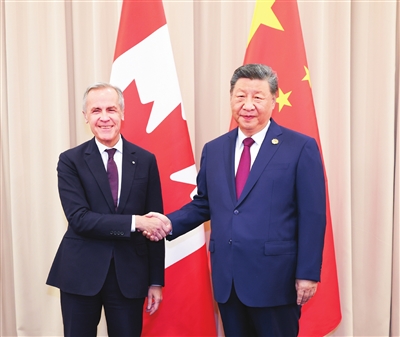
习近平分别会见加拿大总理、泰国总理、日本首相
Xin Hua She· 2025-11-01 01:03
Group 1: China-Canada Relations - President Xi Jinping emphasized the importance of restoring and improving China-Canada relations, marking the 55th anniversary of diplomatic ties and the 20th anniversary of the strategic partnership [3][4] - Both sides agreed to enhance cooperation in agriculture, energy, and climate change, aiming for mutual benefits and increased welfare for their peoples [4] - The two countries will work together to address specific economic issues and strengthen their strategic partnership [4] Group 2: China-Thailand Relations - Xi Jinping expressed condolences for the passing of Thailand's Queen Mother and highlighted the strong ties between China and Thailand, celebrating the 50th anniversary of diplomatic relations [6][7] - Both nations aim to deepen cooperation in various fields, including trade, technology, and tourism, to elevate their relationship to new heights [7] - China is willing to share its development experiences and enhance collaboration on infrastructure projects like the China-Thailand railway [7] Group 3: China-Japan Relations - Xi Jinping noted the significance of maintaining a healthy and stable relationship between China and Japan, emphasizing mutual cooperation and understanding [8][9] - The Chinese side urged Japan to adhere to historical agreements and principles to ensure a solid foundation for bilateral relations [9] - Japan expressed its commitment to maintaining high-level exchanges and enhancing cooperation in various sectors, including regional stability [10]

中欧将就稀土问题进行紧急会谈?外交部回应→
Zheng Quan Shi Bao· 2025-10-22 14:20
Group 1 - The Chinese government emphasizes the importance of free trade and opposes trade protectionism, urging the EU to provide a fair and transparent business environment for all countries [2] - China and ASEAN's trade relationship is strengthening, with a reported total import and export value of 5.57 trillion yuan in the first three quarters of the year, marking a 9.6% increase year-on-year [5] - The comprehensive strategic partnership between China and ASEAN is deepening, with plans to sign the upgraded version of the free trade agreement (FTA 3.0) within the year, enhancing regional economic integration [5][6] Group 2 - China supports Malaysia's role as the ASEAN chair and emphasizes the importance of cooperation with ASEAN countries [4] - The "China-ASEAN Year of Cultural Exchange" is actively promoting cooperation in education, youth, think tanks, and media, with significant achievements [6] - China is committed to maintaining regional peace and stability, supporting ASEAN's central role in regional frameworks, and promoting dialogue to resolve disputes in the South China Sea [6][7]
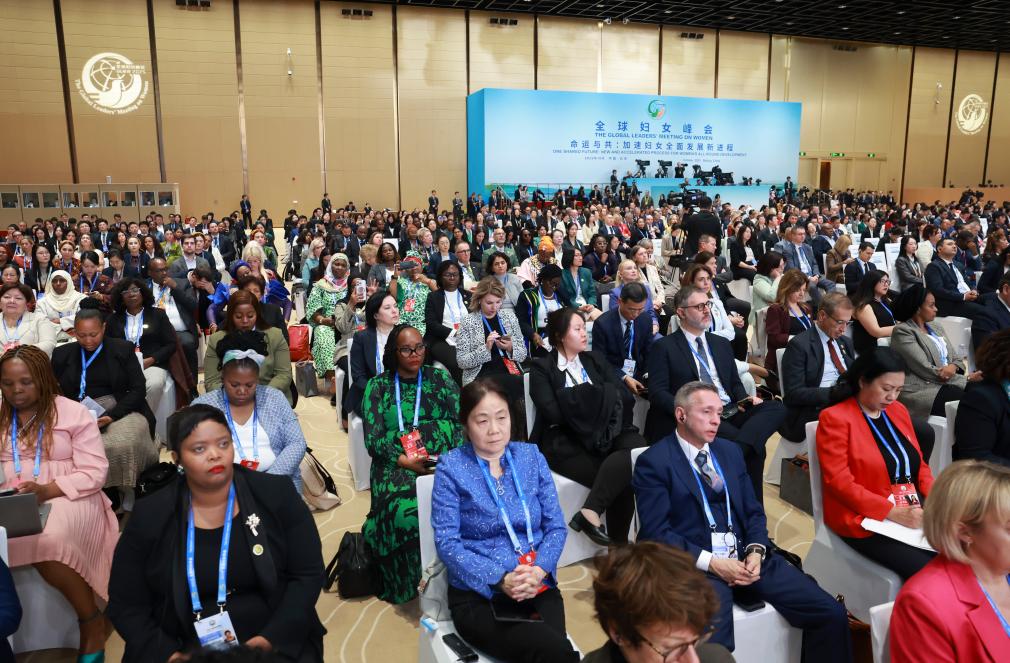
命运与共!全球妇女峰会镌刻新坐标
Xin Hua She· 2025-10-14 03:33
Core Points - The Global Women's Summit opened in Beijing on October 13, themed "Shared Destiny: Accelerating the New Process of Women's Comprehensive Development," commemorating the 30th anniversary of the Beijing World Conference on Women [1][3] - President Xi Jinping emphasized that women are vital creators, promoters, and transmitters of human civilization, and advancing women's development is a shared responsibility of the international community [1][3] Group 1: Historical Context - The summit marks a reflection on the past 30 years since the Beijing Declaration and Platform for Action, which established 12 strategic goals for women's development that have transitioned from paper to policy and practice [3][4] - The event serves as a new milestone in the history of international women's movements, reaffirming the commitment to accelerate gender equality and women's empowerment [3][4] Group 2: Global Participation - Representatives from diverse regions, including Africa, Europe, Latin America, and Asia, gathered to share experiences and express a unified commitment to advancing women's rights [4][5] - The summit highlighted the importance of collective action and responsibility in addressing ongoing challenges such as gender-based violence and the digital divide [5][8] Group 3: Future Actions - The Chinese government announced a commitment to donate $10 million to the UN Women agency and provide $100 million for global development and South-South cooperation projects focused on women's and girls' development [8] - The summit's chair statement called for a commitment to true multilateralism and action-oriented approaches to accelerate women's comprehensive development over the next five years [8]

外交部:“中泰一家亲”和命运共同体意识更加深入人心
Xin Hua Wang· 2025-09-26 10:21
Core Viewpoint - The comprehensive strategic partnership between China and Thailand is deepening under the strategic leadership of both countries' leaders, with a growing sense of "China-Thailand as one family" and a shared community of destiny [1] Group 1: Diplomatic Relations - The new Thai Prime Minister, Anutin, attended a reception celebrating the 76th anniversary of the founding of the People's Republic of China, highlighting the importance of China-Thailand relations [1] - Anutin praised China's significant development achievements and its role in global peace, stability, and prosperity, emphasizing the familial bond between Thailand and China [1] Group 2: Strategic Cooperation - This year marks the 50th anniversary of diplomatic relations between China and Thailand, referred to as the "Golden 50 Years of China-Thailand Friendship" [1] - The strategic partnership is evolving positively, with increased emphasis on cooperation and mutual benefits [1]
东西问·北京文化论坛|罗伯特·沃克:跨文化理解为什么是修复世界的黏合剂?
Zhong Guo Xin Wen Wang· 2025-09-22 12:13
Core Viewpoint - Cross-cultural understanding is essential for bridging differences and enhancing communication globally [3][6]. Group 1: Importance of Cross-Cultural Understanding - Cross-cultural understanding is crucial at both personal and national levels, as it fosters respect and comprehension among diverse cultures [6][10]. - The lack of understanding of other cultures leads to misconceptions, which can create deeper divides if not addressed [6][10]. Group 2: Personal Experience and Observations - The individual has lived in China for several years, experiencing firsthand the cultural differences and the importance of generosity and respect in Chinese society [4][5]. - The individual emphasizes the need to share authentic experiences of China to counteract distorted perceptions formed through Western media [7][12]. Group 3: Challenges to Cross-Cultural Understanding - A significant challenge is the lack of knowledge about other cultures, which can be mitigated through inquiry, listening, and empathy [9][10]. - Language differences pose a barrier, as the way language is used shapes thought processes, particularly between Chinese and English [9][10]. - The prevailing competitive worldview in the West, which divides people into "us" versus "them," hinders problem-solving and fosters isolation [10].


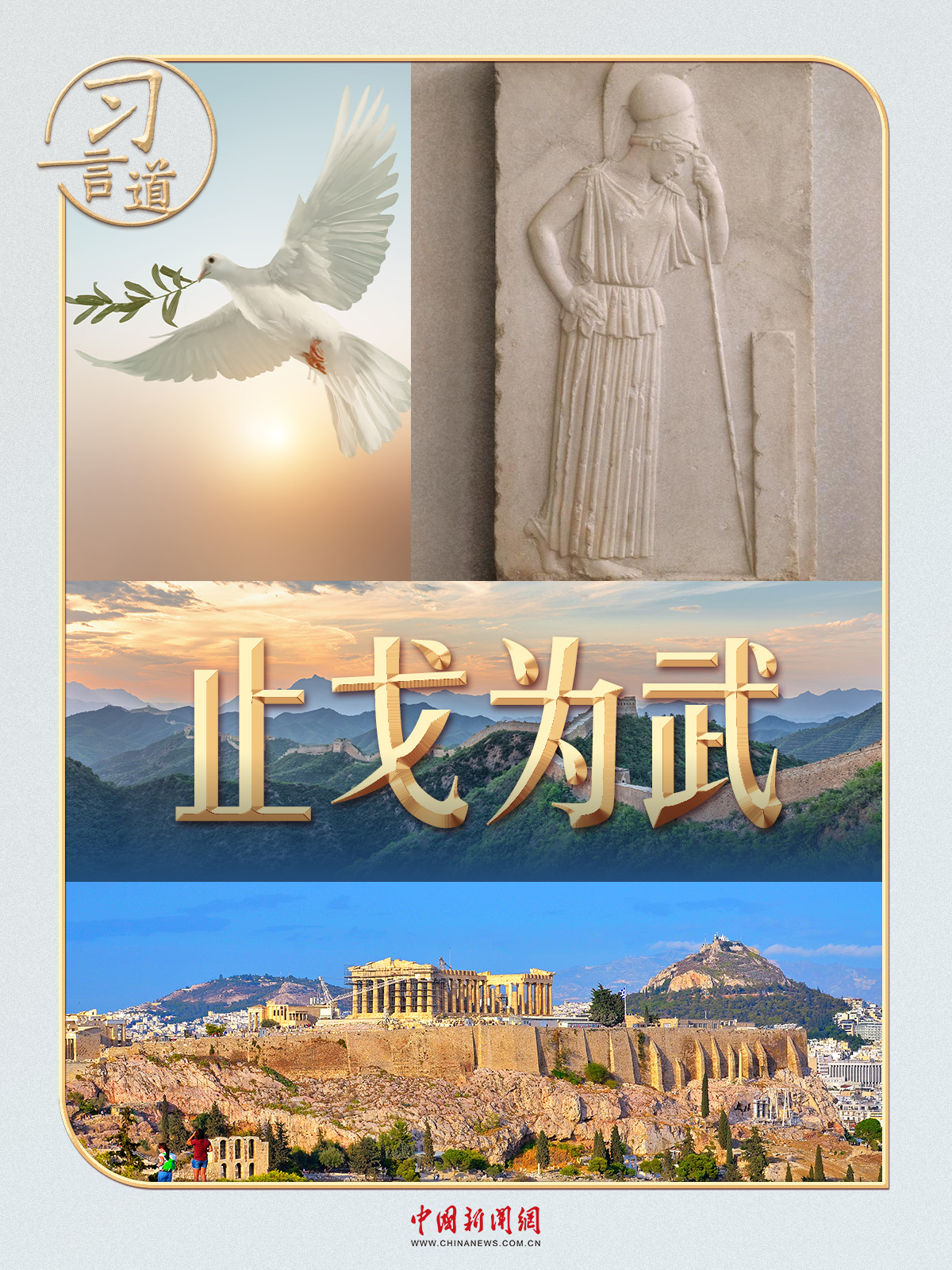
习言道丨面对“沉思的雅典娜”,习近平提到一个中国成语
Zhong Guo Xin Wen Wang· 2025-09-13 12:29
Group 1 - The article discusses Xi Jinping's emphasis on peaceful development and the importance of cultural exchange in the context of global governance and civilization [6][8][9] - Xi Jinping references the Chinese idiom "止戈为武" (stop fighting to achieve peace) to highlight China's commitment to peaceful coexistence and mutual respect among civilizations [7][8] - The article outlines China's initiatives such as the Global Development Initiative and the Global Security Initiative, aimed at promoting stability and cooperation in a turbulent world [8][9] Group 2 - Xi Jinping's remarks at various international forums reflect China's stance against the "clash of civilizations" narrative and its dedication to building a community with a shared future [8][9] - The article mentions China's role as a major trading partner for over 150 countries and its efforts in establishing international mediation institutions, showcasing its influence in global affairs [8] - The call for a more just and reasonable global governance system is reiterated, emphasizing the need for equality and cooperation among nations to ensure lasting peace and development [9]
“推动上合组织构建命运共同体的关键一步”
Ren Min Ri Bao· 2025-09-06 21:54
Group 1 - The core viewpoint of the article emphasizes that the Shanghai Cooperation Organization (SCO) promotes equal, mutually beneficial, and sustainable cooperation without political preconditions or coercion [1][2] - The SCO has evolved from a regional security cooperation initiative to a significant international organization over its 24 years, with member countries representing nearly half of the global population, enhancing its international influence [1] - The organization focuses on sustainable development through equal cooperation and consensus among member states, avoiding military alliances against any third party, and consistently pursuing peaceful development [1] Group 2 - The SCO has improved its decision-making mechanisms, innovative cooperation forms, and institutional construction, making it more flexible and dynamically adaptable to challenges, which lays a solid foundation for its long-term development [2] - The relationship between China and Uzbekistan, as founding members of the SCO, injects strong momentum into the organization's development, with both countries' relations elevated to a comprehensive strategic partnership [2] - Both China and Uzbekistan advocate for peaceful development and dialogue to resolve major regional and global issues, contributing positively to regional peace and prosperity while promoting a more just and reasonable international order [2]