
商业航天发展

Search documents
12个重点行业划定稳增长路线图
Da Zhong Ri Bao· 2026-01-03 01:15
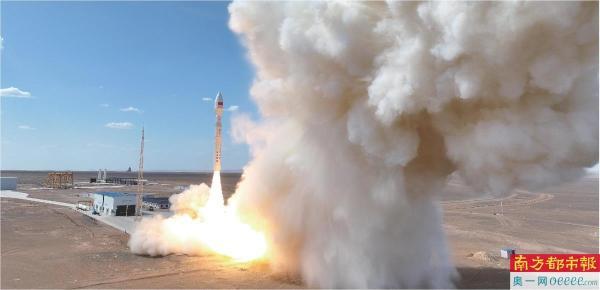
Group 1 - The core focus of the news is the release of a policy list aimed at stabilizing and enhancing the growth of 12 key industries in Shandong, which collectively account for approximately 67% of the province's industrial output and 75% of its manufacturing output [2][3] - The 12 identified industries include steel, non-ferrous metals, chemicals, automotive, and textiles, which are characterized by their large scale, strong driving force, and high interconnectivity [2][3] - Specific quantitative growth targets have been set for these industries by 2026, such as a 4% increase in the steel industry's added value, production of 1.2 million new energy vehicles, and revenue exceeding 850 billion yuan for the electronic information manufacturing sector [3] Group 2 - The policy list includes measures to support the commercial aerospace sector, such as subsidies for rocket and satellite companies utilizing offshore launch platforms, with a maximum subsidy of 3 million yuan per project [4] - The initiative aims to foster innovation and industry growth by providing financial support for companies with core technological competitiveness and strong service capabilities in the commercial aerospace field [4] - The government plans to enhance the green transformation of the construction industry by promoting the use of green building materials through government procurement, with a target of at least 40% application of green materials in star-rated green building projects [5] Group 3 - The Shandong government is committed to improving the support mechanisms for private enterprises, including establishing a comprehensive solution mechanism for enterprise demands and enhancing the "Ru Hui Tong" policy implementation platform [6][7] - The focus will be on addressing common issues faced by enterprises and ensuring that beneficial policies are easily accessible and quickly implemented [7]
海南:抢抓商业航天发展战略机遇期,狠抓重大牵引性项目建设
Xin Lang Cai Jing· 2025-12-30 16:01
Core Viewpoint - The meeting emphasized the critical importance of the Hainan commercial space launch site for supporting the construction of a strong space power, aiming to seize strategic opportunities in commercial space development and enhance its position in the national and global commercial space sectors [2]. Group 1 - The successful construction and reliable operation of the Hainan commercial space launch site are deemed essential for the development of China's space capabilities [2]. - The meeting called for a proactive approach to capitalize on the strategic opportunities in commercial space, focusing on major projects to expand the initial advantages in the sector [2]. - There is a strong emphasis on meticulous planning and high standards for each launch mission, with a commitment to the principle of "first launch, first time" [2]. Group 2 - The meeting highlighted the need for robust support for project construction, including effective coordination to address challenges during the development process [2]. - It was stressed that the commercial space industry should enhance its supply chain, improve the quality of space tourism products and services, and ensure talent support and a favorable business environment [2]. - A commitment to safety and regulatory oversight was reiterated, with plans to establish a long-term regulatory mechanism to ensure integrity and quality in all engineering projects within the commercial space sector [2].

“文昌航天产投指数”首次发布
Hai Nan Ri Bao· 2025-12-23 04:11
Core Insights - The 2025 Wenchang International Aerospace Forum opened with the theme "Exploring New Industrial Models, Empowering the New Aerospace Economy," gathering nearly 500 participants from various sectors to discuss new paths for commercial aerospace development and opportunities in Hainan's free trade port [2] Group 1: Forum Highlights - The Wenchang International Aerospace City has integrated deeply into national strategies, achieving "nine launches, nine successes" in commercial launches, and establishing an innovative model of "factory-to-launch, return-to-reuse" [2] - The forum resulted in multiple agreements, including the unveiling of the Asia-Pacific Space Hainan International Practice Training Center and strategic cooperation agreements with various institutions and companies [2][3] - The "Wenchang Aerospace Investment Index" was launched, serving as the first comprehensive evaluation tool for regional commercial aerospace investment ecosystems, providing scientific basis for investment decisions and industrial attraction [3] Group 2: Future Directions - Wenchang will focus on four key areas: flight-based launch and recovery cycles, satellite application ecosystems, integration of aerospace tourism, and internationalization of satellite data [2] - Beijing Weihan Technology Co., Ltd. plans to invest 300 million yuan to establish a satellite structural thermal control component production line in Hainan, leveraging the region's unique advantages as a new high ground for reform and opening up [3] - The forum included various parallel sessions covering topics such as remote sensing satellite data and applications, technological and industrial innovation in the free trade port, and high-quality development of aerospace tourism [4]
广联航空:公司将继续把握商业航天发展机遇
Zheng Quan Ri Bao Wang· 2025-12-18 10:43
Group 1 - The company will continue to seize opportunities in the commercial aerospace development sector [1] - The company is actively seeking collaboration opportunities with outstanding enterprises in the industry [1] - The company aims to prudently assess various collaboration possibilities to achieve business synergy [1]

商业航天专家交流系列电话会
2025-12-04 15:36
Summary of the Conference Call on China's Commercial Space Industry Industry Overview - The conference call focused on the challenges and developments in China's commercial space industry, highlighting the high costs and technological hurdles faced by companies in this sector [1][5][17]. Key Points and Arguments Cost and Technology Challenges - The cost of launching satellites exceeds 100,000 RMB per kilogram, with a 700-kilogram satellite priced around 40 million RMB [1][5]. - Rapid technological iterations hinder mass production capabilities, which is essential for the industry's growth [1][5]. Major Projects and Their Status - **Xingwang Project**: Aims to deploy between 1,800 to 3,600 basic satellites by 2035, with over 30,000 satellites planned overall [1][4]. Currently in the experimental phase, it is expected to launch around 200 satellites annually until 2027, when production may increase significantly [2][3]. - **Yuanshin Project**: Plans to deploy 1,296 basic satellites by 2027, with a total of approximately 15,000 satellites. However, progress is slow due to reliance on a single supplier and insufficient launch capacity, resulting in only 108 satellites launched in 2025 [1][4][2]. - **Gesi Company**: Has new tender plans but has faced execution issues, with only partial completion of contracts for 108 satellites. Future tenders may include an additional 108 or 256 satellites [1][7]. Rocket Developments - The successful launch of the Zhuque 3 rocket is seen as a positive development for commercial space, although its technical stability needs further validation. It is anticipated that orders may come in 2026, but mass production will take an additional two to three years [8][9]. Future Launch Plans - The overall launch volume for 2026 is expected to remain low, primarily focused on experimental and verification tasks. A significant increase in launch capacity is projected for 2027 and beyond, contingent on the performance of large-capacity rockets [2][10]. Competition and Market Dynamics - Yuanshin and Xingwang are competitors but serve different strategic needs: Xingwang focuses on national strategic tasks, while Yuanshin targets commercial operations [11]. Both are currently in the foundational stage, making it difficult to assess their economic benefits [11]. Additional Important Insights - The average lifespan of commercial satellites is typically 3-5 years, with national projects like Xingwang designed for 7 years but often replaced within 5-7 years to keep up with technological advancements [13][14]. - The cost structure of satellite manufacturing reveals that payloads account for over 50% of costs, with significant portions allocated to components like antennas and processors [12][20]. - Challenges in China's space industry include a lack of standardized industrial practices, reliance on outdated supply chains, and a shortage of skilled personnel for satellite design and manufacturing [17][19]. Conclusion - The commercial space industry in China is at a critical juncture, facing significant challenges in cost, technology, and operational execution. Future growth will depend on overcoming these hurdles and successfully implementing large-scale satellite deployment plans.
就在今天|国泰海通次世代新能源沙龙-上海站
国泰海通证券研究· 2025-11-27 22:22
Group 1 - The article discusses the future outlook of various sectors, including commercial space, smart electric vehicles, and nuclear fusion, highlighting investment opportunities in these areas [3][4]. - It emphasizes the acceleration of China's commercial space development and its implications for the industry [4]. - The article provides insights into the expected growth of the global smart electric vehicle market by 2026, indicating significant investment potential [3][4]. Group 2 - The article outlines the 2026 outlook for the domestic and international large-scale energy storage industry, suggesting a growing market [4]. - It mentions the importance of nuclear fusion as a potential investment opportunity, reflecting ongoing advancements in this field [3][4]. - The event features discussions from industry leaders, providing a platform for investors to engage and explore these emerging sectors [3].



粤企造卫星应用终端 最高奖1500万
Nan Fang Du Shi Bao· 2025-08-19 23:09
Group 1 - The Guangdong government has released a set of 21 specific measures to support the high-quality development of commercial aerospace from 2025 to 2028, focusing on various aspects such as infrastructure, innovation, and market development [2][3][4] - The measures include support for satellite constellation construction, providing a "green channel" for project approval and ensuring frequency resource coordination for commercial satellite operations [3] - Financial support is offered for the construction of ground station networks, with a 10% funding support based on total investment, capped at 2 million yuan per station and 10 million yuan per enterprise annually [3] Group 2 - The initiative emphasizes enhancing independent innovation capabilities by encouraging enterprises to focus on key technologies such as reusable liquid rocket engines and low-cost satellites, with funding support for related projects [4] - There is a plan to implement a tiered cultivation program for commercial aerospace enterprises, including tax incentives and rewards for qualifying high-tech and specialized enterprises [4]
重磅!广东发布21条措施支持商业航天发展
Nan Fang Du Shi Bao· 2025-08-19 09:16
Core Viewpoint - Guangdong Province has released a set of 21 specific policy measures aimed at promoting the high-quality development of the commercial aerospace industry from 2025 to 2028, focusing on infrastructure, innovation, market cultivation, and financing mechanisms [1][3]. Group 1: Infrastructure Development - Support for satellite constellation construction, including a "green channel" for project approval and coordination of satellite frequency resources [1][4]. - Financial support for ground station network construction, with a 10% funding support based on total investment, capped at 2 million yuan per station and 10 million yuan per enterprise annually [1][4]. Group 2: Innovation Enhancement - Encouragement for enterprises to focus on key technologies such as reusable liquid rocket engines and low-cost satellites, with provincial funding support of up to 50% for qualifying projects [2][4]. - Implementation of a tax deduction policy for R&D expenditures, allowing 100% pre-tax deductions [2][4]. Group 3: Market Cultivation - Implementation of a tiered cultivation plan for enterprises, supporting applications for national high-tech enterprise status and tax reduction policies [2][7]. - Financial rewards for enterprises recognized as national manufacturing champions or specialized "little giants" [2][7]. Group 4: Financing Mechanisms - Increased financial support for major commercial aerospace projects, including the use of long-term special bonds and local government bonds [9][10]. - Establishment of specialized funds to support cutting-edge aerospace technology and major project development [9][10]. Group 5: Talent Support - Recruitment of leading talents in the commercial aerospace sector, with support for high-level talents to enjoy local resident benefits [10][11]. - Promotion of applied talent training through partnerships between enterprises and educational institutions, including the establishment of training bases [10][11].

我国商业航天将迎来高密度发射期
Ren Min Ri Bao· 2025-05-03 21:31
Core Insights - Since the 18th National Congress of the Communist Party, China's commercial aerospace development has accelerated significantly, driven by strong policy guidance and a surge of social capital investment [1] - The construction of the Hainan commercial aerospace launch site exemplifies this growth, with the first phase completed in just 878 days, marking a successful inaugural launch and filling a gap in China's commercial launch capabilities [1] - The next 3 to 5 years are expected to see a high-density launch period, necessitating enhanced support capabilities for launch sites, with plans to complete the second phase of the Hainan launch site within 18 months, aiming for over 60 launches annually by the end of 2026 [1] - The commercial aerospace sector is market-oriented and profit-driven, requiring collaborative support across various elements, including a favorable policy environment, optimized land supply, improved financing conditions, and diversified investment entities [1] - The industry is encouraged to explore new models and mechanisms for commercial launch, expand into international markets, and foster sustainable development through collaboration between traditional and commercial aerospace sectors [1] Industry Outlook - The global aerospace industry is entering a transformative phase, with an estimated total scale of $1.8 trillion by 2035, positioning China's commercial aerospace as a key player in this trillion-dollar blue ocean market [2]