
工业稳增长

Search documents
做强“头号工程”,在“两个发力”中求突破
Sou Hu Cai Jing· 2026-02-27 01:54
Core Viewpoint - The article emphasizes the importance of stabilizing growth and improving quality in the industrial economy of Shandong, highlighting the need for a dual focus on these aspects to achieve high-quality development [1][3]. Group 1: Industrial Growth and Quality Improvement - Shandong aims for a 7.6% growth in industrial added value by 2025, exceeding the national average by 1.7 percentage points, with an average annual growth rate of 7.5% during the 14th Five-Year Plan, also higher than the national average [3]. - High-tech industries now account for 55.7% of industrial output, a 10.6 percentage point increase over five years, while the digital economy's share of GDP has surpassed 50%, increasing by 9 percentage points [3]. - The province has established 19 key industrial chains that encompass over 90% of large-scale industrial enterprises, with 148 companies achieving over 10 billion yuan in total output value [3][6]. Group 2: Challenges and Strategic Responses - The industrial economy faces challenges such as being "large but not strong," with significant tasks in industrial transformation and insufficient collaboration across supply chains [3][6]. - To address these issues, Shandong will implement targeted measures, including project support for key industries like steel and petrochemicals, and a focus on monitoring and early intervention for potential risks [6][10]. - The province plans to enhance traditional industries through technological upgrades and to foster emerging sectors like robotics, new energy vehicles, and commercial aerospace [8][10]. Group 3: Innovation and Ecosystem Development - Emphasis is placed on technological innovation as a driver for industrial upgrades, with initiatives to increase high-quality technological supply and facilitate the conversion of scientific achievements into marketable products [10]. - A "chain leader" mechanism will be established to strengthen the resilience and safety of industrial chains, integrating resources such as technology, talent, and finance [10]. - The strategy includes fostering leading enterprises to stimulate growth in upstream and downstream businesses, enhancing support services for companies facing challenges in R&D and market expansion [10].

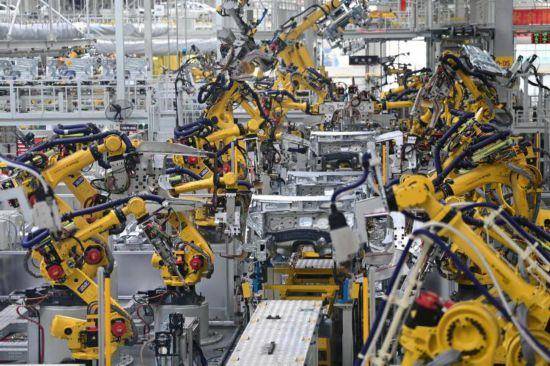
事关工业稳增长,工信部部长发声,信息量很大
Xin Lang Cai Jing· 2026-01-12 03:47
Core Viewpoint - The Chinese Ministry of Industry and Information Technology emphasizes the importance of stabilizing industrial growth, promoting technological innovation, and integrating industry and technology to support economic development [1][2][3] Group 1: Industrial Growth Strategies - The Ministry will focus on four key areas: "stabilize," "expand," "create," and "increase" to ensure industrial growth [2][3] - "Stabilize" involves maintaining growth in key industries and regions, which account for 80% of total industrial output [2][3] - "Expand" aims to enhance effective demand by promoting flexible manufacturing and accelerating the application of new technologies like artificial intelligence [2][3] - "Create" focuses on value creation and quality improvement through the revitalization of traditional industries and the development of emerging industries [2][3] Group 2: Support for Enterprises - The Ministry plans to enhance the vitality of business entities by improving cash flow for small and medium-sized enterprises and addressing overdue payments [3][8] - A national industrial and information technology conference highlighted the need to consolidate the positive trend in industrial growth and support major industrial provinces [3][8] Group 3: Future Industrial Development - Economic experts predict that new production capabilities and policy tools will support industrial production in 2026, despite challenges from weak demand in investment, consumption, and exports [3][9] - Specific provincial goals for 2026 include a target of approximately 6.5% growth in industrial output for Anhui and around 6% for Zhejiang, with a focus on digital economy and manufacturing investment [9][10]
山东:12个重点行业划定稳增长路线图
Xin Hua Wang· 2026-01-03 02:49
Core Viewpoint - The "2026 Policy List" aims to stabilize and enhance the industrial economy in Shandong Province, focusing on 12 key industries that are crucial for economic growth and structural optimization [1][2]. Group 1: Key Industries and Economic Impact - The 12 targeted industries, including steel, non-ferrous metals, chemicals, automotive, and textiles, collectively generate approximately 7.8 trillion yuan, accounting for about 67% of the province's industrial output and 75% of manufacturing output [1]. - Maintaining stability in these key industries is essential for the overall industrial economy of Shandong [1]. Group 2: Growth Targets and Structural Optimization - Specific quantitative growth targets have been set for various sectors by 2026, such as a 4% increase in steel industry value-added, production of 1.2 million new energy vehicles, and over 850 billion yuan in revenue for the electronic information manufacturing sector [2]. - The policy emphasizes both growth and structural improvement, with a focus on enhancing technological capabilities and optimizing product structures [2]. Group 3: Support for Aerospace Industry - The policy includes measures to support the aerospace industry, such as subsidies for commercial rocket and satellite companies, with a maximum subsidy of 3 million yuan per project [3]. - These initiatives aim to reduce launch costs and foster innovation within the aerospace sector, contributing to the industry's overall growth [3]. Group 4: Green Building Initiatives - The policy promotes green building practices through government procurement, aiming to establish a long-term mechanism for supporting green building materials [4]. - New urban construction projects funded by government or state-owned investments are required to use green materials, with a target of at least 40% application in star-rated green building projects [4]. Group 5: Support for Private Enterprises - The policy outlines a comprehensive mechanism to address the needs of enterprises, ensuring a streamlined process for resolving issues and enhancing resource allocation [5]. - Continuous optimization of the "Ru Hui Tong" policy implementation platform is planned to facilitate quicker access to benefits for enterprises [5].
山东12个重点行业划定稳增长路线图
Sou Hu Cai Jing· 2026-01-03 01:50
Group 1 - The core viewpoint of the news is that the "2026 Policy List" aims to stabilize and enhance the industrial economy in Shandong Province by focusing on 12 key industries, which collectively account for approximately 67% of the province's industrial output and 75% of its manufacturing output [1][2] - The policy outlines specific quantitative growth targets for various industries by 2026, including a 4% increase in steel industry value added, production of 1.2 million new energy vehicles, and revenue exceeding 850 billion yuan in the electronic information manufacturing sector [2] - The policy emphasizes the importance of improving technological equipment levels and optimizing product structures, with a goal for high-end chemicals to represent over 60% of the province's chemical industry [2] Group 2 - The policy includes targeted measures to support the aerospace industry, such as subsidies for commercial rocket and satellite companies, with a maximum subsidy of 3 million yuan per project for launch insurance [3] - The initiative aims to foster a robust aerospace industry in Shandong by selecting companies with strong core technology and providing financial support for technology research and production line upgrades [3] - The promotion of green building materials through government procurement is highlighted as a strategy to enhance building quality and encourage green transformation in the construction industry [4] Group 3 - The government plans to implement a comprehensive mechanism to address enterprise demands, ensuring a streamlined process for resolving issues faced by businesses [5] - The initiative includes a structured approach to resource allocation and policy measures aimed at addressing common challenges reported by enterprises [5] - The "Ru Hui Tong" policy platform will be optimized to facilitate quicker access to benefits for enterprises, ensuring that policies are effectively communicated and implemented [5]
12个重点行业划定稳增长路线图
Da Zhong Ri Bao· 2026-01-03 01:15
Group 1 - The core focus of the news is the release of a policy list aimed at stabilizing and enhancing the growth of 12 key industries in Shandong, which collectively account for approximately 67% of the province's industrial output and 75% of its manufacturing output [2][3] - The 12 identified industries include steel, non-ferrous metals, chemicals, automotive, and textiles, which are characterized by their large scale, strong driving force, and high interconnectivity [2][3] - Specific quantitative growth targets have been set for these industries by 2026, such as a 4% increase in the steel industry's added value, production of 1.2 million new energy vehicles, and revenue exceeding 850 billion yuan for the electronic information manufacturing sector [3] Group 2 - The policy list includes measures to support the commercial aerospace sector, such as subsidies for rocket and satellite companies utilizing offshore launch platforms, with a maximum subsidy of 3 million yuan per project [4] - The initiative aims to foster innovation and industry growth by providing financial support for companies with core technological competitiveness and strong service capabilities in the commercial aerospace field [4] - The government plans to enhance the green transformation of the construction industry by promoting the use of green building materials through government procurement, with a target of at least 40% application of green materials in star-rated green building projects [5] Group 3 - The Shandong government is committed to improving the support mechanisms for private enterprises, including establishing a comprehensive solution mechanism for enterprise demands and enhancing the "Ru Hui Tong" policy implementation platform [6][7] - The focus will be on addressing common issues faced by enterprises and ensuring that beneficial policies are easily accessible and quickly implemented [7]
2025年12月PMI数据解读:12月PMI:工业稳增长开启开门红
ZHESHANG SECURITIES· 2025-12-31 08:07
Group 1: PMI and Economic Activity - The manufacturing Purchasing Managers' Index (PMI) for December is 50.1%, an increase of 0.9 percentage points from the previous month, indicating a return to the expansion zone[1] - The production index for December is 51.7%, up 1.7 percentage points from last month, signaling accelerated manufacturing activity[2] - The composite PMI output index is 50.7%, reflecting overall economic activity improvement compared to the previous month[7] Group 2: Demand and Orders - The new orders index for December is 50.8%, rising 1.6 percentage points, indicating improved market demand in manufacturing[3] - The production expectation index for manufacturing is 55.5%, up 2.4 percentage points, showing increased confidence among manufacturers regarding market development[2] - The new export orders index is 49%, an increase of 1.4 percentage points, suggesting stable development in manufacturing exports[3] Group 3: Price Trends - The purchasing price index for raw materials is 53.1%, down 0.5 percentage points, indicating a slowdown in price increases for raw materials[4] - The factory price index is 48.9%, up 0.7 percentage points, marking a second consecutive month of increase in finished product prices[4] - Price trends are diverging, with high-energy-consuming industries experiencing a decline in purchasing prices, while equipment and high-tech manufacturing maintain a faster price increase[4] Group 4: Non-Manufacturing Sector - The non-manufacturing business activity index is 50.2%, up 0.7 percentage points, indicating improvement in the non-manufacturing sector[7] - The construction industry business activity index is 52.8%, an increase of 3.2 percentage points, reflecting a return to expansion in the construction sector[7]
2025年10月宏观数据解读:10月经济:经济内生动能仍偏弱
ZHESHANG SECURITIES· 2025-11-14 12:35
Economic Overview - October economic data shows a continued weakening trend, with industrial added value growing by 4.9% year-on-year, slightly below market expectations[1] - Retail sales in October increased by 2.9% year-on-year, down 0.1 percentage points from the previous month, marking five consecutive months of decline[4] - Fixed asset investment from January to October decreased by 1.7% year-on-year, with October showing a significant drop of 12.2%[7] Production Insights - The industrial production index for October reflects a 4.9% year-on-year growth, with a month-on-month increase of 0.17%[3] - New growth drivers are emerging, particularly in high-tech manufacturing, which grew by 7.2%, outpacing overall industrial growth[16] - Service sector production index rose by 4.6% year-on-year, although this was impacted by last year's high base[17] Consumption Trends - The consumption of automobiles, home appliances, and furniture has significantly weakened, contrasting with the resilience seen in communication equipment[4] - Jewelry retail sales showed strong growth at 37.6% year-on-year, driven by asset allocation and recovery in wedding-related spending[21] - The "old-for-new" policy's effectiveness is diminishing, leading to anticipated pressure on retail sales in the fourth quarter[20] Investment Dynamics - Manufacturing investment saw a year-on-year decline of 6.7% in October, with a cumulative growth of only 2.7% from January to October[37] - Infrastructure investment remains weak, with a year-on-year decrease of 12.1% in October, continuing a downward trend[45] - The real estate sector experienced a significant decline, with investment down 14.7% year-on-year from January to October[31] Employment and Policy Outlook - The urban unemployment rate in October was reported at 5.1%, showing a slight decrease, indicating some stabilization in the job market[8] - The government maintains a cautious stance on large-scale stimulus policies, focusing instead on structural optimization and supply upgrades[23] - Future investment confidence may improve following recent diplomatic engagements and the introduction of new financial tools to support infrastructure projects[32]
10月经济前瞻:渐行渐缓,蓄势明年
Hua Xia Shi Bao· 2025-11-07 05:54
Group 1: Industrial Production and Economic Trends - Industrial production showed signs of slowdown in October, with expected year-on-year growth of 5.3% for industrial added value [2] - Manufacturing demand has weakened due to pre-holiday demand release and international trade uncertainties, with the new orders index dropping to 48.8% [3] - The service sector experienced an increase in activity, with the business activity index rising to 50.2%, driven by holiday-related consumption [3] Group 2: Consumer Retail and Spending - Social retail sales are projected to grow by 2.8% year-on-year in October, a slight decline from the previous 3% [4] - The effectiveness of the trade-in policy for consumer goods has diminished, compounded by reduced fiscal support, leading to pressure on retail sales [5] - The restaurant and alcohol retail sectors are expected to remain under pressure due to regulatory measures affecting public spending [5] Group 3: Investment Trends - Fixed asset investment is anticipated to decline by 0.9% year-on-year from January to October, with manufacturing investment growth at 4.0% and real estate investment down by 14.1% [7] - Manufacturing investment is expected to improve slowly, with recent developments in US-China trade negotiations potentially boosting investor confidence [8] - Infrastructure investment is projected to stabilize, with new policy financial tools fully deployed, indicating a potential recovery in construction activity [12] Group 4: Export and Trade Dynamics - October export growth is expected to be 3.2%, with imports at 1.6%, reflecting a shift towards non-US markets [17] - China's share in non-US markets has increased, with significant growth in exports to Africa and Latin America [18] - The trade cycle between investment and exports to non-US countries is strengthening, particularly in manufacturing sectors [19] Group 5: Price Trends and Inflation - Consumer price index (CPI) is expected to show a slight increase to 0.1% year-on-year, while producer price index (PPI) is projected to decline by 2.6% [20] - Pork prices remain weak, contributing to overall low inflationary pressures, while oil prices are also under pressure due to global supply dynamics [21][22] - Core CPI is anticipated to maintain a recovery trend, supported by holiday consumption and promotional activities [22] Group 6: Employment and Labor Market - The urban unemployment rate is expected to stabilize at 5.1%, with ongoing government efforts to support job creation for graduates [24] - Employment policies are focused on stabilizing job opportunities, particularly for vulnerable groups such as migrant workers [24][25] Group 7: Financial Data and Monetary Policy - Social financing is projected to increase by 750 billion, with a decline in new loans expected at 1 trillion [26][27] - The M2 money supply growth is anticipated to decrease to 8.1%, reflecting weak demand for credit and a shift towards non-bank financial products [28] - Future monetary policy is expected to balance financial stability with support for the real economy, with a focus on gradual adjustments rather than aggressive tightening [29]

2025年9月宏观数据解读:9月经济:增速放缓但目标无忧
ZHESHANG SECURITIES· 2025-10-20 11:46
Economic Growth - Q3 GDP growth rate was 4.8%, down from 5.2% in the previous quarter, with nominal GDP growth at 3.7% compared to 3.9%[1] - The contribution of final consumption, gross capital formation, and net exports to GDP growth was 56.6%, 18.9%, and 24.5% respectively[14] - Q4 economic growth is expected to slightly decline to 4.7%, but achieving the annual growth target of around 5% is considered feasible[15] Industrial Production - In September, industrial added value increased by 6.5% year-on-year, exceeding market expectations, with a month-on-month growth of 0.64%[3] - The capacity utilization rate for industrial enterprises was 74.6% in Q3, up 0.6 percentage points from Q2[21] - High-tech manufacturing added value grew by 9.6% year-on-year, contributing 24.7% to overall industrial growth[20] Consumer Spending - Retail sales of consumer goods in September grew by 3%, down from 3.4% in the previous month, marking the fourth consecutive month of decline[4] - The "trade-in" policy supported certain categories, but overall consumer spending is expected to remain under pressure in Q4 due to reduced fiscal support[32] - The restaurant sector saw a weak performance, with dining revenue growing only 0.9% year-on-year[33] Investment Trends - From January to September, fixed asset investment (excluding rural households) decreased by 0.5%, marking the first negative cumulative data since August 2020[7] - Real estate development investment fell by 13.9%, while manufacturing investment grew by 4.0%[43] - Infrastructure investment in the electricity, heat, and water production and supply sector increased by 15.3% year-on-year, contributing 1.1 percentage points to overall investment growth[42] Employment and Policy - The urban surveyed unemployment rate in September was 5.2%, showing a slight decline, aided by policies supporting employment for college graduates[8] - The government is gradually prioritizing expanding domestic demand and consumption, indicating a shift towards counter-cyclical measures[34]
节前补库进入尾声,黑色整体减仓调整
Zhong Tai Qi Huo· 2025-09-28 12:14
1. Report Industry Investment Rating No relevant content provided. 2. Core Views of the Report - From a policy perspective, after the Politburo meeting at the end of July, the "anti - involution" policy cooled down, and it is currently in the policy - making stage. Pay attention to the spirit of the Fourth Plenary Session of the 20th Central Committee in October. It is expected that the policy will have a neutral impact on the market outlook, and the black market will return to supply - demand and reality [2]. - In terms of market rhythm, the basis positive arbitrage has entered the closing cycle. Although the peak season is approaching, the real downstream demand for steel has limited improvement. The manufacturing prosperity level is still below the boom - bust line. High inventories of some varieties and the profit - taking of basis positive arbitrage suppress the spot price. It is expected that the market may experience a situation of "no peak season during the peak season" [3]. - Regarding supply - demand, on the demand side, the high - frequency sales data of new real - estate homes have weakened month - on - month, and the year - on - year growth of new housing starts is still negative. Although there are many infrastructure projects under construction, there is still pressure on funds, and the overall project progress is slow. The concrete delivery volume still shows a year - on - year decrease, and the overall building materials demand is still weak. For coil demand, downstream consumption in industries such as machinery, automobiles, containers, and home appliances is acceptable, and steel mills generally have no pressure in coil orders, with a delivery period of more than 30 days. However, high inventories of galvanized and cold - rolled products affect steel valuations. In terms of exports, the State Administration of Taxation issued an announcement that will take effect on October 1, which is expected to have a significant impact on buy - order exports [3]. - In terms of valuation, steel mill profits are acceptable but at a low level, with the production profit of rebar and hot - rolled coils at about 100 - 200 yuan/ton. After the downstream restocking for the National Day is basically over, the long - process cost is stable, and the futures prices of raw materials such as iron ore, coking coal, and coke are adjusted. The market valuation is expected to remain between off - peak and on - peak electricity prices [3]. - For alloys, the supply - side contradiction of ferromanganese silicon is large, and the over - supply pressure is gradually emerging. The medium - to - long - term trend of selling high remains unchanged. The cost line of ferrosilicon is generally judged to be neutral to weak, and the medium - term strategy of selling high for ferrosilicon also remains unchanged. Pay attention to the warehouse receipt pressure of the November contract [4]. - In terms of trends, the black market is expected to adjust in the short term and maintain a volatile trend in the medium term [5]. 3. Summary by Relevant Catalogs 3.1 Policy Review - From July 2024 to September 2025, multiple policies related to the industrial economy were introduced, including policies for coal production verification, ten key industries' stable growth, and enterprise income tax prepayment declaration optimization [11][16]. 3.2 Market Participant and Pricing Logic Changes - In recent years, the black - market participants and pricing logic have changed significantly. In the spot market, futures and spot are deeply integrated, and basis pricing has a large market scale, with the futures market guiding or even dominating spot pricing. In the futures market, the capital capacity has increased significantly (exceeding 700 billion yuan in 2025), and the involvement of financial capital has increased price volatility. The trading and pricing logic has become "buying expectations and selling reality" [19]. 3.3 Downstream Industry Analysis 3.3.1 Real Estate - The real - estate investment continues to decline, with the year - on - year decrease in the real - estate development investment completion amount in 2025. The sales of new and second - hand houses have also decreased slightly year - on - year. The new housing starts have a large year - on - year decline, and the construction and completion areas also show negative growth to varying degrees [48][60][67]. 3.3.2 Infrastructure - In July 2025, 905 infrastructure projects were started across the country, with a total investment of about 179.1569 billion yuan. The top three provinces in terms of investment were Tibet, Anhui, and Fujian. The growth rate of infrastructure investment has slowed down, and the issuance of local government special bonds has shown certain fluctuations [75]. 3.3.3 Manufacturing - The investment intensity in the manufacturing industry has weakened slightly, and the entire downstream industry still faces inventory - reduction pressure. The PMI data has improved. In August 2025, the official manufacturing PMI was 49.4%, up 0.1 percentage point from the previous month, and the non - manufacturing business activity index was 50.3%, up 0.2 percentage points from the previous month. The Caixin manufacturing PMI in August was 50.4, up 0.6 percentage points from July [99][103]. 3.3.4 Machinery - The construction machinery industry ended a three - year decline in 2024 and achieved a bottom - out recovery. In 2025, the domestic replacement cycle is expected to start gradually. In July 2025, the sales of various excavators were 17,138 units, a year - on - year increase of 25.2%. The sales of other construction machinery such as graders, rollers, and pavers also showed different trends [109][111]. 3.4 Strategy Recommendations - **Trend Strategy**: Steel is expected to maintain a volatile trend; short iron ore at high prices and hold; the coking coal and coke futures prices may fluctuate and rise in the short term, and it is advisable to go long on dips; sell high for ferromanganese silicon and ferrosilicon in the medium term (without chasing short positions) [5]. - **Arbitrage Strategy**: Participate in the positive arbitrage of iron ore 1 - 5 contracts at low prices; maintain a high spread between coils and rebar; pay attention to the long - term recovery of the steel - ore price ratio under production restrictions; hedge the risk of short positions in far - month ferromanganese silicon with long positions in near - month ferrosilicon [5]. - **Spot - Futures Strategy**: Pay attention to the closing of basis positive arbitrage and the establishment of reverse arbitrage positions for steel during the peak season [5]. - **Options Strategy**: Close the profitable wide - spread options on near - month steel contracts and continue to establish short positions in far - month wide - spread options [5].