
基金经理离职

Search documents
宝盈留不住人才?百亿明星杨思亮批量卸任核心产品,今年竟然负收益
Sou Hu Cai Jing· 2025-08-03 10:50
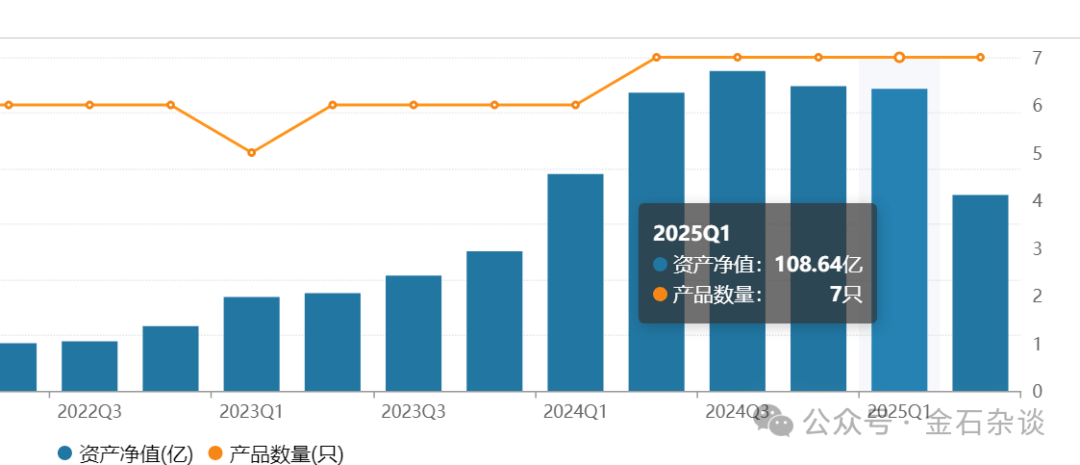
Core Viewpoint - Yang Siliang, a prominent fund manager at Baoying Fund, has resigned from several key funds due to internal adjustments, leading to a significant drop in his managed assets from 70 billion to 7 billion [1][3]. Group 1: Fund Manager Resignation - Yang Siliang's resignation includes management of Baoying Quality Selection (26.6 billion), Baoying Enhanced Income Bond (18.65 billion), Baoying New Value (10.54 billion), and Baoying Advantage Industry (7.59 billion) [1][3]. - The company cites internal work adjustments as the reason for Yang's departure, but speculation suggests poor performance in the current year may have contributed [3][5]. - Yang's performance has been under scrutiny, with a reported return of -2.55% this year, significantly underperforming the benchmark [3][12]. Group 2: Market Reactions and Implications - The market is speculating that Yang's resignation may indicate a potential departure from Baoying Fund, especially given his historically strong performance over the past three years [5][6]. - Baoying Fund has faced criticism for its compensation practices, which may contribute to talent retention issues [5][6]. - The recent trend of fund manager resignations at Baoying Fund raises concerns about the company's ability to retain key talent [7][8]. Group 3: Performance Metrics - Despite the recent downturn, Yang's funds had previously shown resilience, with a three-year return exceeding 10% as of early this year [1][3]. - The significant drop in managed assets in Q2, amounting to a decrease of nearly 40 billion, reflects the impact of recent performance issues [1][3]. - Yang's funds have been heavily invested in the liquor sector, which has faced challenges this year, contributing to the negative performance [12][13].

又见“清仓式”卸任!部分知名基金经理卸任绩差产品
Mei Ri Jing Ji Xin Wen· 2025-06-18 01:42
Group 1 - Multiple public funds announced changes in fund managers, with some managers resigning in a "clearance" manner [1][2] - Wu Huijuan from Green Fund resigned from managing three funds on June 16, 2023, after less than six months in the role, with the highest return of 1.35% for one fund [2] - Qi Jieping from Chunhou Fund also resigned from managing four funds on June 14, 2023, due to personal reasons [2][3] Group 2 - Liu Taiyang from Penghua Fund resigned from three funds in June, leaving only one fund under management [3] - The resignation of fund managers has increased the burden on remaining managers, with some now managing multiple funds [3] - Notably, larger fund companies and star fund managers are also experiencing significant changes in their managed products, including resignations from underperforming funds [4] Group 3 - As of June 17, 2023, there have been 2,314 fund manager changes since 2025, with 1,254 managers resigning [5] - The high turnover of fund managers is closely linked to market cycles, with a shift towards team-based operations and a trend of managers seeking better career opportunities [6]
平安基金段玮婧“清仓式”卸任!新人李晓天能否接住这泼天富贵?
Sou Hu Cai Jing· 2025-05-28 04:54
Core Viewpoint - The sudden resignation of Duan Weijing, a prominent fund manager at Ping An Fund, has raised concerns about the stability and talent retention within the firm, particularly in its fixed income sector, as she steps down from managing seven funds, including those with only four months of operation [1][2]. Group 1: Managerial Changes - Duan Weijing's departure is part of a broader trend, with eight fund managers leaving Ping An Fund in the past year, indicating a significant personnel shake-up within the company [1]. - The exit of Duan Weijing follows the earlier departure of another senior fixed income manager, Zhou Enyuan, to Dacheng Fund, highlighting a potential talent drain in Ping An Fund's fixed income division [1][2]. Group 2: Fund Performance - During her tenure, Duan Weijing managed the Ping An Jin Guanjia Money Market Fund, which achieved a total return of 24.89%, ranking in the top 8% of its peers, generating a profit of 2.424 billion yuan for investors from 2017 to the end of 2024 [2]. - The Ping An Hexi 1-Year Open-End Bond Fund, under her management, recorded an annualized return of 4.63%, exceeding its benchmark by 2.24 percentage points [2]. - As of the end of Q1 2025, Duan Weijing managed a total of 32.059 billion yuan in assets, solidifying her position as a key figure in Ping An Fund's fixed income sector [2]. Group 3: Transition and Challenges - Following Duan Weijing's resignation, the management of the Ping An Jin Guanjia Money Market Fund was handed over to Luo Wei, who has seen a significant drop in the fund's annualized yield to 1.52%, a 43.49% decrease from Duan's management period [6]. - The new manager, Li Xiaotian, has rapidly taken over 19 bond funds, increasing his managed assets to 35.006 billion yuan, but faces challenges as the Ping An Hui Rong Pure Bond Fund's management scale decreased by 41.66% in the first quarter after his takeover [6][7]. - A comparison of performance metrics shows that Duan Weijing's total return rate during her tenure was 28.28% with an annualized return of 3.45%, while her successor Luo Wei's performance was slightly lower at 27.72% and an annualized return of 2.76% [7].

知名基金经理鲍无可离职,接任者都是什么水平?
市值风云· 2025-05-21 10:36
Core Viewpoint - The recent departures of prominent fund managers, including Zhang Kun and Bao Wuke, signal a potential shift in the public fund industry, raising concerns about whether public funds are becoming a "training ground for private equity" [3][4]. Group 1: Departure of Fund Managers - Bao Wuke, a notable fund manager with over 15 years of experience and an annualized return of approximately 15.5%, has officially announced his departure from the public fund sector [5][11]. - The market interpreted Bao Wuke's recent actions, such as appointing new fund managers, as indicative of his impending exit, which was confirmed over the weekend [3][4]. - The trend of high-performing fund managers leaving the public sector has raised questions about the future of public funds and their ability to retain talent [4]. Group 2: Performance and Management Transition - Bao Wuke managed a total of 16.2 billion yuan across eight funds before his departure, with the majority of his funds being handed over to three experienced managers, including Liu Su, Zhang Zhongwei, and Zou Lihua [11][12]. - Liu Su, who has 13 years of experience, is known for a balanced investment style, while Zhang Zhongwei, with over nine years of experience, is recognized for a growth-oriented approach focused on technology stocks [28][20]. - The performance of the funds under Bao Wuke's management has been strong, with a total return exceeding 380% over the past decade, indicating a solid track record that the new managers will need to uphold [5][11]. Group 3: Investment Styles and Strategies - Bao Wuke's investment strategy emphasized low volatility and steady returns, focusing on high-barrier companies with reasonable valuations [7][8]. - In contrast, Zhang Zhongwei's investment philosophy is centered on capturing growth in technology sectors, with a significant portion of his portfolio allocated to TMT (Technology, Media, Telecommunications) stocks [24][27]. - Liu Su's approach is more balanced, with a diversified portfolio that includes sectors like food and beverage and pharmaceuticals, aiming for stable long-term growth [30][28].
景顺长城名将出走,知名基金经理变动频频
2 1 Shi Ji Jing Ji Bao Dao· 2025-05-18 09:16
Group 1 - The departure of star fund manager Bao Wuke from Invesco Great Wall Fund has raised market attention, as he resigned from managing eight funds with a total scale exceeding 15 billion yuan [1][2] - Bao Wuke's resignation is part of a broader trend in the industry, with 138 fund managers leaving their positions in 2025, significantly higher than the same period last year [1][3] - The fund management industry is experiencing rapid growth, leading to an increase in both the number of fund managers and the rate of departures, with many notable managers leaving for larger firms or private equity [1][3] Group 2 - Bao Wuke, who joined Invesco Great Wall in December 2009 and became a prominent figure in value investing, managed funds with a total scale of 16.207 billion yuan before his departure [2][3] - His largest fund, Invesco Great Wall Value Marginal A, achieved a return of 62.60% since his tenure, ranking in the top 2% among similar products [2] - The trend of increasing fund manager departures is not isolated, as other notable managers like Zhou Keping and Zhou Haidong have also left their positions for personal reasons [4][5]