
外交斡旋

Search documents
中方能否介绍外交部亚洲事务特使邓锡军在柬泰的斡旋情况?外交部回应
Huan Qiu Wang· 2025-12-22 07:41
Core Viewpoint - The Chinese government expresses support for ASEAN's mediation efforts regarding the Cambodia-Thailand border conflict and emphasizes the importance of peace and stability in the region [1] Group 1: ASEAN and Regional Stability - Cambodia and Thailand are important members of ASEAN, and China appreciates and supports ASEAN, particularly Malaysia's mediation capabilities [1] - China hopes for a quick ceasefire and peace restoration between Cambodia and Thailand, prioritizing the fundamental interests of the people in both countries [1] Group 2: China's Diplomatic Efforts - Since the escalation of the Cambodia-Thailand conflict, China has been actively mediating, with Foreign Minister Wang Yi communicating with the foreign ministers of both countries [1] - The Asian Affairs Special Envoy, Deng Xijun, is currently engaged in shuttle diplomacy between Cambodia and Thailand, with updates on his efforts to be released at an appropriate time [1] - China aims to play a constructive role in de-escalating tensions and promoting dialogue in the region [1]
中方谈柬泰边境冲突:希望双方保持最大程度克制 尽快实现降温缓局
Zhong Guo Xin Wen Wang· 2025-12-15 08:02
Core Viewpoint - China expresses deep concern over the ongoing border conflict between Cambodia and Thailand, emphasizing the need for both sides to exercise maximum restraint and quickly de-escalate the situation [1] Group 1: China's Position - China is closely monitoring the border situation and feels sorrow for the casualties among the people of Cambodia and Thailand, offering sincere condolences [1] - The Chinese Foreign Ministry highlights the importance of maintaining peace and stability along the border for the benefit of both nations [1] Group 2: Efforts for Peace - China has been actively communicating with both Cambodia and Thailand through multiple channels to facilitate dialogue and create conditions for peace [1] - The country supports direct negotiations between Cambodia and Thailand and endorses ASEAN's efforts, particularly those of Malaysia, to mediate the situation [1] - China is committed to playing a constructive role in promoting a ceasefire and restoring peace in the region [1]
乌克兰领土谈判,欧洲在特朗普面前打擦边球
Sou Hu Cai Jing· 2025-12-13 04:50
Group 1 - The core message of the proposal submitted by European leaders to President Trump is that the final decision regarding Ukraine's territorial issues should rest with the Ukrainian president and people, indicating Europe's willingness to mediate without replacing Ukraine's decision-making authority [1][3][8] - The joint statement from Chancellor Merz and NATO Secretary General Stoltenberg emphasizes Europe's cautious stance, highlighting that negotiations must ensure European security interests without sacrificing the unity of the EU and NATO [3][8] - The upcoming meetings between European representatives and the U.S. are strategically timed to influence the negotiation process and avoid unilateral pressures, showcasing Europe's diplomatic efforts to manage the situation [5][8] Group 2 - The Ukraine issue is portrayed as a reflection of great power competition, with U.S. decisions, European mediation, and Ukraine's autonomy all playing critical roles in the evolving situation [7][8] - Europe's approach balances cooperation within NATO while safeguarding its own interests and regional security, aiming for a peaceful resolution without compromising EU unity [8] - The proposal serves as a reminder that Europe is not passive in the Ukraine crisis, continuing a pragmatic diplomatic style that seeks to influence major power decisions through coordination and dialogue [8]

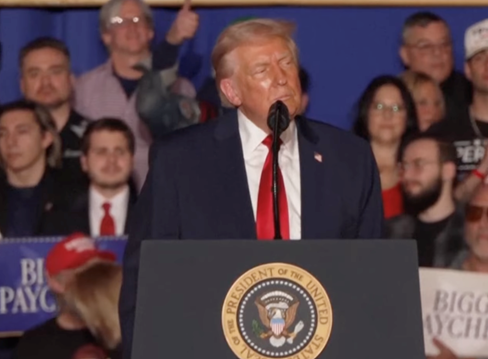
特朗普:泰柬又打起来了,我得打个电话
Huan Qiu Wang· 2025-12-10 07:01
Group 1 - The core point of the article is that former President Trump plans to intervene in the renewed border conflict between Thailand and Cambodia, indicating he will make a phone call to address the situation [1][3] - The conflict has escalated recently, with clashes occurring in December, leading to injuries and significant displacement of residents in Thailand [4] - Previous conflicts in May and July resulted in casualties and the evacuation of over 100,000 people, highlighting the ongoing tensions between the two nations [3][4] Group 2 - Trump previously communicated with leaders from both countries, suggesting that the U.S. would consider trade agreements only if the border conflict was resolved [3] - The situation has led to accusations from both sides, with Cambodia's Senate President stating that Thailand's actions necessitate a response, indicating a potential for further escalation [4] - The Thai military reported that over 400,000 residents have been displaced due to the ongoing conflict, emphasizing the humanitarian impact of the situation [4]
美国智库的台湾问题“土方子”,管不了用
经济观察报· 2025-12-03 14:22
Core Viewpoint - The article argues that the U.S. think tanks' interventions regarding the Taiwan issue, including military intervention and economic sanctions, will not significantly impact China's strategy and pace in resolving the Taiwan situation, as China has its own approach to unification [1][16][17]. Summary by Sections U.S. Think Tanks' Reports - The article expresses skepticism towards the wargaming reports from U.S. think tanks, suggesting that their understanding of modern China is inadequate, leading to flawed conclusions [2]. - A specific report from the Center for Strategic and International Studies (CSIS) in January 2023 outlined 24 battle scenarios, with the U.S., Japan, and Taiwan winning in 22 of them, while China only won in two scenarios under specific conditions [4][5]. Reactions and Implications - The report has been widely circulated and discussed in Japanese and Taiwanese media, which the author views as an attempt to support certain political narratives regarding Taiwan's security [5]. - The author critiques the mindset of U.S. scholars, suggesting they have a savior complex regarding Taiwan, influenced by historical, political, and financial factors [6]. Military and Economic Strategies - U.S. think tanks have traditionally proposed military intervention and economic sanctions as responses to potential Chinese actions regarding Taiwan, acknowledging the growing disparity in military and economic power between China and Taiwan [13]. - The 2023 CSIS report introduced a third approach: diplomatic mediation, suggesting that the U.S. should provide China with a way to save face while addressing the Taiwan issue [14][15]. Conclusion - Ultimately, the article concludes that China's strategy regarding Taiwan is independent of U.S. interventions, which are seen as superficial and ineffective [16][17].
台海观澜 | 美国“药方”
Jing Ji Guan Cha Wang· 2025-12-03 04:53
Core Viewpoint - The article critiques the recent wargaming reports by American think tanks regarding the Taiwan Strait situation, arguing that the foundational knowledge of these experts about modern China is insufficient, leading to flawed conclusions [2][4]. Group 1: Wargaming Reports - The Center for Strategic and International Studies (CSIS) released a report in January 2023 titled "The First Battle of the Next War: Wargaming a Chinese Invasion of Taiwan," which outlined 24 battle scenarios, with the US, Japan, and Taiwan winning in 22 of them [4][5]. - The report has been widely circulated and commented on by Japanese and Taiwanese media, indicating a coordinated narrative supporting Japanese Prime Minister's statements on Taiwan [6][7]. - CSIS has conducted wargaming exercises for three consecutive years, with different focuses each year: nuclear deterrence in 2024 and blockade scenarios in 2025, totaling 65 scenarios across all years [8][11][12]. Group 2: American Think Tanks' Perspectives - Analysts from American think tanks exhibit a "savior complex" regarding Taiwan, influenced by historical, political, and financial factors, leading to a biased perspective [9]. - The reports acknowledge the significant military and economic disparity between Taiwan and China, emphasizing that Taiwan cannot face China alone and requires US assistance to maintain its democratic system [10]. - The wargaming exercises are criticized for their limited practical military value, as they primarily serve as a basis for future propaganda rather than actionable strategies [14][15]. Group 3: Proposed Solutions - American think tanks have suggested two main responses to potential Chinese military actions: military intervention and economic sanctions, though the latter is seen as beyond their expertise [17][19]. - A new approach introduced by CSIS includes diplomatic mediation, suggesting that the US should provide China with a way to save face, such as allowing international observers in Taiwan's customs and reiterating the "1992 Consensus" [20][22]. - The article argues that ultimately, China's strategy regarding Taiwan will not be significantly influenced by American interventions, rendering the think tanks' wargaming efforts largely ineffective [24][25].
德国多党派呼吁与俄对话 停止对乌供武
Yang Shi Xin Wen Ke Hu Duan· 2025-10-17 06:13
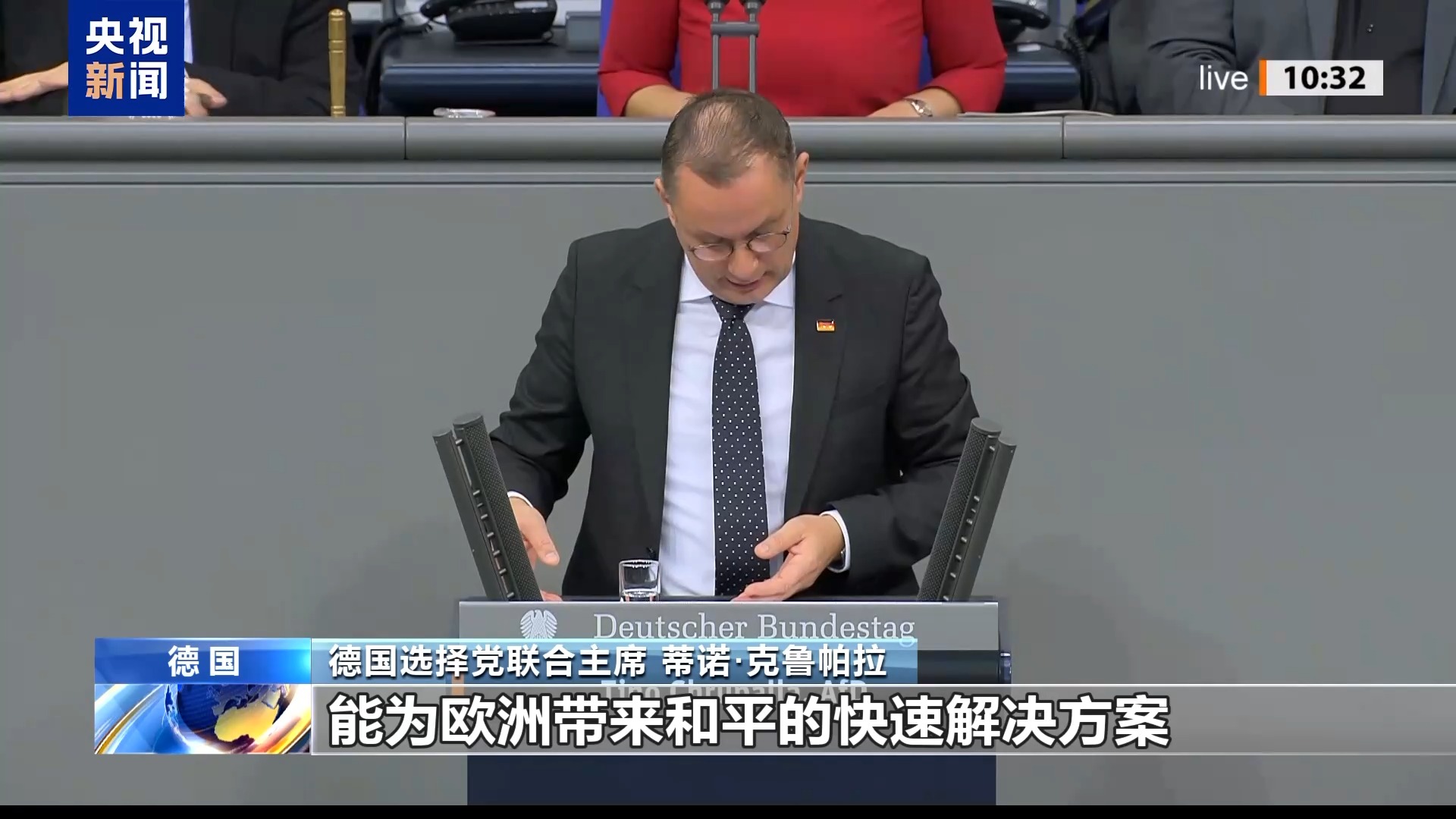
Core Viewpoint - German Chancellor Merz plans to propose using frozen Russian central bank assets to provide interest-free loans to Ukraine for military equipment purchases at the upcoming EU summit, amidst domestic opposition advocating for dialogue with Russia instead of military support [1][3] Group 1: Political Reactions - Multiple opposition parties in the German Bundestag are calling for the government to cease arms supplies to Ukraine and instead engage in diplomatic discussions to resolve the Russia-Ukraine conflict [1] - Sören Pellmann, co-chair of the Left Party parliamentary group, argues that the military approach has not yielded success and has only resulted in prolonged suffering for soldiers and civilians alike [1] - Pellmann criticizes the EU's proposed €2 trillion long-term budget increase for defense investments, claiming it primarily benefits arms companies rather than serving the interests of EU citizens [1] Group 2: Economic Concerns - The largest opposition party, the Alternative for Germany (AfD), emphasizes the need for Germany to restore friendly relations with all countries, including Russia, and to resume imports of Russian natural gas due to high energy prices and economic challenges [1] - AfD co-chair Tino Chrupalla highlights that sanctions and military support are not effective solutions to the conflict and calls for a quick resolution that brings peace to Europe [1] Group 3: Public Sentiment - There is widespread controversy within Germany regarding the government's decision to continue military support for Ukraine, with many politicians and citizens believing that ongoing arms supplies may escalate regional tensions and deepen Germany's involvement in the conflict [3] - Calls are being made for the government to allocate more resources towards diplomatic efforts rather than expanding military engagement [3]
埃尔多安与特朗普通电话 呼吁推动地区和平
Yang Shi Xin Wen Ke Hu Duan· 2025-10-03 16:28
Core Viewpoint - Turkish President Erdogan held a phone call with US President Trump to discuss bilateral relations and the situation in Gaza, emphasizing the importance of cooperation in defense industries and regional peace efforts [1] Group 1: Bilateral Relations - Erdogan stated that his previous visit to Washington helped strengthen the relationship between Turkey and the US [1] - Both countries should advance cooperation in defense industries to a new level [1] Group 2: Regional Stability - Turkey is actively working towards peace and stability in the region, including Gaza, and welcomes related peace initiatives [1] - Erdogan called for Israel to cease military actions promptly to create conditions for regional peace [1] Group 3: Diplomatic Efforts - Turkey will continue to accelerate diplomatic mediation and actively contribute to the global vision of peace [1]
美官员:欧洲试图暗中破坏美俄领导人会晤以来取得的进展
Yang Shi Xin Wen· 2025-08-31 00:04
Group 1 - The core viewpoint of the article indicates that European leaders are attempting to undermine the progress made since the U.S.-Russia leaders' meeting in Alaska, despite publicly supporting U.S. President Trump's efforts to resolve the Ukraine crisis [1] - White House officials assert that European leaders cannot delay the conflict while presenting unreasonable expectations and expecting the U.S. to bear the costs [1] - A senior White House official mentioned that the U.S. is seriously considering temporarily withdrawing from diplomatic mediation until one or both parties show greater flexibility [1]
万斯:俄方重大让步
Zhong Guo Ji Jin Bao· 2025-08-25 13:22
Group 1 - The core viewpoint is that the U.S. Vice President reaffirms that the U.S. will not send ground troops to Ukraine but will play a role in ensuring Ukraine's security [1][2] - The U.S. has observed significant concessions from both Russia and Ukraine in recent weeks, indicating a potential for diplomatic negotiations to end the conflict [2][3] - The Vice President expressed optimism about the diplomatic efforts, stating that the U.S. will either succeed gradually or face significant challenges, with continued pressure on Russia if necessary [2][3] Group 2 - One of the concessions mentioned by the Vice President is Russia's agreement to provide security guarantees to Ukraine [3] - The U.S. administration has indicated that if there is no progress in peace negotiations within two weeks, additional sanctions against Russia will be considered [3]