台海局势

Search documents
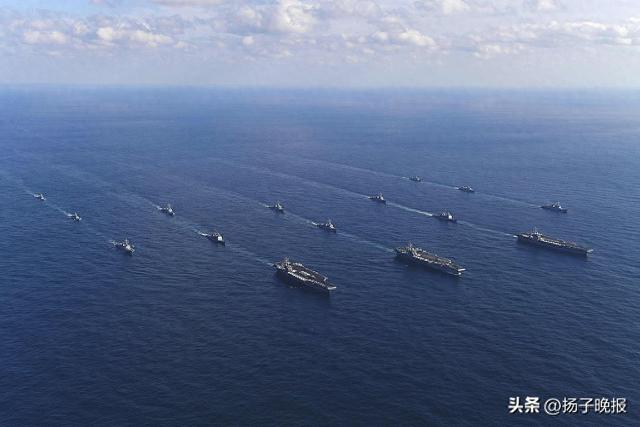
美学者警告:“在大约40次针对台海局势的兵棋推演中,美国都会在第一周内损失两个航母战斗群”
Xin Lang Cai Jing· 2026-02-20 03:09
Group 1 - The core viewpoint is that U.S. military intervention in the Taiwan issue could lead to a prolonged war resulting in significant casualties, which does not align with national interests [1] - A report from the Center for Strategic and International Studies indicates that in approximately 40 war games regarding the Taiwan Strait situation, the U.S. would likely lose two forward-deployed aircraft carrier battle groups within the first week of conflict [1] - The potential war could last for several years, highlighting the severe implications of military engagement in the region [1] Group 2 - The researcher emphasizes that China has shown remarkable restraint by not using large-scale military force over the years [3] - There is a concern that excessive focus on Taiwan and military confrontation may hinder U.S.-China cooperation on global issues such as climate change and infrastructure development [3] - The U.S. and Japan have initiated their largest joint military exercise, "Iron Fist," which is expected to enhance amphibious landing operations and defense capabilities in the southwestern islands of Japan, located only 110 kilometers from Taiwan [3]

美国日本春节想针对台海搞事放弃幻想,提高警惕!
Xin Lang Cai Jing· 2026-02-17 04:55
Group 1 - The core viewpoint of the article highlights the joint military exercises conducted by the US and Japan, named "Iron Fist," which are perceived as a direct response to China's activities in the Taiwan Strait [1] - The military exercises are scheduled to take place from February 11 to March 9, focusing on the Okinawa region and surrounding islands, indicating a strategic preparation for potential conflicts involving Taiwan [1] - A researcher from the Chinese Academy of Social Sciences explicitly states that the exercises are aimed at China, emphasizing that the timing, location, and military equipment used are all tailored to address the possibility of a crisis in the Taiwan Strait [1]
央视:春节期间美日还想针对台海搞事美国日本春节想针对台海搞事 放弃幻想,提高警惕!
Xin Lang Cai Jing· 2026-02-16 10:55
Group 1 - The core viewpoint of the article highlights that the joint military exercises conducted by the US and Japan, named "Iron Fist," are specifically aimed at countering China's activities in the Taiwan Strait region [1] - The exercises are scheduled to take place from February 11 to March 9, focusing on Okinawa and surrounding islands, indicating a strategic military preparation by the US and Japan in response to potential conflicts involving Taiwan [1] - A researcher from the Chinese Academy of Social Sciences explicitly states that the timing, location, and nature of the exercises are indicative of a direct focus on China, emphasizing that any conflict in the Taiwan Strait could implicate Japan [1]
国台办:民进党当局如果胆敢在祥和的节日里挑起事端,必须承担一切恶果
Ren Min Ri Bao· 2026-02-11 06:29
Group 1 - The core viewpoint of the article emphasizes the potential for increased tensions in the Taiwan Strait during the Chinese New Year, a significant traditional holiday for the Chinese people [1] - The spokesperson for the Taiwan Affairs Office, Zhu Fenglian, warns that if the Democratic Progressive Party (DPP) provokes incidents during this peaceful holiday, they will bear the consequences of such actions [1]
美媒称“攻台分三步” 中国国防部:枉费心机臆测解放军行动
Xin Lang Cai Jing· 2025-12-25 12:15
Group 1 - The spokesperson of the Chinese Ministry of National Defense, Zhang Xiaogang, criticized certain media for speculating on the PLA's actions regarding Taiwan, stating that such actions only serve to create "war anxiety" and undermine peace and stability in the Taiwan Strait [1][2] - Reports indicate that PLA aircraft have conducted nearly 3,600 sorties around Taiwan this year, marking a record high, and the PLA has executed 39 joint combat readiness patrols [1] - Zhang emphasized that Taiwan is an inseparable part of China, and the PLA's military exercises around the island are legitimate actions to maintain national sovereignty and territorial integrity [1] Group 2 - The spokesperson reiterated that the Taiwan issue is an internal matter for China and should not be interfered with by external forces, expressing a willingness to seek peaceful reunification while reserving the right to use force if necessary [2] - Zhang warned that if the "Taiwan independence" forces provoke or cross red lines, the PLA would have to take decisive measures, asserting that the military is always ready for combat and confident in defeating any separatist or foreign interference attempts [2]
国防部回应解放军“攻台三个步骤”
券商中国· 2025-12-25 11:55
Core Viewpoint - The Chinese Ministry of National Defense emphasizes that the People's Liberation Army (PLA) is always ready for combat and will decisively defeat any attempts of "Taiwan independence" and foreign interference [2]. Group 1 - The spokesperson of the Ministry of National Defense, Senior Colonel Zhang Xiaogang, criticized certain media for speculating on PLA actions, claiming it undermines peace and stability in the Taiwan Strait [2]. - The Chinese government expresses a willingness to pursue peaceful reunification with Taiwan but does not rule out the use of force if provoked by "Taiwan independence" forces [2]. - The PLA is described as being in a state of constant readiness, prepared to engage in combat at any time, and confident in achieving victory [2].
特朗普政府对于中日外交争端保持沉默,日方被曝“感到沮丧”
Guan Cha Zhe Wang· 2025-12-07 08:38
Group 1 - Japan feels frustrated with the insufficient public support from the US for Prime Minister Kishi's comments regarding Taiwan, urging for more explicit backing from the Trump administration [1][12][15] - Following a diplomatic dispute between China and Japan, the US has expressed limited support, with only a statement from the US Ambassador to Japan, while other forms of public backing have been absent [1][5][16] - Reports indicate that the US has paused plans to impose sanctions on China related to alleged cyberattacks to maintain the trade truce established in late October [1][13] Group 2 - US officials have indicated that there will be no new significant export controls on China after the recent summit, aiming to avoid disrupting the improving US-China relations [2][13] - Despite the lack of public support from the US, Japan does not believe that the US will waver in its commitment to Japan, although disappointment over the absence of high-level backing persists [4][15] - Former US officials argue that the US should have welcomed Kishi's statements about Japan's potential support in the event of a conflict over Taiwan, highlighting the irony of the current lack of support [4][5][15] Group 3 - Japan's Defense Ministry reported that Chinese naval activities, including the Liaoning aircraft carrier's operations, have led to increased tensions, with Japan claiming radar lock incidents involving its aircraft [8][19] - The Chinese military has responded to Japan's claims, asserting that their training exercises were conducted within designated areas and accusing Japan of misrepresenting the situation [11][23] - The ongoing tensions have prompted China to issue travel warnings and suspend imports of Japanese seafood, which some Japanese media view as retaliatory measures [7][18]
台海观澜 | 美国“药方”
Jing Ji Guan Cha Wang· 2025-12-03 04:53
Core Viewpoint - The article critiques the recent wargaming reports by American think tanks regarding the Taiwan Strait situation, arguing that the foundational knowledge of these experts about modern China is insufficient, leading to flawed conclusions [2][4]. Group 1: Wargaming Reports - The Center for Strategic and International Studies (CSIS) released a report in January 2023 titled "The First Battle of the Next War: Wargaming a Chinese Invasion of Taiwan," which outlined 24 battle scenarios, with the US, Japan, and Taiwan winning in 22 of them [4][5]. - The report has been widely circulated and commented on by Japanese and Taiwanese media, indicating a coordinated narrative supporting Japanese Prime Minister's statements on Taiwan [6][7]. - CSIS has conducted wargaming exercises for three consecutive years, with different focuses each year: nuclear deterrence in 2024 and blockade scenarios in 2025, totaling 65 scenarios across all years [8][11][12]. Group 2: American Think Tanks' Perspectives - Analysts from American think tanks exhibit a "savior complex" regarding Taiwan, influenced by historical, political, and financial factors, leading to a biased perspective [9]. - The reports acknowledge the significant military and economic disparity between Taiwan and China, emphasizing that Taiwan cannot face China alone and requires US assistance to maintain its democratic system [10]. - The wargaming exercises are criticized for their limited practical military value, as they primarily serve as a basis for future propaganda rather than actionable strategies [14][15]. Group 3: Proposed Solutions - American think tanks have suggested two main responses to potential Chinese military actions: military intervention and economic sanctions, though the latter is seen as beyond their expertise [17][19]. - A new approach introduced by CSIS includes diplomatic mediation, suggesting that the US should provide China with a way to save face, such as allowing international observers in Taiwan's customs and reiterating the "1992 Consensus" [20][22]. - The article argues that ultimately, China's strategy regarding Taiwan will not be significantly influenced by American interventions, rendering the think tanks' wargaming efforts largely ineffective [24][25].
中国发布预警,日本股市立崩,台军:48小时内大陆64机舰“围台”
Sou Hu Cai Jing· 2025-11-19 09:58
Core Viewpoint - The article discusses the increasing military pressure from mainland China on Taiwan and the notably muted response from Japan, highlighting a shift in Japan's stance due to economic and security concerns [1][4][15]. Military Dynamics - Mainland China's military activities have escalated, showcasing a "systematic suppression" approach rather than mere reconnaissance, which significantly increases pressure on Taiwan [4][18]. - The recent military maneuvers include the involvement of advanced aircraft, indicating a comprehensive capability demonstration [4]. Japan's Response - Japan's previous strong statements regarding Taiwan have been replaced by a notable silence, reflecting a shift in priorities towards its own economic and security interests [6][15]. - The Japanese government has taken steps to clarify its position with China, indicating a desire to avoid further escalation [13]. Economic Implications - The potential decline in Chinese tourists and students could have a significant negative impact on Japan's economy, particularly in sectors like aviation, retail, and services [8][11]. - Japan's economic recovery is fragile, and any disruption from reduced Chinese engagement could lead to a chain reaction affecting various industries [11]. Political Context - The article suggests that some Taiwanese political figures have relied on Japan's support as a deterrent against mainland China, but Japan's recent actions reveal a more self-preserving approach [15][18]. - The dynamics of the Taiwan Strait are shifting, with Japan's focus on its own safety and economic stability taking precedence over its commitments to Taiwan [18].

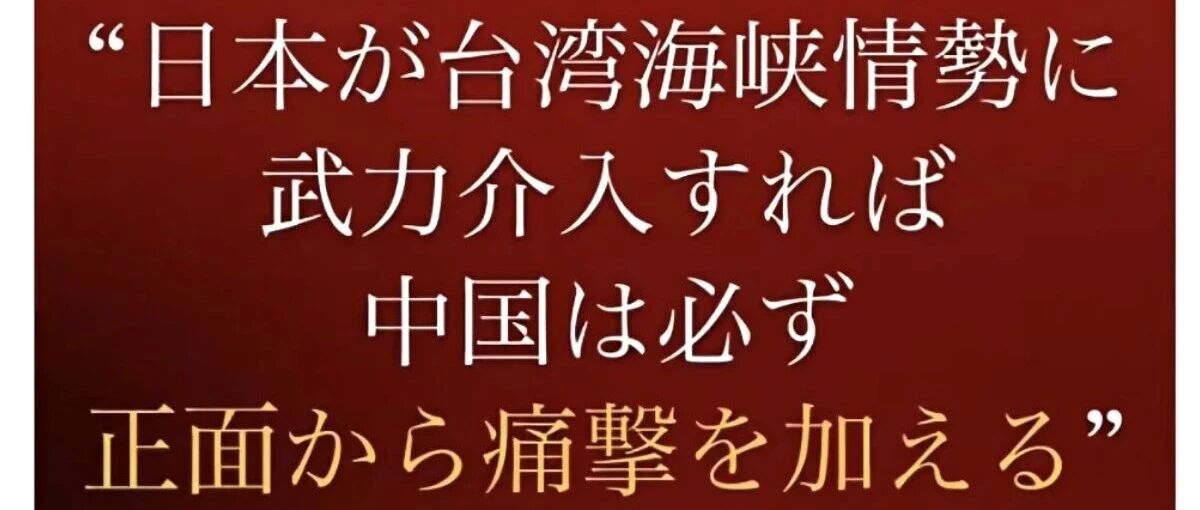
中国军号发布日语海报
第一财经· 2025-11-14 05:41
Core Viewpoint - The article highlights escalating tensions between China and Japan regarding the Taiwan Strait, emphasizing China's strong military stance against any Japanese intervention [1]. Group 1: Military and Political Statements - On November 13, the Chinese military's official account warned that any Japanese military intervention in the Taiwan Strait would be met with a decisive response from China [1]. - Japanese Prime Minister Fumio Kishida stated that potential Chinese military action against Taiwan could pose an existential crisis for Japan, affirming that his comments align with the Japanese government's position [1]. - China's Foreign Ministry spokesperson Lin Jian reiterated that any Japanese military intervention would be considered an act of aggression, asserting China's right to self-defense under international law [1]. Group 2: Historical Context and Warnings - The Chinese government urged Japan to reflect on its historical responsibilities and cease interference in China's internal affairs, warning against provocative actions regarding Taiwan [1]. - The statement from the Chinese military emphasizes the potential consequences of Japan's involvement in the Taiwan issue, suggesting that those who "play with fire" will face dire repercussions [1].