大国工程

Search documents
创多项纪录 上个周末大国工程好消息不断!
Yang Shi Xin Wen Ke Hu Duan· 2025-09-29 02:01
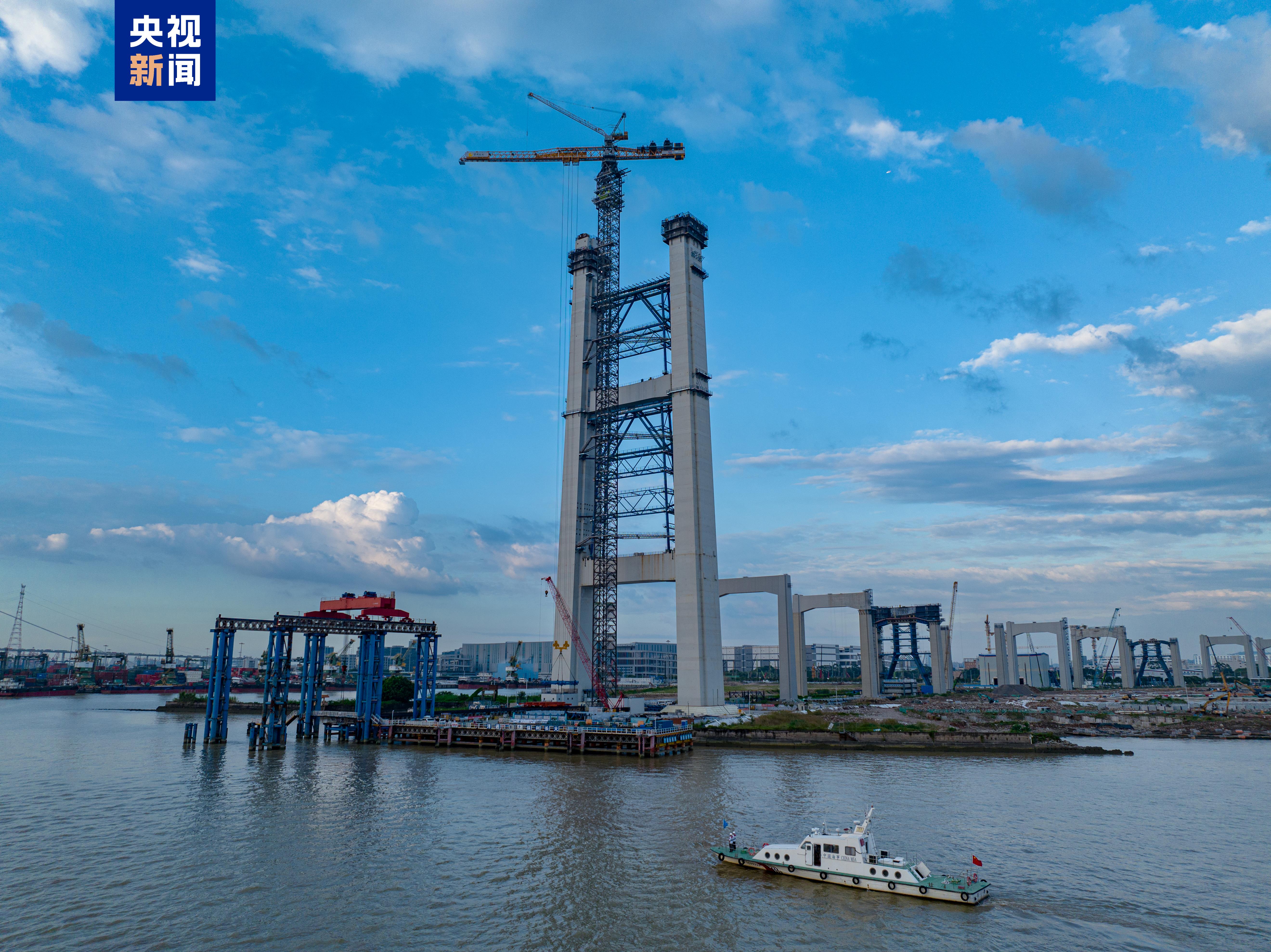
Group 1 - The completion of the world's highest bridge, the Huajiang Canyon Bridge, marks a significant achievement in engineering, with a main span of 1420 meters and a height difference of 625 meters [1] - The bridge reduces travel time between Zhenfeng County and Guanling County from 2 hours to just 2 minutes, showcasing the transformation of infrastructure [1] - The construction utilized advanced technologies such as the Beidou system for assistance and drone operations for precision work [1] Group 2 - The Lion Rock Channel in the Guangdong-Hong Kong-Macao Greater Bay Area is progressing, with the main bridge tower exceeding 200 meters in height, setting the stage for its completion next year [5] - The Lion Rock Channel will be the first dual-layer composite road channel in the Pearl River Estuary, spanning approximately 35 kilometers with 16 lanes [5] - The project aims to achieve five world records in various categories, including main span and tower height [5] Group 3 - The opening of the Shenyang to Changbai Mountain high-speed railway is a key project under China's 14th Five-Year Plan, enhancing connectivity in Northeast China [5] - This railway line connects 14 prefecture-level cities in Liaoning Province, significantly improving access to high-speed rail for previously underserved areas [5] - The construction faced challenges due to extreme weather conditions and complex terrain, with a majority of the route consisting of bridges and tunnels [5] Group 4 - A new world record was set with the development of a 35.1 Tesla steady-state superconducting magnet by the Hefei Institute of Physical Science, showcasing advancements in superconducting technology [6] - This achievement represents a breakthrough in key technologies for high-field superconducting magnets, with 100% domestic control over materials and processes [8] - The research supports various applications, including MRI, aerospace electromagnetic propulsion, and efficient power transmission [8]

西气东输果子沟管道工程隧道贯通 感受大国工程硬核科技
Yang Shi Wang· 2025-08-27 09:43
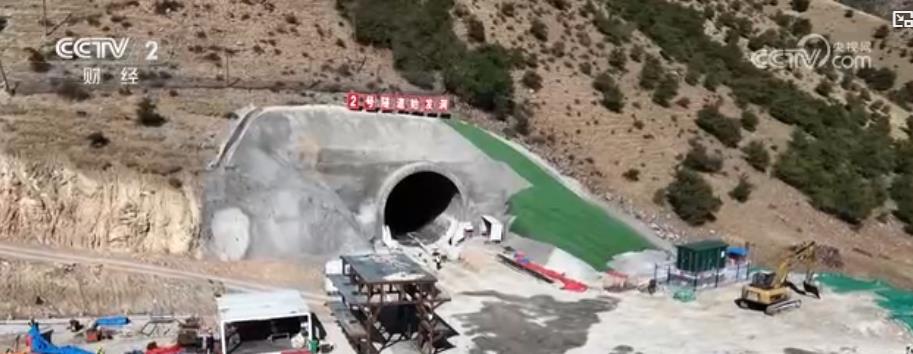
Core Viewpoint - The successful completion of the 1st mountain tunnel of the Guozi Valley pipeline project marks a significant milestone in the West-to-East Gas Transmission project, showcasing advanced engineering capabilities and addressing complex geological challenges [1][3]. Group 1: Project Overview - The Guozi Valley pipeline project is a critical part of the West-to-East Gas Transmission project, featuring four long-distance mountain tunnels [3]. - The total length of the new pipeline is 32 kilometers, designed for dual-pipe installation, enhancing the overall safety of the West-to-East pipeline system [3]. - The project is expected to be fully operational by September 2027, with the existing West-to-East pipelines having already transported over 557 billion cubic meters of natural gas, benefiting 500 million people along the route [3]. Group 2: Engineering Challenges and Solutions - The project faces complex geological conditions, including dense joint zones, water surges, shallow burial, and significant deformation, with over 80% of the weak surrounding rock [7][9]. - To tackle these challenges, the construction team utilized the largest diameter and longest distance dual-shield hard rock tunneling machine in the oil and gas industry [7][9]. - The machine, measuring 193 meters in length, functions like a geological MRI, capable of detecting changes in the geological conditions up to 120 meters ahead, effectively preventing tunnel water inflow and collapse [9]. Group 3: Technological Innovations - The project employs advanced guiding systems to monitor the tunneling equipment's posture, ensuring precision control within 5 centimeters [11]. - A smart construction site center has been established to monitor tunneling parameters, life support system data, and safety and environmental information in real-time [13]. - The system has collected and analyzed over 900,000 data points, triggering more than 300 automatic warnings, with a correction rate exceeding 98% [14].
学过硬技能 铸大国重器(深聚焦)
Ren Min Ri Bao· 2025-07-30 07:02
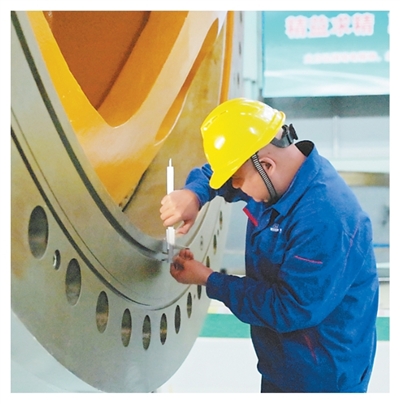
Core Insights - The article highlights the significant role of vocational education in supporting major engineering projects in China, emphasizing the importance of skilled labor in the successful operation of these projects [3][4][10] Group 1: Vocational Education's Contribution - Vocational education in China has established the world's largest system, with over 30 million students and approximately 10 million skilled workers trained annually, which is crucial for the country's industrial capabilities [3][4] - The development of a comprehensive talent supply chain in vocational education ensures the safety and reliability of major engineering projects, as exemplified by the construction and operation of the Baihetan Hydropower Station [3][4] Group 2: Skills and Precision in Engineering - The precision in manufacturing and installation processes, such as those involved in the Baihetan Hydropower Station, is critical, with every component's accuracy affecting the overall performance of the power generation units [4][5] - The article illustrates the dedication of vocational graduates who work tirelessly to ensure the successful operation of major projects, highlighting their roles in monitoring, maintenance, and technical adjustments [4][5] Group 3: Innovation and Technology Integration - The integration of innovative technologies in engineering projects relies heavily on the skills acquired through vocational education, as seen in the use of intelligent positioning systems for bridge construction [5][6] - Vocational institutions are increasingly collaborating with industries to enhance practical training, ensuring that students are well-prepared for real-world challenges in engineering [6][7] Group 4: Cultivating Craftsmanship - The cultivation of a "craftsman spirit" is emphasized as essential for maintaining high standards in engineering, with vocational education playing a key role in instilling this mindset in students [8][9] - Experienced professionals contribute to vocational education by sharing their expertise, thereby enriching the learning experience and promoting a culture of precision and responsibility [9][10]
向“新”向“智”向“绿”行 一项项“大国工程”书写高质量发展篇章
Yang Shi Wang· 2025-07-13 12:58
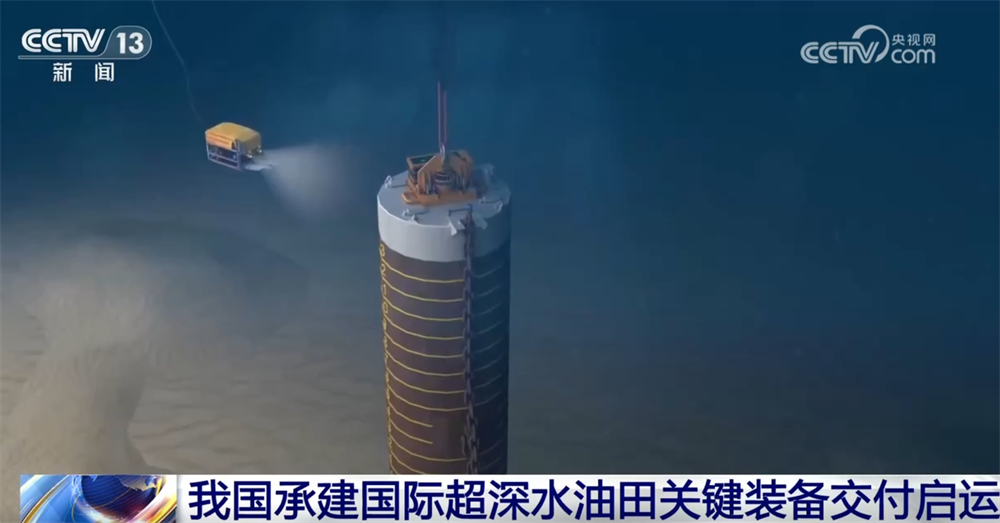
Group 1: Deepwater Equipment Delivery - China National Offshore Oil Corporation (CNOOC) has delivered 24 sets of 2000-meter deepwater suction anchors to Brazil, marking it as one of the largest deepwater oil and gas equipment deliveries by China [1][3] - The suction anchors weigh approximately 2674 tons, with a maximum height of 21 meters and a diameter of 8 meters, presenting significant technical challenges in precision control and deformation management due to their large size and thin wall thickness of 25 millimeters [3] Group 2: Technological Innovations - The project team achieved a quality compliance rate exceeding 99.9% through innovative construction techniques, including horizontal extension and vertical assembly, as well as advanced technologies like 3D scanning and finite element simulation [5] - The suction anchors will be installed at the Mero oil field in the Santos Basin, located in southeastern Brazil [5] Group 3: Marine Research Vessel - The first ocean-class intelligent comprehensive scientific research vessel, "Tongji," has been delivered, designed and built independently by China, featuring a 2000-ton capacity and advanced green, quiet, and intelligent technologies [6][8] - "Tongji" measures 82 meters in length and 15 meters in width, capable of accommodating 15 crew members and 30 research team members, with an operational range of 8000 nautical miles [8] Group 4: Power Grid Development - The Xinjiang 750 kV ring network project is nearing completion after 15 years of construction, with a total line length of 4197 kilometers, making it the largest 750 kV ultra-high voltage transmission ring network in China [11][17] - The project will enhance the power grid coverage to approximately 1.06 million square kilometers, nearly one-ninth of China's land area, and will facilitate the integration of renewable energy resources in the Tarim Basin [11][17]