
安保三文件

Search documents
日本律师:日本政府扩军举动违背宪法
Yang Shi Xin Wen Ke Hu Duan· 2025-12-18 02:21
Group 1 - The Japanese government is advancing military expansion measures, raising concerns among various sectors and citizen groups regarding the contradiction with Article 9 of the Japanese Constitution, which emphasizes peace principles [1] - Legal experts argue that the current security laws, including the "Collective Self-Defense" provisions, violate the constitutional framework and have led to the establishment of the so-called "Security Three Documents" [1] - There is a call to take action to prevent the ongoing trend of military policy advancement in Japan [1] Group 2 - Comments made by Prime Minister Suga Yoshihide in the Diet are viewed as crossing legal boundaries and deviating from Japan's longstanding stance on China, necessitating a retraction [3] - Legal experts assert that Suga's remarks regarding Taiwan are illegal and significantly impact Japan-China relations, urging for an immediate retraction and acknowledgment of the error [5]


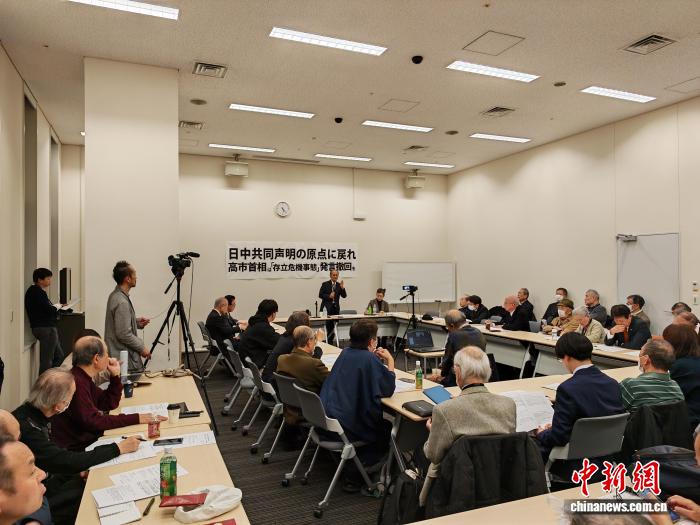
日本多方人士举行集会要求高市早苗撤回涉台错误言论
Zhong Guo Xin Wen Wang· 2025-12-03 07:39
Group 1 - A gathering of political, academic, and civic leaders in Japan demanded Prime Minister Kishi Nobuo retract his erroneous statements regarding Taiwan to prevent further damage to Japan-China relations [1][3] - Former Ministry of Foreign Affairs official Sunzaki Takashi emphasized that the Taiwan issue is purely an internal matter for China and criticized Kishi's linkage of Taiwan to Japan's "survival crisis" as absurd [1][3] - Lawmaker Hiraoka Hideo stated that Kishi's statements, made to please his support base, are unacceptable and could lead to significant economic losses for Japan [3][4] Group 2 - Senator Ibo Yoichi expressed concerns over Japan's increasing military presence in the southwestern islands and the rising defense budget, which he believes could escalate regional tensions [3][4] - Senator Takara Saya suggested that Kishi's provocative remarks are intended to create an atmosphere for further military expansion and revision of Japan's security policies [3][4] - Professor Haba Kumiko highlighted Japan's historical colonial rule over Taiwan, urging the government to exercise caution in its statements regarding the Taiwan issue [4]
高市早苗的愚蠢言论,想必连她的政府官员都始料未及
Xin Jing Bao· 2025-11-23 22:58
Core Viewpoint - The current Japanese Prime Minister, Kishi Suga, maintains a firm stance on promoting Japan-China strategic mutual relations while also asserting Japan's position on the Taiwan issue, which has drawn criticism and concern from various quarters, including China [1][2]. Group 1: High City's Statements and Intentions - High City's remarks regarding Taiwan represent a distorted understanding of China, influenced by her lack of diplomatic experience and her right-wing conservative background [2][3]. - The statements are seen as an attempt to align with U.S. interests, particularly in the context of potential Taiwan Strait conflicts, indicating a shift in Japan's defense posture [2][3]. - High City aims to create a sense of external crisis to garner public support for increased defense spending and military reforms in Japan [3][6]. Group 2: Security Policy Developments - High City is pushing for revisions to Japan's "Three Security Documents," which could mark a significant shift from Japan's post-war defense policy of "defensive defense" to a more proactive military stance [6][7]. - The proposed changes include discussions on modifying Japan's "non-nuclear principles" and increasing defense spending, reflecting a response to U.S. pressures for greater military contributions [7][8]. - The urgency of these revisions is tied to High City's desire to establish a legacy and stabilize Japan-U.S. relations amid rising geopolitical tensions [7][8]. Group 3: Regional Implications and Reactions - High City's comments have raised concerns about escalating tensions in Northeast Asia, potentially igniting conflicts in the Taiwan Strait and complicating regional security dynamics [11][12]. - The U.S. may leverage this situation to strengthen military alliances in the Asia-Pacific, which could provoke stronger countermeasures from China and further complicate the strategic landscape [12][13]. - Domestic opposition in Japan is growing, with public protests against High City's remarks, indicating a potential backlash that could affect her political standing [11][14]. Group 4: Future of Japan-China Relations - The relationship between Japan and China is at a critical juncture, with potential scenarios ranging from continued provocations leading to confrontation, to limited compromises resulting in a state of low trust [14][15]. - A possible path to recovery in Japan-China relations hinges on High City taking substantive actions to correct her statements and address the concerns of both domestic and international stakeholders [16][17]. - The ongoing diplomatic crisis may lead to a reevaluation of Japan's foreign policy, particularly if High City fails to navigate the pressures from both China and the U.S. effectively [17][18].
高市为何想修改无核三原则?
日经中文网· 2025-11-19 02:52
Core Viewpoint - Japan's nuclear policy, based on the "Three Non-Nuclear Principles" of not possessing, not producing, and not allowing the introduction of nuclear weapons, is facing potential modifications, particularly regarding the "not allowing" aspect, which may align with U.S. military strategies [1][3][6]. Group 1: Current Discussions and Political Dynamics - The ruling Liberal Democratic Party (LDP) plans to hold a study session on November 20 to outline topics for revising security documents, with discussions potentially including the non-nuclear principles [3][14]. - High-ranking officials within the Japanese government have indicated that the modification of the "not allowing" principle could be a topic of discussion in upcoming security document revisions [4][6]. - Former Self-Defense Forces Chief Kono Katsutoshi has emphasized the necessity of discussing operational cooperation with the U.S., suggesting a shift in Japan's nuclear stance due to changing geopolitical threats [8]. Group 2: Historical Context and Policy Evolution - The "Three Non-Nuclear Principles" were first articulated in 1967 by then-Prime Minister Sato Eisaku, establishing a framework that has since been challenged by the realities of U.S. military deployments [9][10]. - The principle of "not allowing" has been interpreted flexibly, leading to what some describe as a "2.5 principles" approach, where exceptions may be considered in times of crisis [11][14]. - The U.S. has historically maintained a policy of ambiguity regarding its nuclear capabilities in Japan, complicating the interpretation of Japan's non-nuclear stance [10][12]. Group 3: Regional and International Implications - Modifying the non-nuclear principles could escalate tensions with neighboring countries like China and North Korea, which possess nuclear capabilities that threaten Japan [6][14]. - There are concerns among Southeast Asian nations regarding the potential shift in Japan's nuclear policy, which could alter regional security dynamics [14].
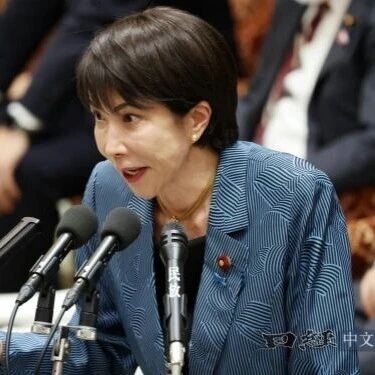
日本多名地方官员反对高市早苗修订“无核三原则”的企图
Xin Hua She· 2025-11-18 14:16
Core Viewpoint - The opposition to Prime Minister Fumio Kishida's attempt to amend Japan's "Three Non-Nuclear Principles" is growing among local leaders, emphasizing the importance of maintaining these principles for national security and historical significance [1]. Group 1: Opposition from Local Leaders - The governors of Okinawa and Nagasaki expressed their opposition to Kishida's plans on November 17, highlighting the need to uphold the "Three Non-Nuclear Principles" [1]. - Hiroshima Governor Hidehiko Yuzaki stated that relying on nuclear weapons for security is dangerous and that the government should seek to eliminate nuclear deterrence [1]. - Nagasaki Mayor Tomihiro Suzuki emphasized that amending the principles would increase Japan's reliance on nuclear deterrence, which has been a cornerstone of Japan's national policy [1]. Group 2: Historical Context of the "Three Non-Nuclear Principles" - The "Three Non-Nuclear Principles" refer to not possessing, not producing, and not introducing nuclear weapons, first articulated by former Prime Minister Eisaku Satō in 1967 [1]. - These principles were formally adopted by the Japanese Diet in 1971 and have been a fundamental aspect of Japan's nuclear policy [1]. - The Japanese government reaffirmed its commitment to these principles in the "Three Security Documents" passed in 2022, indicating that the basic stance would not change [1]. Group 3: Concerns Over Proposed Amendments - Reports indicate that Kishida is attempting to revise the "Three Non-Nuclear Principles" during the amendment of the National Security Strategy and other security documents, raising significant concerns domestically [1].
日本前首相:高市早苗应坚持“无核三原则”
Xin Hua She· 2025-11-16 05:41
Core Points - The former Prime Minister of Japan, Yoshihiko Noda, emphasized that current Prime Minister Sanae Takaichi should adhere to the "Three Non-Nuclear Principles" [1] - Takaichi's recent consideration to modify the "Three Non-Nuclear Principles" has raised concerns, as she did not address this issue during her campaign for the Liberal Democratic Party presidency [1] - The "Three Non-Nuclear Principles," established in 1967, state that Japan will not possess, manufacture, or introduce nuclear weapons [1] Summary by Sections - **Political Context** - Noda's statement reflects a significant political stance regarding Japan's nuclear policy [1] - Takaichi's potential revision of the principles is seen as abrupt and unexpected [1] - **Historical Background** - The "Three Non-Nuclear Principles" were first articulated by former Prime Minister Eisaku Satō and were formally adopted by the Japanese Diet in 1971 [1] - These principles have been a cornerstone of Japan's nuclear policy, reaffirmed in the 2022 national security documents [1] - **Current Developments** - Reports indicate that Takaichi is exploring changes to the principles as part of a broader review of Japan's national security strategy [1] - There has been a lack of clear commitment from Takaichi regarding the adherence to these principles in upcoming security document revisions [1]
《解放军报》刊文:武力介入台海,日本全国都有沦为战场的风险
21世纪经济报道· 2025-11-16 03:58
Core Viewpoint - The article argues that Japan's potential military intervention in the Taiwan Strait would lead to disastrous consequences for both the Japanese people and the nation itself, including worsening regional security, the risk of becoming a battlefield, and a return to historical disgrace [1][5][7]. Summary by Sections Japan's Military Posture - Japan's recent military actions and rhetoric indicate a shift towards a more aggressive defense posture, including the potential for military intervention in the Taiwan Strait, which contradicts its pacifist constitution [4][5]. - The Japanese government has been enhancing its military capabilities, including the development of offensive weapons and the establishment of military infrastructure across the country [5][6]. Risks of Military Intervention - If Japan pursues military intervention, it would exacerbate its surrounding security environment, leading to increased tensions with China and undermining constructive Sino-Japanese relations [6][7]. - The transformation of numerous airports and ports into dual-use military facilities poses a risk of turning Japan into a battlefield, as demonstrated by recent military exercises involving multiple locations [6][7]. Historical Context and Consequences - The article highlights the historical implications of Japan's military ambitions, warning that such actions could lead to a repeat of past militaristic behaviors that caused suffering in Asia [7]. - Japan's current leadership is criticized for ignoring historical lessons, with a warning that any reckless military engagement could provoke a strong response from China [7].
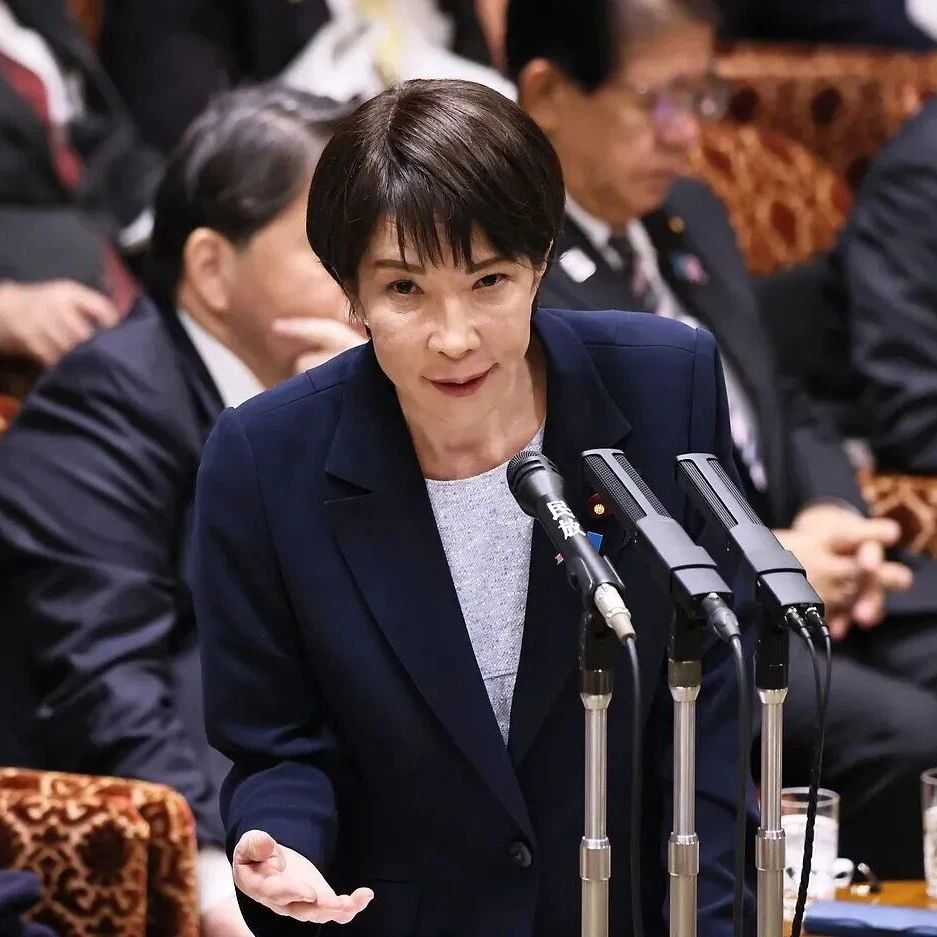
日媒:高市早苗若修改“无核三原则”必将引发强烈批评
Xin Hua She· 2025-11-15 13:10
Core Points - Japanese Prime Minister Fumio Kishida is considering revising the "Three Non-Nuclear Principles" during the update of the National Security Strategy and other security documents, which could signify a shift in Japan's post-war security policy [1] - The "Three Non-Nuclear Principles" established in 1967 state that Japan will not possess, manufacture, or introduce nuclear weapons, and have been a fundamental policy since their adoption in 1971 [1] - Kishida aims to maintain the stance of not possessing or manufacturing nuclear weapons but is contemplating allowing the introduction of nuclear weapons to enable U.S. military vessels to dock in Japan, thereby enhancing U.S. nuclear deterrence [1] Summary by Sections National Security Strategy - The revision of the National Security Strategy may lead to a modification of the "Three Non-Nuclear Principles," which has been a cornerstone of Japan's defense policy [1] - The update is expected to provoke strong criticism both domestically and internationally if changes are made [1] Public Sentiment - The "Three Non-Nuclear Principles" have historically received broad support from the Japanese public, especially given Japan's experience during World War II [2] - There is a call for the Prime Minister to deeply understand the implications of altering this long-standing policy, emphasizing that such a decision should not be made lightly [2]
如愿以偿的高市早苗如何偿还政治赌债
Qi Lu Wan Bao· 2025-10-27 15:37
Core Points - The election of Sanna Takashi as Japan's first female Prime Minister is marked by political compromises with the Japan Innovation Party, raising concerns about her stability in office [1] - The collaboration between the Liberal Democratic Party (LDP) and the Japan Innovation Party is fraught with policy disagreements, particularly regarding the "sub-capital" concept aimed at decentralizing power [2] - The proposed reduction of 10% in the number of Diet members primarily targets proportional representation, which could disadvantage other political parties and provoke internal dissent within the LDP [3][4] - The agreement to ban corporate and organizational political donations poses a significant challenge for the LDP, especially after the departure of Komeito from the ruling coalition [4] Group 1 - Sanna Takashi's ascension to the Prime Minister's position is seen as a "political gamble" that may require repayment of compromises made with the Japan Innovation Party [1] - The Japan Innovation Party's demand for the "sub-capital" plan could lead to significant financial implications for the government, with estimates suggesting a need for at least 7.5 trillion yen (approximately 352 billion RMB) if central administrative functions are relocated [2] - The political landscape is complicated by the fact that the Japan Innovation Party's members predominantly come from small electoral districts, while other parties rely heavily on proportional representation, leading to potential conflicts [4] Group 2 - The joint governance agreement between the LDP and the Japan Innovation Party only expresses a desire to pass the proposal for reducing Diet members, indicating a lack of commitment [5] - The Japan Innovation Party's strategy of distancing itself from the LDP while maintaining a cooperative agreement suggests a lack of trust, allowing for a potential exit if conflicts arise [5] - Overall, the partnership between the LDP and the Japan Innovation Party appears to be a temporary arrangement, with both parties pursuing their political interests at the expense of long-term stability [5]
专家分析高市早苗首相之路:新执政联盟基础不牢面临不确定性
Nan Fang Du Shi Bao· 2025-10-21 15:46
Core Points - The election of Sanna Takichi as Japan's first female Prime Minister marks a significant milestone in Japanese politics, breaking the "glass ceiling" in a traditionally male-dominated political landscape [1][2][3] - The successful formation of a coalition between the ruling Liberal Democratic Party (LDP) and the second-largest opposition party, Japan Innovation Party, was crucial for Takichi's election, despite not achieving a majority in both houses [2][3] - The failure of major opposition parties to unite against the LDP allowed Takichi to secure her position, as the Japan Innovation Party chose to ally with the LDP instead of forming a united front with other opposition parties [3] Coalition Dynamics - The new coalition between the LDP and Japan Innovation Party is characterized as a "non-cabinet cooperation," which is inherently more fragile than previous alliances [5][6] - The LDP's long-standing partnership with the Komeito party lasted 26 years, but the sudden withdrawal of Komeito created unprecedented instability in Japanese politics [4][6] - The lack of prior collaboration between the LDP and Japan Innovation Party raises questions about the durability of their alliance, as they have historically been competitors [7] Policy Implications - The coalition's agreement on contentious issues, such as political funding, reflects a temporary consensus rather than a comprehensive resolution, indicating potential future conflicts [8] - The new administration is expected to maintain Japan's existing foreign policy framework, particularly regarding the U.S.-Japan alliance, with no significant changes anticipated in the short to medium term [9][10] - The appointment of Toshimitsu Motegi as Foreign Minister is seen as a strategic move to leverage his diplomatic experience, which may help mitigate potential extremes in foreign policy under Takichi's leadership [11]