
家庭服务机器人

Search documents
家庭服务机器人布局急行军,家电企业机遇与风险并存
Di Yi Cai Jing· 2025-07-31 09:51
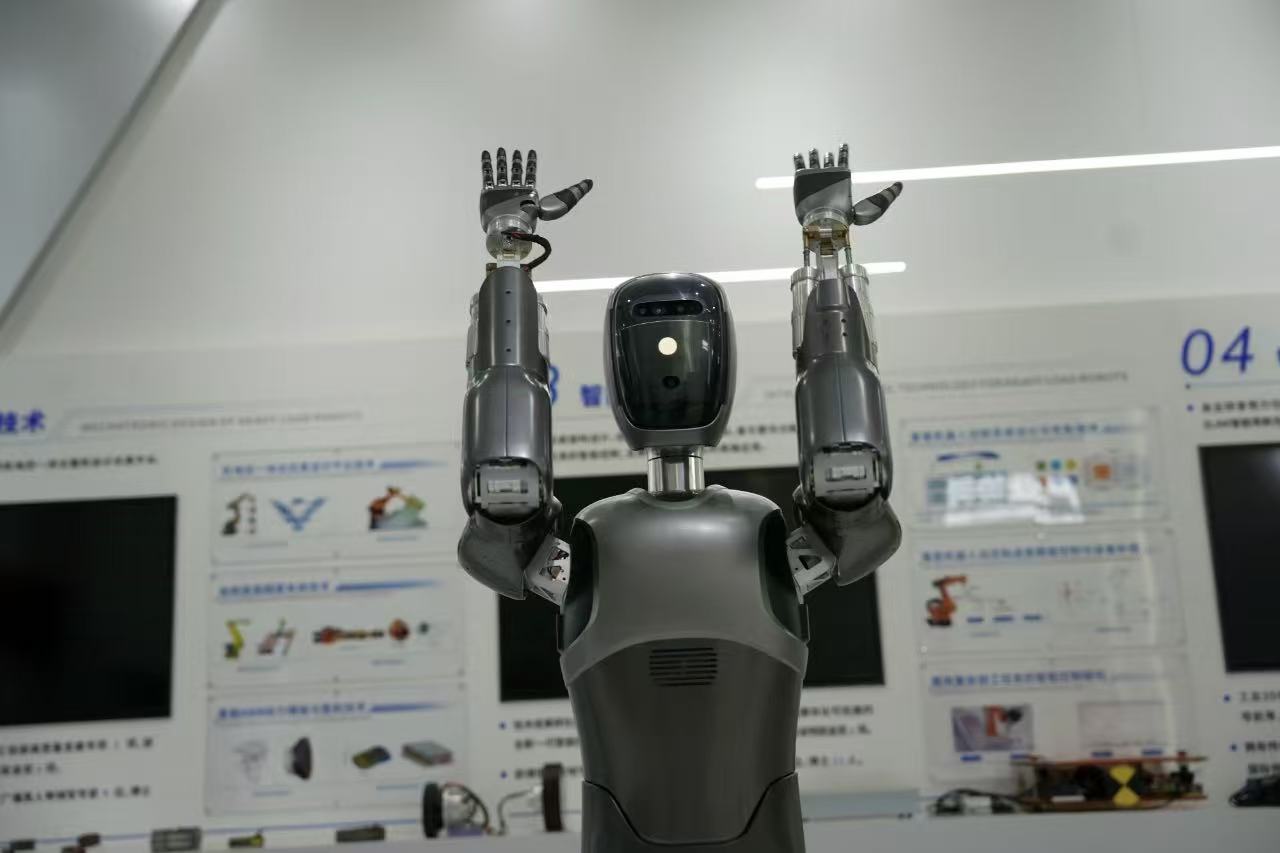
Group 1 - Investment in household service robots is experiencing a surge, with major appliance companies entering the market, presenting both opportunities and risks [2] - Midea Group showcased its humanoid robot "Meila" at the 2025 World Artificial Intelligence Conference and signed a cooperation agreement for a 1.5 billion yuan investment in an embodied intelligence technology platform project [2] - Haier Group launched its household service robot "Haiva," with Chairman Zhou Yunjie predicting that caregiver robots will become more common than cars [2] Group 2 - The aging population in China is driving demand for household robots, with over 300 million people aged 60 and above expected by 2024, accounting for 22% of the total population [2] - AI advancements are providing favorable conditions for the development of robotic and embodied intelligent devices in household settings [2] - Traditional home appliance markets are stagnating, prompting companies to seek new growth opportunities in the household service robot sector [2] Group 3 - GGII predicts that the widespread adoption of household embodied intelligent service robots will not occur until after 2030 [3] - Appliance companies possess advantages in household scenario data and brand channels but need to improve in AI algorithms and motion control to compete effectively [3] - The competition among appliance manufacturers in the robot sector may boost existing product sales and valuations, but the return on investment remains uncertain [3] Group 4 - Current humanoid robots are priced at several hundred thousand yuan, making them less cost-effective than hiring human caregivers for basic tasks [3] - Household humanoid robots must balance generality and efficiency, as family needs and scenarios vary widely [3] - Privacy protection and data security issues also pose challenges for the development of household service robots [3]


擦窗机器人市场需求爆发 玩家涌入要防“成长的烦恼”丨机器人新视界
证券时报· 2025-06-04 01:30
Core Viewpoint - The window cleaning robot industry is experiencing significant growth driven by increasing demand and technological advancements, but it also faces challenges such as market saturation and quality concerns [2][4][10]. Demand Explosion - The Chinese market for household window cleaning robots is projected to exceed 1 billion yuan in 2024, with a year-on-year growth rate of 35.7%. In the first quarter of 2025, the market size reached 430 million yuan, reflecting a 43.3% increase [4]. - The market has seen a demand turning point in recent years, attracting substantial capital and new players. The leading company, Ecovacs, launched the first household automatic window cleaning robot in 2011 and held a 62.3% market share in Q1 2025 [4]. Continuous Technological Breakthroughs - Technological advancements have significantly improved the performance of window cleaning robots, addressing safety and cleaning efficiency issues. Modern products now feature smart route planning, automatic window frame detection, and strong suction capabilities [7][8]. - For instance, Ecovacs' W2 PRO model utilizes WIN-SLAM 4.0 algorithm, offering seven cleaning modes and a speed of 14 cm per second, representing a leading solution in the private sector [8]. Facing "Growing Pains" - The industry is experiencing a price war, with products ranging from a few hundred to over a thousand yuan. Many new entrants are adopting low-price strategies, leading to a mix of product quality and market confusion [10][11]. - The low-cost approach may harm consumer perception of the entire category, as poor experiences with low-quality products can deter potential buyers [10]. Breaking Through Application Scenario "Ceiling" - While vertical products like window cleaning robots have achieved maturity in cleaning efficiency and user experience, they face limitations in application scenarios. Current uses are primarily in residential and commercial window cleaning [12]. - Companies are exploring new markets, such as Ecovacs' self-powered technology that allows for applications beyond traditional windows, including hotel facades and commercial complexes [12].


扫地机器人行业内外销更新
2025-04-15 14:30
Summary of Conference Call Industry Overview - The conference focused on the global robotic vacuum cleaner industry, with specific emphasis on market data for 2024 - According to IDC, global shipments of robotic vacuum cleaners are projected to reach 20.6 million units in 2024, representing an 11% year-over-year growth, with a total market value of $9.3 billion [1] Company Performance - Stone Technology leads the market with a 16% share in unit sales and a 22.3% share in revenue for 2024, particularly strong in the Nordic region [1] - iRobot, facing significant operational challenges, is projected to generate $682 million in revenue for 2024, down 23% year-over-year, with a loss of $160 million [2] - iRobot's revenue for Q4 was only $172 million, a 44% decline, with a quarterly loss exceeding $70 million [2] Market Dynamics - Stone Technology has seen a continuous increase in market share, while iRobot's share is declining, particularly in markets outside the US and Japan, where Chinese brands are performing better [3][4] - In the US Amazon market, Stone Technology has achieved a market share of 25%, while iRobot's share is around 13% [5][6] - The competitive landscape is shifting, with Chinese brands like Dreamy and Roborock gaining traction in both online and offline channels [7][8] Sales Channels and Growth - The online and offline sales channels are now evenly split, with significant growth in both areas. Stone Technology's offline sales grew over 300% during the last Black Friday [6] - In Germany, Stone Technology's sales growth reached 75% in early 2024, outperforming competitors [7] - The overall market in Europe is expected to see a growth rate of 40-50% in Q1 2024 [9] Domestic Market Insights - In the domestic market, Stone Technology's GMV increased by 200% in February 2024, benefiting from government subsidies that have expanded coverage [10][11] - The introduction of cost-effective products is expected to enhance market penetration in lower price segments [12] Financial Projections - For Q1 2024, a conservative estimate predicts a revenue growth of 50%, with potential profit margin declines due to increased marketing expenses for new products [13][14] - The company anticipates a recovery in profit margins in Q2 2024, driven by improved gross margins and a higher proportion of mid-to-high-end products [15][16] Product Innovations - The G30 Space product, launched on March 16, 2024, features advanced cleaning capabilities, including a mechanical arm for enhanced functionality [19][20] - This product represents a significant shift towards multifunctional home service robots, indicating a broader trend in the industry [22][23] Conclusion - The robotic vacuum cleaner industry is experiencing rapid growth, with Stone Technology positioned as a market leader. The competitive landscape is evolving, with increasing pressure on traditional players like iRobot. The introduction of innovative products and government support in the domestic market are expected to drive further growth in 2024 [24]
