
开放型世界经济

Search documents
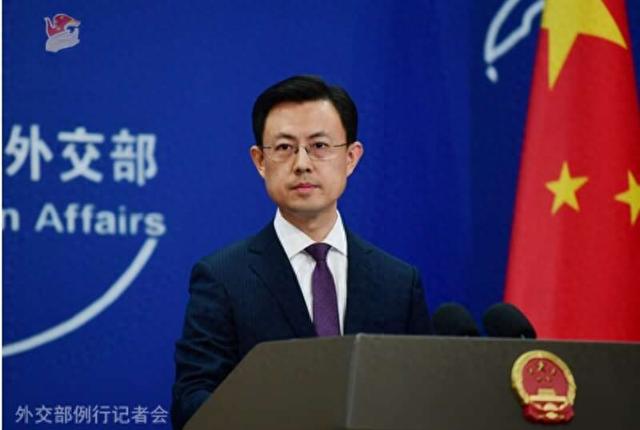
何立峰将出席世界经济论坛2026年年会并访问瑞士,外交部介绍有关安排
Xin Lang Cai Jing· 2026-01-16 09:52
Group 1 - The Chinese Vice Premier He Lifeng will attend the World Economic Forum Annual Meeting in Davos, Switzerland, from January 19 to 22, 2026, at the invitation of the World Economic Forum and the Swiss Federal Government [1][3] - The theme of this year's forum is "Spirit of Dialogue," addressing the current global economic uncertainties and the need for cooperation to enhance global economic stability and development [1][3] - The meeting will serve as a platform for discussing global economic trends and promoting collaborative development, with an emphasis on multilateralism and an open world economy [1][3] Group 2 - During his visit, He Lifeng will meet with Swiss Federal President and Minister of Economic Affairs, Education and Research, Parmelan, to discuss enhancing Sino-Swiss relations and practical cooperation [3] - The year 2026 marks the 10th anniversary of the Sino-Swiss Innovation Strategic Partnership and the beginning of China's 14th Five-Year Plan, presenting new opportunities for cooperation [3] - The visit aims to expand cooperation areas and achieve more mutually beneficial outcomes in the Sino-Swiss Innovation Strategic Partnership [3]

商务部部长王文涛《求是》刊文:坚定不移扩大高水平对外开放
Xin Lang Cai Jing· 2026-01-01 12:36
Core Viewpoint - The article emphasizes the importance of expanding high-level opening-up as a strategic directive for promoting deep reforms and high-quality development in China, as outlined in Xi Jinping's "The Governance of China" Volume V [1] Group 1: Understanding Xi Jinping's Important Discourses on Opening-Up - Xi Jinping's discourses on opening-up are rooted in Marxist theory and reflect a deep understanding of the global market and international division of labor, asserting that "openness is an important driving force for human civilization and a necessary path for global prosperity" [2] - The wisdom derived from Chinese traditional culture highlights the historical significance of openness and inclusivity, as exemplified by the Silk Road and the spirit of mutual benefit and cooperation [3] - Local governance practices have accumulated experiences that emphasize the importance of openness, with various regions in China implementing policies to enhance both domestic and international openness [4] Group 2: Achievements and Transformations in Opening-Up - Under Xi Jinping's guidance, China's opening-up has achieved historic accomplishments and transformations, with a focus on integrating domestic and international markets [7] - China has adopted a path of opening-up that aligns with national conditions and global trends, maintaining independence while actively engaging with the world [8] - The total trade volume has remained the highest globally for eight consecutive years, with exports stabilizing at over 14% of the world's total and imports increasing from 9.7% in 2012 to 10.4% in 2024 [8] Group 3: New Developments in Opening-Up Strategies - The article outlines a commitment to enhancing the quality of trade and investment cooperation, with a focus on expanding institutional openness and promoting high-quality development [14] - There is an emphasis on deepening global partnerships and expanding cooperation in various fields, including digital economy and green development, as part of the Belt and Road Initiative [15] - The need for a robust security framework to safeguard the benefits of opening-up is highlighted, with measures to enhance export control systems and risk management [17]
受权发布丨中华人民共和国对外贸易法
Xin Hua Wang· 2025-12-27 12:55
Core Points - The law aims to promote high-level opening up of foreign trade, ensure high-quality development, maintain trade order, protect the legitimate rights of trade operators, and safeguard national sovereignty, security, and development interests [2][7]. Group 1: General Principles - The law applies to foreign trade and related intellectual property protection [3]. - Foreign trade is defined as the import and export of goods, technology, and international service trade [4]. - The work of foreign trade should serve the national economic and social development and promote the construction of a strong trading nation [5]. - The State Council is responsible for overseeing national foreign trade work according to this law [6]. Group 2: Trade Operators - Foreign trade operators are defined as individuals or organizations that engage in foreign trade activities in accordance with the law [10]. - Operators must obtain qualifications for foreign labor cooperation and comply with relevant regulations for foreign contracting projects [10]. Group 3: Import and Export of Goods and Technology - The state allows the free import and export of goods and technology, except as otherwise provided by law [13]. - The State Council may implement automatic licensing for certain goods based on monitoring import and export conditions [17]. - The state can prohibit or restrict the import and export of certain goods and technologies for reasons including national security [19][20]. Group 4: International Service Trade - The state encourages various modes of international service trade, including cross-border delivery and overseas consumption [27]. - The State Council manages international service trade in accordance with this law and other relevant regulations [28]. Group 5: Intellectual Property Protection - The state strengthens the protection of intellectual property related to foreign trade and may take measures against the import of goods that infringe on intellectual property rights [32][33]. Group 6: Trade Order - In foreign trade activities, operators must not engage in monopolistic or unfair competition practices [24]. - The law outlines specific prohibited actions, including forgery of origin marks and evasion of taxes [25]. Group 7: Trade Investigation - The State Council may conduct investigations into foreign trade activities to maintain order and assess impacts on domestic industries [27][30]. Group 8: Trade Remedies - The state can take appropriate trade remedy measures based on investigation results, including anti-dumping and countervailing measures [44][45]. Group 9: Trade Promotion - The state formulates strategies to promote balanced development in foreign trade and supports the establishment of financial institutions for trade services [56][57]. - The law encourages the development of digital trade and green trade systems [60][61]. Group 10: Legal Responsibilities - Violations of the law can result in fines and restrictions on future trade activities [71][72]. - The law specifies penalties for unauthorized import and export activities [41][43]. Group 11: Miscellaneous Provisions - The law will come into effect on March 1, 2026 [46].
对外贸易法全文发布,2026年3月1日起施行
Xin Lang Cai Jing· 2025-12-27 11:29
Group 1 - The law aims to promote high-level opening-up and high-quality development of foreign trade, maintain trade order, protect the legitimate rights and interests of foreign trade operators, and promote the healthy development of the socialist market economy [1] - The law applies to foreign trade and related intellectual property protection [2] - Foreign trade is defined as the import and export of goods, technology, and international service trade [3] Group 2 - The foreign trade work should serve the national economic and social development and promote the construction of a strong trading nation [4] - The State Council is responsible for overseeing national foreign trade work according to this law [5] - The country implements a unified foreign trade system, encourages the development of foreign trade, and maintains a fair and free trade order [6] Group 3 - The country establishes a compliance mechanism for trade policies that align with international rules [7] - China promotes and develops trade relations with other countries and regions based on the principle of equality and mutual benefit [7] - The country can take corresponding measures against any country or region that adopts discriminatory measures against China in trade [7] Group 4 - Foreign trade operators are defined as individuals or organizations that engage in foreign trade activities in accordance with the law [8] - Those engaged in foreign labor cooperation must obtain the necessary qualifications [9] - The state may implement state-run trade management for certain goods, allowing only authorized enterprises to conduct import and export business [9] Group 5 - The state permits the free import and export of goods and technology, except as otherwise provided by law [11] - The State Council may implement automatic licensing for certain goods based on monitoring import and export situations [11] - The state can prohibit or restrict the import and export of certain goods and technologies for reasons such as national security and public interest [13][14] Group 6 - The state encourages various models of international service trade, including cross-border delivery and overseas consumption [27] - The State Council manages international service trade in accordance with this law and other relevant regulations [28] - The state can prohibit or restrict international service trade for reasons such as national security and public health [29] Group 7 - The state strengthens intellectual property protection related to foreign trade and promotes international cooperation in this area [20] - Measures can be taken against the import of goods that infringe on intellectual property rights and harm trade order [21] - The state can take necessary measures against countries that do not provide adequate intellectual property protection for Chinese entities [21] Group 8 - The law prohibits monopolistic or unfair competition practices in foreign trade activities [22] - Specific behaviors that violate trade order, such as smuggling and tax evasion, are strictly prohibited [23] - The State Council can announce and take necessary measures against violations that harm foreign trade order [39] Group 9 - The state can take appropriate trade remedy measures based on the results of foreign trade investigations [44] - Anti-dumping measures can be implemented against products entering the market at below normal value that harm domestic industries [45] - Safeguard measures can be taken in response to a significant increase in imports that threaten domestic industries [48] Group 10 - The state supports the development of foreign trade by establishing financial institutions and improving insurance measures [56] - The state encourages the innovation of foreign trade models, including cross-border e-commerce [59] - The state promotes the digital development of foreign trade and supports the use of digital tools in trade activities [60]
中国驻墨西哥使馆对美方抹黑中国出口商品言论表示强烈不满
Xin Hua She· 2025-12-27 06:48
Core Viewpoint - The Chinese Embassy in Mexico expressed strong dissatisfaction and firm opposition to recent comments made by Navarro, a senior advisor to the White House, which attacked Chinese exports and incited economic confrontation with China [1] Group 1: Political Context - Navarro's remarks are seen as an attempt to politicize and weaponize trade issues, serving as a cover for hegemonic practices [1] - The U.S., as a major beneficiary of the global economic trade system since World War II, is urged to take responsibility for promoting global cooperation and maintaining trade [1] Group 2: Economic Principles - The Chinese spokesperson emphasized that openness leads to progress while closure results in backwardness [1] - China advocates for resolving trade differences through equal dialogue and negotiation, opposing unilateralism, protectionism, and discriminatory measures [1] Group 3: Commitment to Global Economy - In the face of increasing global economic uncertainty, China remains committed to building an open world economy and welcomes countries to share in its large market [1] - The spokesperson encouraged mutual achievement and common development through intertwined interests [1]
中方:纳瓦罗言论极为卑劣,坚决反对!
Jin Rong Jie· 2025-12-27 01:29
Core Viewpoint - The article highlights the criticism of U.S. trade advisor Navarro's remarks against Chinese exports, emphasizing the negative implications of unilateralism and protectionism in international trade [1] Group 1: Navarro's Statements - Navarro's comments in Mexican media suggest that Mexico's decision to raise tariffs on Chinese goods marks a significant milestone in international trade, encouraging U.S. allies to follow suit [1] - The article describes Navarro as a right-wing politician who politicizes and weaponizes economic issues, aiming to create a narrative that supports U.S. hegemony [1] Group 2: China's Response - The Chinese Embassy in Mexico expresses strong dissatisfaction and opposition to Navarro's statements, advocating for equal dialogue to resolve trade differences [1] - China emphasizes its commitment to building an open world economy and invites countries to benefit from its large market, promoting mutual development through shared interests [1] - The article criticizes U.S. unilateralism and economic coercion, arguing that such actions lead to a zero-sum game and undermine global cooperation [1]

中方称纳瓦罗言论极为卑劣
Xin Lang Cai Jing· 2025-12-27 00:11
Core Viewpoint - The article highlights China's strong opposition to recent comments made by U.S. trade advisor Navarro, which are seen as an attempt to politicize and weaponize economic issues, undermining global trade cooperation [1] Group 1: China's Response to Navarro's Comments - China expresses strong dissatisfaction and firm opposition to Navarro's remarks, labeling them as extremely despicable [1] - The Chinese embassy in Mexico criticizes Navarro for trying to incite U.S. allies to follow Mexico's lead in raising tariffs against China and other Asian countries [1] - The article emphasizes that Navarro's actions are part of a broader trend of U.S. unilateralism and economic coercion, which China firmly opposes [1] Group 2: China's Stance on Global Trade - China advocates for resolving economic and trade differences through equal dialogue and negotiation, rejecting any form of unilateralism, protectionism, and discriminatory measures [1] - The article asserts that China is committed to building an open world economy and encourages countries to share in China's market growth, promoting mutual development [1] - It is stated that the U.S. should take responsibility for promoting global cooperation and maintaining global trade, rather than pursuing a zero-sum game approach [1]
中国驻墨西哥使馆:奉劝纳瓦罗之流认真反思错误,停止自欺欺人的表演
Xin Lang Cai Jing· 2025-12-26 23:06
Core Viewpoint - The article criticizes U.S. trade advisor Navarro's remarks about increasing tariffs on Chinese goods, labeling them as politically motivated and harmful to international trade relations [1]. Group 1: U.S. Trade Policy - Navarro's comments suggest that Mexico's decision to raise tariffs on Chinese goods marks a significant shift in international trade, encouraging U.S. allies to follow suit [1]. - The article argues that the U.S. is misusing its position in the global trade system to promote unilateralism and economic coercion, which undermines cooperative trade practices [1]. Group 2: China's Position - China emphasizes the importance of dialogue and negotiation to resolve trade disputes, opposing unilateralism and protectionism [1]. - The article highlights China's commitment to building an open world economy and invites other countries to benefit from its market, promoting mutual development [1].
外交部:中国开放的大门会越开越大 发展机遇会越来越多
Yang Shi Xin Wen Ke Hu Duan· 2025-12-23 12:34
Group 1 - The core viewpoint is that the full closure operation of Hainan Free Trade Port represents a significant example of China's institutional opening, bridging the global market and China's vast domestic demand [1] - Hainan Free Trade Port is expected to provide new opportunities for other countries and has attractiveness for the Asia-Pacific region and beyond [1] - The establishment of Hainan Free Trade Port is seen as a key element in China's high-level opening-up strategy, as highlighted in the 20th Central Committee's Fourth Plenary Session [1] Group 2 - The Central Economic Work Conference has identified "maintaining openness and promoting multi-field cooperation for mutual benefit" as a key task for the upcoming year [2] - China's commitment to opening its doors wider is expected to create more development opportunities and inject new momentum for global common prosperity [2]
外交部:相信海南自贸港将成为中国高水平对外开放的重要门户
Xin Hua Wang· 2025-12-23 10:58
Core Viewpoint - The establishment of Hainan Free Trade Port is seen as a significant step in China's high-level opening up to the world, providing new opportunities for global cooperation and prosperity [1][2]. Group 1: Hainan Free Trade Port - Hainan Free Trade Port has officially started its full island closure operation, which is viewed as a bridge between the global market and China's vast domestic demand [1]. - The development of Hainan Free Trade Port is expected to offer new opportunities for other countries and is attractive to the Asia-Pacific region and beyond [1]. - The establishment of Hainan Free Trade Port is a key part of China's reform and opening-up history, marking a significant milestone since the establishment of Hainan Economic Zone in 1988 [1]. Group 2: China's Commitment to Openness - China is taking concrete actions to fulfill its commitment to openness amidst increasing global economic uncertainties, countering protectionism [2]. - The country has reduced the negative list for foreign investment access, completely removing restrictions in the manufacturing sector, and providing zero-tariff treatment for 100% of products to all least developed countries with diplomatic relations [2]. - In the first 11 months of this year, over 60,000 new foreign-invested enterprises were established in China, representing a year-on-year increase of 16.9%, while the total value of goods trade imports and exports exceeded 41 trillion yuan, growing by 3.6% year-on-year [2]. - The Central Economic Work Conference has identified "maintaining openness and promoting multi-field win-win cooperation" as a key task for economic work in the coming year [2].