微短剧产业发展

Search documents
微短剧要摆脱野蛮生长
Jing Ji Ri Bao· 2025-12-23 22:49
Core Insights - The rapid development of digital entertainment technology has led to the rise of micro-short dramas, which cater to users' fragmented consumption needs with their quick format of "3 minutes per episode, 1 hour to finish the entire series" [1] - The average production cycle for a micro-short drama is less than two weeks, attracting capital due to its "low threshold and quick return" characteristics, resulting in a sustained industry boom [1] - However, the industry faces challenges such as content homogenization, rough production quality, and high investment costs that squeeze profit margins [1] Industry Developments - The National Radio and Television Administration has implemented a "classification and tiered review" system to promote sustainable industry development, combining support for the industry with regulatory guidance [1] - Local governments are actively establishing policies and funding initiatives, such as the unveiling of the Taiyuan micro-short drama industry base and a three-year funding plan of 30 million yuan in Fujian, to support the sector [1] - Various regions are launching special policies and building industrial parks to promote the professionalization and quality enhancement of micro-short dramas, thereby creating a solid institutional framework for healthy industry development [1] Cultural Integration - The vitality of micro-short dramas lies in their connection to the public and their roots in everyday life, with local cultural heritage and regional characteristics serving as rich sources for creative content [2] - The rise of micro-short dramas is a natural outcome of the evolution of media ecology and the upgrading of cultural consumption, emphasizing the need for industry players to avoid homogenized competition and focus on cultural value and artistic quality [2]
河南:对符合条件的优秀剧本,一次性给予版权方最高不超30万元奖励
Zheng Quan Shi Bao Wang· 2025-12-19 10:16
Core Viewpoint - The Henan Provincial Government has released a set of policies aimed at promoting the high-quality development of the micro-short drama industry, with 15 specific measures to enhance content creation and improve the industry chain, positioning Henan as a competitive hub for micro-short dramas nationally [1] Group 1: Policy Measures - The policies include rewards for outstanding script creation, encouraging writers to participate actively in micro-short drama production [1] - Establishment of a high-quality micro-short drama script database to support ongoing and upcoming projects with financial assistance [1] - Creation of a reserve library for excellent online novels and a platform for the incubation of IP rights and adaptations in the Central Plains region [1] Group 2: Financial Incentives - A one-time reward of up to 300,000 yuan will be given to the copyright holders of excellent scripts selected for various national programs, with each script eligible for only one application [1]
微短剧走好长远路
Jing Ji Ri Bao· 2025-12-06 21:57
Core Insights - The micro-short drama industry in Zhengzhou, Henan, has rapidly developed, becoming a significant player in China's content production landscape, with a production capacity accounting for approximately 40% of the national total [1][2] - In 2024, the market size for micro-short dramas in Zhengzhou is projected to reach 2.3 billion yuan, reflecting a year-on-year growth of 27.4% [2] - The industry is facing challenges such as talent shortages, content quality issues, and increasing competition, necessitating a shift towards higher-quality productions and innovative business models [4][5][6] Industry Growth - Zhengzhou has become a hub for micro-short drama production, with over 820 companies involved, marking a 29.3% increase from the previous year [2] - The city has seen a significant rise in the number of micro-short dramas produced, with 180+ dramas filmed in the first half of the year alone, surpassing the total output of the previous year [2] - The local government is actively supporting the industry through initiatives like the establishment of the "Elephant Theater" platform and funding for public filming locations [3] Economic Impact - The micro-short drama boom has stimulated related industries, including catering, accommodation, and logistics, with a reported 5% increase in orders for services around filming locations [3] - The transformation of traditional spaces into filming locations has created a unique "vertical store ecosystem" in Zhengzhou, enhancing the local economy [2] Challenges and Risks - The shift from paid to free viewing models has increased pressure on content creators to produce engaging material, as revenue is now tied to viewer engagement rather than upfront payments [4] - The industry is experiencing a talent shortage, particularly in key roles such as directors and screenwriters, which hampers production capabilities [5] - Issues of content homogenization and increased competition from other cities are leading to price wars and potential profitability risks for many production companies [6] Future Directions - The industry is encouraged to focus on quality over quantity, with a consensus among industry experts that the future lies in producing high-quality micro-short dramas [9] - Educational institutions in Henan are adapting their curricula to better prepare students for careers in the micro-short drama sector, addressing the talent gap [8] - There is a growing trend for companies to explore international markets, with some already attempting to replicate successful domestic models abroad [8]
中国传媒大学视听艺术研究中心发布报告:微短剧成促进消费、服务民生、传承文化新载体
Huan Qiu Wang· 2025-11-28 04:31
Core Insights - The report titled "Cultural Value Report of Micro-Short Drama Industry" was presented at a seminar held by Communication University of China, highlighting the cultural, social, aesthetic, and industrial values of micro-short dramas [1][4] - The industry is at a critical turning point, facing challenges such as sustaining innovation and adapting to AI's role in production [1][3] Group 1: Industry Development - Micro-short dramas are characterized as a dynamic and diverse audiovisual format, fostering a creative ecosystem where everyone can participate [3][4] - The "Micro-Short Drama+" model is expanding, showing traits of rooting down, growing up, breaking inward, and expanding outward [3] - The industry has formed distinct regional clusters across the country, contributing to employment and local economic development [4] Group 2: Cultural and Social Impact - Micro-short dramas are seen as a new form of popular art that reflects contemporary Chinese culture and serves as a cultural identifier [4] - The integration of micro-short dramas with various themes such as tourism, traditional culture, and public service is demonstrating their cultural value beyond mere entertainment [3][4] Group 3: Collaborative Initiatives - A script incubation plan for traditional cultural micro-short dramas was launched to encourage innovative and exemplary works [6] - The platform "Hongguo Short Drama" aims to collaborate with various provinces to explore local cultural resources and enhance the development of cultural industries [8]


争夺“短剧之都”,又一个中部省会入局
Mei Ri Jing Ji Xin Wen· 2025-11-07 16:50
Core Insights - The forum held in Changsha focused on the integration of culture and technology, emphasizing the support for the micro-short drama industry through a set of measures aimed at high-quality development [1] Group 1: Industry Development - Changsha has introduced ten measures to support the micro-short drama industry, including funding for filming bases, quality creation, and technology empowerment [1] - The micro-short drama market in China is projected to exceed the total annual box office for films for the first time in 2024, with a market size expected to reach 63.43 billion yuan in 2025 and grow to 85.65 billion yuan by 2027, reflecting a compound annual growth rate of 19.2% [1] - The micro-short drama production in Hunan province was only 3% of the national total in 2024, indicating a lag in development compared to other regions [1] Group 2: Regional Competition - Changsha aims to establish itself as a significant player in the micro-short drama industry, with the recent opening of the Tongguan Shudian Short Drama Film City, which is expected to produce 500 to 800 micro-short dramas annually [2] - The success of Zhengzhou's "Shudian" model, which has rapidly gained traction due to cost advantages and cluster effects, serves as a benchmark for Changsha's development strategy [2] Group 3: Talent and Infrastructure - Changsha has seen a net inflow of 1 million people over the past decade, with 80% being young individuals, positioning it as one of the cities with the highest population growth in China [4] - The local entertainment industry is robust, supported by major platforms like Mango TV and the establishment of a national copyright research center, enhancing the region's capability in copyright protection for micro-short dramas [5]
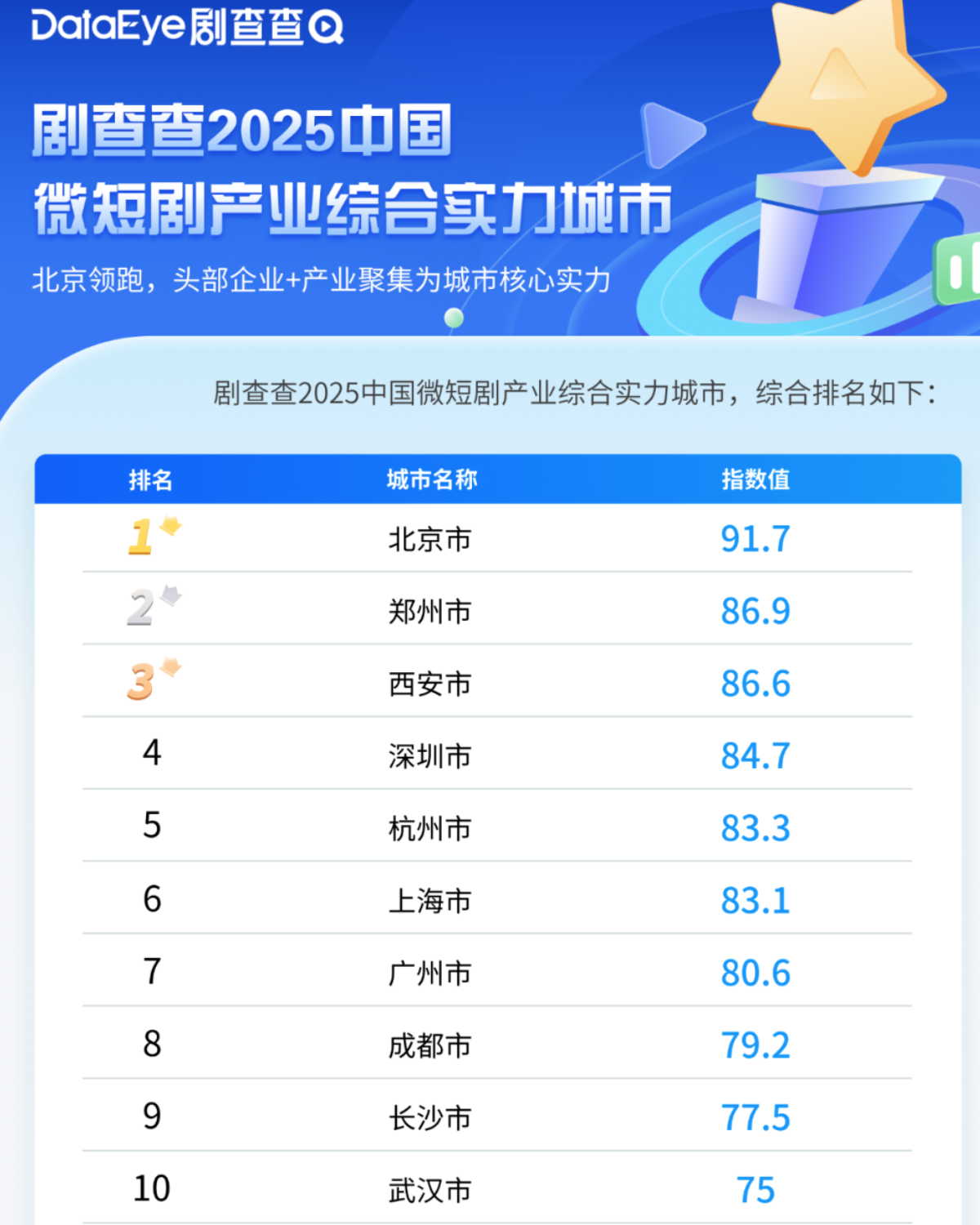
争夺“短剧之都”,长沙入局
3 6 Ke· 2025-11-07 02:21
Group 1 - The forum held in Changsha focused on the integration of culture and technology, emphasizing the protection of copyrights and innovation in the micro-short drama industry [1] - The newly released measures aim to support the high-quality development of the micro-short drama industry in Changsha, including funding for projects in six key areas [1] - The micro-short drama market in China is projected to exceed 63.43 billion yuan in 2025, with a compound annual growth rate of 19.2% expected until 2027 [1] Group 2 - Changsha aims to establish itself as a major hub for micro-short drama production, with the recent opening of the Tongguan Shudian Short Drama Film City, which plans to produce 500 to 800 micro-short dramas annually [2] - The city is learning from the success of Zhengzhou, which has rapidly developed its short drama industry through cost advantages and cluster effects [2] Group 3 - Changsha has seen a significant population influx, particularly among young people, making it one of the cities with the highest net population inflow in China [4] - The local entertainment industry is robust, supported by major platforms like Mango TV and the establishment of a national copyright research center [4] - A copyright protection alliance for micro-short dramas has been formed to safeguard intellectual property rights in the industry [4] Group 4 - The rise of short dramas has led to a significant shift in the distribution of film and television resources across cities, with Changsha now entering the competitive landscape [5]
南京微短剧产业联盟成立,“攥指成拳”闯千亿级赛道
Nan Jing Ri Bao· 2025-10-21 02:13
Core Insights - The Nanjing micro-short drama industry is rapidly emerging as a significant player in the trillion-yuan market, with over 260 related enterprises and more than 1,500 high-quality productions achieving over 500 million views within 24 hours of release [1][2][3] Group 1: Industry Growth and Achievements - The short drama "He Ku Xiang Si Zhu Yu Nian," produced by Nanjing Baichuan Cultural Technology Co., surpassed 500 million views in 24 hours, marking it as a blockbuster [2] - The industry has seen a user base of 662 million in China by the end of last year, surpassing that of food delivery and ride-hailing services, with a market size exceeding 50.4 billion yuan [2] - Nanjing's micro-short drama sector has generated revenue of 4 billion yuan from 2022 to 2024, with a complete industry chain established from IP incubation to film production and precise distribution [3] Group 2: Competitive Advantages - Nanjing's micro-short drama industry benefits from its rich cultural heritage, abundant talent resources, robust industrial ecosystem, digital technology, innovative capabilities, and supportive policies, positioning it as a "hexagonal warrior" in the field [4][5] - The city hosts 54 universities that continuously supply talent in various fields related to film production, including computer science, artificial intelligence, and directing [5] Group 3: Policy and Infrastructure Support - The establishment of the Nanjing Micro-Short Drama Industry Alliance aims to enhance resource integration and address market demands, fostering collaboration among creators, production agencies, and platform operators [6][8] - The alliance will also attract talent, funding, and technology, promoting collaborative development across the industry chain [6] Group 4: Future Directions - The industry is transitioning from "scale expansion" to "quality enhancement," with experts providing insights on policy guidance, industry ecology, data support, and technological applications to navigate this critical transformation [8] - A new service app, "Nanjing 'Ju' Hao," was launched to facilitate access to filming locations, policy support, and other resources, enhancing the operational efficiency of the micro-short drama industry [7]
多城打造微短剧名城,郑州短剧人才需求位列TOP1
Di Yi Cai Jing· 2025-10-20 10:34
Core Insights - The demand for talent in the micro-short drama industry is rapidly increasing, with a year-on-year growth of 26% in related job positions in the first three quarters of 2025, indicating a strong development momentum [1][2] - The micro-short drama market in China is projected to reach a scale of 634.3 billion yuan by 2025 and 856.5 billion yuan by 2027, surpassing annual box office revenues for the first time in 2024 [2] Talent Demand - The leading job position in micro-short drama production is editor, accounting for 15.9% of the total positions, followed by screenwriters at 10.0%, highlighting the importance of efficient editing and compelling storytelling [1] - Other significant roles include actors/models (8.6%), streamers (5.4%), and positions in short video operations (5.3%), ensuring a comprehensive talent chain for production [1] City Distribution - Zhengzhou leads in talent demand with a 13.3% share, experiencing a remarkable 75.6% year-on-year growth in the third quarter [2] - Beijing follows with a 12.9% share and a 36.4% increase, while Chengdu and Xi'an are emerging as regional production hubs with growth rates of 44.4% and 127.9%, respectively [2] Industry Development Initiatives - Zhengzhou has implemented a comprehensive plan to become a "micro-short drama creation capital," aiming for a market scale of 100 billion yuan by 2027, with over 820 related enterprises already established [3] - In Shaanxi, initiatives have been launched to support the micro-short drama industry, including the cultivation of 15 leading enterprises and the production of 200 quality micro-short dramas [4] - Hangzhou is developing a complete micro-short drama industry chain, focusing on writing, filming, broadcasting, evaluation, and investment [5]
西安和郑州,争当微短剧“霸总”
21世纪经济报道· 2025-09-23 02:51
Core Viewpoint - The micro-short drama market is projected to reach 100 billion yuan by 2027, with Xi'an and Zhengzhou emerging as key competitors in this space, each aiming to establish itself as a leading hub for micro-short dramas [1][14]. Group 1: Xi'an's Position - Xi'an has positioned itself as the "capital of micro-short dramas," with 60 out of 100 micro-short dramas produced in the city, housing over 600 production companies [2][5]. - The city has implemented supportive policies, including the establishment of a micro-short drama talent training base and a 50 million yuan fund to nurture professionals in the industry [5][6]. - Xi'an's cultural heritage provides a rich resource for content creation, but it faces challenges in maintaining its competitive edge amid increasing market competition [6][14]. Group 2: Zhengzhou's Growth - Zhengzhou ranks second in the country for annual micro-short drama production, with over 800 production companies and a workforce exceeding 30,000 [8][11]. - The city has seen a 29.3% increase in production companies and a fivefold increase in workforce size compared to 2023, with a market scale growth of 27.4%, reaching 2.3 billion yuan [12][13]. - Zhengzhou aims to establish itself as a "creation capital" by 2027, with plans to develop influential production bases and produce around 50 high-quality micro-short dramas [13][14]. Group 3: Competitive Dynamics - The competition between Xi'an and Zhengzhou reflects a broader struggle for resources, production models, and urban capabilities in the micro-short drama industry [14]. - Both cities are striving to balance rapid growth with the need for quality content, facing the challenge of transitioning from quantity to quality in their productions [14].
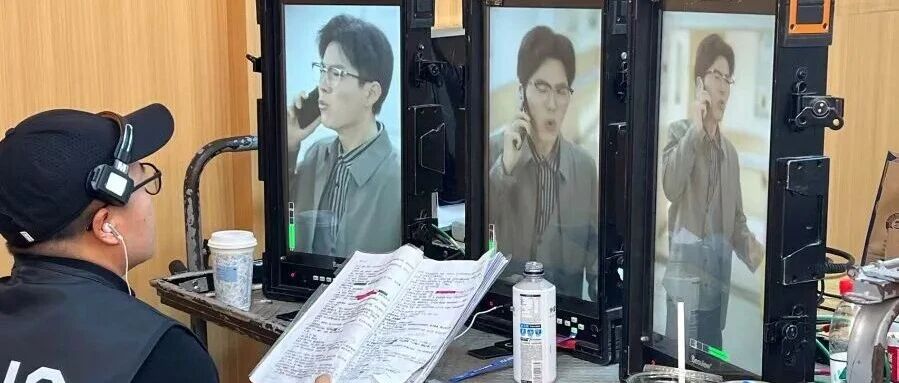
横店短剧现状:现代剧剧组“外逃”,日薪5000元招“爹”是骗局?
Xin Lang Ke Ji· 2025-09-23 01:03
Core Insights - The recent surge in demand for short dramas has led to a recruitment frenzy for middle-aged actors, but this trend is accompanied by hidden training traps and industry false advertising [2] - Despite the ongoing popularity of short dramas, there are signs of a decline in the number of production teams in Hengdian, with some modern drama teams relocating to cities like Xi'an and Zhengzhou due to rising costs and outdated facilities [2][8] Industry Growth - The micro-short drama market in China has seen explosive growth, with market sizes increasing from 368 million yuan in 2021 to 373.9 billion yuan in 2023, and projected to reach 50.5 billion yuan in 2024, surpassing film box office revenues for the first time [5] - Hengdian has become a major production hub for micro-short dramas, hosting over 1,190 production teams in 2024, with more than 2,300 teams already recorded in the first seven months of the year [5] Production Dynamics - The shift from long-form dramas to short dramas has significantly altered the work patterns of industry professionals, with some, like prop masters, reporting a 20%-30% increase in monthly income due to the higher volume of short projects [3] - The filming locations for short dramas in Hengdian include modern settings like hospitals and offices, but there is a noticeable decrease in the number of active production teams compared to peak periods [6][8] Competitive Landscape - Modern drama production teams are increasingly leaving Hengdian due to high costs and outdated facilities, with some opting for locations that offer better financial incentives and support [8] - Cities such as Xi'an and Zhengzhou are emerging as competitive alternatives, with established production bases and supportive policies aimed at attracting short drama projects [9] Regional Initiatives - Various cities, including Hangzhou and Nanning, are implementing supportive measures to develop their short drama industries, offering financial incentives and resources to attract production teams [9] - The choice of filming locations is influenced by the suitability of the scenery, the availability of industry support, and the formation of production clusters for micro-short dramas [11]