
收入分配制度

Search documents
我看“十五五”|对话余永定:投资合理增长是实现经济目标的关键
Bei Ke Cai Jing· 2025-11-02 00:12
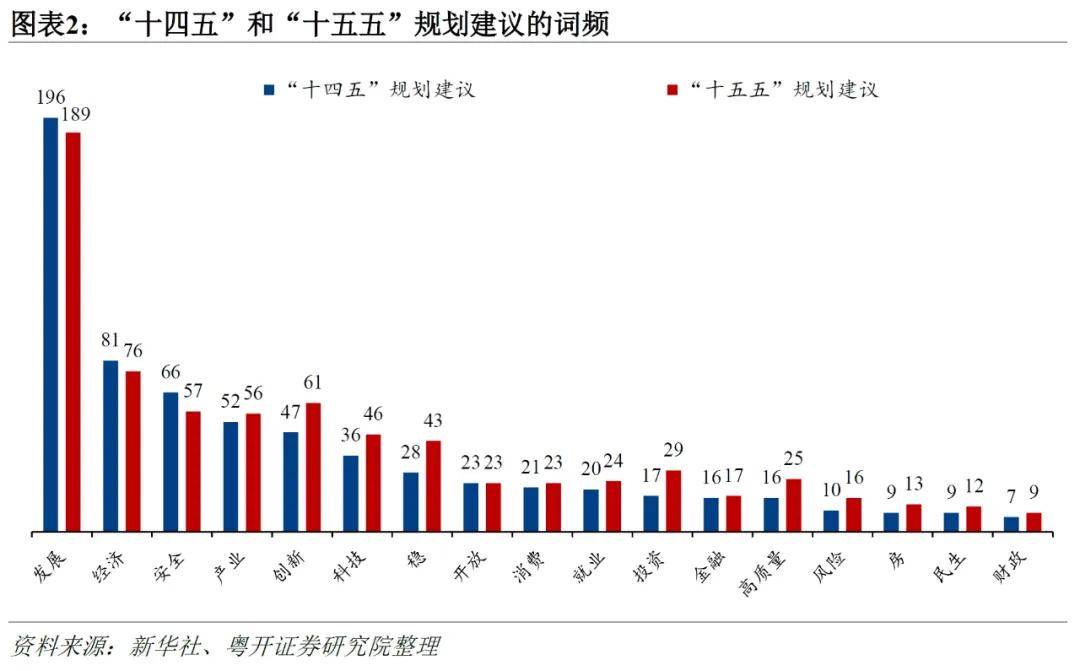
Core Viewpoint - The "14th Five-Year Plan" emphasizes achieving significant results in "high-quality development" as a primary goal for China's economic growth during this period [4][6]. Economic Growth and Investment - Economists suggest that China should maintain an average economic growth rate of around 5% during the "14th Five-Year Plan" period, considering the growth rates of capital accumulation, human capital investment, and technological progress [1][10]. - The government aims to expand effective investment, particularly in major strategic projects and key areas, to ensure reasonable growth in investment and improve investment efficiency [10][11]. Fiscal Policy - The "14th Five-Year Plan" highlights the importance of sustainable fiscal policy, with total government debt projected at 92.6 trillion yuan, representing a debt-to-GDP ratio of 68.7%, which is significantly lower than that of the US and G7 countries [7][8]. - The sustainability of fiscal policy is crucial, with the need to maintain a balance between economic growth and interest rates to ensure the government can meet its debt obligations [8]. Consumption and Demand - The plan mentions consumption 23 times, indicating a strong focus on boosting consumer demand, with suggestions for measures such as subsidies, tax reductions, and social security reforms to stimulate consumption [15][16]. - However, it is noted that increasing consumption rates do not necessarily correlate with improved social welfare, and higher investment rates are linked to higher economic growth [15][17]. Infrastructure Investment - The plan emphasizes the role of infrastructure investment in stimulating economic growth and consumer demand, suggesting that increasing infrastructure investment is essential for achieving the 5% economic growth target [19][20]. - The government is encouraged to raise the deficit ratio to support infrastructure projects, which can create a positive cycle of income and consumption growth [9][19]. Income Distribution - The plan proposes improving the income distribution system to increase the share of residents' income in national income distribution, which is deemed necessary for addressing income inequality and enhancing consumption [20].


新的五年规划,释放了哪些信号?
Sou Hu Cai Jing· 2025-10-29 01:46
Core Viewpoint - The "14th Five-Year Plan" emphasizes economic construction, technological self-reliance, and high-quality development in real estate, indicating a shift in focus towards sustainable growth and innovation-driven development [1][3][20]. Economic Growth and Structure - The plan aims for a per capita GDP of approximately $25,000 by 2035, with current figures at $13,500, projected to exceed $14,000 this year [4][5]. - To achieve this goal, an average GDP growth rate of over 4.4% is necessary over the next decade [6]. - The focus is shifting from investment-driven growth to consumption and innovation-driven growth, marking a significant structural change in the economy [11]. Regional Development - The plan highlights the need for optimized regional economic layouts and coordinated development, with major urban clusters like Beijing-Tianjin-Hebei, Yangtze River Delta, and Guangdong-Hong Kong-Macau Greater Bay Area identified as key growth areas [12][13]. - The strategy aims to address regional disparities, particularly the widening gap between northern and southern regions [13]. High-Tech Industry Development - A goal to establish a new high-tech industry over the next decade is set, with a focus on strategic emerging industries such as new energy, new materials, and aerospace [14]. - The high-tech sector is expected to reshape industrial structures and urban competitiveness, with significant market potential in areas like electric vehicles and low-altitude economy [15][16]. Real Estate Sector - The real estate sector is now positioned as a foundation for public welfare rather than a pillar of economic growth, indicating a transition from rapid expansion to quality development [20]. - Sales in the real estate market have declined significantly, with new and second-hand housing sales dropping from 1.93 billion square meters to 1.5 billion square meters since 2021 [22]. - The focus is shifting towards urban renewal rather than new construction, impacting land finance and necessitating new revenue sources for local governments [24]. Investment in Human Capital - The plan proposes measures to create a family-friendly society, including financial support for child-rearing and education, which may stimulate population growth [26][27]. - The expansion of free education is also highlighted, with a potential move towards 12 years of free education [27]. - Wage increases are anticipated, with recent adjustments to minimum wage standards across various provinces signaling a commitment to improving income distribution [29][31].
X @外汇交易员
外汇交易员· 2025-10-28 08:35
Employment & Income - Prioritizing employment with focus on new job creation, support for stable employment, and resolving structural employment issues [1] - Improving income distribution by increasing the proportion of residents' income in national income and labor compensation in primary distribution [2] - Implementing an income increase plan for urban and rural residents, effectively increasing the income of low-income groups, and steadily expanding the middle-income group [2] Education & Social Security - Expanding educational resources in towns with net population inflows of school-age children and steadily expanding the scope of free education [3] - Improving the national unified basic pension insurance system and developing a multi-level, multi-pillar pension insurance system [4] - Promoting high-quality development of real estate, optimizing the supply of affordable housing, and increasing the supply of improved housing according to local conditions [5] Healthcare & Population - Implementing a healthy China strategy, strengthening public health capabilities, and improving the disease control system to prevent major infectious diseases [5] - Advocating positive marriage and childbearing views, optimizing fertility support policies and incentive measures, and effectively reducing the cost of family birth, childcare, and education [6] - Improving the elderly care service network, strengthening the adaptation of public facilities for the elderly and barrier-free transformation, and developing medical care and nursing services [7] Green Development & Security - Promoting comprehensive green transformation of economic and social development, and building a beautiful China [8] - Accelerating the construction of a new energy system, continuously increasing the proportion of new energy supply, and promoting the safe, reliable, and orderly replacement of fossil energy [9] - Strengthening national security capabilities in key areas, ensuring the safety of food, energy resources, important industrial chains and supply chains, and major infrastructure [12]
熊园VS政策专家 四中全会,怎么看、怎么办?
2025-10-23 15:20
Summary of Key Points from Conference Call Industry Overview - The conference call discusses the Chinese economy and its strategic planning under the "Fifteen Plan" (十五规划), focusing on maintaining economic growth and addressing challenges in various sectors, particularly technology and real estate. Core Insights and Arguments 1. **Economic Growth Target**: The GDP growth target for the "Fifteen Plan" is expected to be set above the potential growth rate, reflecting a commitment to maintaining necessary growth levels [3][4][6]. 2. **Role of Technology Innovation**: Technology innovation is emphasized as a core component of the "Fifteen Plan," with increased fiscal support directed towards enterprises and industries to enhance their innovative capabilities [4][5]. 3. **Macroeconomic Stabilization Policies**: The implementation of macroeconomic stabilization policies aims to reduce market volatility and provide greater certainty for capital markets, thereby boosting investor confidence [6][7]. 4. **Deflationary Pressures**: The Chinese economy is currently facing deflationary pressures, particularly in the manufacturing and export sectors. Solutions include enhancing pricing power through supply-side adjustments [7][8]. 5. **Challenges in Domestic Demand**: The domestic market is under pressure, especially due to real estate issues and a slowdown in urbanization. Future urbanization efforts may focus on less developed regions to promote balanced development [8][9]. 6. **Unified National Market**: The establishment of a unified national market aims to address issues of chaotic low-price competition and promote positive price adjustments, which will support supply-side reforms [9][10]. 7. **Fiscal Policy for Economic Growth**: The fiscal policy for 2025 is designed to maintain a strong stance, with a nominal deficit rate of 4% and an actual deficit rate projected to remain around 10%, focusing on social welfare and transfer payments [10][11]. 8. **Employment Market Challenges**: The employment market faces challenges, particularly for low-skilled workers and recent graduates. Measures include subsidies for job stability and skills training [12][13]. 9. **International Trade Dynamics**: China's technology sector is expected to gain competitiveness, reducing reliance on U.S. trade, which enhances China's position in global trade dynamics [14][15][16]. 10. **Diversification of Trade Partners**: There is a trend towards diversifying trade partners, with increased trade with developing countries, particularly in Africa, to mitigate the impacts of changing U.S.-China trade relations [18]. Additional Important Insights - The call highlights the importance of aligning fiscal policies with social needs and adjusting the central-local fiscal relationship to alleviate local financial pressures [11][12]. - The discussion on the semiconductor industry indicates that China is on track to become a major player in chip exports, reflecting significant advancements in technology [16][17]. - The strategic approach to U.S.-China relations emphasizes a balance between responding to U.S. actions and maintaining a stable economic environment [17][18].