数据孤岛

Search documents
企业AI转型:2000万学费“买”来的15条教训
Sou Hu Cai Jing· 2025-07-01 00:55
Strategic Insights - The key to a successful AI strategy is not technological superiority but deep integration with business processes [2] - Not all problems are suitable for AI solutions; traditional methods can often provide more efficient and cost-effective results [3] - Pursuing long-term value in AI strategies often leads to greater success, as seen in the example of Amazon's investment in recommendation systems [4] - The ultimate measure of AI project success is the enhancement of business value, not the advancement of technology [5] Technical Considerations - The biggest barrier to AI implementation is not talent or funding, but "data silos" that hinder effective training and deployment of AI models [6] - Purchasing existing AI solutions is often more suitable for most companies than developing everything in-house [7] - Simpler, interpretable models are often more practical than complex models with large parameters [8] - The safety, ethics, and accountability of AI models are critical concerns that must be prioritized [9] Talent and Organization - Companies need talent that understands both business and AI, acting as a bridge between the two [10] - AI empowerment requires a culture where all employees understand AI's capabilities and limitations, rather than relying solely on a few experts [11] - Failures in AI projects are often due to organizational, cultural, and communication issues rather than technical shortcomings [12] - Cross-disciplinary talent is essential in the AI era to address the complexities of business [13] Implementation and Operations - AI deployment is not a one-time investment but requires ongoing optimization and monitoring [14] - Focusing on clearly defined small problems is often more successful than attempting to disrupt entire industries [15] - The user experience of AI tools is more important than the intelligence of the models themselves [17]


2025BCS大会开幕,齐向东:“万家造”和“两张皮”催生数据孤岛
Chang Sha Wan Bao· 2025-06-09 15:32
Core Insights - The importance of data for security has increased exponentially over the past decade, but the lack of a unified system has led to the creation of "data islands," severely hindering the implementation of security systems [3][4] - The phenomenon of "two skins" in business and security is prevalent, where security departments are not synchronized with business operations, leading to vulnerabilities and data breaches [4] Group 1: Data Isolation Issues - Many enterprises face challenges in implementing network security systems, with the data island problem being particularly prominent due to the fragmented nature of security devices and operations [3] - A case study of a leading financial institution revealed that the deployment of multiple firewall models from various brands resulted in inconsistent data formats and incompatible interfaces, complicating data collection and analysis [3] Group 2: Operational Challenges - The "manufactured by many" situation in security equipment was highlighted during the recent India-Pakistan conflict, where India's diverse equipment failed to perform effectively due to lack of standardization and poor data flow, contrasting with Pakistan's more integrated system [3] - Insufficient security investment and compatibility issues between new and old products are significant barriers to the effectiveness of overall security system construction [4]


齐向东:数据孤岛严重阻碍网络安全体系落地
Bei Jing Ri Bao Ke Hu Duan· 2025-06-05 14:00
Core Insights - The 2025 Global Digital Economy Conference highlighted the challenges faced by enterprises in implementing cybersecurity systems, particularly the issue of data silos [1][2] - Qi Anxin's chairman emphasized the exponential growth of data importance in security over the past decade, which has led to fragmented systems and isolated data [1] - The lack of a unified system has resulted in difficulties in data management and response capabilities within security operations centers [1] Group 1: Data Silos - The phenomenon of data silos is primarily caused by the "thousand manufacturers" situation of security devices, leading to inconsistent data formats and incompatible interfaces [1] - A case study of a leading financial institution revealed that the deployment of multiple firewall models from various brands resulted in chaotic data collection and analysis [1] - The fragmented nature of security data hampers comprehensive situational awareness and rapid response to incidents [1] Group 2: Business and Security Disconnection - The "two skins" phenomenon, where business operations and security measures are not aligned, was illustrated by an incident involving a financial data breach due to delayed communication between departments [2] - Insufficient investment in security and compatibility issues between new and old products are significant barriers to effective cybersecurity system construction [2] - Addressing these challenges requires a holistic approach to internal security systems, emphasizing the need for strategic thinking in overcoming obstacles [2]
首个全国性政务数据共享法规出台,哪些亮点值得关注
第一财经· 2025-06-05 07:21
Core Viewpoint - The recently published "Regulations on Government Data Sharing" marks the first national-level legislation in China aimed at promoting and regulating government data sharing, set to take effect on August 1. This regulation addresses the management system, directory management, sharing usage, platform support, and security measures related to government data sharing [1][3]. Group 1: Importance of Government Data Sharing - Government data is considered a crucial strategic resource for the nation, and promoting its sharing is vital for enhancing government efficiency, fostering economic and social development, and serving the public and enterprises [1][3]. - The regulation establishes a legal framework for government data sharing, marking a new phase of legal governance in this area [3][4]. Group 2: Management System and Responsibilities - The regulation creates a management system for government data sharing that covers all levels of government and clearly defines the responsibilities of different entities involved in the sharing process [3][4]. - It emphasizes the primary responsibility of government departments in data sharing, requiring them to establish dedicated institutions for managing data sharing tasks [4]. Group 3: Addressing Data Quality and Redundancy - The regulation aims to resolve issues such as unclear data inventory and redundant data collection by establishing a unified data directory system, promoting comprehensive and interconnected high-quality national data directories [4][5]. - It also introduces a quality management system for government data, emphasizing collaboration among data source departments and other relevant government entities to enhance data quality [4][5]. Group 4: Detailed Sharing Rules - The regulation categorizes government data into three types: unconditional sharing, conditional sharing, and non-sharing, with specific timelines for responding to sharing requests [5][6]. - It outlines detailed operational processes for data sharing, aiming to improve efficiency and reduce uncertainties in the sharing process [5][6]. Group 5: Platform Support and Security Measures - A unified national big data system is proposed to support government data sharing, ensuring interoperability among various data platforms [6][7]. - The regulation includes robust security measures, assigning clear responsibilities for data management and usage, and establishing a complaint mechanism to protect citizens' and enterprises' rights [9]. Group 6: Future Implications - The introduction of this regulation is seen as a tool to break the "data island" dilemma and ensure safe and standardized sharing of government data, which is expected to drive high-quality development and contribute to building a digital China [9].

英矽智能三战港交所:四年亏近6亿美元资金链显著承压 在研管线均未完成Ⅱ期临床商业化前景不明
Xin Lang Zheng Quan· 2025-05-27 08:34
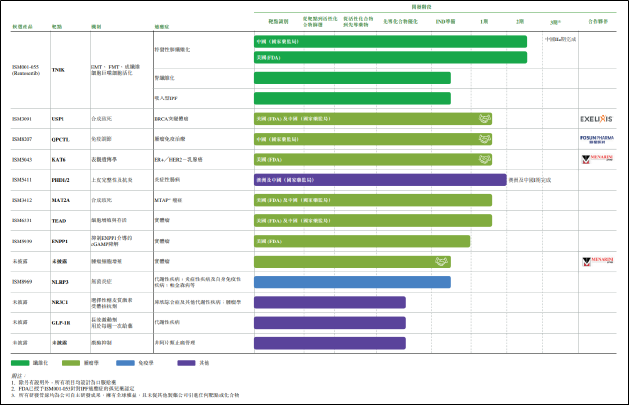
Core Viewpoint - InSilico Medicine, a pioneer in applying generative AI to drug discovery, is facing significant challenges in commercializing its technology and managing its financial health despite its innovative platform and potential breakthroughs [1][2]. Financial Performance - InSilico Medicine's revenue grew from $30.15 million in 2022 to $85.83 million in 2024, with a compound annual growth rate of 68.7% [2]. - The company has accumulated losses of $591 million from 2021 to 2024, with a net loss of $17.1 million in 2024, a 92% year-on-year decrease, primarily due to one-time licensing fees [2][3]. - The revenue is heavily reliant on three candidate drugs, with slow progress in licensing agreements, exemplified by a $12 billion collaboration with Sanofi, where only 1.04% of the agreement has been realized [2][3]. Client Dependency - The top five clients contributed 90.6%, 94.1%, and 94.4% of the revenue from 2022 to 2024, with the largest client accounting for 76.2% at one point [3]. - If core clients reduce their investments or terminate collaborations, the company's performance may face a sharp decline [3]. Research and Development Costs - R&D expenses reached $91.89 million in 2024, exceeding total revenue by 7% [3]. - Clinical trials are the most expensive phase in drug development, accounting for about 80% of the total R&D costs, while InSilico's pipeline is still in preclinical or early clinical stages [3]. Pipeline Status - InSilico Medicine has 15 candidate drugs, all in preclinical or early clinical stages, with the fastest progressing drug, ISM001-055, only having completed Phase IIa trials [4][6]. Clinical Trial Risks - The lack of Phase II clinical data poses a significant risk, as this stage is critical for validating the potential of drug candidates and the company's technology [6]. - Historical examples in the AI drug development sector show that failures in key clinical trials can lead to drastic declines in company valuations [6]. Data Challenges - The company faces a "data island" challenge, where the fragmented and inconsistent quality of data hampers the effectiveness of its AI-driven drug discovery platform [7]. - The AI drug discovery industry is still in its early stages in China, with data barriers prevalent, making it difficult for companies like InSilico to access high-quality research data [7].