
流程再造

Search documents
新春走基层 叫号机不忙了
Ren Min Wang· 2026-02-28 01:32
Core Viewpoint - The article highlights the transformation of business registration services in Shenyang, emphasizing the shift from traditional in-person processes to efficient online services, significantly improving user experience and operational efficiency. Group 1: Online Business Registration - Shenyang has achieved a high online business registration rate, with over 95% of enterprise establishment, modification, and cancellation processes completed online, totaling nearly 550,000 transactions by 2025 [1]. - The online platform allows users to complete most business registration tasks from home, generating application documents and company articles automatically [1]. Group 2: AI and Consultation Services - An innovative "AI + Business Registration" online consultation platform has been established, providing 24-hour support across multiple cities, enhancing the ease and efficiency of business registration [3]. - In January of this year, the online consultation platform served over 6,800 users and responded to 28,000 messages, indicating a high level of engagement and utility [3]. Group 3: User Experience and Efficiency - The introduction of self-service kiosks has streamlined the process, allowing users to print new business licenses in under a minute, showcasing the speed and convenience of the new system [5]. - The overall service model has been restructured to create a comprehensive lifecycle service system for enterprises, enhancing accessibility and efficiency in business operations [5].


会稽山:公司在长三角以外积极寻找重点突破口,加大了招商力度
Zheng Quan Ri Bao· 2026-02-26 10:44
Core Insights - The company is actively seeking key breakthroughs outside the Yangtze River Delta and has increased its recruitment efforts, expanding its sales team to over 600 members [2] - The company is optimizing its distributor structure and will provide specific changes and regional revenue proportions in its upcoming periodic report [2] - The company is implementing process reengineering focused on business growth, enhancing operational efficiency and market responsiveness through management, organizational, and mechanism changes [2] - The company is strengthening dynamic budget management and ensuring marketing expenses yield efficiency in core products and effective channels through detailed accounting [2] - The company continues to optimize its product structure to improve profit margins [2]


优化营商环境进行时丨开企业办手续,动动手指就完成了
Xin Lang Cai Jing· 2026-02-18 23:27
Core Insights - The article highlights the significant improvements in the efficiency of business registration processes in Shenyang, driven by digital transformation and innovative reforms [1][3] Group 1: Business Registration Process - Shenyang's market regulatory authority has introduced a free online service for business registration, allowing companies to complete applications with minimal physical effort [1] - The online registration system has achieved a high rate of usage, with over 95% of business registrations expected to be completed online by 2025, totaling nearly 550,000 transactions [1] - The introduction of an AI-powered online consultation platform provides 24/7 assistance, enhancing the user experience by offering automated responses and guidance [2] Group 2: Service Improvement and User Experience - The shift from traditional sequential approval processes to parallel processing has significantly increased the efficiency of business operations [3] - The focus on proactive service has improved customer satisfaction, with users noting the helpfulness and responsiveness of staff compared to other regions [3] - The regulatory authority aims to further optimize the business registration process, enhancing the overall service experience for enterprises [3]
冰城深1度|数字赋能+制度创新 厚植经营主体成长“沃土”
Xin Lang Cai Jing· 2026-01-20 21:54
Core Viewpoint - Harbin City is implementing a series of reforms aimed at enhancing the convenience of business establishment, focusing on digital empowerment, process reengineering, and service upgrades to become a hotspot for investment and entrepreneurship by 2025 [8] Group 1: Business Establishment Reforms - In 2025, Harbin will introduce measures to simplify the business establishment process, including a "one-stop service" model that integrates various approvals and licenses, significantly reducing the time and complexity involved in starting a business [10] - The city has launched a "business establishment express lane" that allows for rapid processing of business licenses and related permits, with some businesses able to complete all necessary steps in just half a day [9][10] - The "enterprise establishment gift package" has been upgraded to include four seals and a policy guide, enhancing the support for new businesses [13] Group 2: Digital Transformation and Smart Services - The upgraded "Business Establishment Express Lane 2.0" system incorporates AI technology to streamline the registration process, allowing entrepreneurs to complete name checks and obtain licenses in a fraction of the time previously required [11] - The system offers features such as intelligent name suggestions and automated form generation, significantly reducing the difficulty of filling out applications [11] - Harbin has established 24-hour self-service kiosks for business license applications, allowing entrepreneurs to complete the process quickly and conveniently [12] Group 3: Support for Business Transition - The "individual to enterprise" reform facilitates the transition of individual businesses to corporate status without losing their original business identity, providing a smoother path for growth [14] - This reform allows individual entrepreneurs to retain their social credit codes and business names while benefiting from corporate tax incentives [14] - Regular interactions between government and businesses, such as breakfast meetings, are being held to address specific needs and challenges faced by entrepreneurs [14]

服务提速 竞争促优 品牌赋能
Xin Lang Cai Jing· 2026-01-10 22:40
Group 1 - The core objective of the Heilongjiang Provincial Market Supervision Administration is to enhance service efficiency for enterprises, focusing on the "three breakthrough years" action plan set by the provincial government, aiming to stimulate business vitality and ensure fair competition [1] - The implementation of the "efficient handling of one matter" system has reduced the average processing time for high-frequency business matters by 83.5%, with some cases being completed in as little as 10 minutes [2][3] - The introduction of the "AI Huiqi Name" application has improved the efficiency of business name registration, achieving a recommendation success rate of over 90% for 14,000 names [3] Group 2 - The provincial market supervision authority has actively removed barriers to competition, correcting over 100 policies that violated fair competition standards and handling four administrative monopoly cases in 2025 [4] - The proactive approach includes conducting "fair competition policy" seminars and collecting enterprise feedback, resulting in 590 resolved issues for businesses [5][6] - The "Longjiang Quality" certification program has significantly enhanced brand credibility for certified companies, leading to a 10% increase in revenue and profit for participating enterprises [6][7] Group 3 - The provincial market supervision bureau has established a strategic partnership with Shenzhen's market supervision authority to integrate "Longjiang Quality" with high-end market certification systems, facilitating access to the Guangdong-Hong Kong-Macao Greater Bay Area [7] - The implementation of a reward policy for newly certified "Longjiang Quality" enterprises has resulted in 1.8 million yuan in total rewards distributed, with a one-time incentive of 100,000 yuan for each new certification [6][7]
高质量发展地方亮点|山东深化“高效办成一件事”改革提升政务服务效能
Xin Hua Wang· 2026-01-01 02:20
Group 1 - The core viewpoint of the article highlights the significant improvements in administrative efficiency and convenience for citizens and businesses in Shandong Province through the "One Thing Done" reform initiative [1][3][6] - The "One Thing Done" reform has integrated various administrative processes, reducing the number of required materials and streamlining procedures, resulting in a 92% online registration rate for school admissions [1][3] - The integration of data sharing among multiple departments has enabled a more efficient verification process, allowing parents to complete school registration in under three minutes compared to previous lengthy procedures [1][3] Group 2 - The administrative approval process for construction projects in Le Ling City has been significantly streamlined, reducing the number of required documents from 33 to 16 and the processing time from 45 days to 15 days [4] - The establishment of a comprehensive big data platform in Shandong has facilitated over 12 billion electronic certificate services and 540 billion data sharing services, enhancing the efficiency of administrative processes [6] - The "One Person One File, One Enterprise One File" database in Rizhao City has created data assets for over 320 million individuals and 440,000 enterprises, improving service delivery and reducing processing times for social security payments [6]
民生一件事 | 从数天等待到立等可取 居住证的速度变革书写民生“温度答卷”
Yang Shi Wang· 2025-12-28 04:34
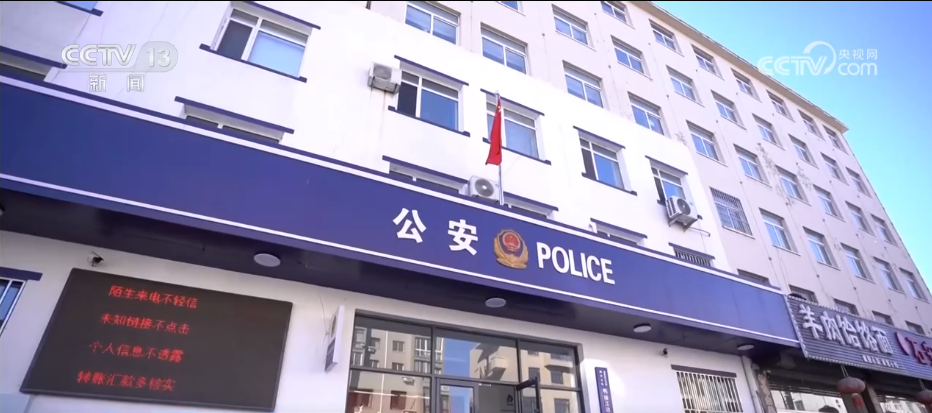
Group 1 - The core viewpoint of the article is the implementation of the "instant issuance" policy for residence permits in Liaoning, significantly reducing the processing time to minutes [1][5]. - The new policy allows for both online and in-person applications, with electronic residence permits holding the same validity as physical ones [3][5]. - The rapid issuance of residence permits is attributed to technological upgrades, service improvements, and the decentralization of production authority to local police stations [5][6]. Group 2 - The policy has been successfully implemented across all cities in Liaoning, with 15,000 instant residence permits issued within just three days [6]. - The verification process has been streamlined, allowing for quicker confirmation of necessary documents, such as identity and employment proofs, through online methods [6].
毁掉公司执行力的,不是员工,而是部门墙
3 6 Ke· 2025-12-18 03:55
Core Viewpoint - The article discusses the detrimental effects of departmental silos within companies, which hinder strategic execution and responsiveness to customer needs, despite the efforts of management and employees [1][2][3]. Group 1: Causes of Departmental Silos - Departmental silos arise from the principle of scientific management proposed by Taylor, which emphasizes specialization and division of labor, leading to "information islands" and "interest differentiation" [4][6]. - Each department focuses solely on its own KPIs, resulting in a lack of accountability for overall company performance [11][10]. Group 2: Detrimental Effects of Departmental Silos - The first harm is that individual departmental interests replace overall company interests, leading to internal conflicts and inefficiencies [15][16]. - The second harm is that adherence to processes obscures accountability, making it difficult to identify who is responsible when issues arise [20][21]. - The third harm is that the system rewards bystanders rather than those who take initiative, discouraging proactive collaboration [22][23]. Group 3: Misconceptions in Addressing Departmental Silos - A common misconception is that relying on leadership for coordination can resolve collaboration issues, which ultimately limits organizational capability [26][28]. - Another misconception is attributing collaboration failures to individual employee attitudes, while most issues stem from systemic problems rather than personal shortcomings [30][31]. Group 4: Strategies to Break Down Departmental Silos - The first strategy is institutional reconstruction, which involves aligning departmental incentives with overall company goals to foster collaboration [35][36]. - The second strategy is process reconstruction, focusing on end-to-end business processes and establishing clear roles and responsibilities across departments [42][45]. - The third strategy is value reconstruction, emphasizing a culture of trust and collaboration, where departmental interests do not undermine company and customer interests [48][49]. Conclusion - The article concludes that breaking down departmental silos is essential for enhancing execution power within companies, as seamless collaboration across departments is crucial for creating value [50].
河南夏邑:科技赋能强监督 清风护航优环境
Zhong Guo Fa Zhan Wang· 2025-11-14 07:01
Core Viewpoint - The article emphasizes the importance of a favorable business environment as a "lifeline" for county economic development, highlighting the role of strict discipline in optimizing this environment [1][5]. Group 1: Innovations in Business Environment - The county's disciplinary committee has implemented a dual-code mechanism ("supervision code" and "service code") to enhance government service efficiency, resulting in the resolution of 32 issues related to bureaucratic processes and policy implementation [1][2]. - A reform initiative has consolidated 20 high-frequency service scenarios into a single process, reducing redundant documentation by over 82% and achieving a total of 10,537 processed cases [2]. Group 2: Collaborative Supervision Mechanisms - A three-dimensional collaborative system has been established, integrating the "12345 hotline," government services, and disciplinary supervision to address issues harming the business environment, with a focus on rapid response to complaints [3]. - The county has initiated a special supervision program targeting irregular charges and inspections, promoting a shift from "management-type" to "service-type" enforcement, and has conducted visits to over 200 enterprises to gather feedback [3]. Group 3: Continuous Improvement and Third-Party Evaluation - The county's disciplinary committee is actively engaging third-party supervisors to evaluate government service quality, leading to 13 optimization suggestions and the simplification of four administrative processes [4]. - An innovative "enterprise reputation evaluation" mechanism has been introduced, linking service effectiveness assessments to departmental performance reviews, thereby incentivizing improvements in service delivery [4]. Group 4: Future Directions - The county plans to continue innovating supervision models, focusing on key tasks such as industrial transfer and economic recovery, while maintaining a commitment to enhancing the business environment through rigorous oversight [5].
新疆乌什县以改革温度激发营商活力
Zhong Guo Jing Ji Wang· 2025-11-01 08:02
Core Viewpoint - The article highlights the significant advancements in digital governance and service efficiency in Wushi County, Xinjiang, through the "Digital Wushi" initiative, which aims to enhance the business environment by addressing service bottlenecks and improving administrative processes. Group 1: Digital Transformation and Service Efficiency - Wushi County has implemented a digital transformation strategy focusing on three dimensions: digitalization, process reengineering, and service extension, resulting in improved efficiency and user satisfaction in government services [1] - The county has achieved 1,178 government service items available online, covering high-frequency areas such as business registration, social security, and real estate registration [1] - The introduction of a "cross-province handling" window and online processing has allowed 123 high-frequency items to be managed across regions, breaking geographical barriers [1] Group 2: Streamlined Approval Processes - The "one industry, one certificate" reform has consolidated multiple departmental approvals into a single comprehensive license, reducing average processing time by 65% [2] - Wushi County has established 98 "deficient acceptance" items and 48 "commitment acceptance" items, clarifying the required materials to minimize the burden on businesses [2] Group 3: Enhanced Service Accessibility - The implementation of a "parallel approval" function has reduced the time for processing seven business registration items from 1.5 days to 1 day, enabling one-stop completion of essential tasks [3] - Average waiting time at service centers has decreased by 80%, from 40 minutes to 15 minutes, significantly enhancing service efficiency [3] - The county has introduced flexible service hours and a 24/7 self-service hall to accommodate the needs of working individuals [3] Group 4: Community Engagement and Feedback - The "one stamp manages approval" reform at the grassroots level has created a new model for one-stop government services, allowing residents to complete tasks locally [4] - The 12345 government service hotline has handled 10,247 public requests with a completion rate of 97.61% and a satisfaction rate exceeding 99% [4]