数据要素价值释放

Search documents
数据要素价值有望加速兑现 制度与技术双轮驱动长效发展
Zheng Quan Shi Bao Wang· 2026-01-18 23:29
Core Viewpoint - The data factor market is characterized by both "policy and institutional improvement" and "local practical implementation" at the beginning of the new year, with a clear national directive aiming for 2026 to be the "year of data factor value release" [1] Group 1: Policy Developments - Multiple policy documents focusing on the value extraction of data factors have been issued since the beginning of the year, indicating a strong governmental push [1] - Local initiatives, such as Shanxi's implementation plan for the comprehensive development of the digital economy, demonstrate practical efforts to advance this agenda [1] Group 2: Market Trends - The first national transaction of "embodied intelligent data sets" was completed in Jiangsu, showcasing the market's evolving landscape [1] - Experts predict that public data products, particularly in meteorology and statistical analysis, will mature rapidly due to their compliance advantages [1] Group 3: Industry Implications - The financial and healthcare sectors are expected to see a rapid formation of data product supply driven by market forces, contributing to the empowerment of the real economy through data factors [1]
数据要素价值加速释放 千亿蓝海迎来质变
Zheng Quan Shi Bao· 2026-01-18 18:15
Group 1 - The core viewpoint of the articles highlights the dual characteristics of "policy system improvement" and "local practice implementation" in the data factor market at the beginning of the year, with a clear national directive aiming for the "release of data factor value" by 2026 [1] - Multiple policy documents focusing on the value extraction of data factors have been issued, and local practices are advancing, such as the implementation plan for the comprehensive development of the digital economy in Shanxi and the first national transaction of "embodied intelligent data sets" in Jiangsu [1] - Experts predict that public data products, particularly in meteorology and statistical analysis, will mature rapidly due to compliance advantages, while data products in finance and healthcare will also form quickly under market-driven forces [1][2] Group 2 - The value of data factors is expected to accelerate, with public and enterprise data serving as the two main carriers, entering a phase of rapid value release, which is crucial for market transformation by 2026 [2] - By 2025, China's data infrastructure construction will enter a practical phase, achieving breakthroughs in resource registration, operational authorization, and pricing mechanisms [2] - Public data applications have already demonstrated effectiveness in various sectors, including smart agriculture and healthcare, with applications like precise medical insurance services and seamless entry to scenic spots [2] Group 3 - The analysis indicates that public data products not involving personal privacy are likely to achieve large-scale supply first, while commercially valuable data products in financial risk assessment and clinical diagnosis will accelerate their market entry [3] - Industrial internet data products are being developed through trusted data spaces established by leading enterprises, facilitating value sharing and circulation within the industry chain [3] Group 4 - The current market faces multiple collaborative obstacles that hinder the full release of data factor value, stemming from a lack of coordinated governance and resulting in fragmented rules and unclear responsibilities [4] - The existing management structure, with multiple departments overseeing data resources, complicates unified resource allocation and rule formulation [4] - Issues such as "products without demand" highlight the need for a vibrant data factor market, where demand is essential for realizing data value [4] Group 5 - To facilitate the smooth release of data factor value, addressing collaborative obstacles is crucial, focusing on resolving issues of coordination, fragmented rules, and unclear responsibilities [5] Group 6 - The national data work conference emphasizes accelerating the cultivation of a unified national data market, enhancing top-level design to promote cross-regional and cross-industry rule interoperability [6] - The focus of policies will shift from "establishing rules" to "implementing and promoting collaboration" as 2026 approaches, with a unified transaction rule and registration system expected to transform data holders' perspectives from "cost centers" to "profit centers" [6] Group 7 - Establishing standards for measuring data value is essential for the long-term development of the market, with a focus on quantifying data circulation and transaction scale [7] - The future assessment system should measure the actual benefits of data in digital transformation and its contribution to the core industries of the digital economy [7] - The data factor market in China is projected to exceed 200 billion yuan by 2025 and is expected to surpass 300 billion yuan by 2028, driven by institutional and technological advancements [7]
长沙以赛聚智,打造数据要素价值释放高地
Xin Lang Cai Jing· 2026-01-17 08:26
Core Viewpoint - The event held in Changsha focused on the theme "Data Empowerment, Multiplying Upwards," showcasing the city's achievements in the data element sector and exploring innovative paths for data value release [1] Group 1: Competition Results - The Changsha preliminary competition attracted 191 teams, with one team advancing to the finals after expert evaluations and presentations [3] - Changsha won 64 awards in the provincial competition, including 21 first prizes, and received the "Pioneer Award" from the Changsha Data Bureau [3] - In the national finals, Changsha secured 10 awards, including 2 first prizes, ranking first among provincial capital cities in terms of both quantity and level of awards [3] Group 2: Policy Insights - A special session was dedicated to policy explanations to facilitate project implementation, with insights from Chen Jianhua, Chief Engineer of the Changsha Data Bureau, on funding and project quality management [3] - Attendees expressed that the policy discussions were highly relevant and provided clear guidance for future project development [3] Group 3: Expert Opinions - Experts highlighted that data empowerment has entered a new phase of both breadth and depth, with Changsha positioned among the top tier nationally due to its clear strategy and solid industrial foundation [5] - As one of the first national data labeling bases, Changsha possesses high-quality data production capabilities and rich industrial heritage, particularly in engineering machinery and audio-visual cultural creation [5] Group 4: Future Outlook - The Changsha Data Bureau plans to deepen market-oriented reforms in data element allocation, focusing on four key areas: enhancing project transformation, exploring data resource utilization, building a development ecosystem, and seizing policy opportunities [6] - The goal is to transition successful competition projects from the "arena" to the "market," encouraging businesses to clarify commercialization paths and application scenarios [6] - The bureau aims to cultivate a batch of data-driven enterprises and develop public data authorization operation demonstration projects by 2026 [6]


市场化转型升级 地方征信机构并入数据集团成趋势
Xin Lang Cai Jing· 2026-01-16 20:09
Core Viewpoint - The integration of local enterprise credit institutions into data groups is becoming a trend, aiming to enhance the efficiency of data resource allocation and create market-oriented credit products in the context of the 2026 "Year of Data Element Value Release" [1][4]. Group 1: Integration of Credit Institutions - The newly established Guangxi Data Group completed 100% control of Guangxi Credit Company by the end of December 2025, marking a significant step in integrating local credit institutions into data groups [1][2]. - The model of "one group, one exchange, one credit platform" is expected to emerge as a new trend in local data market development, facilitating the precise matching of data resources and application scenarios [1][3]. Group 2: Financial Resource Mobilization - Guangxi Data Group's shareholders include various financial-related companies, which will help mobilize financial resources across the region and enhance the data resources of the integrated credit institutions [2][3]. - The integration allows for better utilization of public data resources, breaking down data silos and enhancing the efficiency of data element release [4][5]. Group 3: Policy Support and Market Transformation - The central government has emphasized the establishment of a public data authorization operation mechanism, which supports the integration of credit institutions into data groups for better performance in financial application scenarios [3][5]. - The People's Bank of China is promoting the market-oriented transformation of local credit platforms, encouraging institutions with data, technology, and market capabilities to enter the enterprise credit market [5][6]. Group 4: Data Utilization and Application - Local credit institutions are focusing on gathering and processing credit information, with examples like Wuxi Enterprise Credit having collected around 2 billion data entries, which will be further utilized through public data authorization [3][6]. - The development of credit databases and the application of AI technology are being prioritized to address issues such as financing difficulties for small and medium-sized enterprises [6][7].
多地明确“数据要素价值释放年”工作目标
Zheng Quan Ri Bao· 2026-01-15 16:48
Core Insights - The year 2026 is designated as the "Year of Data Element Value Release," focusing on the market-oriented reform of data element allocation and the comprehensive deployment of digital economy development [1][3] Group 1: Policy and Strategic Focus - Various regions are actively formulating digital construction plans, promoting data infrastructure development, and nurturing a data market ecosystem, reflecting a unified policy direction across different localities [2] - The emphasis on enhancing artificial intelligence (AI) capabilities through coordinated development of computing power, data, and algorithms is a common theme in regional policies [2] Group 2: Economic Integration and Market Dynamics - The integration of data elements into the economy and society is accelerating, requiring both policy guidance and market innovation to shape a new productivity development pattern driven by data [3] - The establishment of data trading institutions and service platforms is attracting capital investment, providing opportunities for participation in data circulation and transactions, which can generate returns for investors [2] Group 3: Challenges and Governance - Issues such as data security, privacy protection, and algorithm bias are identified as obstacles to the healthy development of data elements, necessitating ongoing policy guidance and a robust data governance framework [3] - Ensuring that data operates within legal, compliant, and secure parameters is crucial for achieving the goal of effective data utilization and integration into economic value creation [3]
专访原海南省大数据管理局局长董学耕:2026年数据要素价值规模化释放可期,全国一体化数据市场或成破局关键
Zheng Quan Shi Bao· 2026-01-11 10:12
Core Insights - The article emphasizes that 2026 is designated as the "Year of Data Element Value Release," marking a significant transition in China's data element market reform from foundational institutional development to a phase focused on value creation and validation [1][3] Group 1: Data Element Value Release - The release of data element value has been a consistent theme since the concept was introduced, with the current moment representing a critical transition from quantitative to qualitative change [3] - The national data work conference has set the stage for the large-scale release of data element value, indicating that prior efforts have reached a level conducive to significant transformation [3][4] - Key policies and initiatives, such as the development of public data resources and the establishment of data trading platforms, have laid the groundwork for this transformation [3][4] Group 2: National Integrated Data Market - The establishment of a national integrated data market is seen as essential for overcoming challenges related to the release of data element value, facilitating seamless data flow across regions and industries [6][7] - Key infrastructure for this market includes a nationwide interconnected data platform, a unified standard system, and operational norms to encourage the development of data products [7][8] - The integrated market aims to enhance the efficiency of data resource allocation, enabling data merchants to create more valuable data products and services [7][8] Group 3: Key Indicators for Success - The success of the "Year of Data Element Value Release" and the national integrated data market will be measured against eight key tasks outlined by the national data work conference [4] - There is a need for standardized definitions and metrics to assess the market value generated by data products, focusing on cash flow and other financial indicators [4] Group 4: Transition from Data Resources to Standardized Products - Public data holders, primarily government entities, are encouraged to share and open data responsibly, with performance-driven incentives to enhance data accessibility [10] - Large enterprises are urged to adopt market-driven approaches to release data, including monetizing data products and ensuring data privacy through innovative usage methods [10][11] - The first data products expected to mature and scale include analytical data products and those driven by market demand, particularly in finance and healthcare [11] Group 5: AI and Data Value Standards - The integration of data with AI is crucial for enhancing the performance of AI models, with high-quality datasets becoming essential for effective applications [12][13] - The development of AI will reshape data value standards, emphasizing application-driven assessments rather than traditional metrics [12][13] - The transition from project-based development to subscription-based data services is anticipated, driven by the need for continuous data application and service delivery [14][15]
专访原海南省大数据管理局局长董学耕:2026年数据要素价值规模化释放可期,全国一体化数据市场或成破局关键
证券时报· 2026-01-11 09:34
Core Viewpoint - The designation of 2026 as the "Year of Data Factor Value Release" marks a significant shift in China's data factor market reform, transitioning from foundational institutional development to a focus on value creation and verification [1][3]. Group 1: Data Factor Value Release - The release of data factor value has been a consistent theme since the concept was introduced, indicating that data must be integrated into production and circulation processes to unlock its value [3]. - The national data work conference's designation of 2026 as the year for value release signifies that prior efforts have reached a critical point for qualitative change [3][4]. - Policies implemented since late 2024, including those on public data resource utilization and data infrastructure, have laid the groundwork for this transition [3]. Group 2: National Integrated Data Market - The establishment of a national integrated data market is essential for overcoming challenges related to data factor value release, aiming to eliminate barriers to data circulation across regions and industries [7][8]. - Key infrastructure for this market includes a nationwide interconnected data platform, a unified data standard system, and operational norms for data interoperability [7][8]. - The "Five Unifications and One Openness" framework is considered foundational for building this integrated market, focusing on unified data property rights, circulation, trading, security, and governance [8][9]. Group 3: Data Product Development - The transition from "data resources" to "standardized data products" is crucial for public data holders, particularly government departments, which must be driven by accountability and performance metrics [11]. - Large enterprises with abundant data resources should adopt market-driven principles to encourage the release of data through paid usage and the development of metadata for better accessibility [11][12]. - The expected first wave of mature data products includes analytical data products and those driven by strong market incentives, such as in finance and healthcare [12]. Group 4: AI and Data Value - The integration of data with AI is essential for enhancing the quality and compliance of data used in AI models, which in turn influences the standards for measuring data value [13][14]. - AI's role in reshaping data value standards includes providing new measurement possibilities beyond traditional metrics, allowing for a more nuanced understanding of data's worth [14]. - The evolution of data products towards intelligent applications (Data Product 2.0) is anticipated, driven by the need for high-quality data to support AI applications [14][16]. Group 5: Business Model Transformation - The data industry's business model is shifting from project-based development to recurring data services, emphasizing the importance of data application in realizing value [15][16]. - This transformation is supported by the convergence of data and AI infrastructure, enabling rapid development of data products tailored to specific application needs [16]. - The core activities of the data industry will revolve around the elements of data, data platforms, data products, and data applications, fostering a diverse range of data applications and significantly enhancing data value [16].

全国数标委今年将至少研制80项国家标准和技术文件
Xin Lang Cai Jing· 2026-01-08 21:03
Core Points - The National Data Standardization Technical Committee held a meeting on January 5, 2023, in Beijing, focusing on the release of data element value and the development of national standards [1] - The committee aims to develop at least 80 national standards and technical documents by 2026, with a target of publishing no less than 30 key standards [1][2] - In the past year, the committee has developed 48 national standards and technical documents, with over one-third undergoing verification trials during the drafting process, enhancing both the quality and quantity of standard supply [1] Group 1 - The meeting emphasized the need to optimize standard supply and accelerate the release of high-quality data sets and standards for data anonymization [2] - Key standards to be developed include important data identification directories and a national integrated computing network, as well as standards for cutting-edge fields like intelligent interconnection and embodied intelligence [2] - The committee aims to cultivate high-quality, professional third-party institutions and promote the transformation of national data standards into international standards [2]
全国数据标准化技术委员会全体委员会议在京召开
Zheng Quan Shi Bao Wang· 2026-01-07 15:11
Core Viewpoint - The National Data Standardization Technical Committee emphasizes the importance of data element value release and aims to establish a comprehensive framework for data standards by 2026 [1] Group 1 - The committee plans to develop no less than 80 national standards and technical documents by 2026 [1] - It aims to publish at least 30 key standards as part of its initiative [1]
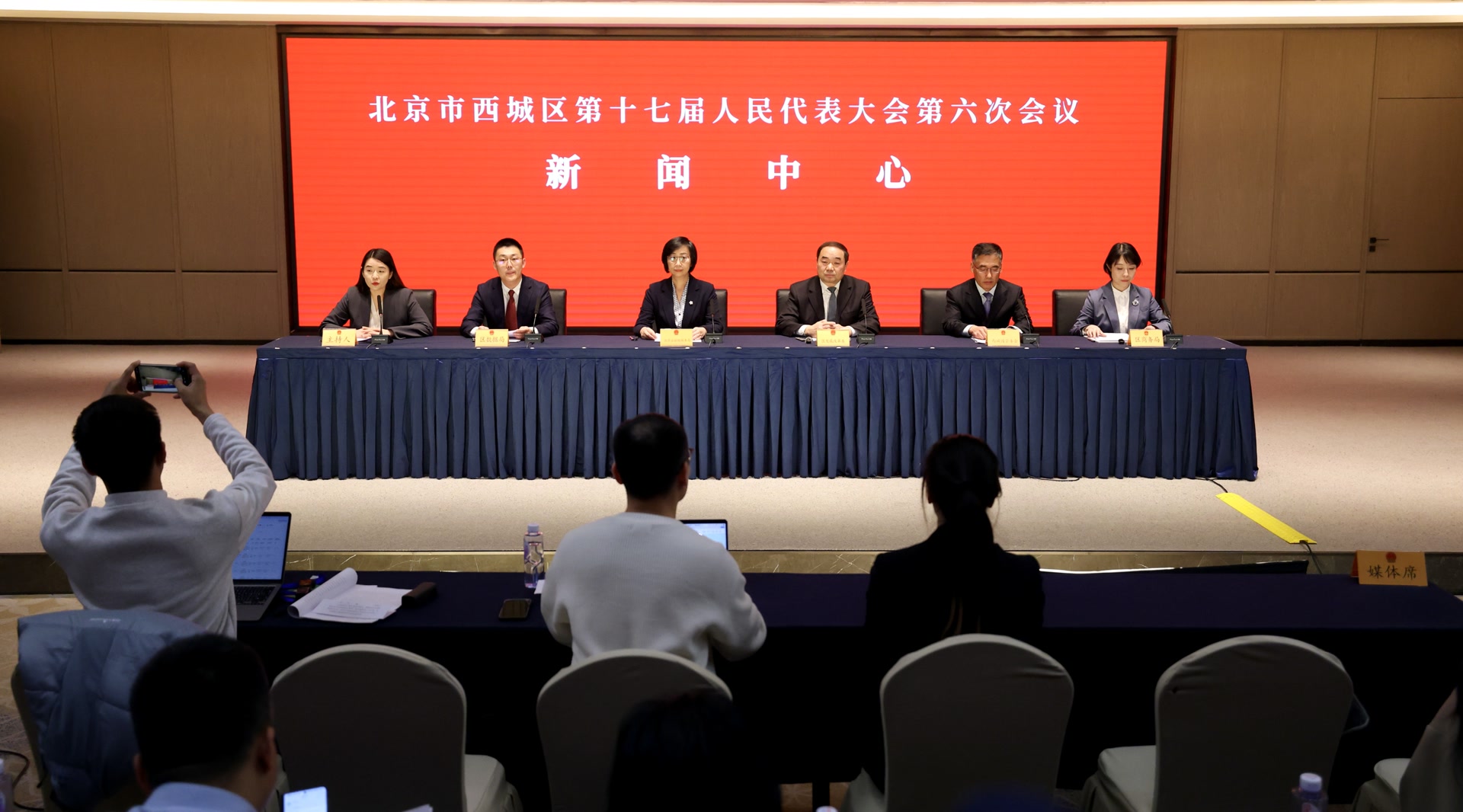
马连道崛起“中国数据街” 北京西城将打造数字经济标杆城市示范区
Xin Lang Cai Jing· 2026-01-06 17:29
Group 1 - The core focus of the news is the development of "China Data Street" in Xicheng District, Beijing, which aims to become a global benchmark for the digital economy by leveraging resources from national ministries, central enterprises, and financial institutions [2] - By 2025, Xicheng District will undertake 24 experimental tasks as part of the national data element comprehensive pilot zone, contributing significantly to the city's data initiatives [2] - The district has successfully established the first national "medical insurance + commercial insurance" clearing and settlement center, enhancing the convenience of claims for the public [2] Group 2 - Xicheng District is advancing new infrastructure construction for data flow, with leading levels in fiber broadband and mobile communication networks, and has 13 projects recognized as national-level data infrastructure typical cases [3] - Five institutions, including Industrial and Commercial Bank of China and China Life, have been selected as the first batch of trusted data space innovation pilots by the National Data Bureau [3] - The district has cultivated 46 national-level high-quality data sets and has 14 projects from the National Data Bureau's 100 public data demonstration scenarios located in Xicheng [3] Group 3 - Xicheng District has established a comprehensive service system for "China Data Street," including policies, forums, alliances, competitions, and various carriers to support the development of the data industry and artificial intelligence [4] - The district hosted the "China Data Street" high-quality development forum and launched the "Central-Local Cooperation · AI Ecosystem Plan," releasing 136 innovative achievements in the data field [4] - Xicheng will host the national finals of the "Data Element ×" competition in 2025, providing a platform for 129 teams to showcase their latest achievements in the data sector [4] Group 4 - By 2026, Xicheng aims to further enhance the "China Data Street" project, focusing on the development of a digital economy driven by data as a key element [5] - The district plans to create a national data management center, a national data resource center, and a national data circulation trading center, leveraging policies to stimulate and guide enterprise development [5] - Xicheng will promote the integration of data technology innovation and industrial innovation, fostering digital industry clusters and enhancing data cooperation between central and local governments [6]